 Sep, 18 2026
Aftermarket Exhaust Risk & Cost Estimator
Input your vehicle details to estimate the downsides before you buy.
Overall Risk Score
Awaiting analysis...
Detailed Breakdown
Total projected expense including tune/install buffer.
Likelihood of cabin drone or fines.
Risk of claim denial.
Expected impact on sale price.
You see a sleek cat-back system on a forum, read about the "horsepower gains," and your hand hovers over the buy button. It’s tempting. But here is the uncomfortable truth: aftermarket exhaust systems are not always an upgrade. Sometimes, they are a downgrade in disguise. If you have ever wondered why some modified cars sound great but drive worse, or why your check engine light won’t stay off after installing a new muffler, this guide is for you.
Aftermarket exhaust refers to any exhaust component replaced by a non-OEM (Original Equipment Manufacturer) part. Unlike factory systems designed for balance, these parts prioritize sound, aesthetics, or specific performance traits. While they can improve flow and reduce weight, they often introduce significant downsides that owners overlook until it is too late.
Noise Is Not Always Better Sound
Let’s be honest: half the reason people buy an aftermarket exhaust is for the noise. But there is a massive difference between a deep, aggressive growl and a droning headache. Most cheap or poorly tuned systems suffer from excessive drone. This is a low-frequency hum that vibrates through the cabin at cruising speeds, typically between 60 and 80 km/h. It makes long drives exhausting and conversations impossible.
Furthermore, volume does not equal power. A straight-pipe setup might scream like a race car, but without proper tuning, it can actually hurt low-end torque. Your neighbors will hate you, and so will your passengers. In Hamilton, where we value quiet neighborhoods, getting cited for "excessive noise" is more common than you think. Police here take decibel levels seriously, especially with modified vehicles.
The Backpressure Myth and Real Performance Losses
Car enthusiasts love to talk about backpressure. The old logic was that you need some resistance to help scavenge exhaust gases. Modern engineering knows better, but removing all restriction isn't always good either. OEM systems are engineered with precise internal baffling to optimize gas flow across the entire RPM range.
When you slap on a generic "universal fit" muffler, you often lose this precision. The result? You might gain top-end horsepower, but you lose mid-range punch. That feels sluggish when merging onto the highway or passing trucks. Unless you are buying a high-end, vehicle-specific system from a reputable brand like Borla or Magnaflow, you are likely trading daily drivability for a dyno graph number that looks pretty but feels flat.
Warranty Risks and Emissions Compliance
This is the big one. Does modifying your exhaust void your warranty? Technically, no-thanks to laws like the Magnuson-Moss Warranty Act in the US or consumer protection laws in Canada. However, if a dealer proves your aftermarket part caused a failure, they will deny the claim. And they will try to prove it.
If you remove your catalytic converter or use a high-flow cat that fails emissions testing, you are in trouble. In Ontario, emissions testing is strict. A failed test means you cannot renew your permit. Worse, if your check engine light comes on due to O2 sensor errors (common with cheap sensors in aftermarket cats), you risk being flagged during routine inspections. Dealerships are notorious for blaming modifications for unrelated engine issues, forcing you into expensive diagnostic battles just to get covered repairs.
Poor Fitment and Quality Control
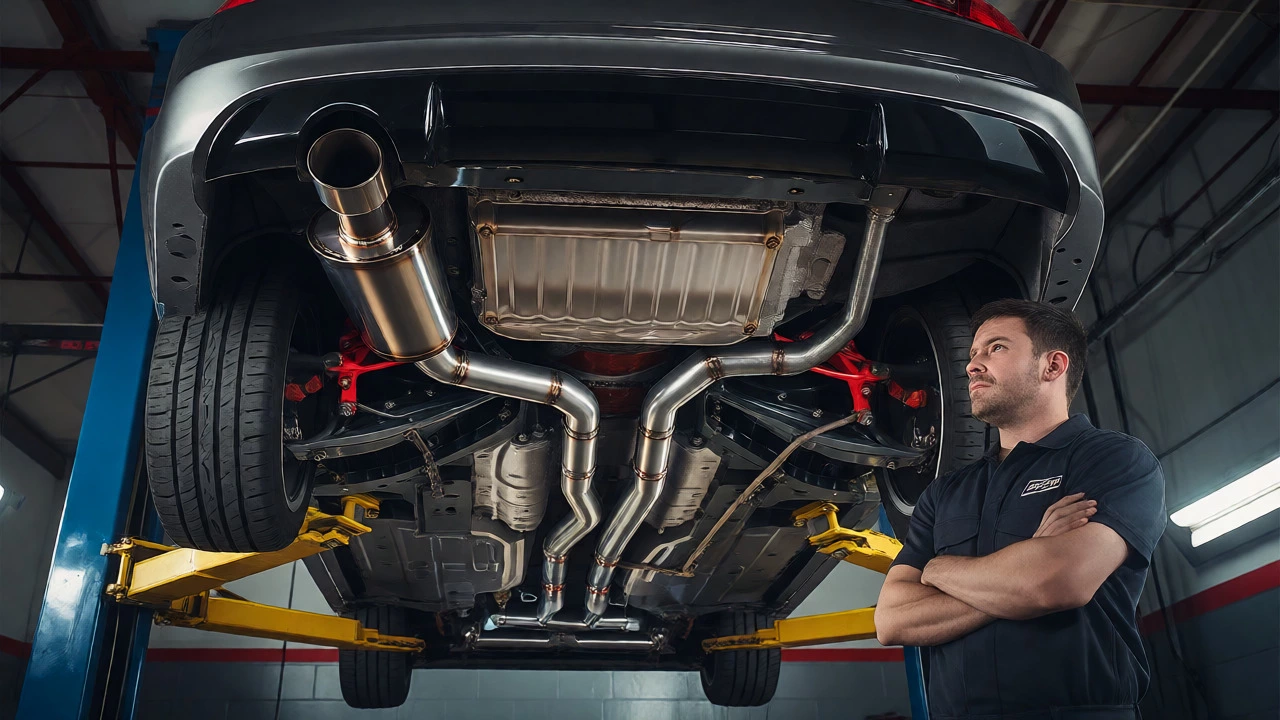
OEM parts fit perfectly because they are made specifically for your chassis. Aftermarket parts, especially budget ones, are often approximations. You might find yourself wrestling with hangers that don’t line up, needing to cut and weld pipes that should have been bolt-on. This leads to rattles, leaks, and stress points on the exhaust manifold.
Corrosion is another silent killer. Many budget systems use aluminized steel instead of stainless steel. Aluminized steel looks shiny for a year, then starts rusting from the inside out, especially in regions with harsh winters and road salt. Once the internal lining corrodes, the muffler clogs, killing performance and increasing backpressure. Stainless steel is better, but even 409-grade stainless can pit over time. Only 304-grade stainless offers true longevity, and it costs significantly more.
Impact on Fuel Economy and Tuning Costs
A common misconception is that a louder exhaust equals better fuel economy. In reality, changing the exhaust flow alters how the engine's computer manages air-fuel ratios. If you go too free-flowing without remapping the ECU, the engine may run lean or rich depending on the load. This can hurt mileage.
To fix this, you often need a tune. A custom tune costs money ($300-$800 CAD). Without it, you are driving blind. With it, you are spending more than the exhaust itself. If you skip the tune, you might notice hesitation or poor idle quality. These are real-world disadvantages that brochures rarely mention.
Resale Value Complications
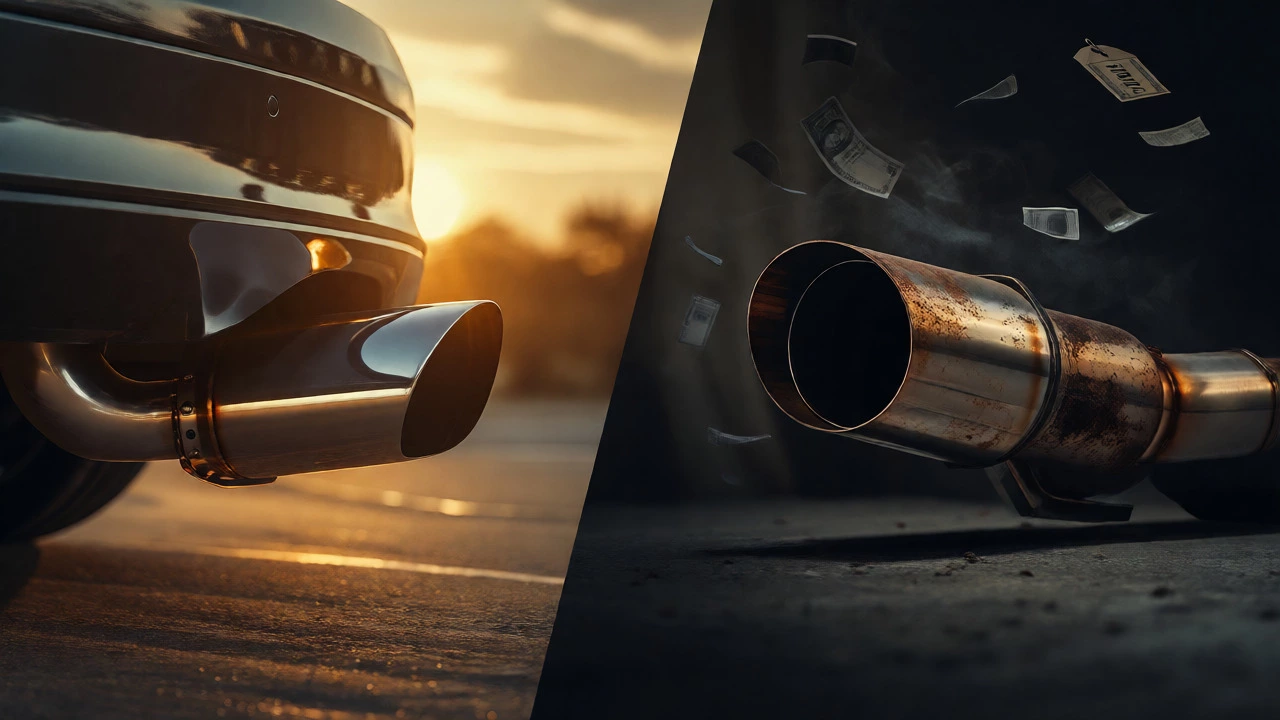
Here is a hard pill to swallow: most buyers do not want your modifications. They want a stock, reliable car. An aftermarket exhaust can lower resale value because it signals potential abuse or hidden damage. When selling, you face two choices: revert to the stock exhaust (costly and time-consuming) or sell with the mod and accept a lower price.
Buyers also worry about legality. Will the next owner pass emissions? Will they get fined? These questions make your car harder to sell compared to a clean, stock example. Unless you are targeting a niche enthusiast market, the exhaust mod is often a financial loss upon exit.
Comparison Table: Stock vs. Aftermarket Exhaust
| Feature | Stock (OEM) | Aftermarket (Budget) | Aftermarket (Premium) |
|---|---|---|---|
| Fitment | Perfect | Poor/Approximate | Excellent/Vehicle-Specific |
| Material | Durable Steel/Alloy | Aluminized Steel (Rusts) | Stainless Steel (Long-lasting) |
| Sound | Quiet/Balanced | Loud/Drone Heavy | Deep/Tuned Tone |
| Emissions | Certified | Risk of Failure | CARB/EPA Compliant Options |
| Cost | Included | $500 - $1,200 | $1,500 - $3,000+ |
| Tuning Needed | No | Often Yes | Recommended for Max Gains |
Key Takeaways
- Noise: Expect drone and potential fines; loud doesn't mean fast.
- Performance: Cheap systems can hurt low-end torque without a tune.
- Warranty: Modifications give dealers a reason to deny claims.
- Quality: Budget materials rust quickly in Canadian winters.
- Resale: Mods often decrease buyer interest and final sale price.
Does an aftermarket exhaust void my car warranty?
Not automatically. Under laws like the Magnuson-Moss Warranty Act, the manufacturer must prove the modification caused the failure. However, if you install a cheap system that causes a check engine light or damages a sensor, the dealer can legitimately deny coverage for related repairs.
Will an aftermarket exhaust improve my fuel economy?
Rarely. While improved flow can theoretically help efficiency, the change in air-fuel mixture often requires a tune to realize benefits. Without tuning, you might see neutral or slightly worse fuel economy due to altered sensor readings and driving habits.
What is exhaust drone?
Drone is a constant, low-frequency humming noise heard inside the cabin at steady cruising speeds. It is caused by resonance frequencies in the exhaust piping that match the car's interior cavity. It is fatiguing on long trips and is a common complaint with cheaper aftermarket systems.
Are stainless steel exhausts worth the extra cost?
In climates with road salt, yes. Aluminized steel rusts from the inside out within 3-5 years. 304-grade stainless steel resists corrosion much longer, maintaining performance and appearance for the life of the vehicle. The upfront cost saves money on replacements later.
Can I fail emissions testing with an aftermarket exhaust?
Yes, if you remove the catalytic converter or use a non-compliant high-flow cat. Even if the cat remains, a failing O2 sensor or improper tune can cause emission codes. Always ensure your system is certified for your region (e.g., CARB compliant in California, EPA compliant elsewhere).