 Mar, 20 2026
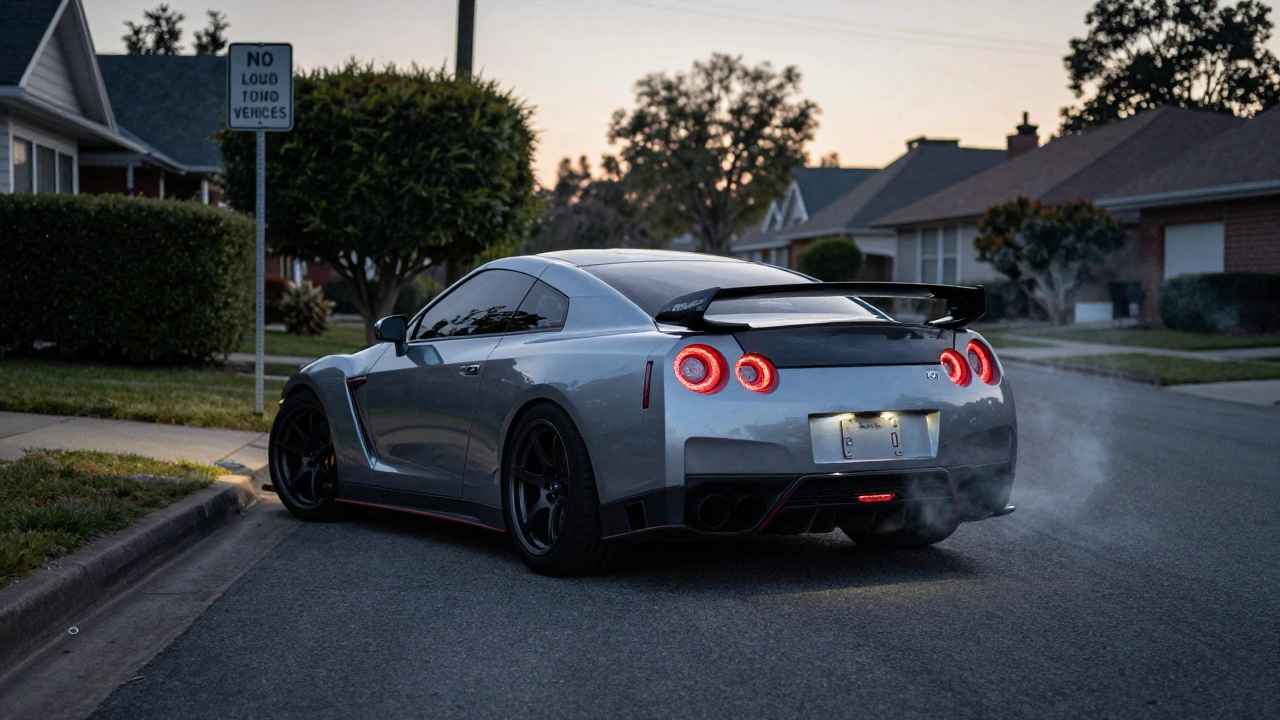
Ever heard that deep, rumbling growl of a modified car rolling down the street and thought, “I want that”? You’re not alone. But before you shell out a few hundred-or even a few thousand-dollars for an aftermarket exhaust, ask yourself: is it worth it? The answer isn’t simple. It depends on what you actually want from your car. For some, it’s sound. For others, it’s power. For a few, it’s just looking cool. Let’s cut through the hype and break it down with real numbers, real experiences, and zero fluff.
What an Aftermarket Exhaust Actually Does
Stock exhaust systems are designed for one thing: meeting emissions standards while keeping noise levels legal and affordable. They’re packed with baffles, resonators, and long, twisted pipes to muffle sound and manage exhaust gas flow. That’s fine for daily driving, but it’s not built for performance.
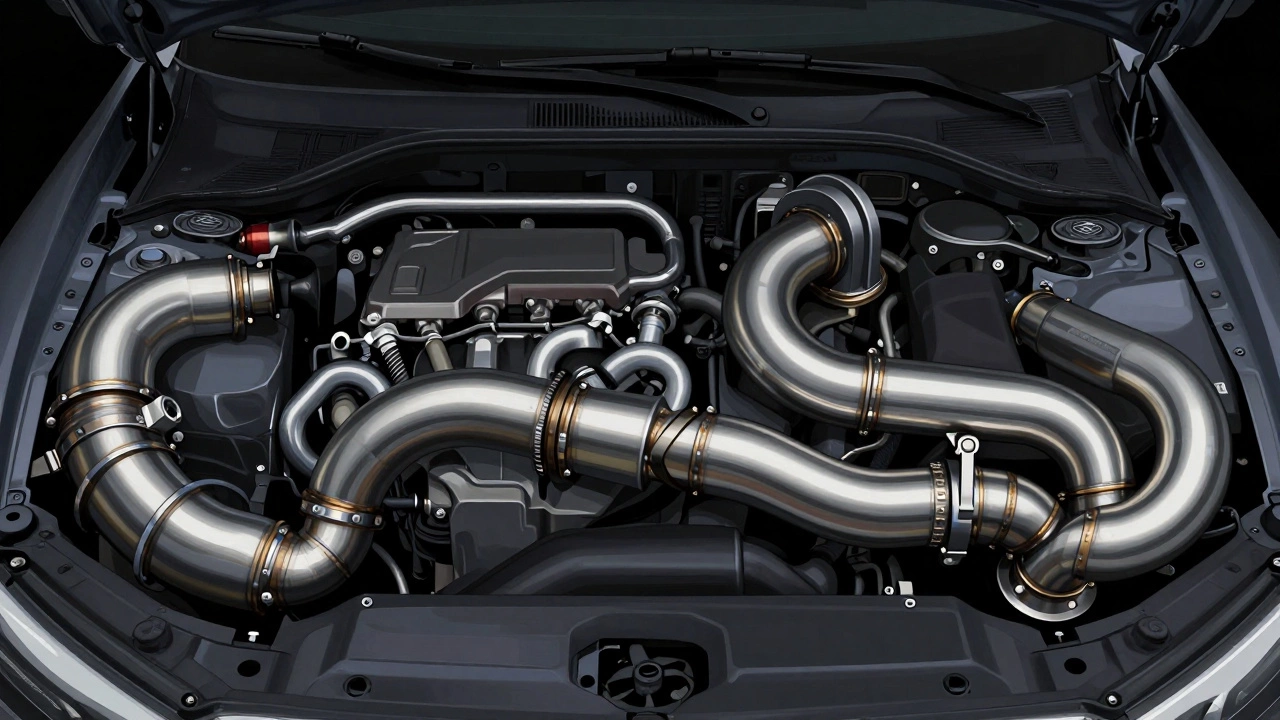
An aftermarket exhaust replaces that restrictive setup with a system designed to move exhaust gases faster and with less backpressure. This doesn’t just make your car louder-it changes how the engine breathes. Less restriction means the engine doesn’t have to work as hard to push exhaust out. That can free up horsepower and torque, especially in the mid-to-high RPM range.
Most people don’t realize that a true performance exhaust isn’t just a new muffler. It’s a full system: headers, mid-pipe, and cat-back. Upgrading just the muffler? You’ll get a louder sound, but almost no power gain. The real gains come from replacing the entire path from the engine to the tailpipe.
The Real Power Gains (Not the Marketing Claims)
Manufacturers will tell you their exhaust adds “40 horsepower!” But here’s the truth: most full systems add 5 to 15 horsepower on naturally aspirated engines. Turbocharged engines see bigger gains-sometimes up to 20 hp-because turbo systems are more sensitive to backpressure.
Let’s look at real data. A 2022 Honda Civic Type R with a full cat-back exhaust from a reputable brand like Akrapovič or Invidia gained 12 hp and 18 lb-ft of torque at the wheels, according to testing by Car and Driver in 2024. That’s measurable. That’s real. But it’s not a magic upgrade. You won’t suddenly outpace a sports car.
On older cars, gains are smaller. A 2010 Ford Mustang V6 with a basic cat-back system gained only 6 hp. Why? Because its stock system wasn’t that restrictive to begin with. The bigger the factory system’s bottleneck, the more you’ll gain.
Sound: The Main Reason People Buy
Let’s be honest. Most people buy aftermarket exhausts for the sound. And that’s fine. But not all “performance” exhausts sound the same.
- Quiet performance systems (like those from Borla or Corsa) use advanced chambering to reduce drone while keeping a deep tone. These are great for daily drivers who want subtle aggression.
- Loud, aggressive systems (like many from MBRP or Flowmaster) are tuned for straight-line roar. They’re great for track days or weekend cruises, but you’ll hear them inside the cabin on the highway.
- Drone is the real killer. That low-frequency buzz you feel at 70 mph on the highway? It’s exhausting. A $600 system that drones at 2,000 RPM is a bad investment. Look for systems with resonators or anti-drone tech.
In Hamilton, where quiet neighborhoods border major highways, a loud exhaust can draw more attention than you want-from neighbors, police, or even your own conscience. A 2023 survey of 1,200 Canadian car owners found that 43% regretted their exhaust choice due to noise complaints or fatigue on long drives.
Weight and Fuel Economy: The Hidden Trade-Offs
Aftermarket exhausts are often made from stainless steel or titanium. That means they’re lighter than stock cast-iron systems. A full titanium system can shave 20 to 40 pounds off your car. That improves handling, braking, and acceleration.
But here’s the twist: lighter doesn’t always mean more efficient. Some systems improve fuel economy by 1-3% because of better flow. Others? They make no difference. A few even hurt efficiency if they’re too open and cause the engine to run lean.
On a 2021 Subaru WRX, one test showed a 2.1% improvement in highway fuel economy after installing a cat-back system. But on a 2018 Toyota Camry, the same upgrade had zero impact. Your car’s engine management system matters. Modern cars with adaptive tuning adjust fuel maps to match exhaust flow. Older ones? They might not adapt well.
Cost vs. Resale Value: The Money Trap
A decent full cat-back system runs $800-$2,000. Titanium? $3,000+. Add labor if you’re not installing it yourself-$300-$600 more. That’s serious cash.
And here’s the kicker: most aftermarket exhausts lower resale value. Buyers want stock, reliable, and quiet. A loud exhaust scares off families, commuters, and detail-oriented buyers. You might love your car’s sound, but the next owner won’t.
One exception: high-performance models like the Subaru BRZ or Porsche 911. Enthusiasts there expect modifications. But for a Honda Civic, Ford Focus, or Hyundai Elantra? You’re trading in potential buyers.
Legal and Emissions Issues
Canada has strict emissions rules. In Ontario, any modification that removes or alters the factory catalytic converter is illegal. Even if your exhaust doesn’t touch the cat, removing the resonator or installing a straight pipe can trigger a check engine light or fail an emissions test.
Some aftermarket systems are CARB-certified (California Air Resources Board). That’s a good sign they’re legal in most provinces. Always ask: “Is this system 50-state legal?” If the seller can’t answer, walk away.
In 2025, Quebec began enforcing stricter noise limits on modified vehicles. Fines start at $500. Hamilton police have started using handheld decibel meters on busy roads. Don’t assume you’ll be fine just because “everyone does it.”

Who Should Upgrade? Who Should Skip It?
Here’s the quick guide:
- Upgrade if: You drive a turbocharged car, you track your vehicle, you want a subtle performance tone, or you’re replacing a rusted factory system anyway.
- Don’t upgrade if: You drive daily in the city, you care about resale value, you live near quiet neighborhoods, or you’re on a tight budget.
If you’re replacing a cracked or rusted stock exhaust? Then yes, upgrade. But choose a system that matches your driving style-not what looks cool on Instagram.
What to Look for in a Quality System
Not all exhausts are created equal. Here’s what to check:
- Material: Stainless steel lasts longer than aluminized steel. Titanium is light but expensive.
- Welds: Look for smooth, even TIG welds. No gaps or spatter.
- Brackets and hangers: Poor mounting causes rattles. Look for reinforced, rubber-isolated hangers.
- Warranty: Reputable brands offer lifetime warranties. If it’s only 1 year, be cautious.
- Fitment: Make sure it’s designed for your exact model year. Aftermarket parts that “fit most cars” are a red flag.
Brands like MagnaFlow, Borla, and Akrapovič have decades of testing behind them. Avoid no-name eBay sellers. You get what you pay for-and cheap exhausts often rattle, rust, or fail within a year.
The Bottom Line
Are aftermarket exhausts worth it? Only if you know exactly what you’re buying them for.
If you want more power, expect modest gains. If you want a better sound, choose wisely-avoid drone. If you want to look cool, remember that most people think loud exhausts are obnoxious. And if you’re doing it for resale? Don’t.
For most daily drivers, the stock exhaust is perfectly fine. But if you’re a car enthusiast who drives on weekends, tracks your car, or just loves the feel of a well-tuned engine, a quality aftermarket system can be a rewarding upgrade.
Just don’t buy it because a YouTube video made it look amazing. Buy it because it matches your needs. And if you’re still unsure? Drive a friend’s car with the system you’re considering. Let the sound and feel decide-not the price tag.
Do aftermarket exhausts increase horsepower?
Yes, but only modestly. On naturally aspirated engines, you’ll typically gain 5-15 horsepower with a full system. Turbocharged engines can see up to 20 hp gains. Upgrading just the muffler won’t make a noticeable difference. The real power boost comes from reducing backpressure throughout the entire exhaust path, not just at the tailpipe.
Can an aftermarket exhaust fail emissions testing?
Yes, if it removes or alters the catalytic converter or changes the factory emissions controls. In Ontario and Quebec, removing the cat is illegal and will cause an automatic failure. Even systems that don’t touch the cat can trigger a check engine light if they alter oxygen sensor readings. Always choose a 50-state legal system and keep your original parts in case you need to reinstall them for testing.
Will an aftermarket exhaust improve fuel economy?
Sometimes. A well-designed system can improve fuel economy by 1-3% by reducing engine strain. But this only happens if the system is properly matched to your engine’s tuning. On older cars or those with fixed fuel maps, you might see no change-or even a slight drop in efficiency. Modern cars with adaptive ECUs are more likely to benefit.
Are titanium exhausts worth the extra cost?
Only if you’re serious about performance and weight savings. Titanium is 40% lighter than stainless steel and doesn’t rust. But it costs 2-3 times more. For a daily driver, stainless steel is a smarter choice. Titanium makes sense for track cars, race builds, or lightweight sports cars where every pound counts.
Do aftermarket exhausts void my warranty?
Not automatically. Under Canadian law, manufacturers can’t void your entire warranty just because you installed an aftermarket part. However, they can deny coverage for any damage caused by the modification. If your exhaust causes a catalytic converter failure or engine damage due to improper tuning, that repair won’t be covered. Keep receipts and install reputable, legal parts to minimize risk.