 Jan, 30 2026
Clutch & Transmission Damage Checker
Identify if your symptoms indicate clutch problems that could damage your transmission. Based on real-world mechanics' experience.
Ever heard someone say, "My clutch is slipping, but the transmission is fine"? That’s a dangerous myth. A worn or failing clutch doesn’t just make shifting rough-it can wreck your transmission faster than you think. If you’re hearing grinding, feeling vibrations, or noticing your car won’t go into gear, you’re not just dealing with a clutch problem. You might already be hurting your transmission.
How a Clutch Actually Works
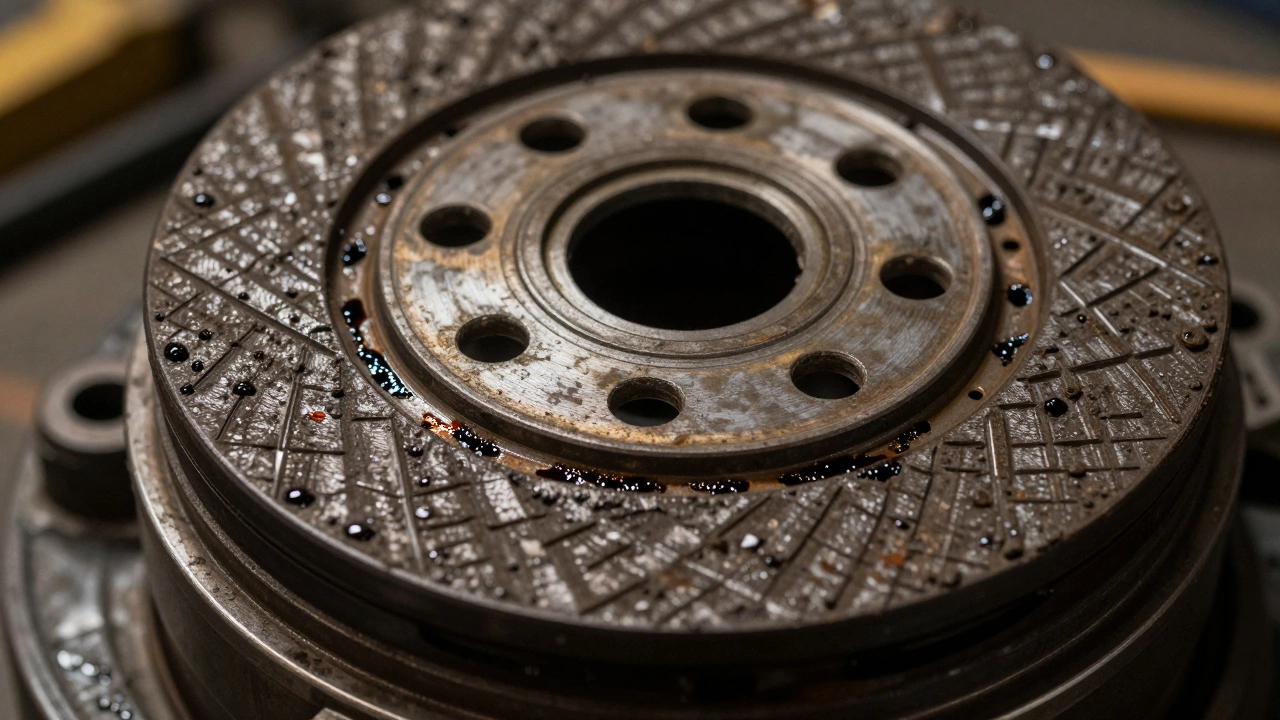
The clutch isn’t just a pedal you press to shift. It’s the direct link between your engine and transmission. When you press the pedal, the clutch disc disengages from the flywheel, letting you change gears without grinding. When you let go, the disc clamps back down, transferring engine power smoothly to the transmission.
That clutch disc is made of friction material-like brake pads-but it’s designed to wear slowly over tens of thousands of miles. When it wears out, it doesn’t just stop working. It starts slipping, grabbing unevenly, or overheating. And when it does, the transmission pays the price.
What Happens When the Clutch Slips
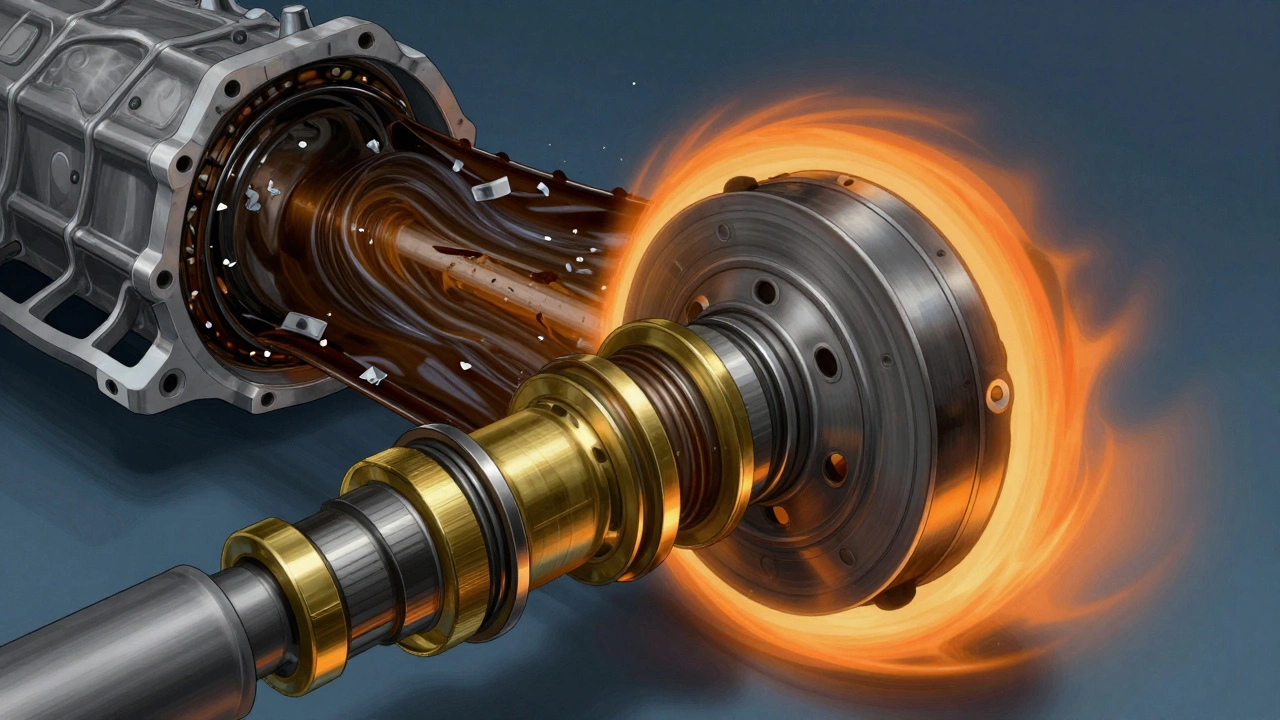
Slipping isn’t just annoying-it’s destructive. When the clutch can’t grip the flywheel properly, the engine revs higher but the car doesn’t accelerate. That means extra heat builds up in the clutch assembly. But here’s the thing: that heat doesn’t stay put.
Excess heat travels into the transmission fluid. Transmission fluid is designed to stay under 175°F. When the clutch slips badly, temperatures can hit 250°F or higher. That’s enough to break down the fluid’s lubricating properties. Once the fluid turns thin and dark, metal parts inside the transmission start grinding against each other. Bearings wear out. Synchronizers get scored. Gears chip.
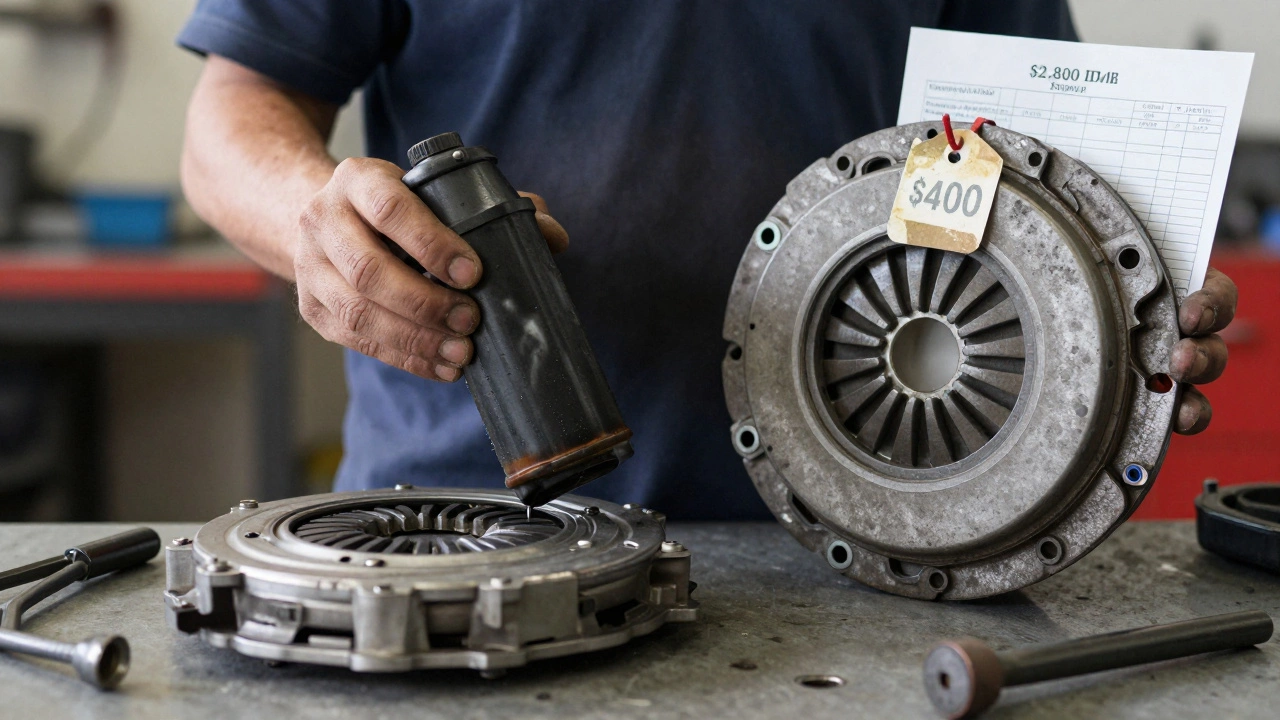
One mechanic in Hamilton told me about a 2018 Honda Civic that came in with a "noisy transmission." The owner thought it was the gears. Turns out, the clutch had been slipping for six months. The transmission fluid was burnt black. The synchronizers were ruined. Replacing just the clutch would’ve cost $400. Replacing the transmission? $2,800.
Clutch Drag and Transmission Wear
Not all clutch problems are about slipping. Sometimes, the clutch doesn’t fully release. That’s called clutch drag. It happens when the release bearing, hydraulic system, or cable gets worn or misadjusted.
When the clutch doesn’t disengage completely, you’re trying to shift gears while the engine is still partially connected to the transmission. That forces the synchronizers to fight against spinning gears. Synchronizers are made of brass and designed to handle light friction. Constant forced shifting grinds them down like sandpaper on metal.
That’s why drivers who keep shifting without fully pressing the clutch pedal end up with grinding noises and failed gears. It’s not the gears breaking-it’s the synchronizers being worn out by bad clutch operation.
Clutch Kit Quality Matters
Not all clutch kits are created equal. Cheap aftermarket kits often use low-grade friction material that overheats faster. Some use thin pressure plates that warp under heat. Others have weak release bearings that fail early.
A good clutch kit-like those from Sachs, Luk, or OEM suppliers-uses ceramic-composite friction material, hardened pressure plates, and sealed bearings. These can handle 20% more heat and last twice as long under heavy use.
Skimping on a clutch kit doesn’t save money. It just delays the inevitable. I’ve seen three cars in the last year where owners bought the cheapest clutch kit they could find. All three needed a transmission rebuild within 15,000 miles.
Signs Your Clutch Is Already Damaging the Transmission
Here’s what to watch for:
- Grinding noises when shifting, even with the clutch fully pressed
- Difficulty getting into first or reverse-especially when the car is warm
- Transmission fluid that looks dark, smells burnt, or has metal flakes
- Delayed engagement-the car doesn’t move right away after releasing the clutch
- Clutch pedal feels spongy or needs to be pressed all the way to the floor
If you’re seeing two or more of these, your transmission is already under stress. Don’t wait for it to fail completely. Get it checked before you’re stranded with a $3,000 repair bill.
How to Prevent Clutch-Induced Transmission Damage
Prevention is cheaper than repair. Here’s how:
- Don’t ride the clutch. Keep your foot off the pedal when not shifting. Even light pressure wears out the release bearing.
- Shift smoothly. Don’t jerk the gear lever. Let the clutch engage gradually, especially from a stop.
- Check fluid regularly. Transmission fluid should be red and clean. If it’s brown or smells like burnt toast, it’s time for a flush.
- Replace the clutch before it fails. Most clutches last 60,000-100,000 miles. If yours is over 80,000 and you’re feeling slip, don’t wait.
- Use quality parts. Skip the $120 clutch kit. Invest in a $400-$600 OEM or premium aftermarket kit. It’s the only way to protect your transmission.
What Happens If You Ignore It?
Ignoring a bad clutch doesn’t mean you’ll just replace the clutch later. It means you’ll replace the transmission-and possibly the flywheel, release bearing, and slave cylinder too.
Transmission repairs aren’t simple. Most modern transmissions are sealed units. You can’t just pop them open and fix a gear. You need a rebuild or a replacement. That means labor costs alone can hit $1,200-$2,000. Add the part, and you’re looking at $2,500-$4,500.
Compare that to replacing the clutch kit for $500-$800, including labor. That’s a 70% savings. And you’ll avoid the weeks of downtime waiting for a rebuilt transmission to be shipped.
Final Thought: The Clutch Is the Transmission’s First Line of Defense
Your transmission isn’t a separate system. It’s connected to the clutch in every way-mechanically, thermally, and hydraulically. A bad clutch doesn’t just make shifting hard. It cooks the fluid, grinds the gears, and wears out parts that were never meant to be stressed.
Don’t treat clutch problems like a minor annoyance. Treat them like a warning light for your transmission. Fix it early. Use good parts. Drive smart. Your wallet-and your car-will thank you.
Can a slipping clutch cause transmission failure?
Yes. A slipping clutch generates excess heat that transfers to the transmission fluid, breaking down its lubrication. This leads to worn synchronizers, damaged bearings, and eventually gear failure. Many transmission rebuilds start with a neglected slipping clutch.
How do I know if my clutch is bad or if it’s the transmission?
If the clutch slips (engine revs without acceleration), it’s likely the clutch. If you hear grinding when shifting-even with the clutch fully pressed-or can’t get into gear at all, the transmission is probably damaged. A mechanic can check fluid condition and perform a clutch inspection to confirm.
Will a new clutch fix a damaged transmission?
No. If the transmission is already damaged-grinding gears, burnt fluid, failed synchronizers-a new clutch won’t fix it. The transmission needs its own repair or replacement. Installing a new clutch on a damaged transmission just wastes money.
How often should I replace the clutch?
Most clutches last between 60,000 and 100,000 miles. But aggressive driving, frequent stop-and-go traffic, or towing can cut that in half. If you’re noticing slipping, vibration, or hard shifting before 80,000 miles, it’s time to inspect it.
Is it worth replacing the flywheel when replacing the clutch?
Yes-if the flywheel is worn, cracked, or heat-damaged. Many mechanics recommend replacing it at the same time. It’s a labor-intensive job to remove the transmission, so doing both saves money on labor. A worn flywheel can cause new clutch chatter or premature failure.