 Jul, 28 2026
Radiator Failure Risk & Cost Estimator
Select Observed Symptoms:
Check the issues you are currently experiencing with your vehicle.
Risk Assessment
No symptoms selected. Select issues to calculate risk.
Potential Repair Costs
Parts + Labor for standard repair
If seized or warped block/head
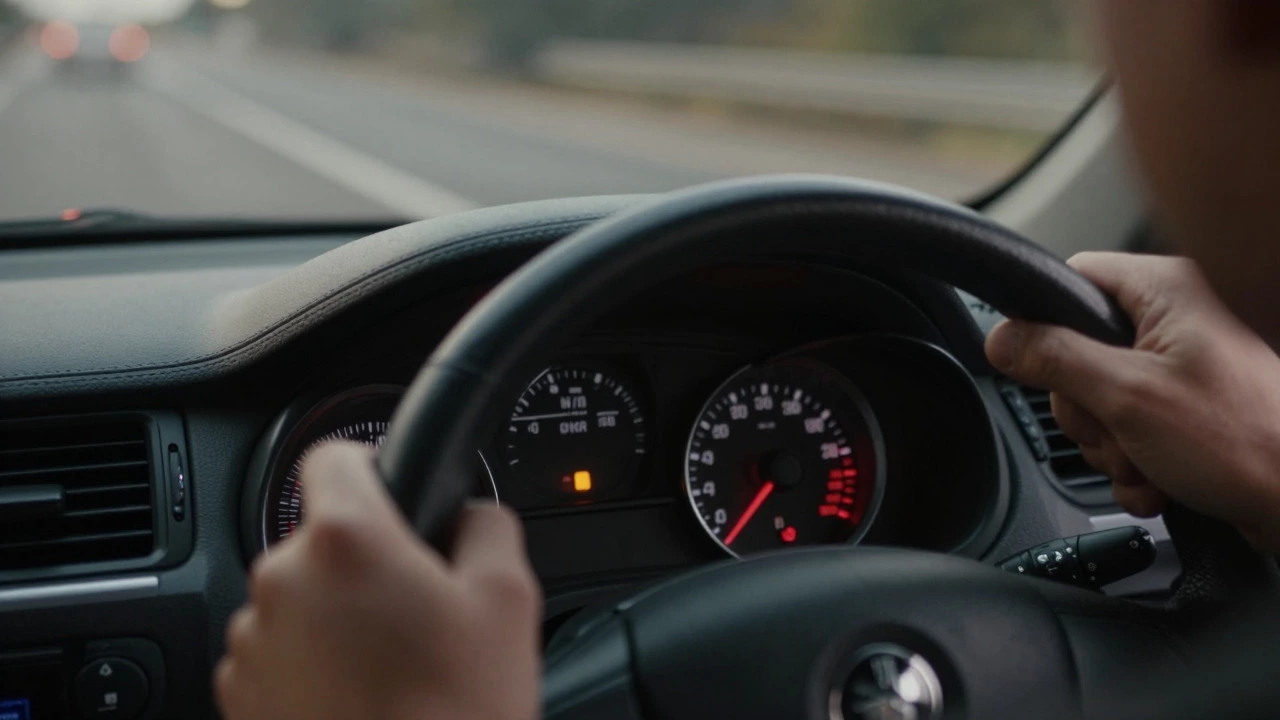
Imagine you are driving down the highway. You glance at your dashboard and see the temperature gauge climbing into the red zone. You pull over, heart pounding, wondering if you just ruined thousands of dollars worth of machinery. The short answer is yes: a bad radiator can absolutely ruin an engine. But it doesn't happen overnight, and it rarely happens because the radiator itself exploded. Instead, it’s a slow, destructive chain reaction that starts with heat and ends with metal fatigue.
Your engine generates immense heat during combustion. Without a way to shed that heat, internal components expand, seize, and crack. The radiator is the primary heat exchanger in this process. When it fails-whether through a leak, clogging, or cap failure-the entire cooling system collapses. This article breaks down exactly how a failing radiator destroys an engine, what signs to look for before it’s too late, and how to save your vehicle from catastrophic repair bills.
The Chain Reaction: How Heat Destroys Metal
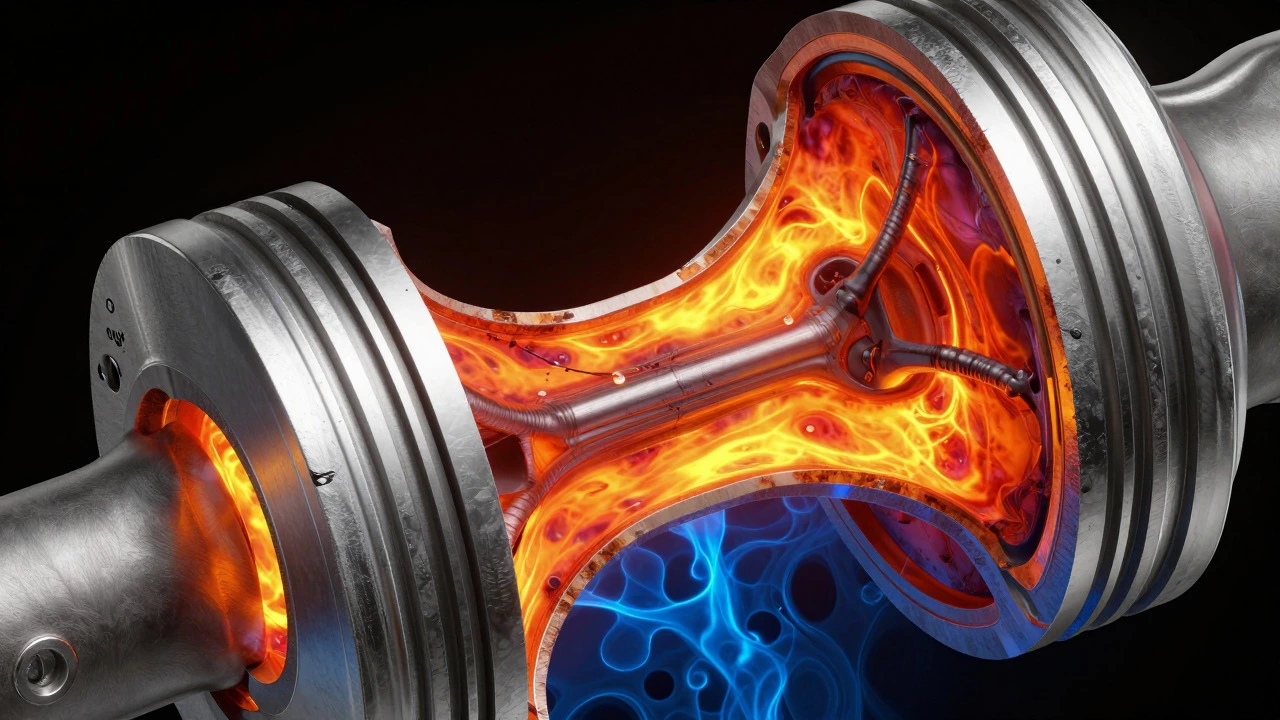
To understand why a bad radiator is so dangerous, you have to look at the physics of an internal combustion engine. Engines run hot. We’re talking about temperatures exceeding 2,000°F inside the cylinders during combustion. While the block and head are made of cast iron or aluminum designed to withstand high stress, they rely on precise tolerances. Pistons fit into cylinders with gaps measured in thousandths of an inch.
When the coolant stops circulating properly due to a blocked or leaking radiator, the engine temperature spikes rapidly. Aluminum, commonly used in modern engine blocks and cylinder heads, expands significantly when heated. If the expansion exceeds the clearance limits, the piston can rub against the cylinder wall-a phenomenon known as "scuffing." In severe cases, the piston locks up entirely, causing the engine to seize. A seized engine usually requires a complete rebuild or replacement.
But seizure isn’t the only threat. The most common form of destruction comes from warping. The cylinder head sits on top of the engine block, sealed by a gasket. When one part heats up faster than the other, or when both parts overheat unevenly, the metal distorts. A warped cylinder head no longer sits flat against the block. This leads to compression loss, oil mixing with coolant, and eventually, hydrolock if coolant enters the combustion chamber. Hydrolock occurs because water does not compress like air does; if a piston tries to compress liquid, the connecting rod bends or snaps, sending shrapnel through the engine block.
Silent Killers: Clogs and Corrosion
A radiator doesn’t need to be visibly broken to cause harm. Many drivers ignore their vehicles until steam pours from under the hood, but by then, the damage may already be done. One of the sneakiest failures is internal clogging. Over time, rust particles, scale, and degraded coolant additives build up inside the radiator’s narrow tubes. These deposits restrict flow, reducing the radiator’s ability to dissipate heat.
You might notice the car runs fine in town but overheats on long highway drives. That’s because at higher speeds, airflow helps cool the radiator passively. But in stop-and-go traffic or steep climbs, the fan must do all the work. If the tubes are clogged, even a perfect fan won’t help. The coolant stagnates, boils, and loses its lubricating properties. Boiling coolant creates vapor pockets-air bubbles-that insulate metal surfaces from the remaining liquid coolant. This localized boiling causes "hot spots" on the cylinder head, accelerating warping.
Corrosion is another silent killer. Old coolant becomes acidic, eating away at the aluminum fins and copper solder joints inside the radiator. Microscopic leaks develop, slowly draining coolant levels. You might top off the reservoir every few weeks, thinking nothing is wrong. Meanwhile, the system is losing pressure and efficiency. Low coolant volume means less heat absorption capacity. The thermostat opens later, the water pump works harder, and the engine runs hotter than designed. Chronic overheating weakens head bolts, cracks the block, and destroys bearings.
Warning Signs Your Radiator Is Failing
Catching radiator issues early can mean the difference between a $150 flush and a $3,000 engine swap. Here are the key indicators that your cooling system is struggling:
- Rising Temperature Gauge: If the needle creeps above the normal range (usually marked "H" or red), shut off the AC and turn on the heater. This diverts some heat to the cabin. Pull over safely if it hits the red zone.
- Sweet Smell Inside or Outside the Car: Coolant has a distinct sweet odor. If you smell it while driving or parked, check for puddles under the vehicle. Green, orange, or pink fluid indicates a leak.
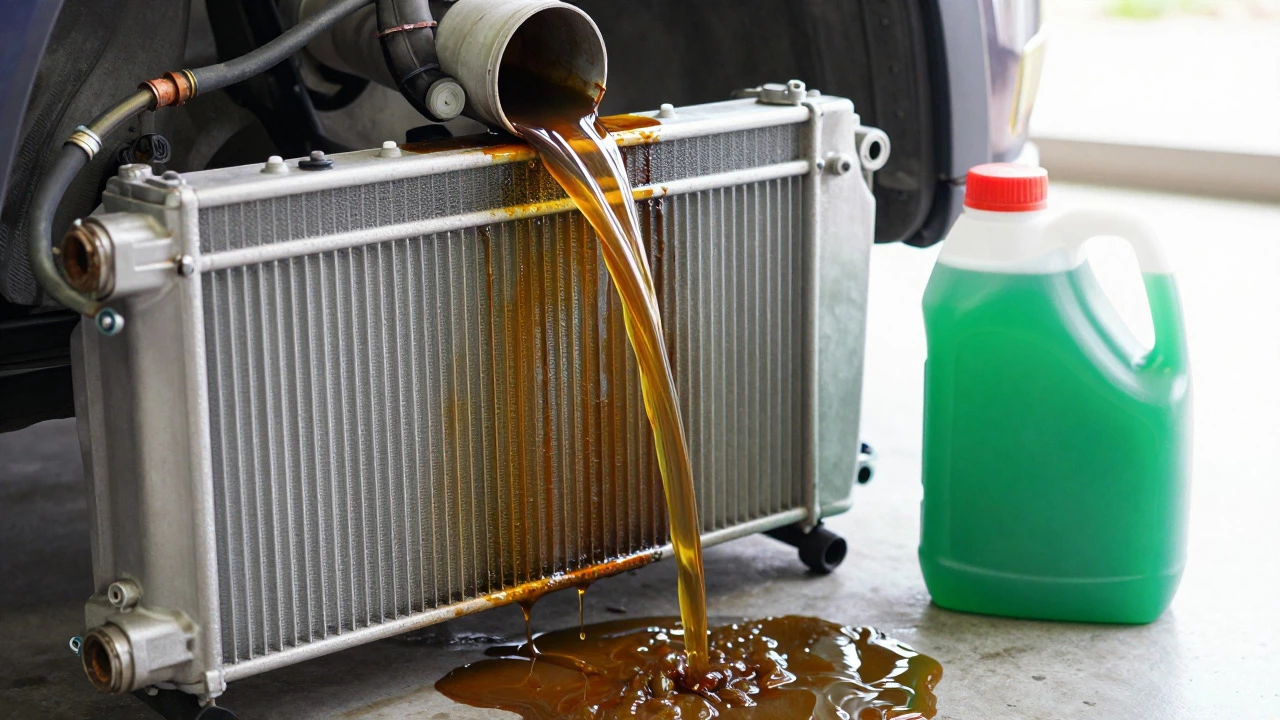
- Discolored or Dirty Coolant: Fresh coolant should be clear and brightly colored. Brown, rusty, or milky coolant suggests contamination, corrosion, or oil mixing-a sign of internal failure.
- Overheating Only Under Load: If the car overheats only when towing, climbing hills, or idling in traffic, the radiator may be partially clogged or the fan isn’t engaging properly.
- Bubbles in the Overflow Tank: Air bubbles rising in the coolant reservoir indicate combustion gases entering the cooling system, often due to a blown head gasket caused by prior overheating.
Don’t wait for smoke or steam. By the time those appear, the engine has likely been running above safe temperatures for minutes-or even hours. Modern engines have sensors that trigger warning lights, but these are last-resort alerts. Proactive monitoring saves engines.
The Role of Other Cooling Components
While the radiator gets the blame, it’s part of a larger ecosystem. A bad radiator can strain other components, and vice versa. For example, a failing water pump reduces coolant flow, making the radiator ineffective. A stuck-open thermostat keeps the engine running too cool, which increases wear and emissions, while a stuck-closed thermostat traps heat, overwhelming the radiator.
| Component | Failure Mode | Engine Risk |
|---|---|---|
| Radiator | Leak or clog | Overheating, warped head, seized pistons |
| Thermostat | Stuck closed | Rapid heat buildup, gasket blowout |
| Water Pump | Impeller failure | Reduced flow, localized hot spots |
| Coolant Cap | Pressure loss | Boiling point drop, vapor lock |
| Fan Clutch/Electric Fan | No airflow at idle | Idle overheating, transmission damage |
The coolant cap plays a surprisingly critical role. It maintains system pressure, raising the boiling point of the coolant. A worn cap allows pressure to escape, lowering the boiling point. Coolant boils at lower temperatures, creating steam pockets that reduce cooling efficiency. This creates a feedback loop: more boiling, less cooling, higher temps. Always replace the cap when flushing the system-it’s cheap insurance.
Prevention and Maintenance Best Practices
Most radiator-related engine failures are preventable. Regular maintenance keeps the cooling system functioning within design parameters. Here’s what you should do:
- Flush and Replace Coolant Every 2-5 Years: Follow your manufacturer’s recommendation. Older cars use green ethylene glycol; newer ones use orange or pink hybrid organic acid technology (HOAT) or fully organic acid technology (OAT). Mixing types can cause gelation and clogs.
- Check Coolant Level Monthly: Look at the overflow tank when the engine is cold. Top off with the correct type if low. Never open the radiator cap on a hot engine.
- Inspect Hoses and Connections: Cracked, swollen, or soft hoses indicate age and potential failure. Squeeze them gently-they should feel firm, not mushy.
- Test the Thermostat Annually: Use an infrared thermometer to check if the upper hose heats up gradually after startup. If it stays cold, the thermostat is stuck open. If it never gets hot, it’s stuck closed.
- Listen for Fan Operation: After shutting off the engine, listen for the electric fan spinning. If it doesn’t engage when hot, the sensor or relay may be faulty.
If you live in a region with extreme temperatures-like Hamilton, Canada, where winters freeze and summers bake-consider adding a pre-filter to catch debris before it reaches the radiator. Also, avoid using tap water in emergencies unless absolutely necessary. Tap water contains minerals that accelerate scaling and corrosion. Distilled water mixed with proper coolant is always safer.
What to Do If Your Engine Overheats
Panic leads to mistakes. If your temperature gauge rises unexpectedly, follow these steps immediately:
- Turn off the air conditioning to reduce engine load.
- Turn on the heater to maximum heat and fan speed. This pulls heat away from the engine into the cabin.
- Find a safe place to pull over. Do not keep driving unless absolutely necessary.
- Let the engine idle for 5-10 minutes to cool slightly. Do not turn it off yet if it’s extremely hot, as sudden shutdown can trap heat.
- Once the temperature drops, turn off the engine and wait 15+ minutes before opening the hood.
- Check coolant levels carefully. If low, add coolant slowly. If empty, investigate for major leaks.
- If you reach home or a mechanic without further issues, have the system pressure-tested to find hidden leaks.
Never pour cold water onto a hot engine block. Thermal shock can crack aluminum instantly. Let it cool naturally. And resist the urge to drive “just a little farther.” Each mile adds thermal stress that could push a marginal component past its breaking point.
How long can you drive with a bad radiator?
Ideally, none. Even a small leak or partial clog reduces cooling efficiency. Driving with a compromised radiator risks sudden overheating, especially under load. Short trips might seem fine, but cumulative heat exposure damages seals, gaskets, and metal surfaces. Replace or repair the radiator as soon as symptoms appear.
Can a bad radiator cause a blown head gasket?
Yes. A blown head gasket is often the result, not the cause, of overheating. When the cylinder head warps due to excessive heat, the seal between the head and block fails. Coolant leaks into oil passages or combustion chambers, leading to white smoke, milky oil, and loss of compression. Preventing overheating prevents head gasket failure.
Is it cheaper to fix the radiator or replace the engine?
Fixing the radiator is almost always cheaper. A new radiator costs between $300 and $800 including labor, depending on the vehicle. An engine rebuild or replacement ranges from $2,500 to $6,000+. Early detection and repair of radiator issues save thousands. Ignoring warnings turns minor problems into major disasters.
Does a dirty radiator affect fuel economy?
Indirectly, yes. When the engine runs hotter than optimal, the computer enriches the fuel mixture to protect components, reducing mileage. Additionally, inefficient cooling forces the engine to work harder, increasing friction and energy waste. Keeping the radiator clean ensures peak performance and better gas mileage.
Can I use distilled water instead of coolant in an emergency?
Yes, temporarily. Distilled water lacks minerals that cause scaling, making it safer than tap water. However, it lacks anti-freeze and anti-corrosion additives. Use it only to get home or to a shop, then flush and refill with proper coolant. Long-term use will lead to rust and freezing in winter climates.