 Jul, 24 2026
Spark Plug & Maintenance Calculator
Vehicle Configuration
Analysis Results
Configure your vehicle details and click analyze to see results.
| Metric | Value |
|---|
Imagine pulling up to the grocery store, turning the key in the ignition, and hearing nothing but silence. Or worse, imagine your car sputtering and dying right in the middle of a busy intersection. It’s a nightmare scenario for any driver. But what if I told you that for half of the cars on the road today, that missing spark plug wouldn’t stop them at all?
The question "can a car run without a spark plug" sounds simple, but the answer depends entirely on one critical factor: how your engine burns fuel. If you drive a standard gasoline vehicle, the answer is a hard no. Your engine will likely refuse to start, or it will run so poorly that driving becomes dangerous. However, if you drive a modern diesel truck or SUV, you can remove every single spark plug, and the engine will keep humming along just fine.
To understand why this happens, we need to look under the hood at the fundamental differences between combustion methods. This isn't just trivia; knowing this distinction can save you from buying unnecessary parts or diagnosing a problem incorrectly.
The Gasoline Engine: Why It Needs That Spark
In a typical gasoline enginean internal combustion engine that uses spark ignition to burn fuel-air mixture, the process of creating power relies on three ingredients: air, fuel, and heat. But here is the catch-gasoline doesn't want to explode on its own at room temperature. You have to force it.
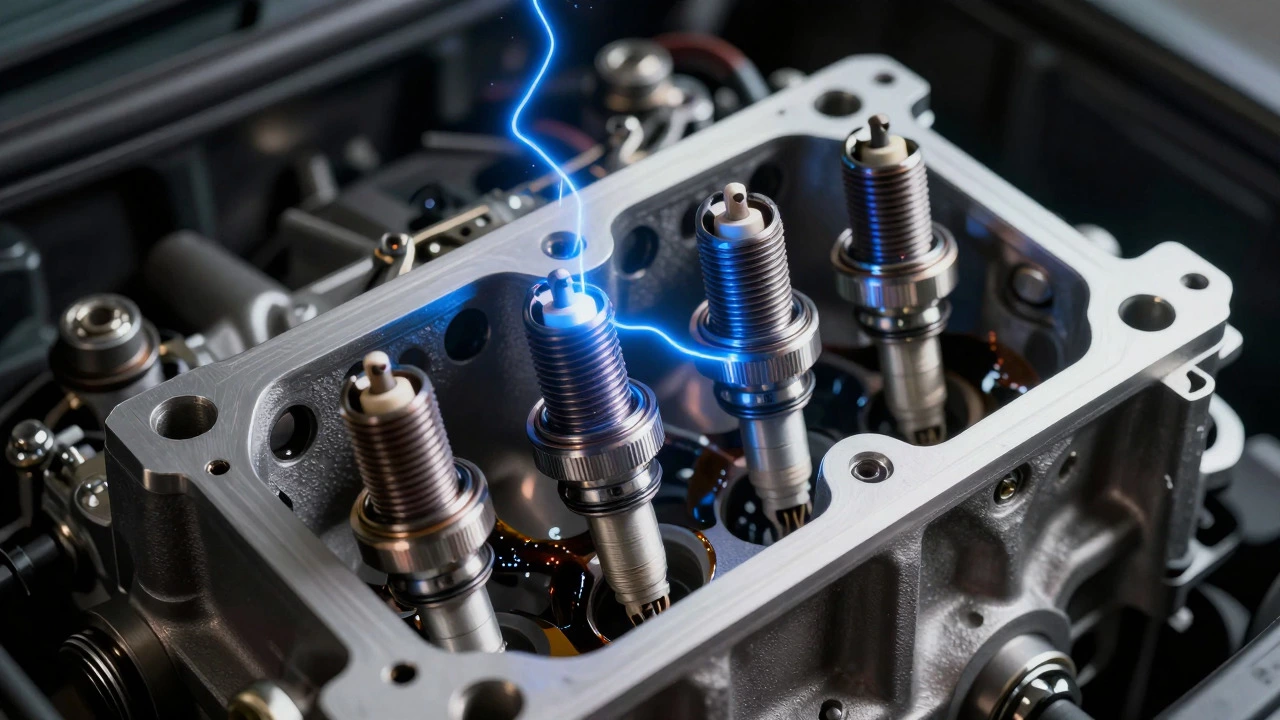
This is where the spark pluga device that delivers an electric spark to ignite the compressed fuel-air mixture in an engine cylinder comes in. Think of it like trying to light a campfire with damp wood. No matter how much oxygen (air) you blow on it, it won't catch fire until you introduce a flame. In your car, the spark plug provides that precise, timed flash of electricity.
Here is how the cycle works inside your gas engine:
- Intake: The piston moves down, sucking in a mix of air and gasoline through the intake valve.
- Compression: The piston moves back up, squeezing that mixture into a tiny space. This raises the pressure and temperature, but not enough to ignite the gas naturally.
- Ignition: Just as the piston reaches the top, the spark plug fires. A high-voltage electrical arc jumps across a small gap, igniting the compressed mixture.
- Power: The explosion pushes the piston down, turning the crankshaft and moving your car.
- Exhaust: The burnt gases are pushed out through the exhaust valve.
If you remove the spark plug from a gasoline engine, step three never happens. Without that spark, the fuel and air just sit there, compressed but unburned. The result? A dead cylinder. If you pull one plug, your car might still run, but it will be rough, shaky, and inefficient. Pull two or more, and most modern cars won't even start because the computer detects the imbalance and shuts down the engine to protect itself.
The Diesel Difference: Compression Ignition
Now, let's switch gears to diesel enginesinternal combustion engines that use compression ignition rather than spark plugs. If you've ever driven a heavy-duty pickup truck or a large SUV with a diesel badge, you might have noticed something odd when looking under the hood: there are no spark plugs. So, how does it work?
Diesel engines rely on a principle called compression ignitiona method of igniting fuel by compressing air to high temperatures. Instead of mixing fuel and air before compression, a diesel engine only sucks in air during the intake stroke. Then, the piston slams that air shut with immense force.
Here is the science part made simple: when you compress air rapidly, it gets hot. Really hot. In a diesel engine, the compression ratio is much higher than in a gas engine-often 15:1 or even 20:1 compared to a gas engine's 8:1 to 12:1. This squeezes the air so tightly that its temperature spikes to over 700°F (370°C).
At the peak of this compression, the fuel injector sprays a fine mist of diesel fuel directly into that superheated air. Because the air is already hotter than the auto-ignition point of diesel, the fuel catches fire instantly upon contact. No spark needed. The heat generated by the compression alone is enough to sustain the explosion.
This is why you can take a wrench to a diesel engine, unscrew all the glow plugs (which are different from spark plugs and only used for cold starts), and remove the injectors' caps, and the engine will continue to run as long as fuel and air are supplied. Of course, removing the actual injectors would stop it, but the ignition source is purely mechanical thermal energy, not electrical.
| Feature | Gasoline Engine | Diesel Engine |
|---|---|---|
| Ignition Source | Electrical Spark | Heat from Compression |
| Spark Plugs Required? | Yes (Critical) | No |
| Fuel-Air Mixture | Mixed before compression | Fuel injected after compression |
| Compression Ratio | Low (8:1 - 12:1) | High (15:1 - 20:1) |
| What Happens Without Spark Plug? | Engine fails to run/misfires | Engine runs normally |
What Happens If You Drive a Gas Car With a Bad Spark Plug?
So, we know a gas car needs spark plugs. But what if one is failing? Can you still drive it? Technically, yes, but you shouldn't. Driving with a faulty spark plug is like running on three legs. You might get somewhere, but you're going to hurt yourself in the process.
When a spark plug wears out, the electrode gap widens, or carbon builds up on the tip. This makes it harder for the electricity to jump the gap. Sometimes, it doesn't jump at all. This is called a misfirea failure of the air-fuel mixture to ignite properly in an engine cylinder.
Here are the signs your spark plug is struggling:
- Rough Idling: When you stop at a red light, the car feels like it's shuddering or vibrating excessively.
- Poor Acceleration: You press the gas, but the car feels sluggish or hesitant, especially when climbing hills.
- Increased Fuel Consumption: Unburned fuel is being dumped straight into the exhaust pipe, wasting money.
- Check Engine Light: Modern cars have sensors that detect irregular rotations in the crankshaft. A misfire triggers code P0300 (random misfire) or specific cylinder codes like P0301.
If you ignore these signs, you risk damaging other expensive components. Unburned fuel can wash away the lubricating oil film in the cylinder, causing wear. Worse, raw fuel can enter the catalytic converter, overheating it and causing it to melt or crack. Replacing a spark plug costs maybe $20-$50 per plug. Replacing a catalytic converter can cost over $1,000. Do the math.
Glow Plugs: The Diesel Confusion
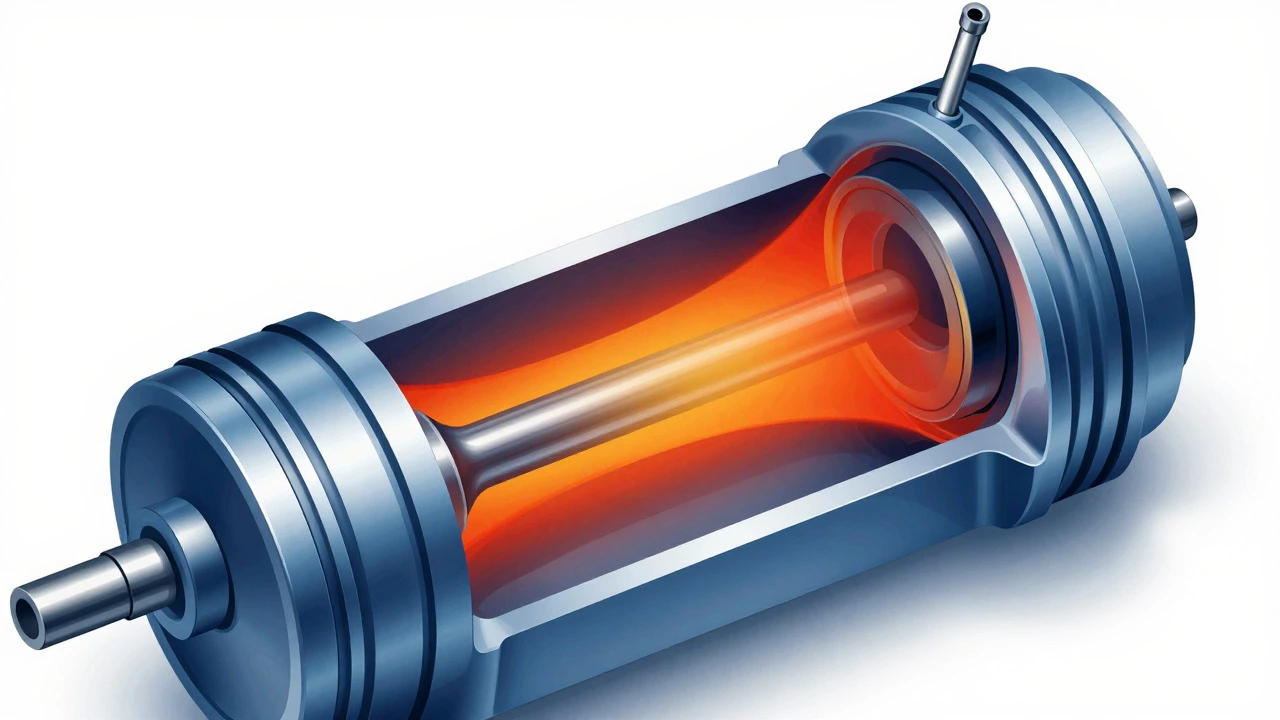
Many people get confused because diesel engines do have a component that sounds similar: the glow pluga heating element in diesel engines used to warm the combustion chamber for cold starts. Are glow plugs the same as spark plugs? Absolutely not.
Glow plugs are essentially heaters. They don't create a spark to ignite fuel continuously. Instead, they heat up the air inside the cylinder for a few seconds before you start the engine. This helps the diesel ignite easier when it's cold outside, since cold air doesn't compress as efficiently to generate heat.
Once the engine is running and warm, the glow plugs turn off. They play no role in the ongoing combustion process. If a glow plug fails, your diesel truck might be hard to start on a freezing morning, but once it's running, it will perform perfectly. This is another key reason why diesels can operate without "sparks" during normal driving conditions.
Hybrid and Electric Vehicles: The Middle Ground
With the rise of hybrids and plug-in hybrids, the lines are getting blurrier. Take a Toyota Prius, for example. It has a gasoline engine and an electric motor. Does it need spark plugs? Yes, the gas engine does. Even though the electric motor can propel the car at low speeds, the gasoline engine still requires spark plugs to function when it kicks in.
However, some advanced hybrid systems can run for short distances on battery power alone, effectively bypassing the need for spark ignition temporarily. But if you removed the spark plugs from a hybrid's gas engine, you'd eventually lose the ability to recharge the battery or drive at highway speeds, rendering the vehicle useless for long trips.
Fully electric vehicles (EVs), of course, have neither spark plugs nor glow plugs. They use electric motors powered by batteries. For EV owners, the concept of a spark plug is entirely obsolete, which is one of the many maintenance benefits of switching to electric.
How to Check Your Spark Plugs
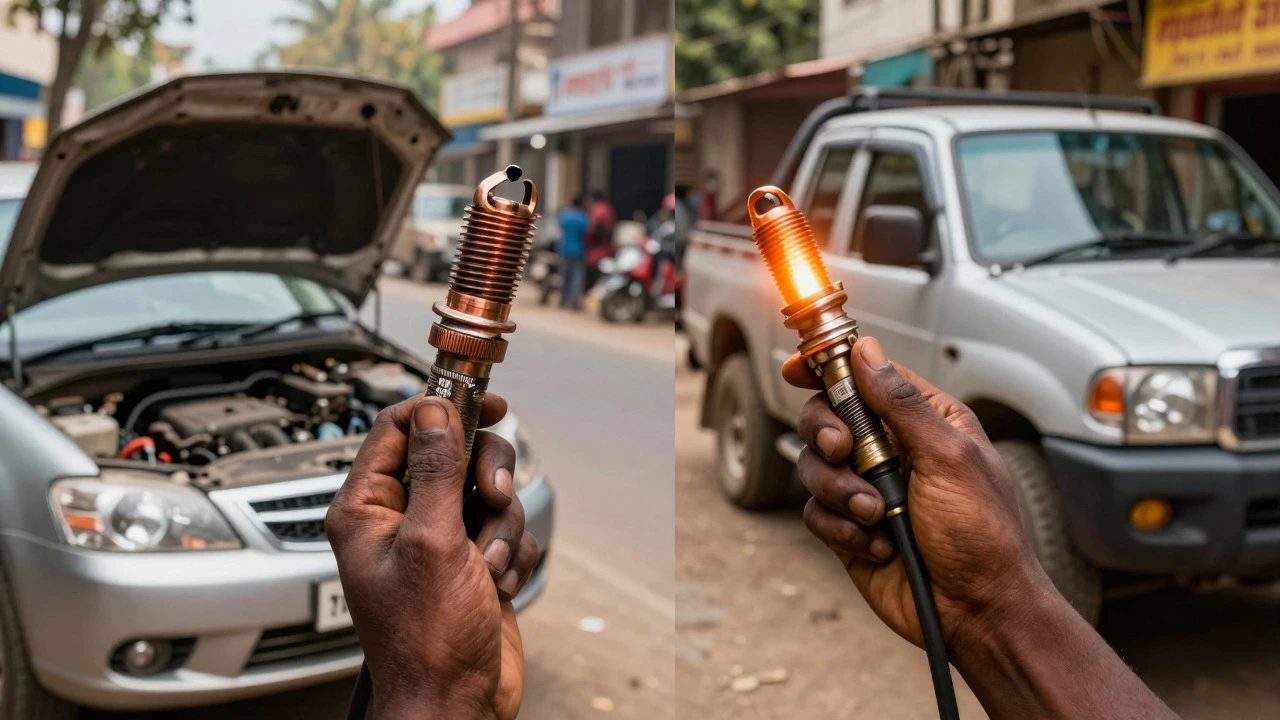
Since gasoline engines rely so heavily on these small components, regular inspection is wise. Most manufacturers recommend replacing spark plugs every 30,000 to 100,000 miles, depending on the type. Copper plugs wear out faster, while iridium or platinum plugs last longer.
You can check them yourself if you have basic tools:
- Turn off the engine and let it cool.
- Remove the ignition coil or wire connected to the plug.
- Use a spark plug socket and ratchet to unscrew the plug.
- Inspect the electrode. If it's worn down, cracked, or covered in heavy black soot, it needs replacement.
- Check the gap with a feeler gauge to ensure it matches the manufacturer's specification (usually around 0.040 to 0.060 inches).
Don't overtighten new plugs. Follow the torque specifications in your owner's manual. Stripping the threads in the engine block is a costly mistake that turns a simple job into a major repair.
Conclusion: Know Your Engine
So, can a car run without a spark plug? If you're driving a diesel, yes. If you're driving a gasoline car, no. Understanding this difference is crucial for proper maintenance and troubleshooting. Don't try to diagnose a no-start condition by assuming it's the spark plugs if you're in a diesel truck-you'll waste time and money. Conversely, don't ignore a rough-running gas engine thinking it's "just a minor issue." That missing spark is costing you fuel and potentially destroying your exhaust system.
Whether you're maintaining a daily commuter or a heavy-duty hauler, respecting the physics of your engine's ignition system ensures reliability, efficiency, and safety on the road. Keep those plugs clean, replace them on schedule, and your engine will thank you with smooth, powerful performance for years to come.
Will a car run with one bad spark plug?
A gasoline car might still start and run with one bad spark plug, but it will experience significant issues. You will likely notice rough idling, poor acceleration, decreased fuel economy, and a illuminated Check Engine light. The engine will be running on fewer cylinders than designed, causing vibration and potential damage to the catalytic converter due to unburned fuel. It is recommended to replace spark plugs in sets to ensure balanced performance.
Do diesel trucks have spark plugs?
No, diesel trucks do not have spark plugs. They use compression ignition, where the air is compressed to such a high degree that it generates enough heat to ignite the diesel fuel upon injection. However, diesel engines do have glow plugs, which are used solely to assist with cold starts by pre-heating the combustion chamber.
What happens if you drive with a missing spark plug?
Driving a gasoline engine with a completely missing spark plug is dangerous and damaging. The open hole allows unfiltered air and debris to enter the cylinder, potentially causing severe internal engine damage. Additionally, the lack of compression in that cylinder leads to immediate misfiring, loss of power, and contamination of the oil with fuel. The engine may also overheat. Stop driving immediately if a spark plug falls out.
How often should spark plugs be replaced?
Replacement intervals vary by plug material. Standard copper spark plugs should be replaced every 30,000 to 50,000 miles. Platinum plugs typically last 60,000 miles, while iridium plugs can last up to 100,000 miles or more. Always consult your vehicle's owner manual for the specific recommendation for your engine model.
Can a bad spark plug cause the check engine light to come on?
Yes, a faulty spark plug is one of the most common causes of the Check Engine Light illuminating. The engine control unit (ECU) monitors the rotation speed of the crankshaft. If a cylinder fails to fire consistently due to a bad spark plug, the ECU detects this irregularity and stores a misfire code (such as P0300-P0308), triggering the warning light.