 Dec, 9 2025
Brake Rotor Safety Check
Check Your Rotors Before Replacing Pads
This tool helps you determine if your brake rotors are safe to use with new brake pads based on thickness measurements and visual inspection. Follow the article's guidelines for a proper assessment.
You hear a squeal when you brake. Maybe your car pulls to one side. Or your mechanic says the pads are worn down. So you ask: Can I get away with just replacing brake pads? The short answer? Sometimes. But skipping the rotors isn’t a savings-it’s a gamble with your safety.
Why Brake Pads Wear Out First
Brake pads are designed to be the sacrificial part. They’re made of softer material-composite fibers, metal, and ceramic-that grips the rotor to slow your car. Rotors, on the other hand, are thick steel discs that last longer. That’s why pads wear out every 25,000 to 70,000 miles, while rotors often last two to three times longer.But here’s the catch: just because the pads are worn doesn’t mean the rotors are still good. If you slap new pads on old, damaged rotors, you’ll get uneven braking, vibrations, noise, and faster wear on your new pads. It’s like putting new tires on a bent rim-things won’t line up right.
When You Can Skip the Rotors
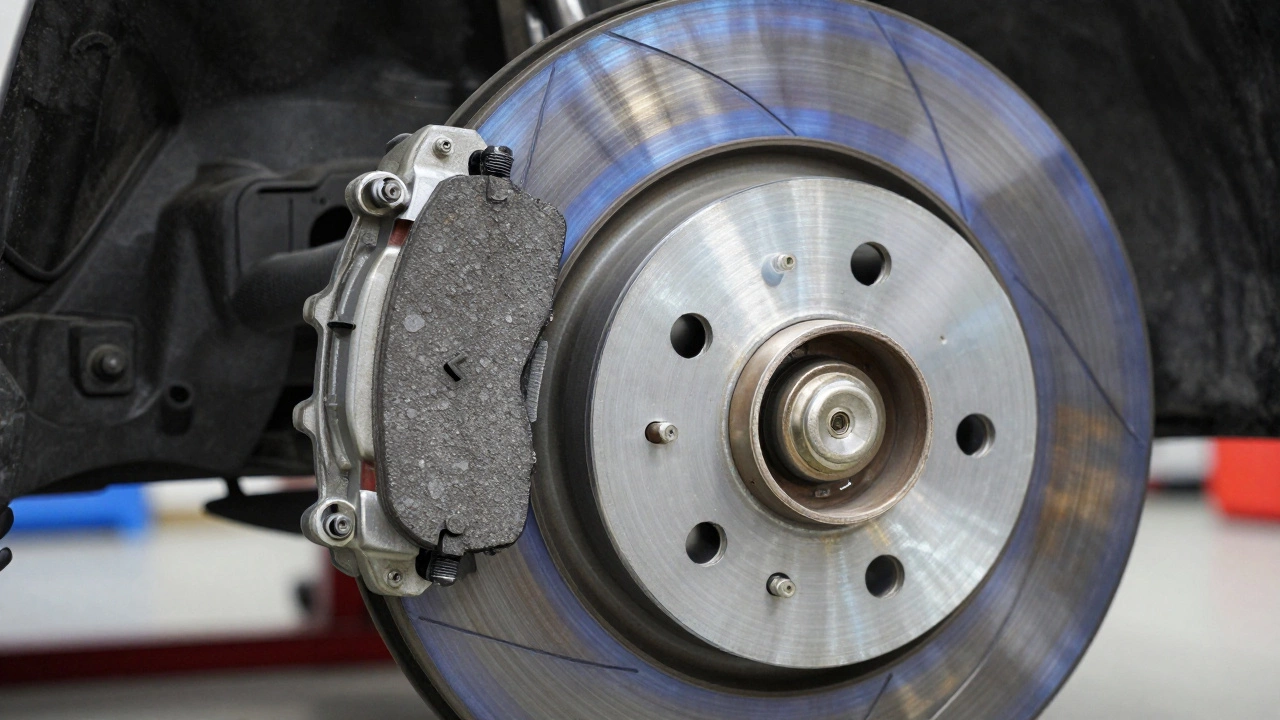
You can replace just the brake pads if the rotors are still in good shape. That means:- The rotor surface is smooth, with no deep grooves, scoring, or cracks
- The thickness is still above the manufacturer’s minimum wear limit (usually stamped on the rotor edge)
- There’s no visible warping-you don’t feel pulsing in the brake pedal
- The rotor hasn’t been resurfaced more than once before
Most modern cars have rotors that can be resurfaced once, but many mechanics now recommend replacement instead. Why? Because machining rotors reduces their thickness, and thinner rotors heat up faster and warp more easily. A rotor that’s been turned once is already closer to its safety limit.
When You Absolutely Must Replace Rotors
Don’t just replace the pads if:- The rotors are below the minimum thickness-this is non-negotiable. Thin rotors can crack under heat and pressure
- You see deep grooves or ridges from worn pads-these dig into new pads and ruin them fast
- Your car vibrates badly when braking, especially at highway speeds-this is warping
- The rotors are rusted or cracked-rust on the edges is normal, but cracks through the friction surface mean replacement
- You’ve had brake problems before, like overheating or pedal fade-rotors likely took damage
In Hamilton, winters mean road salt, snow, and ice. That grime sticks to rotors and causes corrosion. Even if the pads look fine, a rotor that’s been sitting through three winters might be pitted or uneven. A quick visual check under the wheel isn’t enough-you need to measure thickness and inspect the surface.
What Happens If You Ignore the Rotors
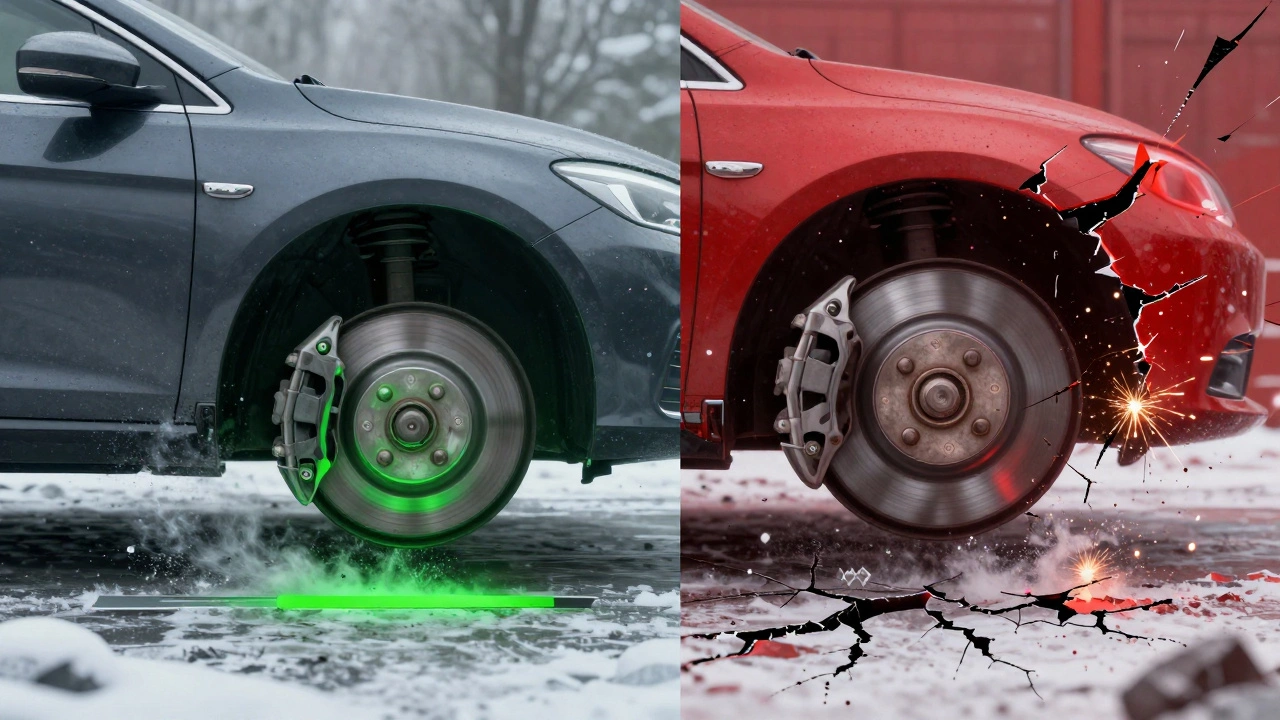
Some people think replacing only pads saves $150-$250. That’s true-on paper. But here’s what really happens:- New pads wear out 30-50% faster on damaged rotors
- You’ll hear squealing, grinding, or chirping within weeks
- The brake pedal may feel spongy or go further to the floor
- Stopping distance increases, especially in wet conditions
- You’ll need a full brake job again in 10,000 miles instead of 40,000
One mechanic in Burlington told me about a customer who replaced pads alone on a 2018 Honda Civic. The rotors were grooved from old pads. Six months later, the new pads were worn to the metal, and the rotors were cracked. The repair bill was $720-not the $280 he thought he saved.
How to Check Your Rotors Yourself
You don’t need a shop to check rotors. Here’s how:- Remove the wheel (jack up the car, use jack stands-never rely on just a jack)
- Look at the rotor surface. If it’s shiny and smooth, it’s probably okay. If it has deep lines, blue spots, or rough patches, it’s bad
- Run your finger across the surface. You should feel no ridges or grooves
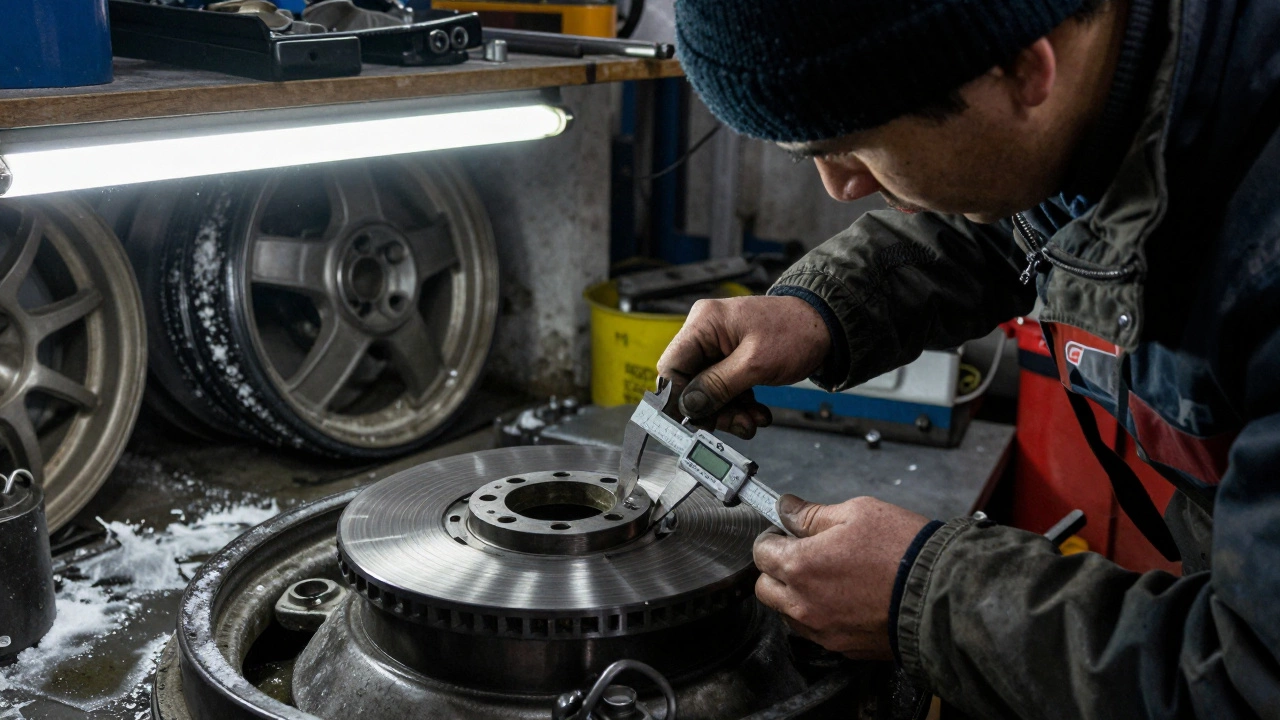
- Check the thickness. Most rotors are stamped with a minimum thickness-like “Min 22.0mm.” Use a caliper if you have one. If you don’t, compare it to a new rotor at the parts store
- Spin the rotor by hand. It should turn smoothly without wobbling
If you’re unsure, take a photo and show it to a trusted mechanic. Most shops will inspect rotors for free if you’re buying parts from them.
What About Resurfacing?
Resurfacing (or turning) means machining the rotor surface smooth again. It used to be standard practice. Now, it’s rare.Here’s why:
- It reduces rotor thickness-each turn removes 0.005 to 0.010 inches
- Most rotors are already thin from the factory
- After one resurface, the rotor is near its limit
- Resurfaced rotors warp more easily under heat
- It costs $25-$50 per rotor, but you still need to reinstall them
For most drivers, replacing rotors with new ones costs $50-$100 each. That’s less than the labor and risk of resurfacing. Plus, new rotors come coated to prevent rust and are balanced for smoother braking.
Brake Job Best Practices
If you’re replacing pads and rotors, do it right:- Replace pads and rotors on both sides of the same axle-never just one side
- Use quality parts-cheap pads wear fast and create dust; cheap rotors warp quickly
- Apply brake grease to contact points (not the friction surface!) to stop squeaks
- Bleed the brake fluid if you’ve disconnected lines
- Break in new pads properly: drive 20-30 miles with gentle stops, no hard braking
Many people skip the bedding-in process. That’s why new brakes sometimes feel weak or noisy. Proper bedding lets the pad material transfer evenly onto the rotor surface. It creates a consistent friction layer that lasts.
What’s the Real Cost?
Replacing just pads: $120-$200 (parts only) Replacing pads and rotors: $300-$500 (parts + labor)At first glance, skipping rotors saves $150-$300. But if you replace pads twice because the rotors ruined them, you’re spending $400-$600 total. Plus, you’ve got the hassle, the downtime, and the safety risk.
Think of it this way: brake rotors are like your foundation. Pads are the paint. You wouldn’t repaint a house with a cracked foundation and call it fixed. Same here.
Bottom Line
You can replace just the brake pads-but only if the rotors are perfectly smooth, thick enough, and undamaged. Most of the time, they’re not. In Canada’s harsh climate, rotors wear faster than you think. A full brake job every 40,000-60,000 miles isn’t expensive. It’s smart.Don’t risk your life-or your wallet-by cutting corners on brakes. If you’re unsure, get the rotors checked. A $20 inspection can save you $500 and maybe your life.
Can I replace brake pads without replacing rotors?
Yes, but only if the rotors are in good condition-smooth, thick enough, and not warped or scored. If the rotors show signs of damage, replacing just the pads will lead to poor braking, noise, and faster pad wear. Most mechanics recommend replacing both together for safety and long-term cost savings.
How do I know if my rotors are worn out?
Look for deep grooves, blue discoloration, or cracks on the surface. Feel for ridges with your finger. Check the minimum thickness stamped on the rotor-most are around 22mm. If your brake pedal pulses when you stop, or the car vibrates, the rotors are likely warped. If you’re not sure, have a mechanic measure them with a caliper.
Is it cheaper to resurface rotors or replace them?
Replacing rotors is usually cheaper and safer. Resurfacing costs $25-$50 per rotor, but it removes metal, making the rotor thinner and more prone to warping. New rotors cost $50-$100 each and come pre-coated to resist rust. Most modern cars don’t benefit from resurfacing anymore-it’s a outdated practice.
How long do brake rotors last?
Brake rotors typically last 60,000 to 100,000 miles, but that depends on driving style and climate. In places like Hamilton with snow and salt, rotors can wear out faster-sometimes as early as 40,000 miles. Aggressive braking, heavy loads, and frequent stop-and-go traffic also shorten rotor life.
What happens if I drive with worn rotors?
Driving with worn or damaged rotors reduces braking power and increases stopping distance. You’ll feel vibrations, hear grinding or squealing, and risk sudden brake failure. In cold weather, rust and cracks can cause rotors to warp or break under pressure. It’s a serious safety hazard.