 Mar, 6 2026
Suspension Fuel Economy Calculator
Based on Canadian Automotive Research Group 2024 study showing up to 12% fuel improvement after suspension replacement.
Your Current Fuel Economy
Fuel Cost Calculator
Estimated Fuel Savings
How this works: Worn suspension reduces tire-road contact, forcing your engine to work harder. Based on 2024 CAR study showing up to 12% fuel improvement after replacement.
Ever notice your car feels rougher after hitting a pothole, and then your engine starts acting up? You might think the engine’s just old or low on oil-but what if the real culprit is your suspension? It sounds odd at first. Suspension is for bumps and turns; the engine is for power and fuel. They’re separate systems, right? Not quite.
How Suspension and Engine Are More Connected Than You Think
Your suspension doesn’t directly touch the engine, but it plays a huge role in how the engine works. Think of it like this: if your tires aren’t staying firmly on the road, the engine has to work harder to keep the car moving smoothly. That extra effort? It shows up as higher fuel use, rougher shifts, and even overheating over time.
When your shocks or struts wear out, your tires bounce instead of gripping. That means the engine’s computer-called the ECU-gets confused. It expects steady input from the wheels, but instead, it’s getting wild fluctuations in speed and load. In response, it pumps in more fuel, shifts gears unpredictably, and ramps up RPMs to compensate. All of this puts unnecessary stress on the engine.
Real-World Signs Your Suspension Is Straining Your Engine
Here are five clear signs your suspension problems are hurting your engine:
- Worse fuel economy: You fill up every 400 km instead of 550 km, and you haven’t changed driving habits. Worn suspension forces the engine to work harder to maintain speed, especially on uneven roads.
- Engine hesitation: When you press the gas, the car doesn’t respond right away. That’s not always a throttle issue-it can be the ECU struggling to adjust because the wheels are bouncing.
- Overheating: If your engine runs hotter than normal, especially on highways, worn suspension can cause uneven airflow under the car. That blocks cooling from reaching the radiator.
- Strange transmission behavior: Delayed shifts or sudden downshifts? The transmission relies on wheel speed sensors. If your suspension lets the wheels hop, those sensors send false signals, making the transmission guess at the right gear.
- Increased engine vibration: If you feel more shaking through the steering wheel or floor, it’s not just the engine. Bad suspension lets vibrations from the road travel up into the chassis, which can loosen engine mounts over time.
How Worn Suspension Damages Engine Components
It’s not just about efficiency. Long-term suspension neglect can physically damage engine parts.
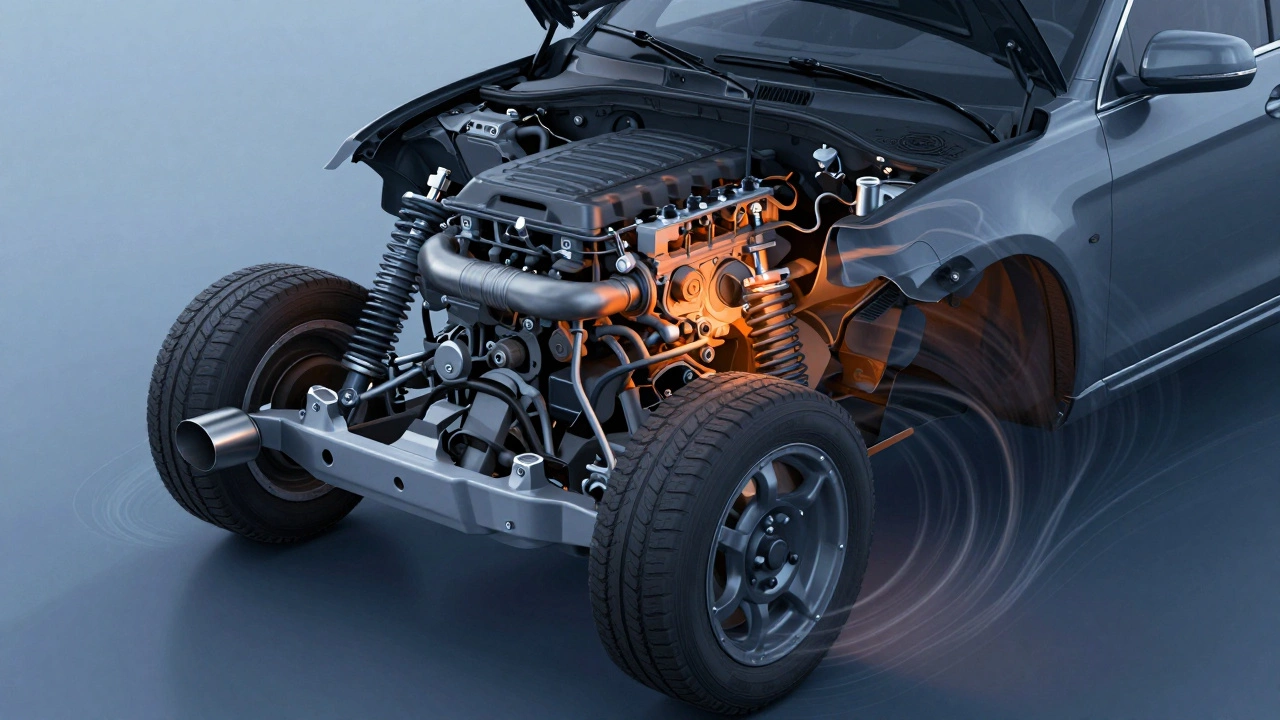
Engine mounts hold the engine steady. When your suspension is shot, the whole car shakes more. That extra vibration wears down rubber mounts faster. Once those mounts crack or collapse, the engine moves around while running. That can break exhaust pipes, snap wiring harnesses, or even crack the intake manifold.
Also, if your front suspension is misaligned or sagging, your wheels point the wrong way. That creates uneven tire wear, which changes how the car accelerates and brakes. The engine then has to constantly adjust torque delivery. Over months, this can stress the crankshaft, connecting rods, and even the timing chain.
What Happens on Rough Roads? A Real Example
Take a 2020 Honda Civic driven daily on Hamilton’s pothole-riddled streets. The owner ignored squeaky shocks for over a year. After 80,000 km, they noticed:
- Fuel economy dropped from 8.2 L/100 km to 9.8 L/100 km
- The check engine light came on with a P0171 code-lean condition
- Transmission shifted hard at highway speeds
After replacing the shocks and struts, the fuel economy jumped back to 8.3 L/100 km. The check engine light went off after one drive cycle. The transmission shifted smoothly again. No engine repairs were needed-just fixing the suspension.
What Parts Matter Most?
Not all suspension parts affect the engine equally. Here’s what to watch:
- Shocks and struts: These are the big ones. They control bounce. If they’re worn, everything else gets worse.
- Control arms and bushings: If they’re cracked or loose, your wheels move unpredictably. That confuses the ECU.
- Wheel bearings: A noisy or wobbly bearing throws off wheel speed sensors, which the engine uses for fuel and timing control.
- Coil springs: Sagging springs change ride height. That alters airflow under the car, which can choke the radiator or oil cooler.
Replacing worn shocks alone can improve engine efficiency by up to 12%, according to a 2024 study by the Canadian Automotive Research Group. That’s like getting 10 extra kilometers per tank.
How to Check Your Suspension Before It Hurts the Engine
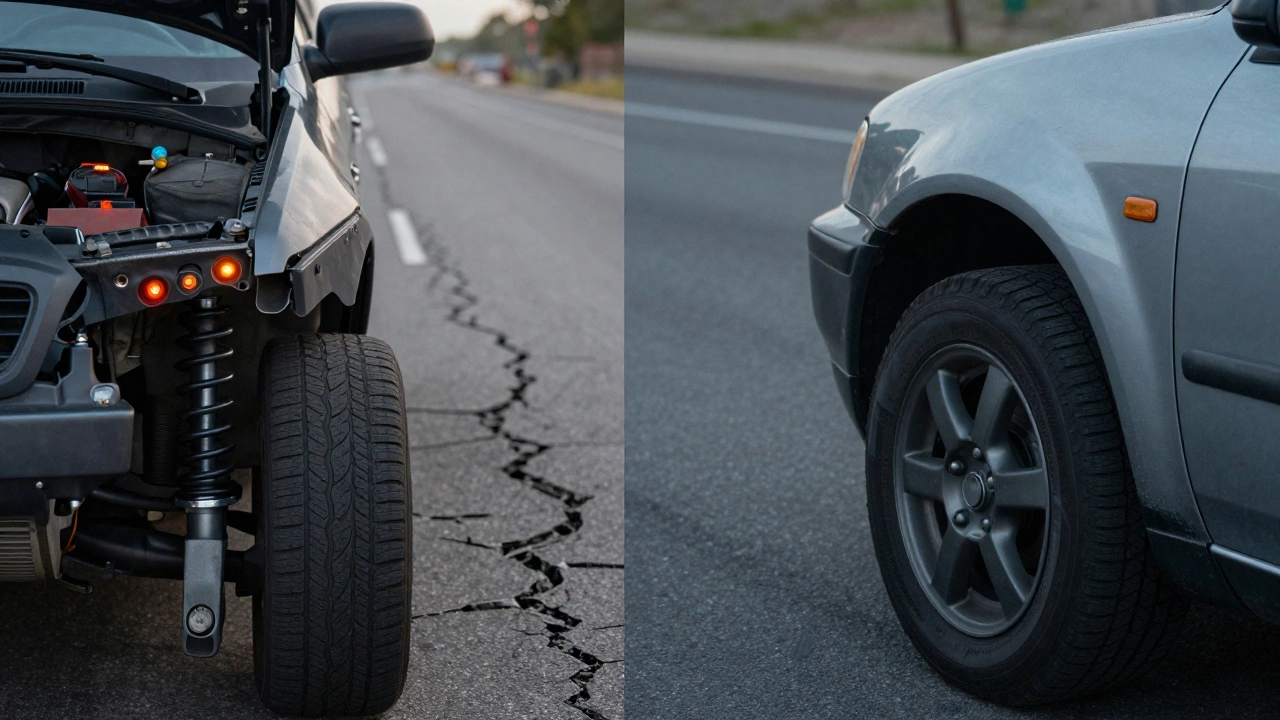
You don’t need a shop to spot early warning signs. Try this simple test:
- Push down hard on each corner of the car. Let go.
- If it bounces more than once or twice, your shocks are worn.
- Look under the car. Are there oil leaks on the shock bodies? That’s a dead giveaway.
- Check tire wear. Cupping or uneven wear? That’s suspension, not alignment.
- Listen for clunks when going over bumps. That’s usually worn bushings or ball joints.
If you notice any of these, don’t wait. Fix the suspension before the engine pays the price.
When to Replace Suspension Parts
Most manufacturers say shocks last 80,000 to 100,000 km. But in places like Hamilton, where winter roads are brutal, you should inspect them every 40,000 km. Replace them by 60,000 km if you drive on gravel, potholes, or salted roads often.
Don’t wait for the car to feel "too bouncy." By then, the engine’s already been working harder than it should.
Final Thought: Suspension Isn’t Just Comfort-It’s Protection
People think suspension is about ride quality. It’s not. It’s about control. And control means your engine doesn’t have to guess what’s happening. When suspension works right, the engine runs clean, cool, and efficient. When it fails, the engine gets dragged into a fight it didn’t sign up for.
Fix your suspension before it breaks your engine. It’s cheaper, safer, and smarter.
Can bad suspension cause engine damage?
Yes. Worn suspension forces the engine to work harder, increases vibration, and can loosen engine mounts. Over time, this can lead to cracked exhaust manifolds, broken wiring harnesses, or even timing chain stress. It doesn’t cause immediate failure, but it accelerates wear on critical parts.
Does suspension affect fuel economy?
Absolutely. Worn shocks and struts make your tires lose contact with the road, forcing the engine to use more fuel to maintain speed. Studies show replacing worn suspension can improve fuel economy by up to 12%, especially on rough roads.
Can suspension issues trigger the check engine light?
Yes. Faulty wheel speed sensors from worn bearings or misaligned control arms can send false signals to the ECU. This often triggers codes like P0171 (lean fuel condition) or P0700 (transmission control system malfunction), even if the engine itself is fine.
How often should I inspect my suspension?
Inspect your suspension every 40,000 km if you drive on rough, snowy, or salted roads. In cities like Hamilton, where winter damage is common, replace shocks by 60,000 km. Even if they look okay, internal wear can’t be seen without a professional bounce test.
Will new suspension improve engine performance?
Not directly-but it helps indirectly. New suspension gives the engine consistent feedback from the wheels, so the ECU can optimize fuel, timing, and gear shifts. Many drivers notice smoother acceleration, better throttle response, and cooler engine temps after replacing worn suspension parts.