 Jan, 13 2026
Engine Damage Cost Estimator
Damage Risk Calculator
Enter how long you've driven with a cracked radiator to see potential costs and damage.
Damage Risk Level
CriticalEstimated repair costs based on your driving time:
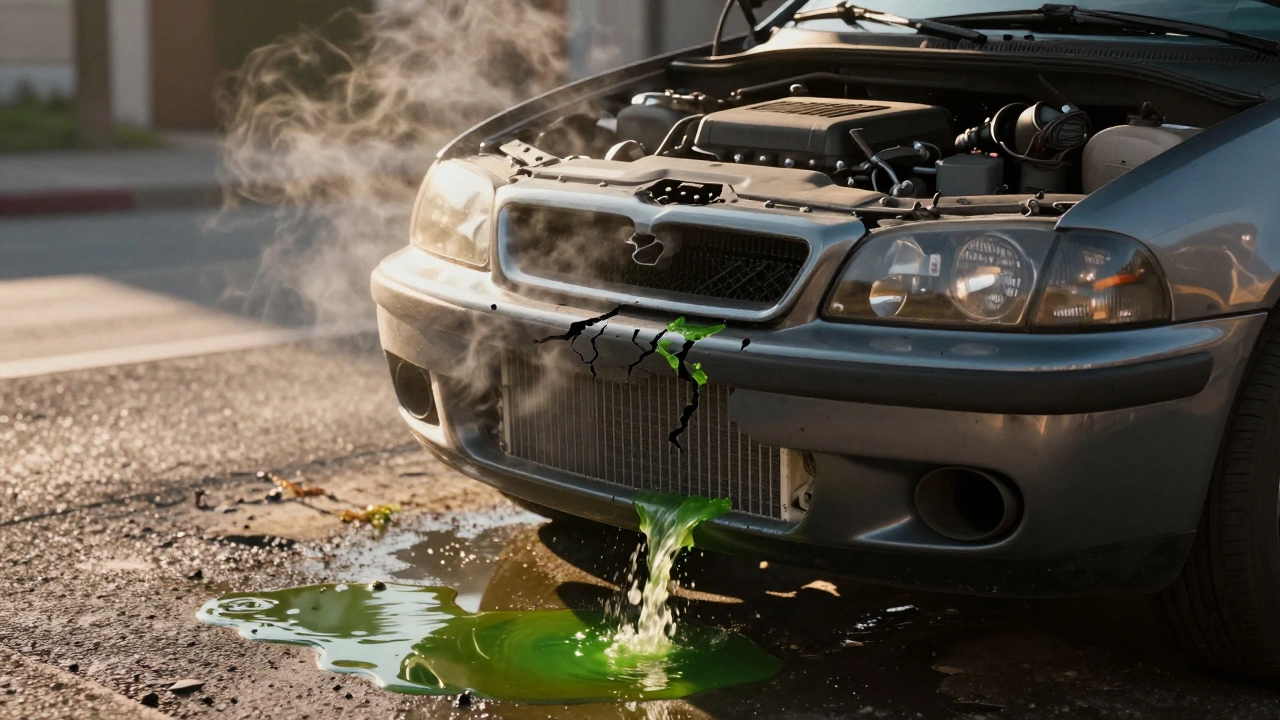
Driving with a cracked radiator is like driving with a hole in your gas tank-you might make it a few blocks, but you won’t make it far without serious consequences. A cracked radiator doesn’t just leak coolant; it breaks the entire cooling system. And without coolant, your engine overheats. Fast.
What a Cracked Radiator Actually Does
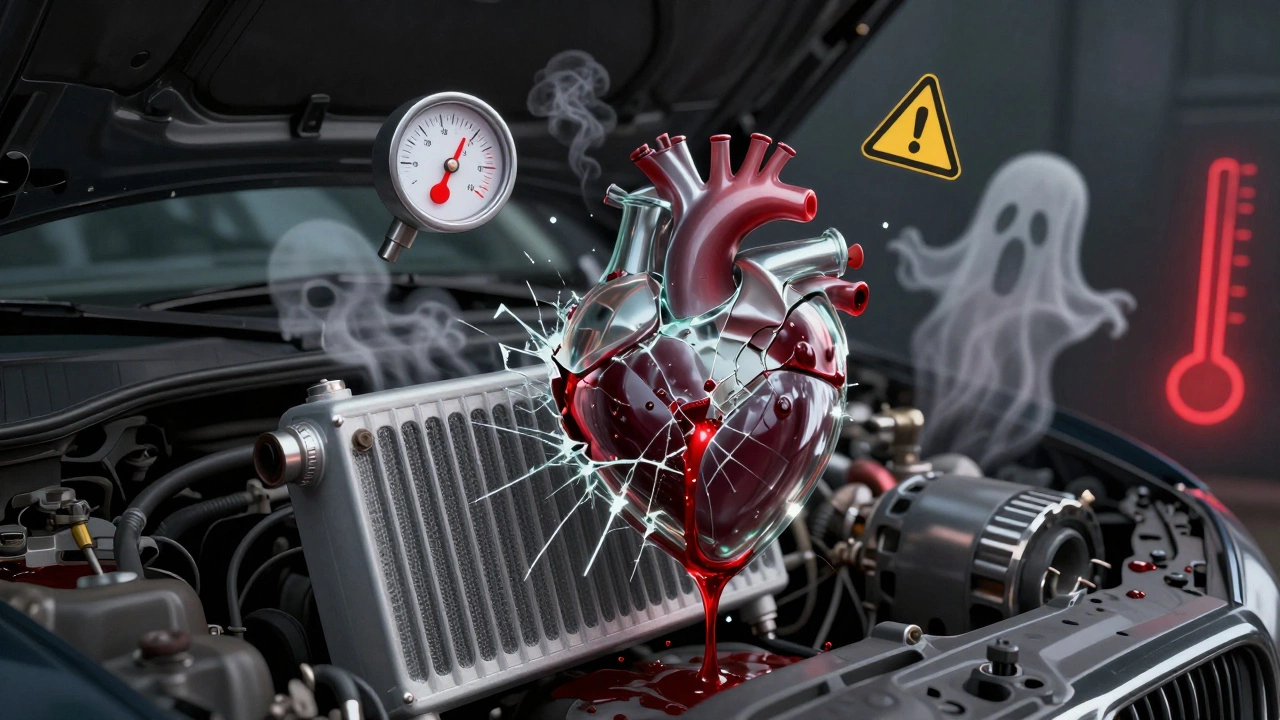
Your radiator isn’t just a metal box. It’s the heart of your engine’s cooling system. It pulls heat away from the engine using coolant that circulates through tubes and fins. When that radiator cracks, coolant escapes. Not slowly. Not a drip. Often, it’s a steady stream under pressure, especially when the engine is hot.
Most people think a small crack means a small problem. That’s wrong. Even a hairline fracture can let out enough coolant to drop the level below safe operating limits in under 10 minutes of driving. Once the coolant drops, the engine temperature spikes. Modern engines run at 195-220°F. When they hit 240°F, damage starts. At 260°F, you’re in serious danger.
What happens next? The aluminum cylinder heads warp. The head gasket blows. Pistons seize. Bearings melt. All because a tiny crack let out a few ounces of fluid.
What Happens If You Keep Driving
Some drivers try to push through. They top off the coolant, keep going, and hope for the best. That’s not a fix. It’s a gamble with thousands of dollars at stake.
Here’s what actually happens when you drive with a cracked radiator:
- Within 5-10 minutes: Engine temperature climbs past normal. The dashboard warning light comes on.
- By 15 minutes: Coolant loss accelerates. Steam may come from under the hood. You might smell sweet, burnt antifreeze.
- At 20-30 minutes: Engine begins to overheat severely. Power drops. The car may stall or refuse to accelerate.
- After 45 minutes: Permanent damage is likely. A blown head gasket costs $1,500-$2,500 to fix. A warped cylinder head can run $2,000-$4,000. A seized engine? That’s a $5,000+ replacement.
Real story: A neighbor in Hamilton drove 18 miles with a cracked radiator because he thought "it’s just a little leak." By the time he pulled over, the engine had overheated twice. The head gasket blew. He spent $2,100 to fix it. A new radiator would’ve cost $320.
Can You Drive Short Distances?
Some say, "I only need to go to the mechanic 2 miles away. Can I make it?" The answer is: no. Not safely.
Even a 2-mile drive on a hot engine can cause irreversible damage. The radiator isn’t just leaking coolant-it’s losing pressure. That pressure keeps coolant from boiling. Without it, coolant turns to steam before it even reaches the engine. Steam doesn’t cool. It insulates. And that’s when things go from bad to catastrophic.
Here’s what you should do instead:
- Turn off the engine immediately if the temperature gauge hits red or a warning light comes on.
- Do not open the radiator cap. Hot coolant under pressure can burn you badly.
- Call for a tow. Even if you think you can make it, you can’t.
- If you’re near a mechanic, ask if they offer free towing. Many do.
Driving even a short distance with a cracked radiator isn’t risky-it’s reckless. The cost of repair skyrockets the longer you wait.
Signs You Have a Cracked Radiator
You don’t always see the crack. But you’ll see the symptoms:
- Low coolant level with no visible leaks inside the car
- Puddles of green, orange, or pink fluid under the front of the car
- Steam or smoke coming from under the hood
- Engine overheating, even after refilling coolant
- White, sweet-smelling smoke from the exhaust (coolant burning in the cylinders)
- Bubbles in the coolant reservoir when the engine is running
If you notice any of these, stop driving. Don’t wait for the warning light. Check your coolant level every time you fill up. If it’s dropping fast, something’s wrong.
What Causes a Radiator to Crack?
Radiators don’t crack for no reason. Here’s what actually causes it:
- Age: Plastic end tanks become brittle after 8-10 years. Cold winters in Canada make this worse.
- Overheating: Repeated overheating weakens metal and plastic over time.
- Physical damage: Rocks, road debris, or even a bad car wash can crack the radiator.
- Pressure buildup: A faulty radiator cap that doesn’t vent properly creates too much pressure.
- Improper coolant mix: Using straight water or wrong antifreeze causes corrosion and weakens materials.
Most cracked radiators in Hamilton are from winter stress. Freezing temperatures cause coolant to expand. If the antifreeze mix is too weak, ice forms inside the radiator. That ice pushes on the plastic end tanks until they split.
How to Fix It
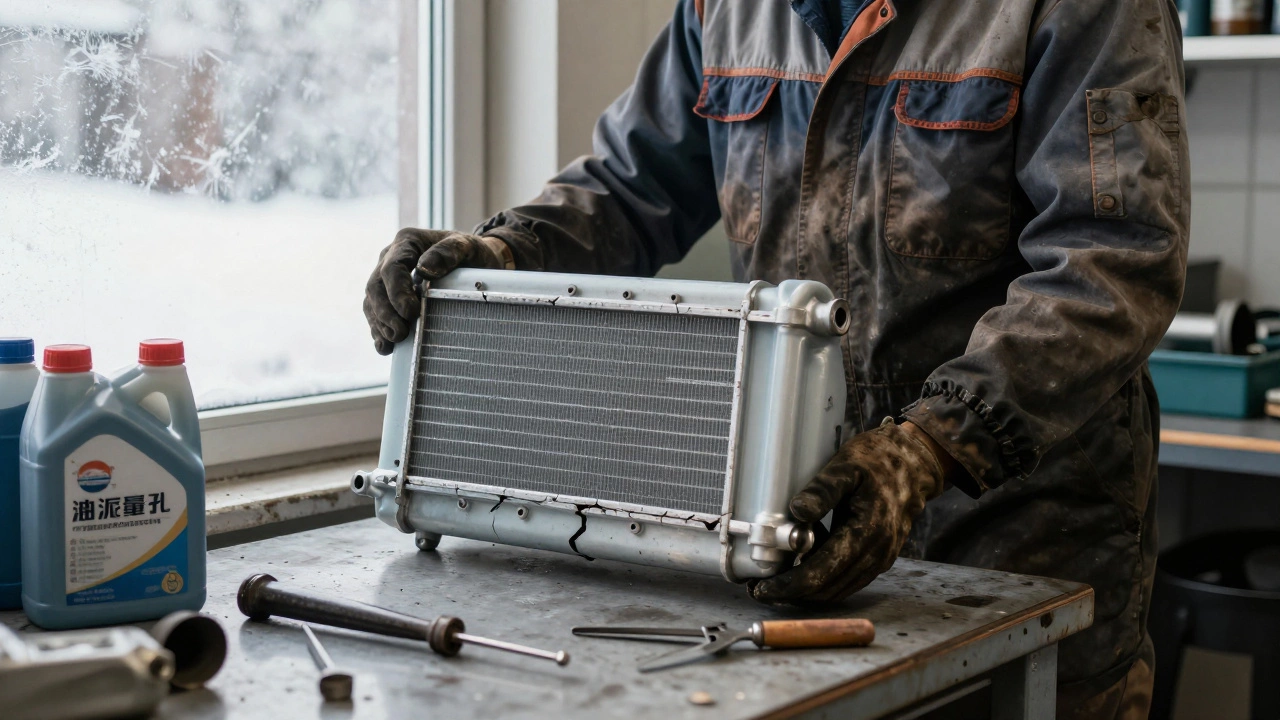
There’s no real repair for a cracked radiator. Sealants? They’re a temporary bandage at best. They might stop a tiny leak for a few days, but they clog the cooling system. That leads to overheating. Worse.
Replacement is the only reliable fix. A new radiator costs between $250 and $500, depending on your car. Labor runs another $150-$300. Total? Less than $800. That’s cheaper than a single blown head gasket.
Here’s what to look for when buying a replacement:
- Match the OEM part number exactly
- Choose aluminum over plastic if you can-it lasts longer
- Make sure the cooling fans and hoses are in good shape too
- Flush the entire cooling system before installing the new radiator
Don’t skip the flush. Old coolant, rust, and debris in the system will ruin your new radiator in months.
How to Prevent This
Prevention is simple:
- Check coolant level every oil change
- Use a 50/50 mix of antifreeze and distilled water
- Replace the radiator cap every 3 years-it’s cheap and wears out
- Flush the cooling system every 50,000 miles or 5 years
- Inspect the radiator for cracks or bulges during winter
Most people forget their radiator until it’s too late. But checking it takes 30 seconds. A quick glance under the hood can save you thousands.
What to Do Right Now
If you suspect your radiator is cracked:
- Don’t drive it.
- Check for coolant leaks under the car.
- Look at the coolant reservoir-is it empty or murky?
- Call a mechanic and ask if they offer free towing.
- Get a quote for a replacement radiator.
Waiting doesn’t make it better. It makes it more expensive. And it puts your safety at risk. An overheating engine can fail while you’re on the highway. That’s not just a repair bill-it’s an accident waiting to happen.
Fix it now. Not tomorrow. Not next week. Now.
Can you drive a car with a cracked radiator for a short distance?
No. Even driving a few miles can cause permanent engine damage. A cracked radiator leaks coolant, which leads to overheating. Once the engine gets too hot, parts like the head gasket, cylinder head, or pistons can fail. The cost to repair that damage is 5-10 times higher than replacing the radiator. Always tow the vehicle instead.
How do I know if my radiator is cracked?
Look for coolant puddles under the front of your car, especially after parking. Check the coolant reservoir-if it’s low and you haven’t added any, that’s a red flag. Other signs include steam from the engine, a sweet smell, the temperature gauge going into the red, or bubbles in the coolant when the engine is running. If you see any of these, stop driving and get it checked.
Can radiator sealants fix a cracked radiator?
Radiator sealants might temporarily stop a small leak, but they’re not a real fix. They clog coolant passages, reduce cooling efficiency, and can damage the water pump or thermostat. In the long run, they make overheating worse. Replacing the radiator is the only safe, lasting solution.
Why does my radiator crack in winter?
Cold weather makes coolant expand if the antifreeze mix is wrong. Pure water freezes and turns to ice inside the radiator, putting pressure on the plastic end tanks. Over time, this causes cracks. Always use a 50/50 mix of antifreeze and distilled water, especially in places like Hamilton where winter temps drop below -20°C.
How much does it cost to replace a cracked radiator?
A new radiator costs $250-$500, depending on your car model. Labor runs $150-$300. Total cost is usually $400-$800. Compare that to a blown head gasket ($1,500-$2,500) or a seized engine ($5,000+). Replacing the radiator is the smart, affordable choice.
How often should I replace my radiator?
Most radiators last 8-12 years. But in cold climates like Canada, they can fail sooner due to freezing stress. Replace it if you see cracks, leaks, or if it’s over 10 years old. Regular coolant flushes every 50,000 miles help extend its life.