 Nov, 17 2026
Suspension Safety Checker
Select the symptoms you are experiencing to determine if it is safe to continue driving or if immediate action is required.
Safe to Drive
No specific symptoms selected. If you hear noises or feel instability, please select them on the left.
Recommended Action:
Continue normal driving habits. Perform a monthly visual inspection.
You’re cruising down the highway when your car suddenly feels like it’s floating on a cloud. Or maybe you hit a pothole and hear a loud clunk that rattles your teeth. Your first thought is probably, "Is this safe? Can I just ignore it until payday?" The short answer is: yes, you can physically drive with bad suspension, but whether you *should* depends entirely on how bad "bad" actually is.
Suspension isn’t just about comfort; it’s the critical link between your tires and the road. When it fails, you lose control. We’ve all seen cars bouncing uncontrollably after hitting a bump. That’s not just annoying-it’s dangerous. This guide breaks down exactly what happens when your suspension degrades, which symptoms mean you need to pull over immediately, and when you might get away with driving to the shop.
What Does Your Suspension Actually Do?
To understand the risk, you have to understand the job. Your suspension system is a collection of components including shock absorbers, struts, springs, and control arms. Its primary purpose is to keep your tires in constant contact with the pavement. Without this contact, you cannot steer, brake, or accelerate effectively.
Think of it this way: if your tires aren't glued to the road, your brakes are useless. A worn-out shock absorber allows the tire to bounce off the surface. In that split second of airtime, friction drops to zero. If you slam the brakes then, the wheel locks up or skids because there’s no grip. This is why a bad suspension directly impacts stopping distance, often adding several meters to the time it takes to stop at 60 mph.
The Warning Signs: How to Spot Trouble Early
Cars rarely fail catastrophically without warning. They give you clues long before a part snaps. Here are the most common indicators that your suspension is failing:
- Excessive Bouncing: Push down hard on each corner of your car and let go. If the car bounces more than once or twice, your shocks or struts are likely shot.
- Nose Diving: Does your front end dip sharply when you brake? This means the front suspension can’t handle the weight transfer.
- Body Roll: Taking a curve feels like you’re tipping over? Worn sway bars or bushings allow too much lean.
- Noisy Rides: Clunks, knocks, or squeaks when going over bumps usually point to loose or broken components like ball joints or control arm bushings.
- Uneven Tire Wear: Check your tires. If the edges look scalloped (cupped) or one side is bald while the other looks new, your alignment is off due to suspension wear.
When Is It Safe to Drive?
Not every suspension issue requires a tow truck. Context matters. If you notice minor noise or slight discomfort, you can likely drive to a mechanic. However, specific scenarios change the equation completely.
If you experience a flat spot on your tire caused by cupping, you can drive cautiously for a few days. But if you hear a metallic grinding sound, stop immediately. That could be a broken spring coil poking through the tire or rubbing against the chassis. Driving further will shred your tire and potentially damage the brake lines.
| Symptom | Risk Level | Action Required |
|---|---|---|
| Minor Squeaking/Bushings | Low | Schedule appointment within 1-2 weeks |
| Bumpy Ride/Shocks | Medium | Drive carefully; avoid highways if possible |
| Clunking/Popping Noises | High | Inspect immediately; limit speed to 30-40 mph |
| Steering Vibration | High | Pull over; check for loose wheels or broken parts |
| Visible Broken Spring | Critical | Tow vehicle; do not drive |
The Hidden Dangers of Ignoring Suspension Problems
Let’s talk money and safety. Many drivers delay repairs because suspension work seems expensive. But ignoring it creates a domino effect that costs far more later.
First, consider your tires. Properly aligned suspension ensures even tread wear. A misaligned car due to worn tie rods or control arms can destroy a set of tires in less than 10,000 miles instead of 50,000. That’s hundreds of dollars wasted on rubber.
Second, other components suffer. If your shocks are dead, the springs take all the impact. Eventually, the spring mounts crack, or the strut tower rusts out from constant vibration. Worse, if a ball joint fails completely while driving, the wheel can detach or fold under the car. This usually happens at low speeds, but it causes instant loss of steering control. At highway speeds, a sudden suspension collapse can lead to a rollover accident.
DIY Checks vs. Professional Inspection
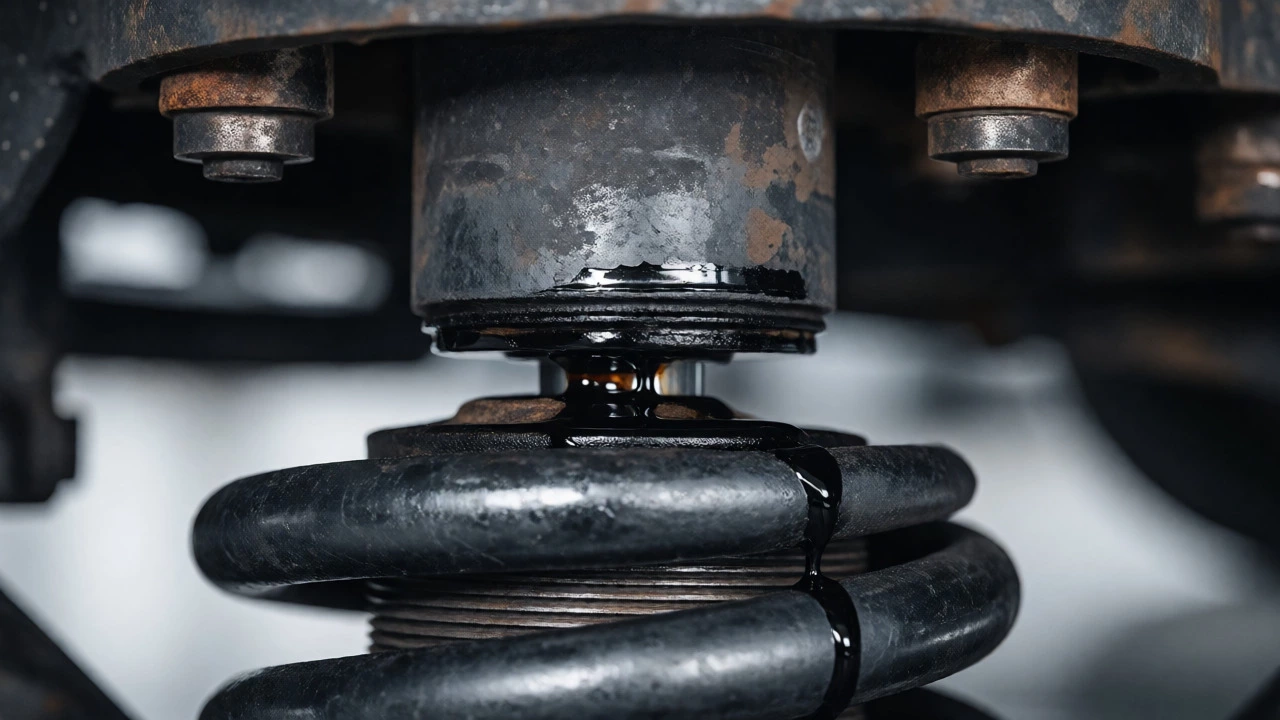
Can you diagnose this yourself? Partially. The "bounce test" mentioned earlier is a great start. Also, crawl under your car (safely, with jack stands) and look for oil leaks on the shock absorbers. If they’re wet with black fluid, they’re leaking and need replacement.
However, some issues require professional tools. Checking for play in ball joints or tie rod ends requires prying bars and specific knowledge of tolerances. Furthermore, replacing struts involves compressing powerful springs, which can be deadly if handled incorrectly. For most people, DIY is fine for diagnosis, but leave the heavy lifting to a pro unless you have mechanical experience.

Cost-Benefit Analysis: Repair Now or Later?
Replacing a full set of shocks and struts typically costs between $400 and $1,000 depending on the vehicle and labor rates. Replacing control arms or ball joints adds to this. While it stings, compare it to the alternative.
A single blown tire from uneven wear costs $100-$200. An accident caused by poor braking distance could cost thousands in deductibles and premium hikes. Plus, modern cars with electronic stability control rely heavily on suspension integrity. If the sensors detect erratic movement, they may intervene unnecessarily, making your drive jerky and unpredictable.
If you plan to keep your car for more than six months, fix the suspension. If you’re selling it next week, you might get away with mentioning the issue to the buyer, but expect a lower offer. Most buyers walk away from cars with known suspension noises.
Frequently Asked Questions
How long can I drive on bad shocks?
If the shocks are merely worn but not broken, you can likely drive for several hundred miles. However, handling will be compromised, especially in wet conditions or during emergency maneuvers. Limit your speed and increase following distances significantly.
Does bad suspension affect gas mileage?
Yes, indirectly. Poor suspension leads to increased rolling resistance and improper tire contact patches. Additionally, if the engine has to work harder to stabilize the vehicle or if aerodynamics are affected by body roll, fuel efficiency can drop by 1-3%.
Can I replace just one shock absorber?
You can, but mechanics strongly advise against it. Shocks wear evenly. Replacing only one creates an imbalance where the new shock is much stiffer than the old ones. This causes uneven handling and puts extra stress on the remaining old components. Always replace them in pairs (front or rear).
What does a broken ball joint sound like?
A broken or severely worn ball joint typically produces a deep clunking or knocking noise when turning or going over bumps. You may also feel excessive vibration in the steering wheel or notice that the car pulls to one side despite proper alignment.
Is it safe to drive on a flat spring?
It depends. If the spring is cracked but still holding height, you can drive slowly to a shop. If the spring has snapped and the car sits very low on that corner, do not drive. The metal coil can puncture the tire or damage brake lines. Call a tow truck.