 Nov, 6 2026
Spark Plug Responsiveness Estimator
Select your vehicle details and symptoms above, then click "Estimate Improvement" to see potential gains.
Expected Throttle Response Gain:
Estimated Fuel Efficiency Recovery:
You’re driving down the highway, merging onto an on-ramp, and you press the gas pedal. The car hesitates for a split second before surging forward. Or maybe it just feels sluggish, like it’s dragging its feet instead of jumping ahead. You start wondering if your engine is losing its edge. Then someone mentions, "Have you changed your spark plugs recently?" Suddenly, you’re convinced that swapping out those little metal cylinders will unlock hidden horsepower and make your car feel brand new again.
But does replacing spark plugs actually make your car more responsive? Or is this just another myth passed around in auto shops? The truth is nuanced. While fresh spark plugs don’t magically transform an old engine into a sports car, they play a critical role in how efficiently your engine burns fuel. When ignition timing is precise, power delivery becomes smoother and more immediate. Let’s break down exactly what happens when you swap out worn plugs, why responsiveness might improve, and when you should expect to feel the difference.
The Role of Spark Plugs in Engine Performance
To understand whether a spark plug change affects responsiveness, you first need to know what these components actually do. A spark plug is a small electrical component that delivers high voltage from the ignition coil to the combustion chamber. Its job is simple but vital: create a spark that ignites the air-fuel mixture inside the cylinder.
When this spark occurs at the exact right moment, the explosion pushes the piston down, turning the crankshaft and ultimately moving your wheels. If the spark is weak, late, or inconsistent, the combustion process suffers. This leads to incomplete burning of fuel, which translates directly to reduced power and delayed throttle response.
Think of it like lighting a campfire. If you use a damp match, the fire struggles to catch. It smolders, produces smoke, and takes longer to burn hot. Fresh, dry matches ignite instantly, creating a robust flame immediately. Your engine works similarly. Worn spark plugs are like damp matches-they struggle to ignite the fuel cleanly, causing hesitation and poor acceleration.
How Worn Plugs Kill Responsiveness
Over time, spark plugs degrade. The electrode wears down, carbon builds up on the insulator, and the gap between electrodes widens beyond manufacturer specifications. These changes disrupt the spark’s strength and timing.
Here’s what happens mechanically when plugs wear out:
- Misfires: Weak sparks fail to ignite the mixture in one or more cylinders. This causes jerky acceleration and noticeable vibration.
- Late Ignition: The spark fires too late in the compression cycle, wasting energy as heat instead of converting it to motion.
- Inconsistent Combustion: Uneven firing across cylinders creates a rough idle and sluggish pickup.
Drivers often describe this as "lag." You press the accelerator, but the engine doesn’t respond immediately. Instead, there’s a pause, followed by a sudden surge once the RPMs climb enough to compensate for the inefficiency. This lag is not necessarily a sign of a failing turbocharger or transmission issue-it’s often just bad ignition.
| Condition | Throttle Response | Fuel Efficiency | Engine Sound |
|---|---|---|---|
| New/Iridium Plugs | Immediate, linear power delivery | Optimal (within 1-3% of spec) | Smooth, consistent hum |
| Worn Copper Plugs | Slight hesitation under load | Reduced by 5-10% | Rough idle, occasional pinging |
| Fouled/Oil-Covered | Significant lag, misfires | Poor (up to 15% loss) | Shaking, loud knocking |

When Will You Actually Feel the Difference?
Not every driver notices a dramatic shift after changing spark plugs. Whether you feel improved responsiveness depends heavily on the starting condition of your old plugs and the type of vehicle you drive.
If your car has been running on severely worn or fouled plugs for thousands of miles, the improvement can be startling. Owners of older vehicles with high mileage often report that their cars feel "tighter" and more eager to accelerate. The throttle becomes less numb, and passing maneuvers require less anticipation.
However, if you maintain your vehicle strictly according to schedule-replacing plugs every 30,000 to 100,000 miles depending on the material-you might notice only subtle improvements. Modern engines with electronic control units (ECUs) are incredibly good at compensating for minor ignition issues. They adjust fuel injection and timing on the fly to keep the car running smoothly. So, while the underlying mechanical efficiency improves, the ECU masks much of the symptom until the problem becomes severe.
High-performance cars and turbocharged engines tend to show clearer benefits. These engines operate at higher pressures and temperatures, making them more sensitive to ignition quality. A weak spark in a boosted engine can cause significant knock or pre-detonation, forcing the ECU to pull timing and reduce power. Fresh plugs allow the engine to run closer to its optimal timing map, restoring lost punch.
Copper vs. Iridium: Does Material Matter for Feel?
The type of spark plug you install also influences perceived responsiveness. Not all plugs are created equal.
Copper core plugs are the standard factory option for many economy cars. They conduct electricity well but wear out faster, typically lasting around 30,000 miles. As they age, the electrode erodes, widening the gap and weakening the spark. Replacing copper plugs regularly keeps ignition sharp, but the peak performance window is shorter.
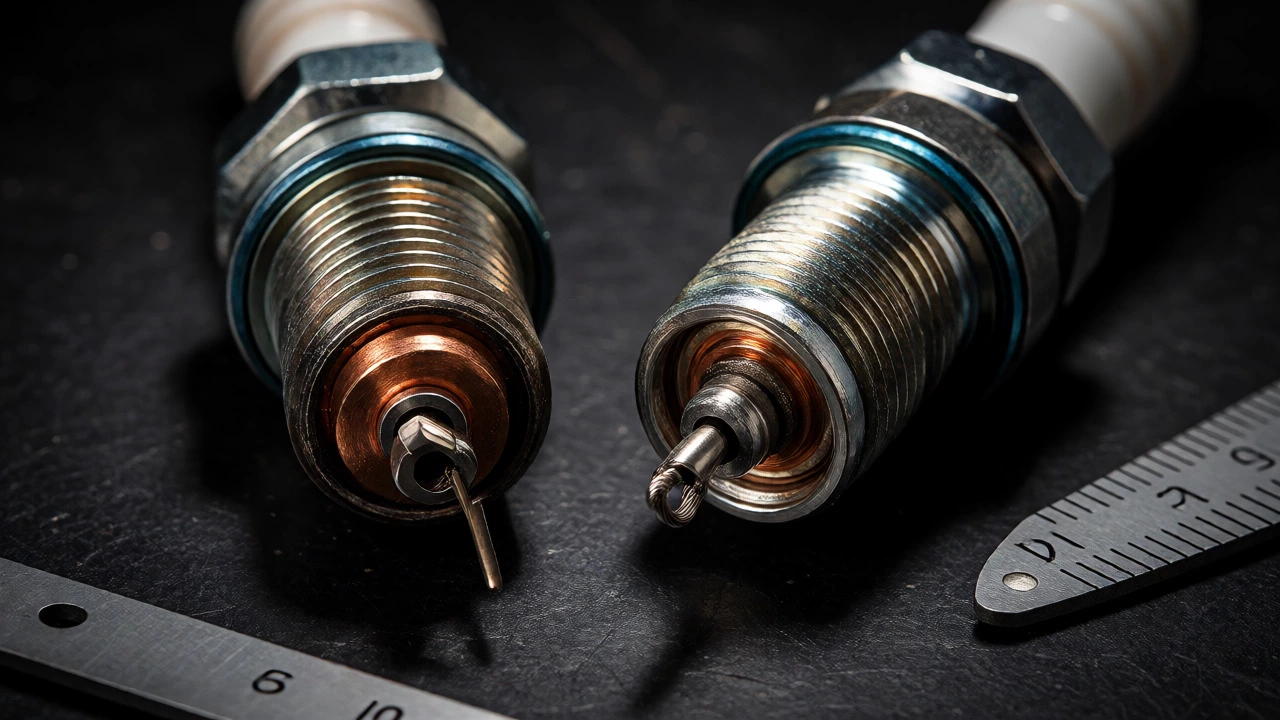
Iridium plugs, on the other hand, feature a fine-wire center electrode made of iridium alloy. This material is harder and more durable than nickel alloys used in copper plugs. Because the wire is thinner, it requires less voltage to jump the gap, resulting in a stronger, more consistent spark even at high RPMs. Many drivers report that switching from copper to iridium provides a noticeable boost in throttle sensitivity, especially in the mid-range where most daily driving occurs.
Platinum plugs sit somewhere in between, offering better longevity than copper but lacking the fine-point precision of iridium. For maximum responsiveness, iridium is generally the superior choice, though it comes at a higher cost.
Beyond Plugs: Other Factors Influencing Responsiveness
It’s crucial to manage expectations. Changing spark plugs alone won’t fix deep-seated mechanical issues. If your car still feels sluggish after installing new plugs, look elsewhere.
Ignition coils work hand-in-hand with spark plugs. A failing coil pack can deliver insufficient voltage, rendering even the best plug ineffective. Symptoms include random misfires and check engine lights. Similarly, dirty fuel injectors can spray uneven mist, disrupting combustion regardless of spark quality.
Air intake restrictions also play a role. A clogged air filter chokes the engine, reducing oxygen availability. Without sufficient oxygen, the air-fuel mixture burns poorly, leading to hesitation. Always check the basics before blaming the ignition system entirely.
Finally, consider the transmission. In automatic cars, delayed shifts can mimic engine lag. If the torque converter isn’t locking up properly, power transfer feels indirect. Diagnosing whether the issue lies in the engine or the drivetrain requires careful observation of RPM behavior during acceleration.
Practical Tips for Maximizing Gains
If you decide to replace your spark plugs to regain responsiveness, follow these guidelines to ensure you get the best results:
- Check the Gap: Even new plugs may have gaps slightly off-spec due to shipping or handling. Use a feeler gauge to verify the distance matches your owner’s manual. An incorrect gap alters spark intensity and timing.
- Torque Correctly: Over-tightening can crack the ceramic insulator; under-tightening can lead to heat dissipation issues. Use a torque wrench set to manufacturer specs.
- Replace One Cylinder at a Time: This prevents debris from falling into the open cylinder bore. Keep the area clean to avoid introducing dirt into the combustion chamber.
- Inspect Coil Packs: While you’re in there, check the boots of the ignition coils for cracks or oil contamination. Replace them if necessary to ensure full system health.
After installation, take the car for a test drive on a varied route. Include city stop-and-go traffic and highway merging. Pay attention to how the pedal feels compared to before. You shouldn’t hear rattling or feel shaking. If the car drives smoother and reacts quicker to input, the change was worthwhile.
How quickly will I notice improved responsiveness after changing spark plugs?
You may notice immediate differences during the first few drives, particularly in throttle sensitivity and idle smoothness. However, some drivers adapt quickly to the new baseline and forget the previous state. To truly assess the change, compare notes with your memory of the car's behavior before the service, or record audio/video of the engine sound and acceleration pattern before and after.
Can bad spark plugs damage my catalytic converter?
Yes. Unburned fuel from misfires caused by bad spark plugs passes through the exhaust system and enters the catalytic converter. This raw fuel overheats the converter, potentially melting its internal substrate. Replacing faulty plugs early prevents costly repairs down the line.
Do expensive spark plugs make a bigger difference than cheap ones?
In terms of pure horsepower, the difference is negligible. However, premium plugs like iridium offer greater consistency over time and resist fouling better. This consistency translates to sustained responsiveness throughout the plug's lifespan, whereas cheaper copper plugs may degrade performance gradually as they wear.
Should I change all spark plugs at once or one by one?
Always replace all spark plugs simultaneously. Mismatched plugs can cause uneven firing intervals, leading to vibration and potential engine imbalance. Even if one plug looks okay, its neighbors likely share similar wear patterns. Uniformity ensures balanced power delivery across all cylinders.
What are the signs that my spark plugs need replacement?
Common indicators include difficulty starting the engine, poor fuel economy, rough idling, engine misfires (jerking during acceleration), lack of acceleration, and the check engine light illuminating. Visual inspection may reveal carbon buildup, white deposits, or eroded electrodes.