 Jun, 30 2026
Brake Replacement Decision Tool
Vehicle Information
Reasoning:
Enter your vehicle details to get a personalized recommendation.
You press the pedal, and the car slows down. It feels normal. But what if one set of pads is worn thin while the other set still has plenty of life left? Do you really need to swap out all four corners at once, or can you just fix the ones making noise? This is one of the most common questions in any garage, and the short answer is: it depends on your driving habits, your vehicle’s design, and how much you value consistent performance.
Replacing brake pads isn't just about stopping power; it's about balance. When you mix old pads with new ones, or even new pads on only two wheels, you change how weight shifts during deceleration. Let’s break down exactly when you should replace all four, when two will do, and why ignoring the rear brakes might be a costly mistake.
The Front-Heavy Reality of Braking
To understand why mechanics often suggest replacing all four, you first have to look at physics. When you slam on the brakes, your car’s weight transfers forward. Think about riding in a car and feeling pushed into your seatbelt-that’s inertia. That same force dumps extra weight onto the front tires.
Front brake pads are the primary components responsible for stopping a vehicle, handling approximately 60% to 75% of the braking force. Because they do so much more work, they wear out significantly faster than the rears. On a typical daily driver, you might need to replace the front pads every 30,000 to 40,000 miles, while the rear pads could last 60,000 miles or more.
This disparity leads many drivers to believe that replacing the front pads is sufficient. And technically, yes, your car will stop. However, relying solely on the front brakes creates an imbalance. If your rear pads are already near their minimum thickness limit, adding fresh, high-friction material to the front without addressing the back can lead to uneven stopping distances and increased stress on the front suspension.
When Replacing Just Two Pads Is Acceptable
There are specific scenarios where replacing only the front (or occasionally the rear) brake pads is a smart, cost-effective move. You don’t always need to spend money on parts you don’t strictly need yet.
- Newer Vehicles: If your car has less than 40,000 miles on it and you’ve never changed the brakes before, the rear pads likely have substantial life left. In this case, replacing only the fronts is standard practice.
- Measured Thickness: Use a caliper or a simple visual inspection. If the rear pad material is thicker than 5mm (about 1/4 inch), they are generally safe to keep for another cycle.
- No Warning Signs: If there is no squealing, grinding, or vibration coming from the rear wheels, and the ABS sensor hasn’t triggered any codes, the rear system is likely functioning within normal parameters.
However, even if you only replace two, you must always replace them in pairs-both fronts or both rears. Never replace just the left front and leave the right front alone. This causes the car to pull violently to one side when braking, which is dangerous and damages wheel bearings.
Why Replacing All Four Is Often Recommended
So why do shops often quote you for all four? It comes down to consistency and long-term cost savings. Here is the logic behind the "all four" recommendation:
Uniform Stopping Power: New brake pads have different friction characteristics than worn ones. Mixing very new fronts with very old rears can cause the rear wheels to lock up prematurely under hard braking, especially in wet conditions. This increases the risk of skidding. By refreshing all four corners, you ensure that the Electronic Stability Control (ESC) and Anti-lock Braking System (ABS) sensors receive accurate data from all wheels.
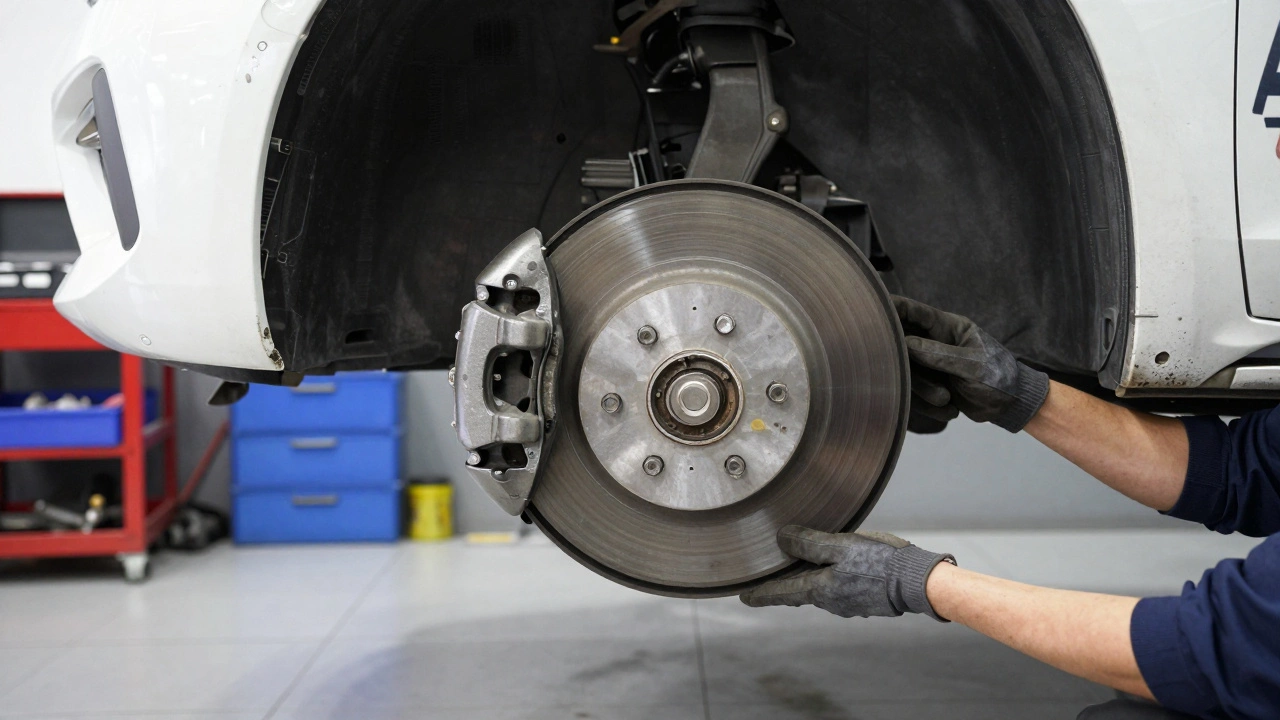
Rotors and Calipers: Brake pads don’t wear evenly across a single axle unless the calipers are perfectly balanced. If you replace the fronts, you’ll likely resurface or replace the front rotors. Doing the same for the rears ensures that the entire braking system operates as a unified unit. It also spreads out the labor costs. Since the mechanic has to bleed the brake lines and remove the wheels anyway, doing all four at once saves you from paying double labor charges six months later.
Resale Value and Safety Inspection: If you plan to sell your car soon, having a record of a complete brake job (all four pads and rotors) is a strong selling point. It signals to buyers that the vehicle has been maintained comprehensively, not just patched up.
The Hidden Danger of Ignoring Rear Pads
Rear brake pads often fail silently. Unlike the fronts, which might squeal due to wear indicators, rear pads can grind against the rotor until they damage the metal backing plate. Once that happens, you’re looking at replacing not just the pads, but the rotors, and potentially the caliper hats.
In Hamilton, Canada, where we deal with salted roads in winter and heavy rain in spring, corrosion is a major factor. Rear calipers are more prone to sticking because they see less frequent heat cycles and movement compared to the fronts. A stuck rear caliper can drag, wearing down the pad rapidly and overheating the wheel bearing. If you ignore the rear brakes because "they last longer," you might miss a stuck caliper that’s eating away at your new investment.
Decision Matrix: Should You Replace All Four?
To help you decide, use this simple checklist based on your current situation:
| Scenario | Action | Reasoning |
|---|---|---|
| Mileage < 40,000 km | Replace Fronts Only | Rears likely have significant life remaining. |
| Mileage > 60,000 km | Inspect Rears Closely | If rears are < 4mm, replace all four. |
| Pulling to one side | Replace All Four + Inspect Calipers | Indicates uneven wear or stuck hardware. |
| Selling the car soon | Replace All Four | Increases value and buyer confidence. |
| Budget constrained | Replace Fronts Now, Schedule Rears | Fronts are critical for safety; rears can wait if thick. |
Pro Tips for a Better Brake Job
If you decide to go ahead with the replacement, whether it’s two or four, keep these expert tips in mind:
- Lubricate the Hardware: Don’t just slap the new pads in. Clean the caliper slides and lubricate them with high-temperature brake grease. This prevents future sticking and ensures even wear.
- Bed the Brakes: New pads need to transfer a layer of material onto the rotors to work effectively. Find a safe, empty road and perform 5-10 moderate stops from 60 km/h to 20 km/h. Avoid slamming on the brakes immediately after installation.
- Check Brake Fluid: While the pads are off, inspect the brake fluid level and color. Old fluid absorbs moisture, which lowers its boiling point. If it looks dark brown, flush it. Fresh fluid improves pedal feel and safety.
Ultimately, the decision to replace all four brake pads isn’t a black-and-white rule. It’s a calculation of risk versus reward. If your rear pads are healthy, save your money. If they’re borderline, bite the bullet and do all four. Your safety on the road, especially in unpredictable weather, is worth the extra investment.
Can I replace just the front brake pads?
Yes, you can replace just the front brake pads if the rear pads still have sufficient thickness (typically above 4-5mm). Front pads wear out faster because they handle most of the braking force. However, always replace them in pairs (both left and right fronts).
How do I know if my rear brake pads need replacing?
You can check rear brake pad thickness by removing the wheel and looking through the spokes at the caliper, or by using a flashlight. If the friction material is less than 3-4mm thick, they need replacement. Signs include a humming noise, reduced fuel efficiency due to dragging brakes, or a warning light on your dashboard.
Is it cheaper to replace all four brake pads at once?
While the parts cost is higher for four pads, labor costs may be lower per axle if done simultaneously since the mechanic only bleeds the system and removes wheels once. Additionally, preventing future rotor damage by replacing worn rears early can save money in the long run.
What happens if I mix old and new brake pads?
Mixing old and new pads can cause uneven braking, leading to pulling to one side, increased stopping distances, and potential instability. The new pads have higher friction coefficients, which can overwhelm the older, worn pads, causing the wheels with new pads to lock up sooner.
Should I replace rotors when changing brake pads?
Not always. If the rotors are smooth, free of deep grooves, and meet the manufacturer’s minimum thickness specification, they can be resurfaced or kept. However, if they are warped, scored, or below minimum thickness, they must be replaced to ensure proper contact with the new pads.