 Dec, 1 2025
Muffler Fuel Economy Calculator
How Muffler Replacement Affects Your Fuel Costs
Based on real studies: Performance mufflers typically improve fuel economy by less than 0.3% - often causing losses if poorly tuned. Only replace if your muffler is damaged.
Many drivers believe upgrading their muffler will boost gas mileage. You see ads for "performance mufflers" that promise better fuel economy, louder exhaust notes, and more power. But does a new muffler actually save you money at the pump? The short answer: not really - unless your old muffler was broken.
How Mufflers Actually Work
A muffler isn’t designed to make your car faster or more efficient. Its only job is to reduce engine noise. Inside, it has chambers, perforated tubes, and sound-dampening materials that cancel out the loud pulses of exhaust gas. Think of it like a noise-canceling headphone for your engine.
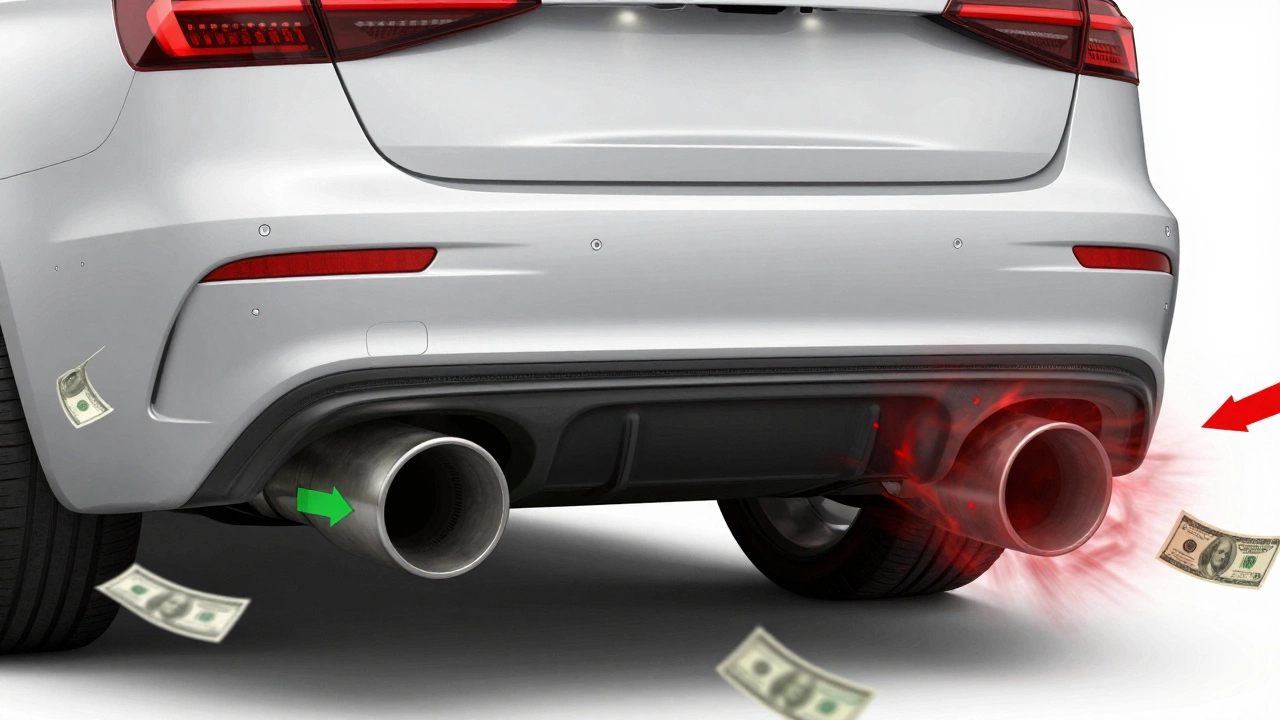
Some aftermarket mufflers are marketed as "free-flowing" - meaning they offer less resistance to exhaust gases than stock units. This sounds good in theory: less backpressure should let the engine breathe easier, right? But here’s the catch: modern engines are tuned to work with the exact level of backpressure their factory exhaust system provides.
Backpressure Myths and Reality
The idea that "less backpressure = better fuel economy" is widespread, but it’s misleading. Backpressure isn’t always bad. In fact, a small amount helps with exhaust scavenging - the process where outgoing exhaust gases help pull the next batch out of the cylinder. Too little backpressure can actually hurt low-end torque and throttle response, especially in daily drivers.
A 2018 study by the Society of Automotive Engineers tested 12 different exhaust systems on five popular sedans. The results? None of the aftermarket mufflers improved fuel economy by more than 0.3%. In three cases, fuel economy dropped by up to 1.2% due to poor tuning and mismatched flow rates.
That’s not a savings. That’s a loss. At $3.80 per gallon in Hamilton, Ontario, a 1% drop in fuel efficiency on a car that gets 8.5 L/100 km means you’re spending an extra $15 to $20 a year on gas.
When a Muffler Actually Improves Fuel Economy
There’s one real scenario where replacing a muffler helps your gas mileage: when the old one is clogged or damaged.
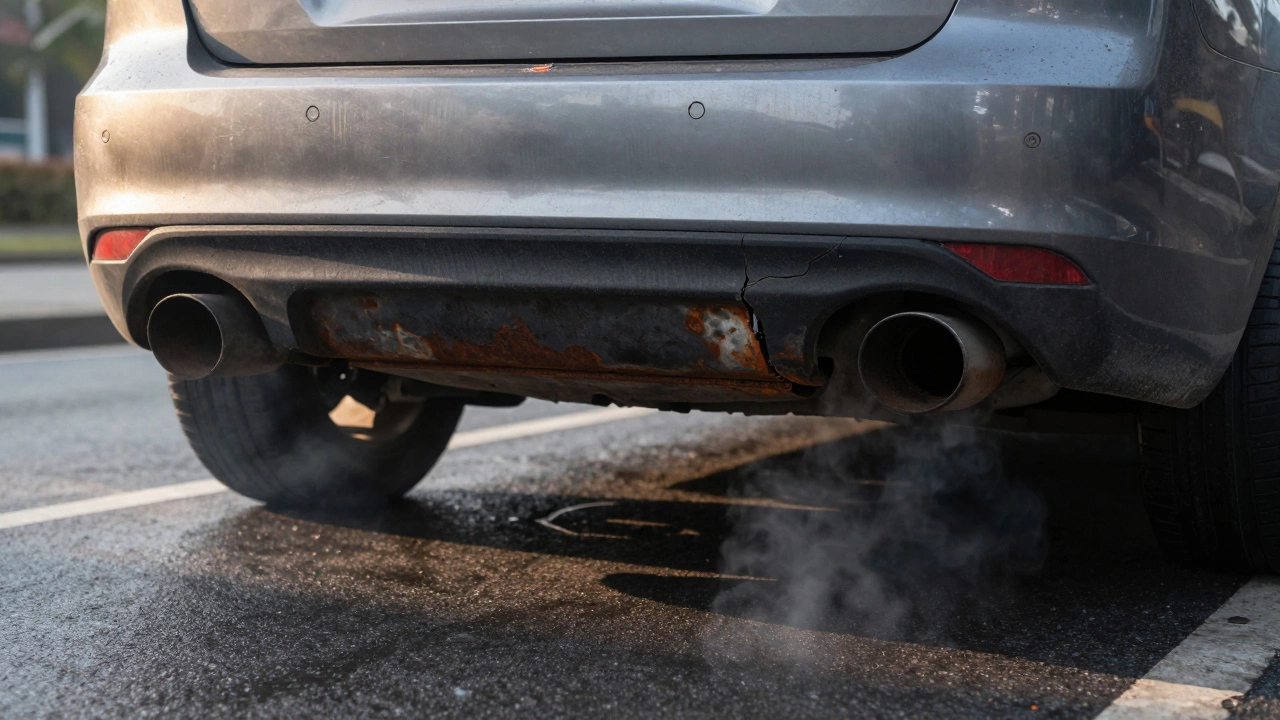
A rusted, collapsed, or blocked muffler creates excessive backpressure. That forces the engine to work harder to push exhaust out. This can trigger the check engine light, reduce power, and burn more fuel. In extreme cases, a severely restricted exhaust can cause the engine to misfire or overheat.
If your muffler is visibly rusted through, makes a loud roaring sound, or you smell exhaust fumes inside the cabin, replacing it with a factory-spec unit can restore your car’s original efficiency. But you’re not gaining mileage - you’re just getting back what you lost.
What About Performance Mufflers?
Performance mufflers - like those from MagnaFlow, Borla, or Gibson - are designed for sound and appearance, not fuel savings. They often use straight-through designs with minimal baffling. This makes them louder, which many people like. But they don’t magically turn your Honda Civic into a race car.
Some performance systems come with headers or cat-back kits. Even then, any fuel economy gain is negligible unless you’re also upgrading the engine’s ECU tune. And even then, most drivers who install these systems drive more aggressively - which cancels out any tiny efficiency gains.
One real-world example: a 2020 Ford F-150 owner in Calgary replaced his stock muffler with a Borla cat-back system. He tracked his fuel economy for six months. Before: 11.2 L/100 km. After: 11.3 L/100 km. He liked the sound, but he didn’t save a single cent on gas.
What Actually Improves Gas Mileage?
If you want real fuel savings, focus on these proven methods:
- Keep tires properly inflated - underinflated tires can increase fuel use by up to 3%
- Replace a clogged air filter - a dirty filter can reduce efficiency by 1-2%
- Use the right motor oil - synthetic 0W-20 can improve mileage by 1-1.5% over thicker oils
- Drive smoothly - rapid acceleration and hard braking can waste up to 40% more fuel
- Remove excess weight - every 45 kg of extra weight reduces fuel economy by about 1-2%
These changes cost less than a new muffler and deliver measurable results. A new muffler? It costs $200-$600. The fuel savings? Zero - unless you’re fixing damage.

Common Misconceptions
Here are the myths you’ll hear from salespeople or online forums:
- "Big pipes = better mileage" - False. Pipe diameter matters less than overall system design. Oversized pipes can hurt low-RPM efficiency.
- "Dual exhausts save fuel" - Dual exhausts are for aesthetics and engine balance, not efficiency. Most passenger cars don’t need them.
- "Removing the muffler entirely boosts fuel economy" - Dangerous and illegal. It also increases noise pollution and can trigger emissions system faults.
These myths persist because they sound logical. But cars aren’t simple machines. Every part is calibrated to work together. Changing one piece without adjusting the rest rarely helps.
Bottom Line: Don’t Buy a Muffler for Gas Mileage
Replacing a muffler to save on gas is like buying new shoes to lose weight. It might feel like progress, but it won’t deliver the result you want.
If your muffler is intact and quiet, leave it alone. If it’s rusted, leaking, or loud, replace it - but choose a standard replacement, not a "performance" model. You’ll save money on repairs and avoid wasting cash on false promises.
Real fuel savings come from maintenance, driving habits, and tire pressure - not exhaust noise.
Do performance mufflers improve gas mileage?
No, performance mufflers don’t improve gas mileage. They’re designed to reduce noise restriction and change the sound of the exhaust. Any fuel economy gains are negligible - often less than 0.5% - and usually canceled out by more aggressive driving. In some cases, they can even reduce efficiency if the system isn’t properly tuned to your engine.
Can a damaged muffler reduce fuel efficiency?
Yes, a damaged muffler - especially one that’s clogged, collapsed, or rusted shut - can significantly reduce fuel efficiency. It creates excessive backpressure, forcing the engine to work harder to expel exhaust gases. This can lower fuel economy by 5-10% and trigger engine warning lights. Replacing a broken muffler restores your car’s original efficiency, but doesn’t improve it beyond factory levels.
Is it worth upgrading to a stainless steel muffler?
Stainless steel mufflers last longer and resist rust better than aluminized steel, which is good for longevity - especially in snowy regions like Hamilton. But they don’t improve fuel economy. If you live where road salt eats through exhaust systems quickly, stainless is worth the extra cost for durability, not for gas savings.
Will a muffler delete increase my gas mileage?
No, removing the muffler entirely won’t improve gas mileage. Modern engines rely on the entire exhaust system - including the muffler - for proper tuning. Removing it can cause the engine control unit to detect a fault, trigger the check engine light, and put the car into a fuel-rich "limp mode" to protect the engine. You’ll likely burn more fuel, not less.
What’s the best way to improve my car’s fuel economy?
The best ways to improve fuel economy are: keeping tires properly inflated, using the manufacturer-recommended motor oil, replacing a dirty air filter, driving smoothly without rapid acceleration, removing unnecessary weight from the car, and avoiding excessive idling. These changes cost little and can improve mileage by 5-15%. Mufflers are not on this list.
If you’re looking to save on gas, skip the muffler upgrade. Focus on what actually works.