 Sep, 1 2026
Radiator & AC Diagnostic Tool
Is your AC blowing warm air? Use this tool to determine if the culprit is your radiator or another component.
Select all symptoms that apply to your vehicle:
Select symptoms and click Diagnose
You’re driving on a hot summer day in Hamilton. The traffic is thick, the sun is beating down, and you turn on the air conditioning. Instead of that crisp, cool breeze, you get lukewarm air-or worse, nothing at all. You check your dashboard, and the temperature gauge is creeping up. Your mind immediately jumps to the worst-case scenario: a blown head gasket or a dead compressor. But before you start panicking about expensive repairs, there’s another component you should look at first: your radiator.
It seems counterintuitive. Isn’t the radiator for the engine and the AC for the cabin? Why would one affect the other? The short answer is yes, they are deeply connected. While they serve different primary functions, they share the same ecosystem under your hood. If your radiator is clogged, leaking, or failing, it can absolutely sabotage your air conditioning performance.
The Cooling System Ecosystem
To understand why this happens, you have to stop thinking of your car as having separate systems. Think of it as one big thermal management network. The engine generates massive amounts of heat from combustion. The coolant absorbs that heat and carries it to the radiator. Meanwhile, your air conditioning system works by removing heat from the inside of your car and dumping it outside.
Here is the critical link: both systems rely on airflow and heat exchange to work. They often sit right next to each other in front of the engine bay. When you turn on your AC, the fan kicks into high gear to pull air through both the condenser (the AC part) and the radiator (the engine part). If the radiator is blocked with debris or internal corrosion, it restricts airflow. This restriction doesn't just hurt the engine; it creates a bottleneck for the entire front-end assembly, including the components responsible for keeping you cool.
How a Failing Radiator Sabotages Your AC
There are three main ways a bad radiator messes with your comfort. It isn’t always obvious because the symptoms can mimic other problems.
1. Airflow Restriction
Your radiator fins are designed to maximize surface area for heat dissipation. Over time, bugs, dirt, leaves, and road grime build up between these fins. This is called external blockage. When this happens, the electric cooling fan has to work harder to pull air through. But here’s the catch: if the fan is struggling against a blocked radiator, it might not generate enough static pressure to effectively cool the AC condenser, which usually sits directly in front of the radiator.
If the condenser can’t dump its heat efficiently because the airflow is choked off, the refrigerant stays too hot. Hot refrigerant means warm air coming out of your vents. You’ll notice the AC works fine when you’re moving fast on the highway-because natural wind force helps-but fails when you’re stuck in traffic or idling at a light.
2. Engine Overheating Triggers AC Shutdown
This is the most common reason drivers think their AC is broken. Modern cars are smart. If the engine starts to overheat due to a faulty radiator, the car’s computer (ECU) will automatically shut off the AC compressor. Why? Because running the AC puts extra load on the engine. If the engine is already struggling to stay cool, adding the mechanical drag of the AC compressor makes things worse.
So, if your temperature gauge spikes and the AC suddenly stops blowing cold, don’t blame the AC system immediately. Blame the radiator for causing the engine to overheat. Fixing the cooling issue will likely restore your AC function without touching the refrigerant lines.
3. Shared Fan Issues
In many vehicles, the same electric fan cools both the radiator and the condenser. If the fan motor is weak or failing, it won’t spin fast enough to cool either component effectively. You might see the engine temp rise slightly while the AC blows lukewarm air simultaneously. This shared dependency means a single point of failure-a bad fan relay or motor-can cripple both systems.
Radiator vs. Condenser: Know the Difference
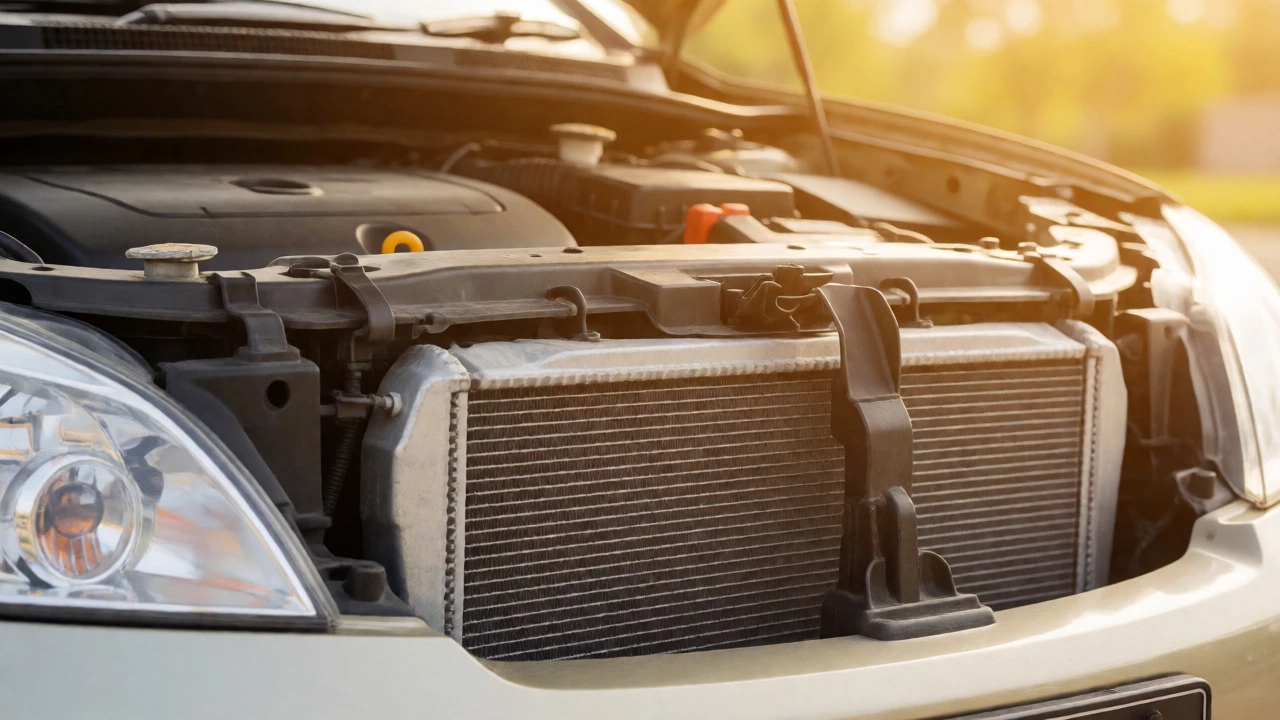
People often confuse the radiator with the AC condenser because they look almost identical. Both are aluminum grids with fins, located at the front of the car. But they handle different fluids and serve different masters.
| Feature | Radiator | Condenser |
|---|---|---|
| Purpose | Cools engine coolant | Cools AC refrigerant |
| Fluid | Water/Glycol mix | Refrigerant (e.g., R-134a) |
| Pressure | Low to Medium | High Pressure |
| Location | Behind the condenser | Front-most component |
| Failure Symptom | Engine overheating | Warm AC air |
While they are distinct parts, their proximity is the problem. Debris clogs the condenser first, then the radiator. Leaks from the radiator can sometimes spray coolant onto the condenser, causing corrosion. And as mentioned, they share the same cooling fan. Understanding this layout helps you diagnose whether you need a new radiator, a new condenser, or just a good cleaning.

Signs Your Radiator Is Hurting Your AC
How do you know if the radiator is the culprit? Look for these specific clues:
- Temperature Gauge Fluctuation: Does the needle creep up when the AC is on? This suggests the engine can’t handle the extra load because the radiator isn’t shedding heat fast enough.
- AC Works Only at High Speeds: If the AC is cold on the highway but warm in the city, your airflow is restricted. Check the front of the radiator and condenser for packed dirt.
- Lukewarm Air After Idling: If you’ve been sitting still for more than 10 minutes and the AC feels less effective, the fan might be struggling against a clogged core.
- Visible Damage: Inspect the fins. Are they bent? Is there white crusty residue indicating a leak? A leaking radiator loses coolant volume, reducing its ability to absorb heat, which indirectly stresses the whole thermal environment.
DIY Checks Before Visiting the Mechanic
You don’t need a degree in automotive engineering to rule out simple radiator issues. Try these steps first:
- The Visual Inspection: Pop the hood. Look at the front grille. Can you see sunlight through the fins? If it looks like a fuzzy carpet of dust and bugs, clean it. Use a garden hose on low pressure (never a pressure washer, which bends fins) to wash from the inside out.
- Fan Operation Test: Start the engine and turn on the AC. Watch the cooling fan. It should spin rapidly after a few minutes. If it’s slow or doesn’t start until the engine is nearly boiling, the fan or its control module is suspect.
- Check Coolant Level: Low coolant reduces the radiator’s efficiency. Top it off if necessary, but inspect for leaks underneath the car. Pink or green puddles mean trouble.
- Touch Test (Caution): With the engine warm and AC running, carefully touch the upper and lower radiator hoses. Both should be hot. If one is hot and the other is cold, the thermostat might be stuck closed, preventing flow through the radiator. This causes overheating, which shuts off the AC.

When to Replace the Radiator
Sometimes cleaning isn’t enough. Internal corrosion can block the tiny tubes inside the radiator core, restricting coolant flow even if the outside looks clean. If you’ve flushed the system and the engine still runs hot under AC load, replacement is likely needed.
A new radiator restores proper heat rejection capacity. This ensures the engine stays within optimal operating temperatures, allowing the AC compressor to run continuously without triggering safety shutdowns. In older cars, replacing an old, inefficient radiator can dramatically improve AC performance during stop-and-go traffic.
Final Thoughts
Yes, your radiator affects your AC. It’s not a direct mechanical link, but a thermal and aerodynamic one. A compromised radiator creates a chain reaction: poor heat dissipation leads to higher engine temps, which triggers AC shutdowns, or restricted airflow chokes the condenser, leaving you sweating in your own car.
Don’t ignore the connection. Next time your AC acts up, don’t just top off the refrigerant. Check the radiator. Clean the fins. Verify the fan. Ensure the coolant level is correct. Often, the solution to your comfort problem lies in the humble grid of metal at the front of your vehicle.
Can a clogged radiator cause my AC to blow warm air?
Yes, indirectly. A clogged radiator restricts airflow across the front of the vehicle. Since the AC condenser is usually mounted in front of the radiator, reduced airflow prevents the condenser from releasing heat effectively. This results in warmer refrigerant entering the cabin, leading to lukewarm air from the vents.
Why does my AC stop working when my engine overheats?
Modern vehicles have a safety feature where the engine control unit (ECU) disables the AC compressor if the engine temperature exceeds a safe threshold. Running the AC adds mechanical load to the engine, generating more heat. To prevent severe damage, the car prioritizes engine survival over cabin comfort by turning off the AC.
Is the radiator the same as the AC condenser?
No, they are different components. The radiator cools engine coolant using water/glycol, while the condenser cools AC refrigerant. However, they look similar and are often stacked together in the front of the car. They share the same cooling fan, which is why a failure in one system can impact the other.
How do I clean my radiator fins safely?
Use a garden hose with a gentle spray nozzle. Spray from the engine side outward to push debris out. Never use a high-pressure washer, as it can bend the delicate aluminum fins, permanently reducing cooling efficiency. For heavy buildup, use a specialized fin comb to straighten bent fins after cleaning.
Can low coolant affect my air conditioning?
Yes. Low coolant levels reduce the radiator's ability to dissipate engine heat. This can lead to engine overheating, which typically triggers the automatic shutdown of the AC compressor. Additionally, some vehicles use heater cores (part of the cooling system) for defrosting, so low coolant can also affect window visibility.