 Nov, 10 2026
Engine Oil Advisor
Vehicle & Driving Profile
Key Takeaways
You’re standing in the auto parts aisle, staring at a wall of colorful bottles. There’s Mobil 1, Castrol Edge, Valvoline, and some store-brand jug that costs half as much. The question hits you: does it matter what engine oil I use?
The short answer is yes, but not for the reasons most people think. It’s not about brand loyalty or marketing hype. It’s about chemistry, certification, and matching the fluid to your specific engine’s needs. Using the wrong stuff can lead to sludge buildup, poor fuel economy, or even warranty issues. But using a cheaper, certified oil won’t destroy your car either. Let’s break down exactly what matters and what’s just noise.
Viscosity Is Non-Negotiable
Before you worry about whether you should buy premium or budget oil, look at the numbers on the bottle. This is viscosity. If you ignore this, nothing else matters. Viscosity tells you how thick or thin the oil is at different temperatures. Your owner’s manual specifies a grade, like 0W-20, 5W-30, or 10W-40. That first number (with the W) indicates flow at cold starts. The second number indicates thickness when the engine is hot.
Modern engines have tighter tolerances than cars from the 1990s. They need thinner oils to lubricate tiny gaps quickly. If you pour 10W-40 into an engine designed for 0W-20, you might feel sluggish acceleration and see worse gas mileage because the pump works harder to push that thick fluid through narrow channels. Conversely, putting thin oil in an older, high-mileage engine with worn bearings can cause leaks and low pressure warnings.
Stick to the manufacturer’s recommended viscosity range. If your manual says 5W-30 or 5W-40 are acceptable, pick one based on your climate. Colder winters favor the lower winter rating; hotter summers might benefit from the higher hot viscosity. But don’t guess. Check the cap or the manual.
Conventional vs. Synthetic: The Real Difference
This is where most confusion happens. People often think "synthetic" means a specific brand makes better oil. In reality, synthetic refers to how the base oil is manufactured. Conventional oil comes directly from crude oil refining. Synthetic oil is chemically engineered in a lab to create uniform molecules.
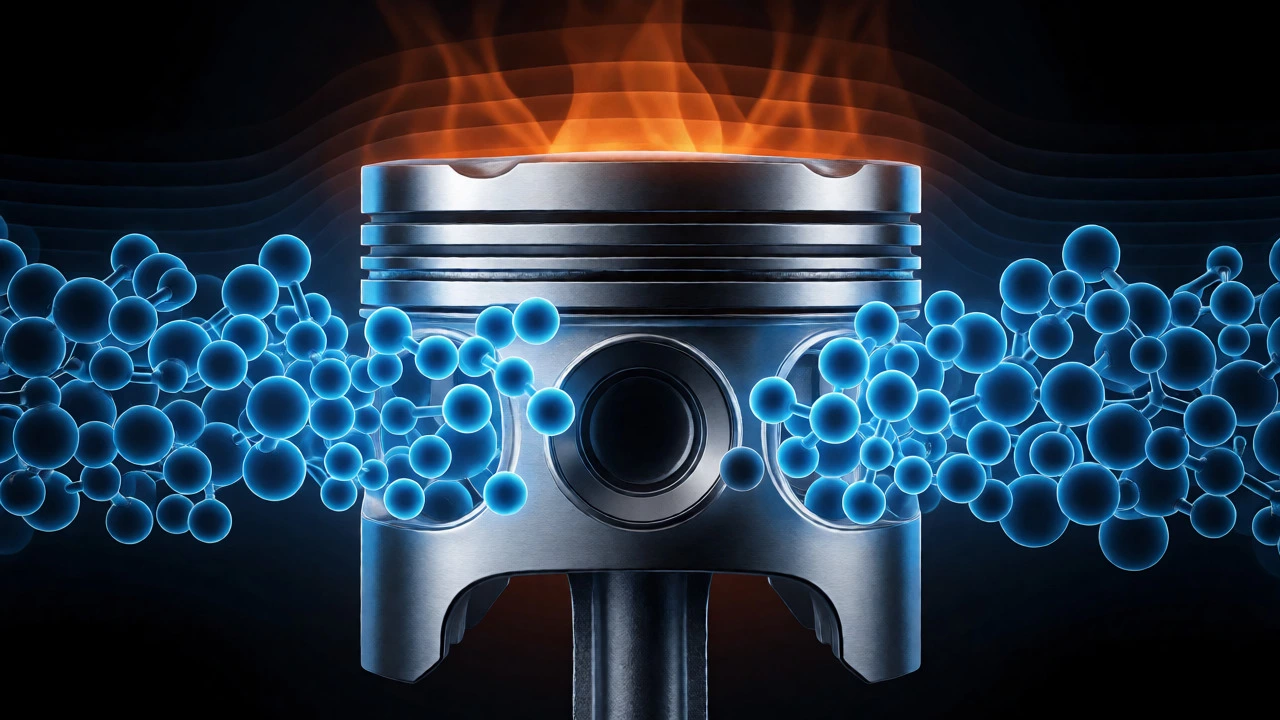
Why does this matter? Uniform molecules resist breakdown better. They handle extreme heat without turning into sludge. They flow easier in freezing temperatures. For turbocharged engines, which run incredibly hot, full synthetic is usually mandatory. Older, naturally aspirated engines can often run fine on conventional oil if you change it frequently enough.
Here’s the catch: Many "premium" conventional oils now contain synthetic blends. A bottle labeled "Synthetic Blend" isn’t fully synthetic, but it performs better than basic conventional. If your car requires full synthetic, don’t try to save money by buying blend. It will break down faster than the service interval expects, leading to deposits on critical components like variable valve timing solenoids.
API and ACEA Certifications Are Your Safety Net
You don’t need to be a chemist to know if an oil is good. Look for the API Donut. This small circular seal on the back label certifies that the oil meets American Petroleum Institute standards. You’ll see codes like SP, SN, or SM. "SP" is the current standard for gasoline engines, introduced to combat low-speed pre-ignition (LSPI) in modern turbo engines.
If you drive a European car, look for ACEA ratings (European Association of Car Manufacturers). BMW, Mercedes, and VW have their own strict approval lists. An oil might be API SP compliant but still fail BMW’s LL-01 spec. Why? Because European engines often use longer drain intervals and different emission systems, like particulate filters. Using non-approved oil can clog these expensive filters.
Motor Oil is a lubricant used in internal combustion engines to reduce friction, wear, and corrosion while aiding in cooling and cleaning. Its performance is defined by its chemical composition and adherence to industry standards such as API and ACEA.
When in doubt, check your owner’s manual for required specifications. If the bottle doesn’t list them, put it back. Brand name alone doesn’t guarantee compatibility with your specific engine design.
Do Expensive Brands Outperform Budget Ones?
Let’s address the elephant in the room: Is Mobil 1 actually better than the Walmart brand? In blind tests conducted by independent labs, top-tier synthetic oils from major brands often perform within 5% of each other in terms of wear protection and cleanliness. The difference between a $7 quart and a $10 quart is rarely noticeable in daily driving.
However, there is a floor. Extremely cheap, no-name oils may lack adequate additive packages. Additives are what keep the oil stable, prevent oxidation, and clean out carbon deposits. A reputable budget brand (like Quaker State or Pennzoil Pure Plus) uses quality additives. A random off-brand jug might skimp here. Over time, those missing additives show up as increased engine noise or slower response.
Think of it like food ingredients. Both a Michelin-star chef and a home cook might use the same salt. But the chef balances flavors perfectly. Similarly, big brands spend millions on R&D to balance detergent levels so they clean without foaming. Budget brands get close, but rarely perfect. For most drivers, the mid-range options hit the sweet spot of price and performance.
| Feature | Conventional Oil | Synthetic Blend | Full Synthetic |
|---|---|---|---|
| Base Source | Refined Crude Oil | Mix of Conventional & Synthetic | Chemically Engineered |
| Temperature Range | Narrower | Moderate | Wide Extreme Range |
| Drain Interval | Short (3k-5k miles) | Medium (5k-7k miles) | Long (7k-15k+ miles) |
| Best For | Older, simple engines | Daily commuters | Turbos, towing, extreme climates |
| Cost | $ | $$ | $$$ |
What About High-Mileage Oils?
If your odometer reads over 75,000 miles, you’ve probably seen bottles labeled "High Mileage." These aren’t just marketing gimmicks. They contain extra seal conditioners. As engines age, rubber gaskets and seals harden and shrink. This causes minor leaks and oil consumption. High-mileage formulas include softening agents that help re-expand those seals slightly, reducing drips.
They also typically have higher levels of anti-wear additives like zinc and phosphorus. Newer cars phase these out to protect catalytic converters, but older engines rely on them to protect camshafts and lifters. If you have a classic muscle car or an older Toyota, sticking to high-mileage or specifically formulated oils can extend engine life significantly.
Don’t switch to high-mileage oil if your engine is already leaking badly due to a broken component. No oil will fix a blown head gasket or a cracked pan. It helps maintain existing health, not repair mechanical failure.
How Often Should You Change It?
Your choice of oil dictates your change schedule. Modern cars often claim 10,000-mile intervals. Trust your driving habits more than the sticker. If you do lots of city driving with frequent stops, short trips, or towing, consider cutting that interval in half. Stop-and-go traffic prevents the oil from reaching optimal operating temperature long enough to burn off moisture and fuel contaminants.
Using full synthetic allows you to stretch intervals safely, provided you monitor oil level regularly. Some newer cars have oil life monitors that calculate usage based on RPM and temperature. These are surprisingly accurate. However, if you live in Hamilton and deal with road salt and humidity, keeping fresh oil helps neutralize acids formed during combustion. When in doubt, change it annually regardless of mileage. Oil degrades over time, not just with use.
Common Myths That Waste Money
First, you never need to "flush" your engine unless it’s severely neglected. Flushing kits can dislodge large chunks of sludge that then clog oil pickup screens. Regular changes with good oil remove light deposits gradually. Second, mixing brands is fine. All API-certified oils are compatible. You can top off Mobil 1 with Castrol if that’s all you have. It won’t harm the engine.
Third, racing oil isn’t always better for street cars. Racing oils often sacrifice detergents for extreme pressure protection. Without detergents, street cars build up varnish and deposits over thousands of miles. Unless you’re track-driving weekly, stick to street-rated specs.
Can I mix different brands of engine oil?
Yes, you can mix different brands of engine oil as long as they meet the same viscosity and API specifications. All commercially available oils in North America are compatible with each other. Mixing them will not cause chemical reactions or damage to your engine.
Is synthetic oil worth the extra cost?
For most modern vehicles, especially those with turbochargers or direct injection, synthetic oil is worth the cost. It provides better protection against wear, handles heat better, and lasts longer, allowing for fewer oil changes. For older, simpler engines driven gently, conventional oil may suffice.
What happens if I use the wrong viscosity?
Using oil that is too thick can cause poor cold-start lubrication, reduced fuel economy, and strain on the oil pump. Using oil that is too thin can lead to low oil pressure, increased noise, and potential engine damage under heavy load or high temperatures.
Do I need to change my oil filter every time?
Yes, you should replace the oil filter every time you change the oil. The filter traps dirt and metal particles. If you leave an old filter in place, it becomes saturated and can bypass dirty oil back into the engine, negating the benefit of fresh oil.
Can I use diesel oil in my gasoline car?
Generally, no. Diesel oils (CK-4, CJ-4) have different additive packages optimized for soot handling and higher shear stability. While they might physically fit, they may not provide the correct friction modifiers needed for gasoline engines, potentially affecting fuel economy and emissions systems.