 Oct, 16 2026
Exhaust Repair Cost Estimator
Calculate a realistic estimate for your exhaust repair. Prices vary significantly based on part origin (OEM vs Aftermarket), material choice, and local labor rates.
Adds time for extraction and potential welding.
Estimated Breakdown
Select options and click Calculate to see estimates.
You’re driving down the highway, and suddenly your car sounds like a tractor from the 1950s. Or maybe you just failed your emissions test with a glowing "Check Engine" light that specifically mentions oxygen sensors or efficiency. Either way, you’re staring at a bill estimate that makes your wallet ache. The question isn't just how much does it cost to fit an exhaust system? It’s about understanding why the numbers vary so wildly and how to avoid getting ripped off by shops that charge you for parts you don’t need.
The short answer? You could spend as little as $300 for a simple muffler swap on a basic sedan, or over $2,500 if you drive a modern turbocharged vehicle needing a new catalytic converter. But averages lie. Let’s break down exactly what drives these costs in Hamilton, Ontario, and beyond, using real-world scenarios rather than vague estimates.
The Anatomy of Your Bill: Parts vs. Labor
When mechanics quote you, they are usually splitting the cost into two buckets: parts and labor. Understanding this split helps you negotiate. For most standard vehicles, parts account for 60-70% of the total cost, while labor takes up the remaining 30-40%. However, this ratio flips when dealing with complex systems like those in luxury German cars or performance trucks, where custom fabrication might be required.
Labor rates in Canada have climbed significantly. In urban centers like Toronto or Vancouver, independent shops might charge $120-$150 per hour, while dealerships can hit $180-$220 per hour. If your job takes three hours because rusted bolts snapped and required extraction, that’s an extra $400 right there. Always ask if the quote includes bolt extraction fees, as this is a common hidden cost.
Catalytic Converters: The Price Shock Factor
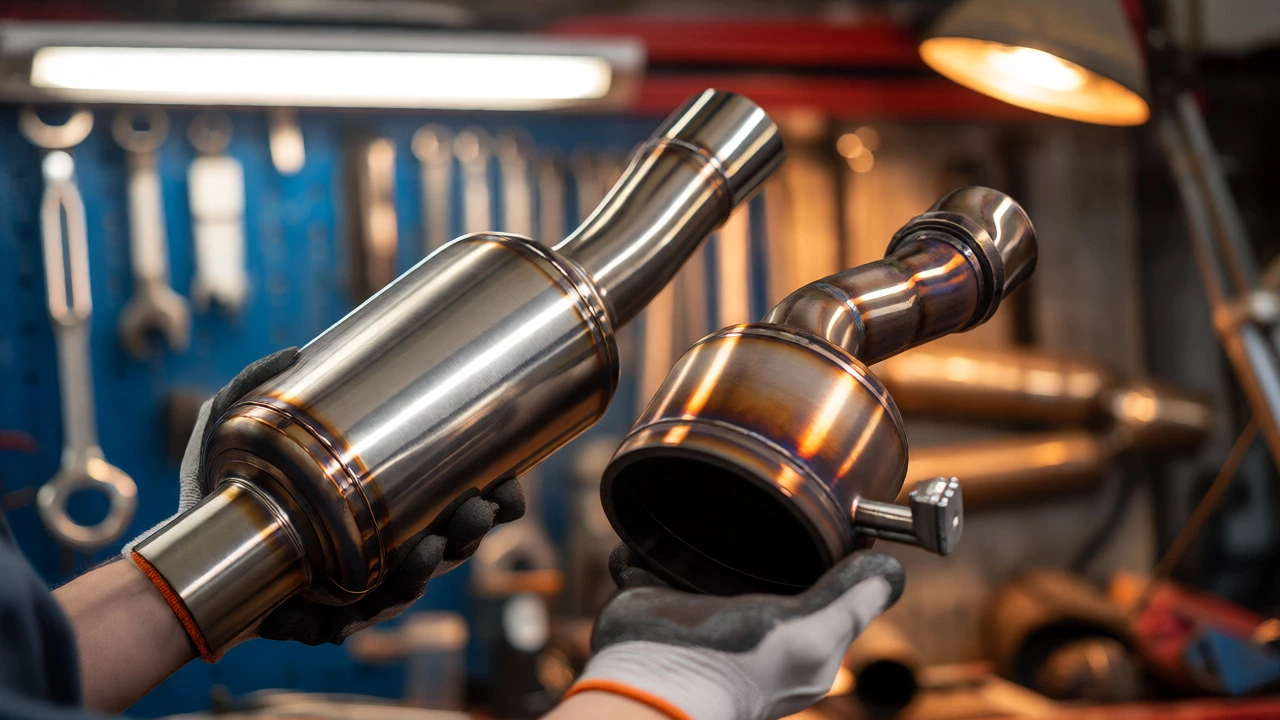
If your quote seems unusually high, check if a Catalytic Converter is involved. This small, honeycomb-like component contains precious metals-platinum, palladium, and rhodium-which are worth more than gold by weight. Because theft has skyrocketed, the market for replacements has tightened.
A direct-fit OEM (Original Equipment Manufacturer) catalytic converter for a popular model like a Honda Civic or Toyota Camry can range from $800 to $1,500 just for the part. Universal aftermarket converters might drop that to $300-$500, but beware: cheap ones often fail emissions tests within six months. Mechanics in Hamilton report a surge in customers returning for re-fits because they opted for the cheapest option available online.
- OEM Parts: Guaranteed fit, highest durability, passes all inspections. High cost.
- Aftermarket Direct-Fit: Good balance of price and quality. May void some warranties if not certified.
- Universal Fit: Cheapest upfront, requires cutting and welding. Highest risk of failure or noise issues.
Mufflers and Resonators: Where You Can Save
Unlike catalytic converters, Mufflers are relatively affordable. They are hollow chambers filled with baffles that dampen sound waves. Replacing a blown-out muffler on a standard commuter car typically costs between $200 and $450, including labor.
Why the variance? Material matters. Aluminized steel mufflers are cheaper but corrode faster in areas where road salt is used heavily-like here in Ontario during winter. Stainless steel mufflers cost 30-50% more but last twice as long. If you plan to keep your car for another five years, paying the extra $100 for stainless is a smart financial move. It prevents the annoying rattle that develops when internal baffles break loose.
Full System Replacement: When Is It Worth It?
Sometimes, replacing individual components is throwing money at a sinking ship. If your entire exhaust pipe is rusted through, or if you have multiple leaks across the mid-pipe and tailpipe, a full system replacement might actually save you money in the long run.
A complete cat-back exhaust system (everything behind the catalytic converter) for a mainstream vehicle generally costs $600 to $1,200 installed. For enthusiasts looking for performance gains, brands like Borla or MagnaFlow offer systems that improve horsepower and sound, pushing prices to $1,500+. But for daily drivers, stick to functional replacements. You aren’t buying speed; you’re buying silence and compliance with environmental laws.
| Component | Part Cost | Labor Cost | Total Estimate |
|---|---|---|---|
| Muffler Only | $80 - $250 | $100 - $200 | $180 - $450 |
| Resonator | $50 - $150 | $100 - $150 | $150 - $300 |
| Catalytic Converter (Aftermarket) | $300 - $600 | $150 - $300 | $450 - $900 |
| Catalytic Converter (OEM) | $800 - $1,500 | $150 - $300 | $950 - $1,800 |
| Full Cat-Back System | $400 - $900 | $200 - $400 | $600 - $1,300 |
Hidden Costs: Gaskets, Clamps, and Rust
Here is the trap many DIYers fall into: they buy the part, install it, and then realize the old gaskets crumbled upon removal. New Exhaust Gaskets are essential seals that prevent leaks between joints. They cost only $5-$15 each, but forgetting them leads to loud hissing noises and potential re-work.
Rust is the other silent killer. In regions with harsh winters, exhaust hangers and brackets often fuse together due to corrosion. A mechanic might quote you for a simple swap, only to find they need to cut and weld new sections because the old pipes won’t separate cleanly. This adds welding time, increasing labor costs by $100-$200. Ask your shop beforehand: "What happens if the bolts seize?" Get a written policy on extra charges for seized hardware.
DIY vs. Professional Installation: Do the Math
Can you do it yourself? Yes, if you have a jack, stands, wrenches, and a helper. The savings on labor ($150-$300) look tempting. But consider the risks. Improper alignment can cause exhaust fumes to leak into the cabin-a dangerous carbon monoxide hazard. Also, without proper torque specs, you might strip threads on aluminum components, turning a $50 job into a $500 nightmare.
Professional installation offers peace of mind and often comes with a warranty on both parts and workmanship. If the muffler rattles after two weeks, the shop fixes it for free. If you did it yourself, you’re back under the car with a wrench in hand. For complex jobs involving sensors or catalytic converters, professional help is almost always worth the premium.
How to Lower Your Bill Without Sacrificing Quality
You don’t have to pay dealership prices to get good work. Here are practical steps to reduce costs:
- Get Three Quotes: Prices vary wildly between chains, independents, and dealerships. Use online estimators first, then call local shops.
- Ask for Used Parts: For older cars, a verified used catalytic converter from a reputable recycler can save 50%. Ensure it comes with a warranty.
- Bundle Repairs: If you need new oxygen sensors alongside the exhaust work, ask for a package discount. Labor overlaps when accessing the same area.
- Check for Recalls: Some manufacturers issued recalls for faulty exhaust components. Check your VIN online before spending a dime.
Remember, the goal isn't just the lowest price-it's the best value. A $200 muffler that lasts six months is more expensive than a $400 one that lasts four years. Factor in longevity, noise reduction, and fuel efficiency impacts when making your decision.
How long does it take to replace an exhaust system?
A simple muffler replacement usually takes 1-2 hours. A full cat-back system or catalytic converter replacement typically takes 2-4 hours. If significant rust or seized bolts are present, add another 1-2 hours for extraction and preparation.
Can I drive with a broken exhaust?
Short distances are usually fine, but prolonged driving is risky. A broken exhaust can lead to increased noise, reduced fuel efficiency, and potential damage to other engine components. Crucially, if there are leaks near the cabin, carbon monoxide can enter the passenger area, posing a health risk.
Does insurance cover exhaust repairs?
Generally, no. Exhaust wear and tear is considered maintenance. However, if your catalytic converter was stolen, comprehensive auto insurance may cover the replacement cost, subject to your deductible. Always file a police report for theft to support your claim.
Are aftermarket exhaust parts bad?
Not necessarily. Reputable aftermarket brands often match or exceed OEM quality. Avoid no-name generic parts, especially for catalytic converters, as they may lack sufficient precious metal content to pass emissions tests or degrade quickly under heat.
Why is my new exhaust louder than the old one?
New parts haven't settled yet. Often, a new exhaust will sound slightly louder until the internal materials compress and settle after a few hundred miles. If it remains excessively loud, check for leaks at the joints or ensure the correct part number was installed.