 Dec, 5 2025
Engine Oil Selector Tool
Find Your Engine Oil
Enter your vehicle details to get a precise oil recommendation that matches your owner's manual specifications.
Recommended Oil Specification
Type:
Viscosity:
API/ILSAC:
Important: This recommendation matches the vehicle's requirements. Always check your owner's manual for specific instructions.
Why This Oil?
Every time you open your hood, you’re staring at a mystery: a small, unassuming dipstick that holds the key to your engine’s health. But if you’ve ever stood there wondering, what engine oil I need, you’re not alone. Too thick? Too thin? Synthetic or conventional? Full synthetic? Synthetic blend? The labels on the bottle can feel like a foreign language. And getting it wrong isn’t just inconvenient-it can cost you thousands in repairs.
Start with Your Owner’s Manual
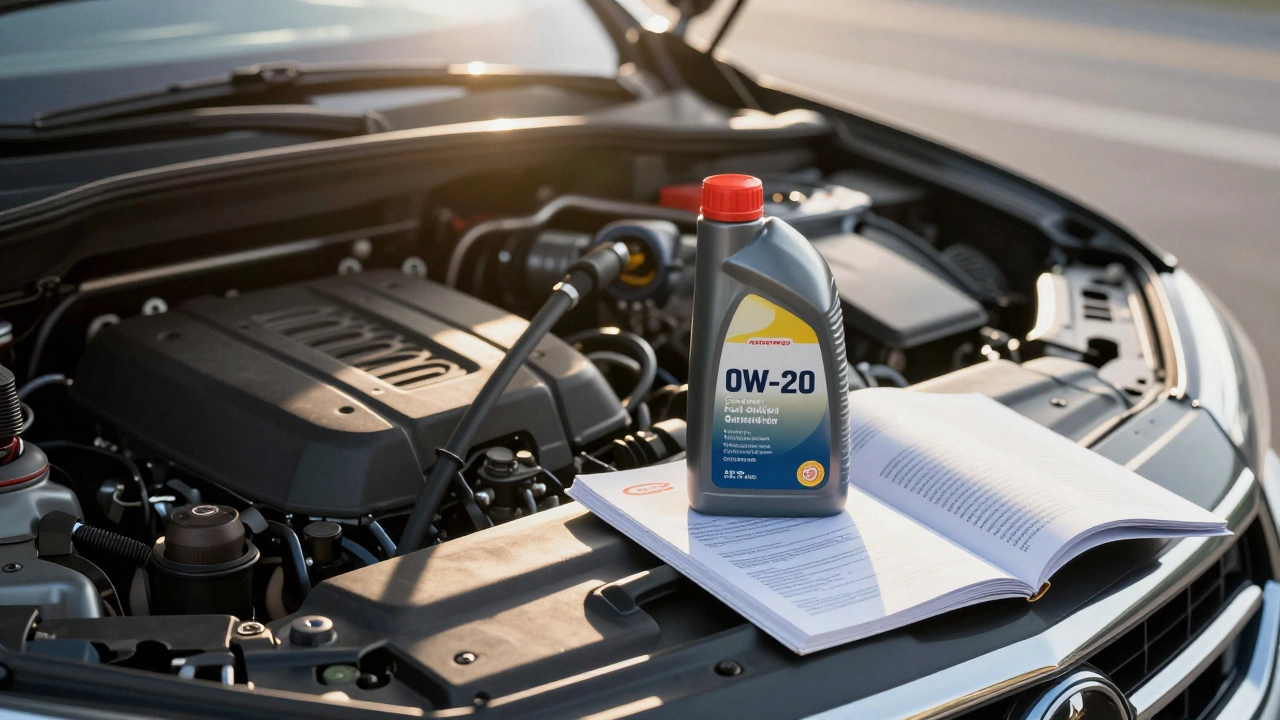
Your car’s owner’s manual isn’t just a relic from the dealership. It’s the only document that knows exactly what your engine was designed to use. Look for the section labeled "Maintenance," "Lubrication," or "Engine Oil." You’ll find three critical pieces of information: the viscosity grade (like 5W-30), the oil type (conventional, synthetic blend, or full synthetic), and the API or ILSAC specification (like SN or SP).For example, a 2022 Honda Civic might require API SP, SAE 0W-20 full synthetic oil. A 2018 Ford F-150 with a 5.0L V8 might need API SN, SAE 5W-20 synthetic blend. These aren’t suggestions-they’re requirements. Manufacturers test their engines with specific oils to ensure performance, fuel economy, and longevity. Using something else can void your warranty, especially if you’re still under coverage.
Understand Viscosity: The 5W-30 Puzzle
Viscosity is how thick or thin the oil flows. It’s measured in two parts: the number before the W (winter) and the number after. The first number tells you how well the oil flows when cold. The second tells you how thick it stays when hot.So 5W-30 means: flows like a 5-weight oil in winter cold, but thickens to a 30-weight when the engine hits 100°C. Lower numbers like 0W-20 or 5W-20 are thinner and help engines start faster in freezing temperatures and improve fuel economy. Higher numbers like 10W-40 are thicker and used in older engines or high-mileage vehicles where internal clearances have widened.
Don’t guess. If your manual says 5W-30, don’t switch to 10W-40 because you think "thicker is better." Modern engines have tight tolerances. Too thick, and the oil won’t reach critical parts fast enough on startup. Too thin, and it can’t protect under load. Both lead to premature wear.
Know Your Oil Type: Synthetic vs. Conventional
There are three main types of engine oil:- Conventional oil: Refined from crude oil. Cheaper, but breaks down faster. Best for older cars with high mileage that don’t push hard.
- Synthetic blend: Mix of conventional and synthetic. Offers better protection than conventional at a lower cost than full synthetic.
- Full synthetic: Engineered in labs. Superior heat resistance, longer life, better flow in cold weather. Required for most modern cars, especially turbocharged or direct-injection engines.
If your manual says "synthetic oil only," that’s not a suggestion-it’s a mandate. Turbocharged engines run hotter than ever. Direct injection creates more carbon buildup. Conventional oil can’t handle it. You’ll end up with sludge, reduced power, and maybe even a failed turbocharger.
For example, a 2020 Toyota Camry with a 2.5L four-cylinder engine needs full synthetic 0W-20. A 2005 Chevy Silverado with 180,000 miles and a naturally aspirated V8? Conventional 10W-30 still works fine. The key is matching the oil to the engine’s design, not the car’s age.
Check the API and ILSAC Standards
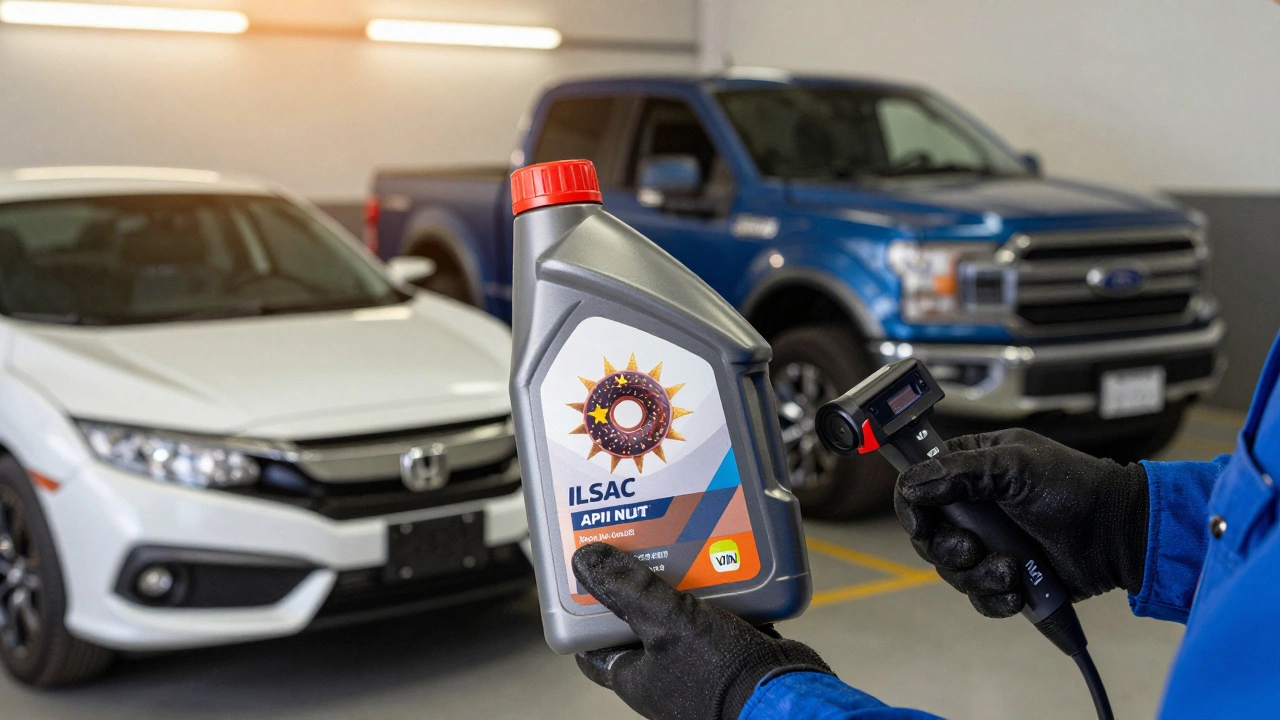
The API (American Petroleum Institute) and ILSAC (International Lubricant Standardization and Approval Committee) labels on the bottle aren’t marketing fluff. They tell you what performance standards the oil meets.Look for the API Service Symbol (the donut). Inside, you’ll see a letter like SP, SN, SM, SL. SP is the current highest standard (introduced in 2020). SN is still widely used and acceptable for many cars made before 2020. SL and earlier are outdated and should be avoided in modern engines.
ILSAC GF-6 is the latest fuel economy and engine protection standard. It’s backward compatible with GF-5. If your manual says "ILSAC GF-6," use it. If it says "GF-5," you can use GF-6-but not the other way around. Using an older oil in a new engine risks damaging the emissions system or variable valve timing components.
High Mileage Oil: Is It Worth It?
If your car has over 75,000 miles, you might see bottles labeled "High Mileage Oil." These contain seal conditioners to reduce leaks and detergents to clean sludge. They’re not magic. If your engine isn’t leaking oil or burning it, you don’t need it. But if you’re noticing oil spots under your car or blue smoke on startup, switching to high mileage oil can help.Just make sure the viscosity and API rating still match your manual. A high mileage 5W-30 with API SP is fine. A high mileage 10W-40 with API SL? That’s a problem.
What Happens If You Use the Wrong Oil?
Using the wrong oil doesn’t always mean immediate failure. But the damage builds slowly.- Too thick: Poor cold-start lubrication → increased engine wear → higher fuel consumption.
- Too thin: Oil film breaks down under load → metal-to-metal contact → bearing damage.
- Wrong type: Synthetic oil in an engine designed for conventional? Might be okay short-term. Conventional in a turbo engine? You’re asking for carbon buildup and turbo failure.
- Wrong specification: Using API SN in a car that needs SP? You risk damaging the catalytic converter or variable valve timing system.
One real-world example: a 2018 Subaru Outback owner used 10W-30 conventional oil because it was on sale. After 15,000 miles, the engine started knocking. A mechanic found carbon buildup on the variable valve timing solenoids-caused by the oil breaking down too fast. Repair cost: $3,200.
How to Double-Check Your Oil Choice
Still unsure? Here’s how to verify:- Find your VIN (Vehicle Identification Number) on the driver’s side dashboard or door jamb.
- Go to the oil manufacturer’s website (Mobil, Castrol, Pennzoil, etc.).
- Use their oil selector tool. Enter your year, make, model, and engine.
- It will return the exact oil type, viscosity, and specification.
Or ask your mechanic. Not the guy at the quick-lube spot who’s pushing a $100 synthetic oil change. Ask someone who works on your exact model. A Subaru specialist will know the 2.5L engine needs 0W-20 full synthetic. A Ford technician will know the EcoBoost 2.3L needs 5W-30 full synthetic with API SP.
When in Doubt, Stick to the Manual
You don’t need to overthink this. The answer is in your manual. No app, no YouTube video, no mechanic’s opinion overrides it. If you lost your manual, download a PDF from the manufacturer’s website. Most automakers offer free digital copies.And if you’re buying oil online or at the store, don’t just grab the cheapest bottle with "5W-30" on it. Look for the API donut and ILSAC starburst. Make sure the viscosity matches. Make sure the type matches. Make sure the specification matches.
That’s it. No magic. No guesswork. Just matching the oil to the engine’s needs.
What About Oil Additives?
Skip them. Modern oils already contain detergents, dispersants, anti-wear agents, and friction modifiers. Adding extra additives-like those marketed to "stop leaks" or "increase horsepower"-can actually disrupt the oil’s chemistry. Some additives have been linked to catalytic converter damage. Others can cause sludge buildup. Your oil is engineered to work alone. Don’t mess with it.Final Tip: Change It on Time
Even the right oil won’t help if you never change it. Most modern cars recommend oil changes every 10,000 to 15,000 kilometers, or once a year-whichever comes first. If you drive in stop-and-go traffic, extreme heat, or dusty conditions, stick to the lower end of that range.And don’t ignore the oil life monitor. If your car has one, trust it. It tracks driving conditions, not just mileage. It’s smarter than any calendar.
Can I use any 5W-30 oil in my car?
No. Not all 5W-30 oils are the same. You need the right viscosity and the correct API specification (like SP or SN) and oil type (synthetic, blend, or conventional). Using a 5W-30 with the wrong specification can damage emissions systems or turbochargers.
Is synthetic oil better than conventional oil?
For modern engines, yes. Synthetic oil resists breakdown better, flows easier in cold weather, and protects better under high heat. If your manual requires synthetic, you must use it. For older cars with no performance demands, conventional oil still works fine.
What happens if I mix synthetic and conventional oil?
You can mix them in an emergency without immediate damage. But it’s not ideal. Synthetic oils have different additives and base stocks. Mixing them can reduce performance and shorten the oil’s lifespan. Always top off with the same type your engine requires.
Do I need to flush my engine before switching to synthetic oil?
No. Modern engines don’t need flushing. Synthetic oil is designed to clean as it circulates. A flush can actually stir up sludge and clog oil passages. Just change the oil and filter normally. If your engine has heavy sludge, have a mechanic inspect it before switching.
Can I use diesel oil in my gasoline engine?
No. Diesel oils (like CJ-4 or CK-4) are formulated for different combustion byproducts and higher soot levels. They contain additives that can harm gasoline engine components like catalytic converters. Always use oil labeled for gasoline engines.