 Feb, 13 2026
When your car starts acting weird-sputtering on the highway, struggling to start in the morning, or losing power when you step on the gas-it’s easy to blame the battery, the spark plugs, or even bad gas. But if these symptoms keep showing up and nothing else seems off, your fuel pump might be on its last legs. Most people don’t think about the fuel pump until their car won’t start at all. By then, it’s too late. The truth? Fuel pumps give warning signs long before they die completely. And if you catch them early, you can avoid being stranded on the side of the road.
It Stalls or Sputters at High Speeds
One of the clearest signs a fuel pump is failing is when your car sputters or stalls while driving at highway speeds. You’re cruising along at 100 km/h, everything’s smooth, then suddenly the engine hesitates like it’s running out of air. You press the gas harder, but the car doesn’t respond. It’s not the engine. It’s not the air filter. It’s the fuel pump not keeping up with demand.
Fuel pumps are designed to deliver a steady flow of gas under pressure. When they wear out, they can’t maintain that pressure when the engine needs more fuel-like when you’re accelerating or climbing a hill. In older cars with mechanical pumps, this happens more often. But even modern electric pumps in the gas tank can weaken over time. If this happens repeatedly, especially on long trips, don’t ignore it. It’s not a one-time glitch. It’s the pump gasping for breath.
Your Car Struggles to Start-Especially When Warm
Think about this: your car starts fine in the morning, but after you’ve driven it, shut it off, and come back 20 minutes later, it takes forever to turn over. Or worse-it cranks but won’t catch. This isn’t a dead battery. It’s the fuel pump losing its ability to build pressure after it’s been heated up by the engine.
Fuel pumps generate heat as they run. When they start to fail, the internal components get too hot and temporarily lose efficiency. That’s why cold starts are fine, but hot restarts are a nightmare. I’ve seen this happen dozens of times in Hamilton winters. People think it’s the starter, or the fuel injectors. But if you hear the fuel pump whine for a second when you turn the key-then nothing-chances are, the pump is weakening. A working pump makes a quiet hum. A failing one makes a strained, irregular buzz.
The Engine Dies Under Load
Have you ever noticed your car losing power when you’re towing something, climbing a steep hill, or even just accelerating hard out of a stoplight? If your engine suddenly feels like it’s running on half its cylinders, and then catches back up after you ease off the gas, that’s another red flag.
Under load, the engine needs more fuel. A healthy fuel pump delivers extra volume on demand. A failing one can’t. It’s like trying to drink a thick shake through a straw that’s half-clogged. You can sip slowly, but when you try to gulp, it chokes. The same thing happens in your engine. The car might feel fine during light driving, but under pressure, it gives out. This isn’t normal. It’s not just an old engine. It’s a fuel delivery problem.
You Hear a Loud Whining Noise from the Gas Tank
Most people don’t realize their fuel pump even makes noise. But if you hear a loud, high-pitched whining coming from the back of the car-especially when the engine is idling or just after you turn it on-that’s not normal. A healthy fuel pump hums quietly. A failing one whines, screams, or buzzes erratically.
This noise comes from worn bearings or a struggling motor inside the pump. The louder it gets, the closer it is to complete failure. I’ve had customers come in saying, “My car sounds like a dentist’s drill.” That’s not an exaggeration. If you hear this, especially if it’s new or getting worse, don’t wait. The pump could die next week-or next time you hit the highway.
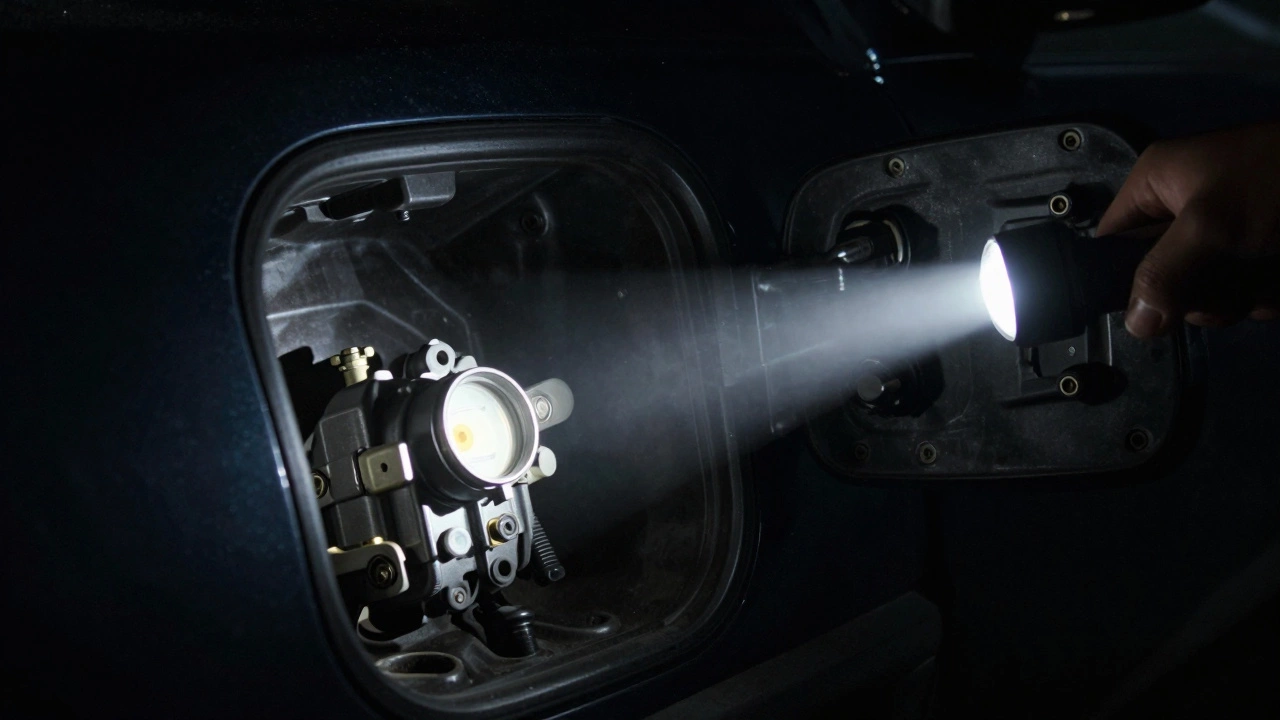
Check Engine Light Comes On (Without Other Codes)
Modern cars have sensors that monitor fuel pressure. If the fuel pump can’t maintain the right pressure, the engine control unit will throw a code-and turn on the check engine light. But here’s the catch: the code might not say “fuel pump.” It could say “P0191: Fuel Rail Pressure Too Low” or “P0087: Fuel System Pressure Too Low.” These codes point to fuel delivery, not the injectors or sensors.
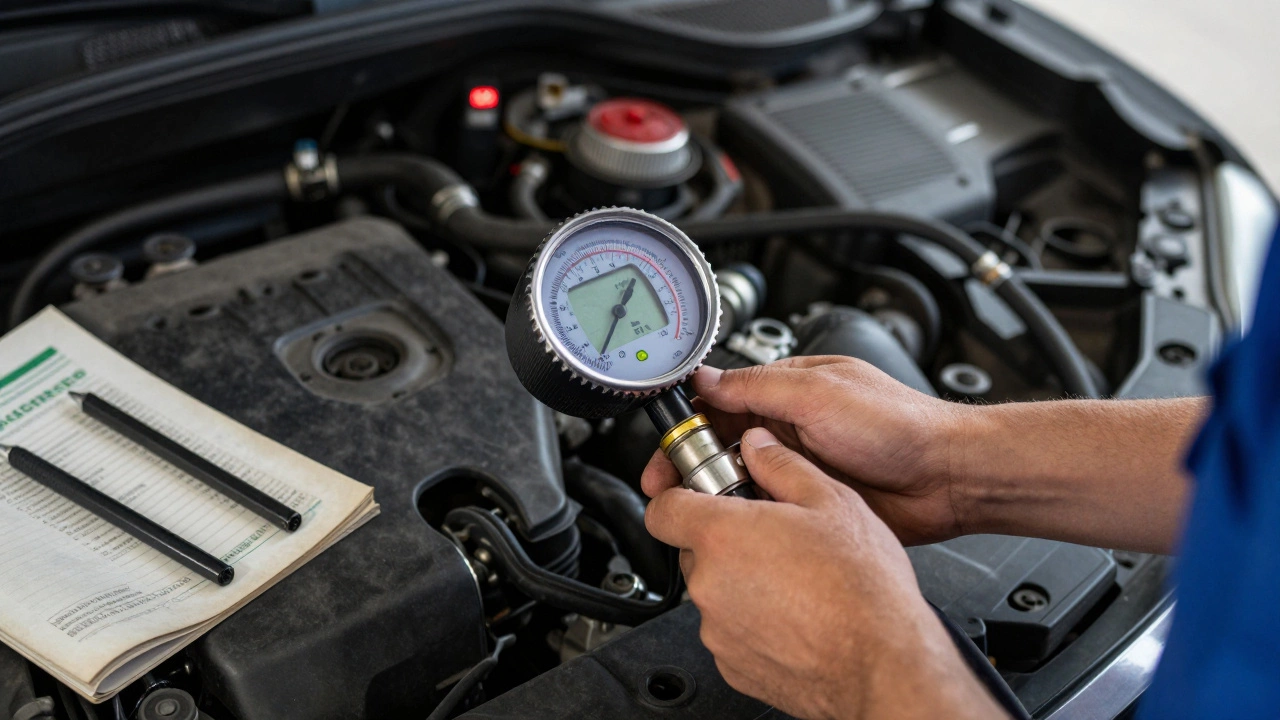
If your check engine light is on, and the scan tool shows low fuel pressure without any other major codes (like misfires or O2 sensor faults), the pump is the likely culprit. A lot of mechanics skip checking the fuel pump first because it’s harder to test. But if the pressure readings are low and everything else checks out, the pump is the problem.
Your Fuel Economy Drops for No Reason
Have you noticed your car suddenly using more gas than usual? You’re not driving differently. You’re not hauling extra weight. You haven’t changed routes. But your miles per gallon have dropped 15-20%. That’s not just bad gas. That’s a failing fuel pump.
When the pump can’t deliver fuel efficiently, the engine’s computer tries to compensate by spraying more fuel into the cylinders. It thinks it’s not getting enough, so it overcompensates. The result? You’re burning more fuel than you should. It’s like leaving your faucet running while you brush your teeth-you’re wasting it without realizing why.
Your Car Won’t Start at All-But You Can Still Hear the Pump
This one’s scary. You turn the key. Nothing. No cranking, no clicking, just silence. You think it’s the battery. But the lights come on. The radio works. So it’s not the battery. You hear a faint whirring sound from the gas tank when you turn the key. That’s the pump trying to work.
If you hear the pump but the engine still won’t start, the pump might be running but not delivering enough fuel. Or worse-it’s delivering fuel, but not at the right pressure. Either way, it’s not working as it should. In some cases, tapping the gas tank lightly while someone turns the key can get the pump to kick in for a second. If that works-even briefly-it’s a dead giveaway. The pump’s motor is stuck or worn out. It needs replacement.
What Happens If You Ignore It?
Ignoring a failing fuel pump doesn’t just mean you’ll get stranded. It can damage other parts of your car. A weak pump forces the fuel injectors to work harder. It can cause the fuel filter to clog faster. In extreme cases, metal shavings from a grinding pump can flow into the fuel lines and ruin the injectors or even the engine itself.
And here’s the kicker: fuel pumps are expensive to replace-but not nearly as expensive as replacing a fuel injector set or cleaning out a contaminated fuel system. Most fuel pumps last 100,000 to 150,000 km. If your car is hitting that range and you’re seeing any of these symptoms, replace it before it leaves you in the cold.
How to Test It (Without a Mechanic)
You don’t need a shop to check your fuel pump. Here’s a simple test you can do at home:
- Turn the key to the “on” position (don’t start the engine).
- Listen near the gas tank. You should hear a 2-3 second hum as the pump primes the system.
- If you hear nothing, tap the tank gently with your hand. If the pump starts, it’s weak.
- Try starting the car. If it cranks but won’t run, spray a little starting fluid into the air intake. If it fires up briefly, the fuel pump isn’t delivering fuel.
This isn’t a professional test, but it’s enough to tell you if you’re in trouble. If you’re unsure, take it to a shop. Most will test fuel pressure for under $100.
What to Do Next
If you’ve noticed multiple symptoms-sputtering, hard starts, noise, poor fuel economy-it’s time to act. Don’t wait for the car to die on the highway. Replacing a fuel pump is a job that takes a few hours. But it’s not something you should delay.
Use a quality replacement. Cheap pumps fail faster. Look for OEM or reputable aftermarket brands like Bosch, Delphi, or Denso. And if your car is older than 10 years, consider replacing the fuel filter at the same time. It’s cheap insurance.
And if you live in a place like Hamilton where winter hits hard, don’t let your tank drop below a quarter full. Running low on gas makes the pump overheat and wear out faster. Keep it full. It’s the easiest way to extend its life.