 Nov, 13 2026
Car Battery Lifespan Estimator
Answer the questions below to estimate how long your current battery might last and when you should consider replacing it.
1. Current Battery Age
2. Climate Zone
3. Driving Habits & Usage
Estimated Status:
Why this score?
You turn the key, and instead of the engine roaring to life, you get that dreaded clicking sound. It’s annoying, but it’s also a clear signal: your car battery is on its last legs. But how long should you actually expect it to stick around before you need to spend money on a new one? The short answer is three to five years, but that number hides a lot of variables. Where you live, how you drive, and even what kind of electronics you plug in can shave months or add years to that timeline.
Understanding the real factors behind battery life saves you from getting stranded and helps you avoid replacing a perfectly good unit too early. Let’s break down exactly what determines longevity, how to spot the warning signs before you’re stuck, and which type of battery gives you the best bang for your buck.
The Real Numbers: Average Car Battery Lifespan
Most standard automotive batteries are designed to last between three and five years. This isn’t just a manufacturer’s guess; it’s based on the chemical degradation of the lead plates inside the casing. Every time you start your car, a chemical reaction occurs that converts stored energy into electricity. Over time, this process wears down the internal components. Sulfation builds up on the plates, reducing their ability to hold a charge.
However, treating "five years" as a guarantee is risky. In milder climates like Hamilton, Canada, where I live, temperatures rarely drop below -10°C often enough to kill a battery instantly, so batteries here might lean toward the four-to-five-year mark. In contrast, if you live in Arizona or Florida, heat accelerates the evaporation of battery fluid and increases corrosion, potentially cutting lifespan down to two or three years. Cold doesn’t necessarily kill the battery faster chemically, but it exposes weak batteries by increasing the power needed to crank a frozen engine.
| Climate Type | Average Lifespan | Primary Stressor |
|---|---|---|
| Cold (e.g., Northern Canada) | 4-5 Years | Cold Cranking Amps demand, slow charging |
| Mild/Temperate (e.g., Pacific Northwest) | 3-5 Years | Short trips preventing full recharge |
| Hot (e.g., Southern US) | 2-3 Years | Heat-induced fluid evaporation, corrosion |
What Actually Kills Your Battery?
It’s not just age. Several specific habits and conditions accelerate wear. If you want your battery to hit that five-year mark, you need to understand these enemies.
Short Trips: This is the silent killer. Your alternator needs time to recharge the battery after the initial burst of energy used to start the engine. A typical cold start uses about 1% of the battery’s capacity. If you only drive 5-10 minutes to work, the alternator never fully replenishes that charge. Over weeks, the battery stays in a state of partial discharge, which leads to permanent sulfation.
Parasitic Drain: Modern cars are computers on wheels. Dash cams, aftermarket stereos, and even the clock memory draw power when the car is off. While small, a consistent drain over several days of non-use can deplete a battery enough to prevent starting. If your car sits unused for more than two weeks, consider using a trickle charger.
Vibration: Loose batteries shake. Constant vibration damages the internal lead plates and can cause short circuits. Always ensure your battery hold-down clamp is tight. If you hear rattling under the hood, check the mount.
Battery Types: Lead-Acid vs. AGM vs. Lithium
Not all batteries are created equal. The technology inside dictates both price and lifespan. Choosing the right one depends on your vehicle’s electrical demands.
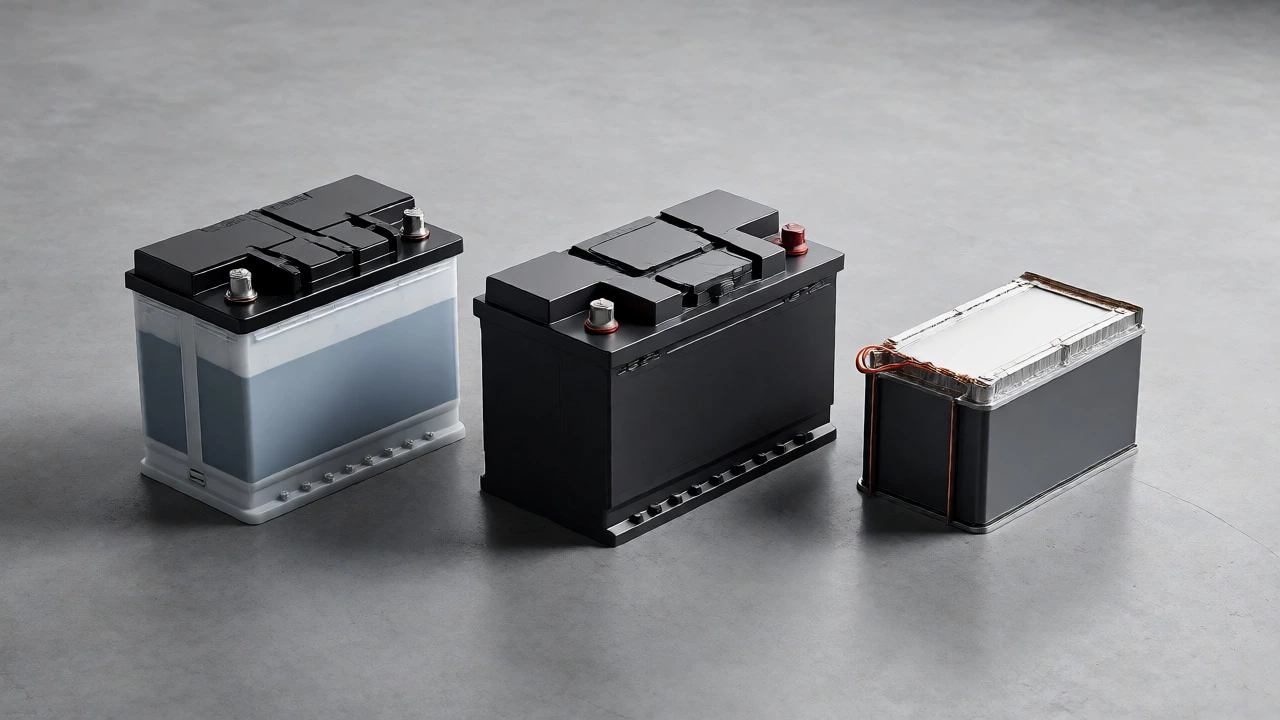
Flooded Lead-Acid is the traditional, cheapest option. It contains liquid electrolyte and requires occasional maintenance (checking fluid levels). It’s fine for basic cars with minimal electronics but struggles with Stop-Start systems.
AGM (Absorbent Glass Mat) batteries are sealed and spill-proof. The glass mat absorbs the electrolyte, making them resistant to vibration and capable of handling deep discharges. They are essential for cars with Start-Stop technology because they recharge much faster. Expect to pay 30-50% more, but they often last longer in demanding applications.
Lithium-Ion is emerging in luxury EVs and high-end performance cars. They are lighter and have a longer cycle life but come with a steep price tag and complex management systems. For most regular drivers, AGM is the sweet spot between cost and performance.

Signs You Need a Replacement Now
Don’t wait for total failure. Batteries give warnings. Here is what to look for:
- Slow Engine Crank: When you turn the key, the engine sounds sluggish or labored. This is the most common sign of low voltage.
- Dim Headlights: If your headlights look yellowish or dim at idle but brighten when you rev the engine, your battery isn’t holding a strong charge.
- Dashboard Warning Light: The battery symbol (often looks like a plus and minus sign) illuminating on your dash indicates the charging system or battery itself is failing.
- Swollen Case: Heat can cause the battery case to bulge. This is dangerous and means the internal structure is compromised. Replace immediately.
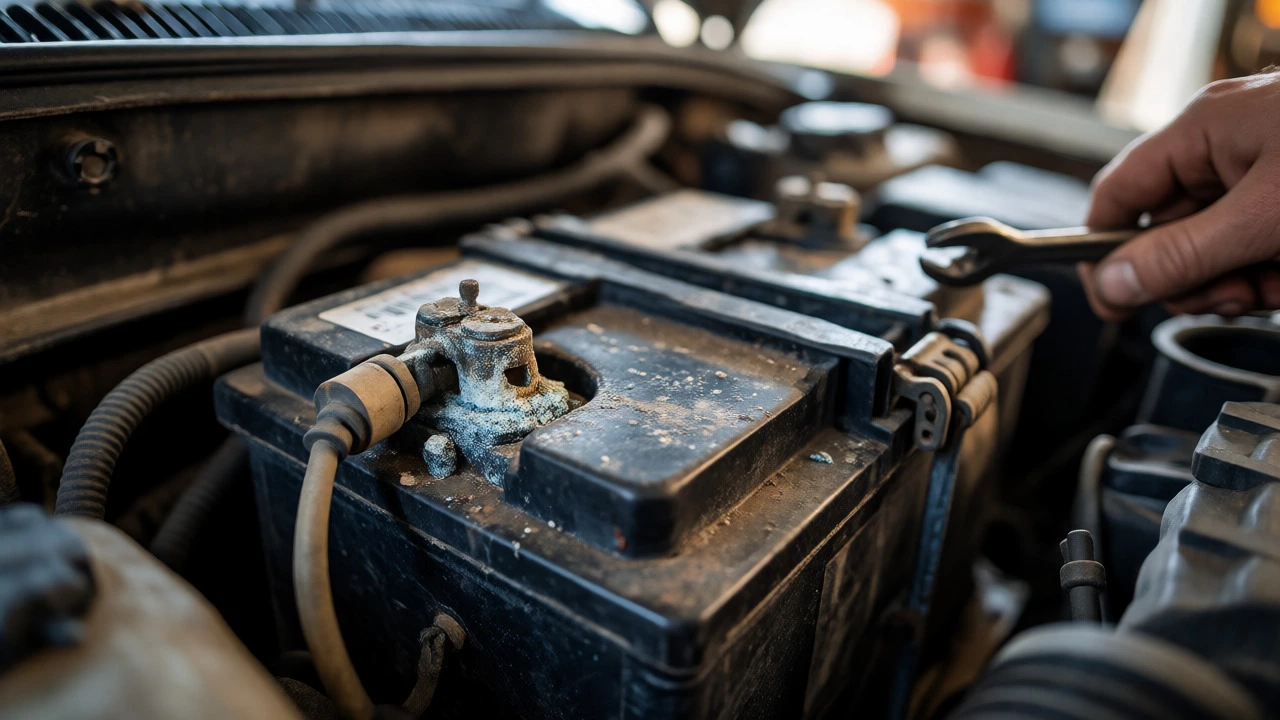
- Rotten Egg Smell: A sulfur smell near the battery indicates overcharging or leaking acid. Check terminals for white/blue crusty corrosion.
How to Extend Your Battery Life
You can’t stop chemistry, but you can slow it down. Simple habits go a long way.
- Drive Longer Routes: Try to take one longer drive (20+ minutes) per week to let the alternator fully top off the battery.
- Keep Terminals Clean: Corrosion blocks current flow. Mix baking soda and water, scrub the terminals with an old toothbrush, and rinse with clean water. Apply petroleum jelly to prevent future buildup.
- Turn Off Electronics: Don’t leave lights, radios, or chargers plugged in when the engine is off. Parasitic drain adds up quickly.
- Check the Belt: A loose serpentine belt slips, causing the alternator to spin slower and charge less efficiently. Listen for squealing noises.
- Use a Trickle Charger: If your car sits for long periods, a smart maintainer keeps the battery at optimal voltage without overcharging it.
When to Test vs. When to Replace
Should you test first or just buy a new one? If your battery is under three years old and shows symptoms, test it. Auto parts stores often do free load tests. They measure Cold Cranking Amps (CCA) versus actual output. If the CCA drops below 70% of the rated value, replace it.
If your battery is over four years old and you have any symptoms, skip the testing hassle. Just replace it. Testing equipment can sometimes pass a dying battery that fails under real-world stress. The cost of a tow truck usually exceeds the price difference between testing and buying a new battery.
Cost Factors and Buying Tips
Prices vary wildly. A basic flooded battery might cost $80-$120, while a premium AGM could run $150-$250. Installation fees add another $20-$50 if you don’t do it yourself.
Always match the Group Size (physical dimensions) and Terminal Orientation (positive/negative post location) of your old battery. Check the Reserve Capacity (RC) rating; higher RC means the car can run longer if the alternator fails. For modern cars with lots of tech, prioritize higher CCA ratings, especially if you live in a cold climate.
Remember, the warranty matters. Most batteries come with a 2-3 year free replacement warranty. Keep your receipt. If your battery dies in month 35 of a 36-month warranty, you’ll likely get a prorated credit rather than a free swap.
Can a completely dead car battery be recharged?
Yes, if it’s due to parasitic drain or short trips. Jump-starting or using a charger can revive it. However, if the battery is old and the cells are sulfated, recharging might provide temporary relief but won’t restore full capacity. If it dies again within a few days, it needs replacement.
Does driving fast charge the battery faster?
Not significantly. The alternator charges based on RPMs, but once it reaches a certain speed, the output stabilizes. Driving 60 mph vs 80 mph doesn’t double the charging rate. What matters is duration. A steady highway drive for 30 minutes is better than ten minutes of city stop-and-go, regardless of speed.
Why did my new battery die so quickly?
This usually points to an underlying issue, not the battery itself. Common culprits include a faulty alternator not charging properly, a parasitic drain from a malfunctioning module, or extreme weather conditions. Have your charging system tested before blaming the new battery.
Is it safe to jump-start a car myself?
Yes, if done correctly. Connect positive to positive, then negative to a metal ground on the receiving car (not the battery terminal directly, to avoid sparks near gases). Start the donor car, wait a minute, then try starting the dead car. Disconnect in reverse order. Wear eye protection.
How often should I check my battery?
Inspect visually every oil change (every 5,000-7,500 miles) for corrosion or leaks. Perform a professional load test annually if your battery is older than three years. Before winter, always get a check-up to ensure it can handle cold starts.