 Jun, 5 2026
Radiator Lifespan & Health Estimator
Assessment Results
Estimated Remaining Lifespan:
Health Score:
Recommended Actions:
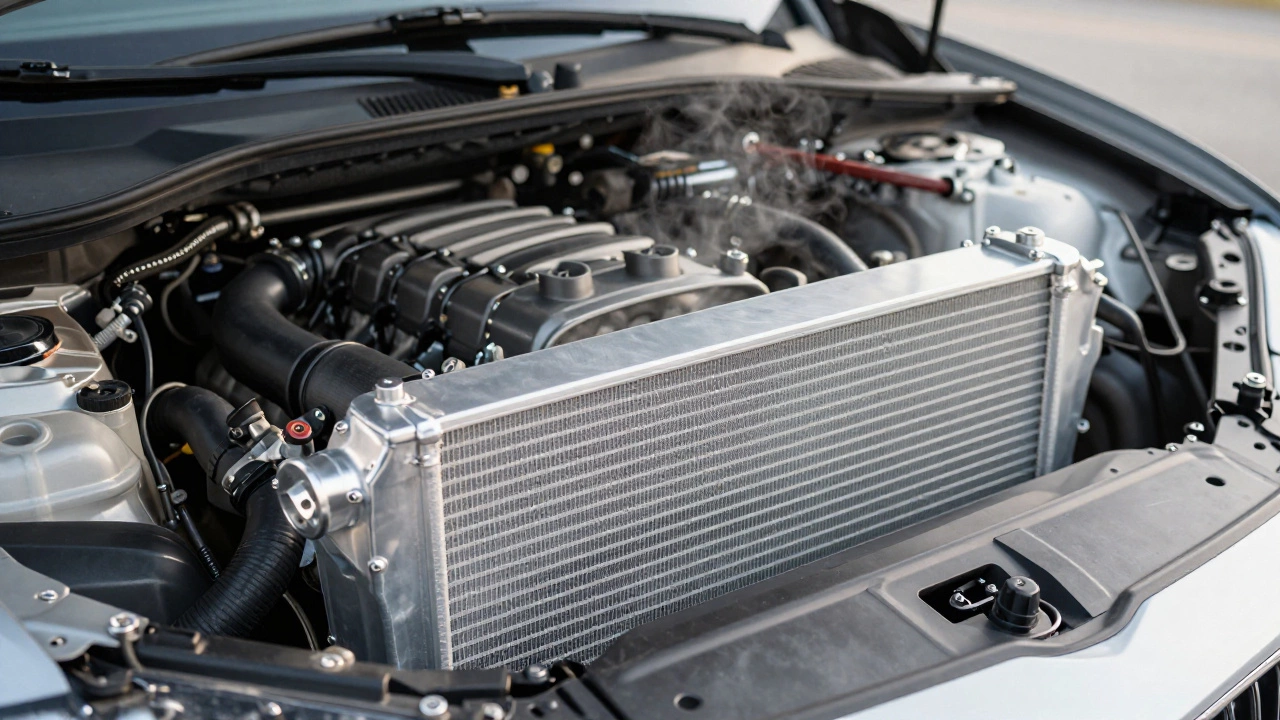
Your car’s engine is a heat-generating beast. Without something to keep it cool, that metal block would warp, seize, and destroy itself in minutes. That’s where the car radiator comes in. It acts as the primary heat exchanger, pulling thermal energy out of your engine coolant and dumping it into the air as you drive. But like any mechanical part exposed to extreme temperatures and vibration, it doesn’t last forever. So, what is the average lifespan of a radiator?
Generally, a well-maintained car radiator lasts between 8 to 10 years, or roughly 100,000 to 150,000 kilometers. However, this number is a moving target. Some radiators fail after just three years due to poor coolant quality, while others survive for two decades because they were flushed regularly and protected from road debris. The difference usually comes down to material composition, driving conditions, and how diligently you maintain your cooling system.
The Material Factor: Aluminum vs. Copper
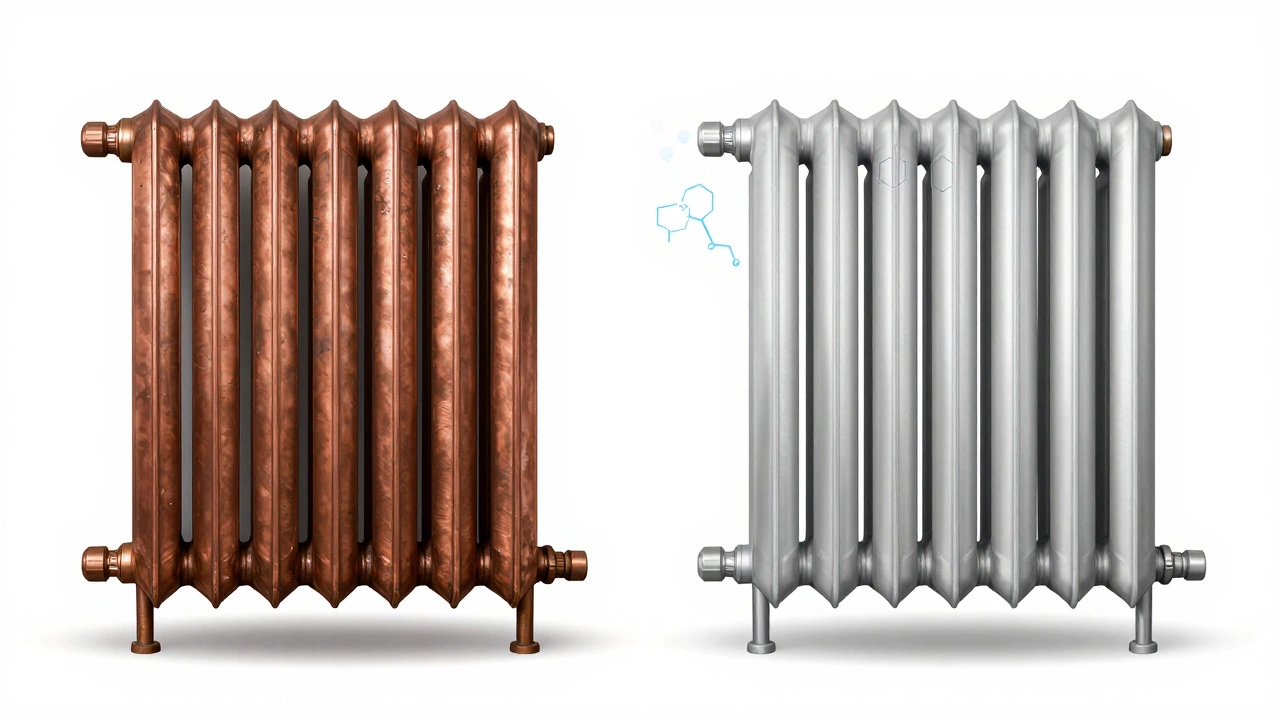
To understand why your radiator might die early or live long, you have to look at what it’s made of. Decades ago, almost every vehicle rolled off the assembly line with a copper-brass radiator. These units were heavy, expensive to manufacture, but incredibly durable. They could withstand high pressures and resist corrosion better than modern alternatives, often lasting the lifetime of the car if maintained properly.
Today, nearly all passenger vehicles use aluminum radiators. Aluminum is lighter and conducts heat more efficiently than copper, which helps improve fuel economy-a critical factor in meeting modern emissions standards. However, aluminum has a weakness: it is highly susceptible to galvanic corrosion. When different metals (like an aluminum radiator core and a cast-iron engine block) sit in the same fluid, chemical reactions can eat away at the softer metal over time. This shift in materials is the main reason modern radiators have a shorter expected lifespan compared to their vintage counterparts.
| Feature | Copper-Brass (Older Cars) | Aluminum (Modern Cars) |
|---|---|---|
| Average Lifespan | 15-20+ years | 8-10 years |
| Heat Efficiency | Good | Excellent |
| Weight | Heavy | Light |
| Corrosion Resistance | High | Moderate (requires inhibitors) |
| Repairability | Easily soldered | Difficult; often requires replacement |
The Silent Killer: Coolant Degradation
If the radiator is the heart of the cooling system, the coolant (or antifreeze) is the blood. Most drivers think coolant just prevents freezing in winter, but its job is actually much broader. It contains chemical additives called corrosion inhibitors that coat the inside of your radiator, water pump, and engine block to prevent rust and scale buildup.
Here is the catch: these inhibitors break down over time. In older "green" ethylene glycol coolants, the protection typically lasts about two years or 40,000 kilometers. If you ignore the manufacturer’s recommendation to flush and replace the coolant, the protective layer vanishes. Once that happens, the raw metal surfaces are exposed to acidic byproducts of combustion and oxidation. This leads to sludge formation, clogged passages, and eventual pinhole leaks in the radiator core.
Newer vehicles often use "long-life" or "extended-life" coolants (often orange, pink, or yellow). These Organic Acid Technology (OAT) formulas claim to last up to five years or 160,000 kilometers. While impressive, they are not immortal. Even OAT coolants lose their pH balance eventually. If you buy a used car and the previous owner never changed the fluid, you might be looking at a radiator on borrowed time, regardless of how many kilometers are on the odometer.
Driving Conditions and External Damage
Your driving habits and environment play a massive role in radiator longevity. Living in Hamilton, Canada, means dealing with distinct seasonal challenges. In winter, we throw salt and grit on the roads to melt ice. That abrasive mix gets kicked up by tires and hammers the front end of your vehicle. The thin fins of an aluminum radiator are easily bent or punctured by small stones. A single dent can disrupt airflow, causing localized overheating that weakens the metal structure over time.
Summer brings its own set of problems. High ambient temperatures mean your cooling system has to work harder. If you frequently tow trailers, drive in stop-and-go city traffic, or ride the brakes downhill, your engine generates excess heat. This puts constant stress on the radiator’s seals and tanks. Rubber hoses and plastic overflow tanks degrade faster under thermal cycling, leading to external leaks that aren't necessarily caused by the radiator core itself but still render the unit useless.
Additionally, rodents are a surprisingly common cause of premature radiator death. Mice and rats love nesting in the warm engine bay during cold months. They chew through wiring, insulation, and yes, the soft rubber hoses connected to the radiator. In some cases, they even gnaw on the plastic end tanks of the radiator itself, creating slow drips that go unnoticed until the coolant level drops critically low.
Signs Your Radiator Is Failing
Radiators rarely fail overnight. They give you warnings. Ignoring these signs can turn a simple $300 repair into a $3,000 engine rebuild. Here is what to watch for:
- Visible Leaks: Puddles of green, orange, or red fluid under the front of your car. Note that evaporated coolant smells sweet, like maple syrup. If you see steam rising from the hood or smell that sweetness, pull over immediately.
- Discolored Coolant: Clean coolant should be translucent. If it looks brown, rusty, or oily, there is internal contamination. Rust indicates corrosion inside the radiator; oil suggests a blown head gasket, which is a separate but related disaster.
- Overheating Gauge: If your temperature gauge climbs higher than normal, especially in traffic, your radiator isn't transferring heat effectively. This could be due to clogged passages or a stuck thermostat.
- Sludge Buildup: When opening the radiator cap (only when cold!), you should see clear liquid. If you see gel-like particles or rust flakes, the internal chemistry has failed.
- Physical Damage: Inspect the front of the radiator for dents, bent fins, or cracks in the plastic tanks. Even minor damage can compromise pressure integrity.
Maintenance Tips to Extend Lifespan
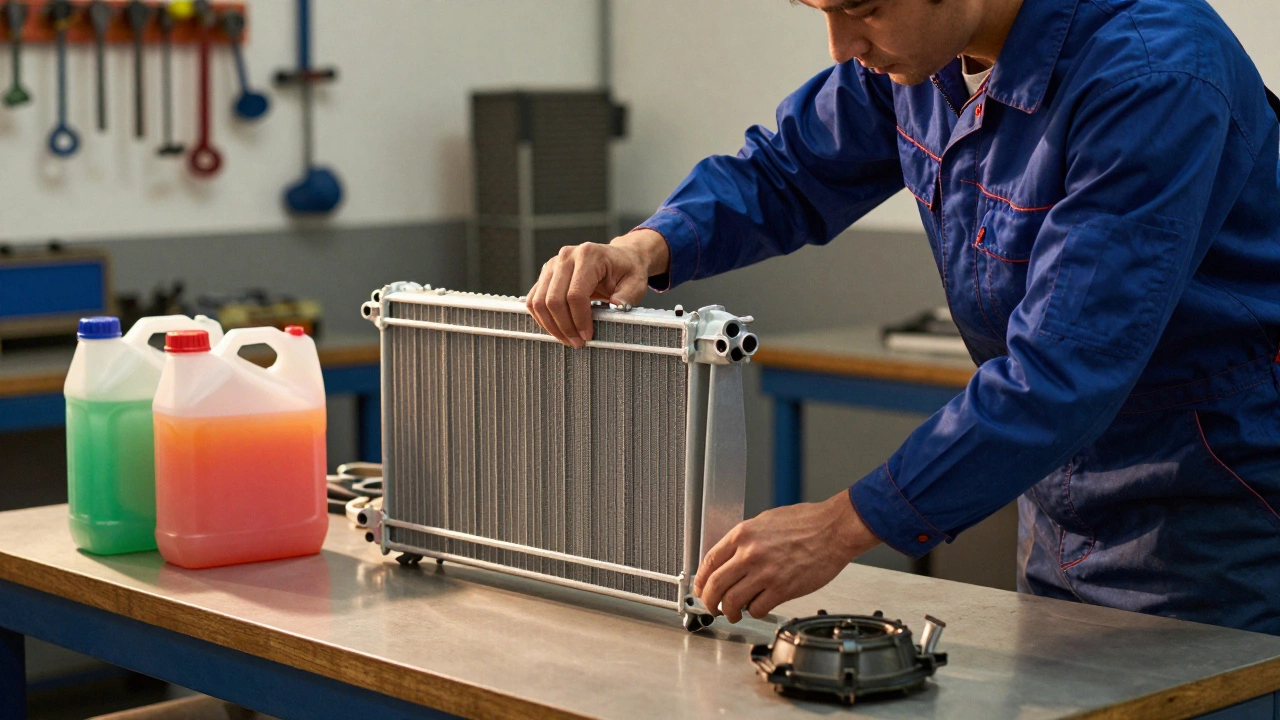
You can significantly extend the life of your radiator with basic maintenance. First, follow the coolant change interval specified in your owner’s manual. Don’t guess. If the manual says every 5 years, do it every 5 years. Flushing the system removes old, acidic coolant and sediment that accumulates at the bottom of the radiator.
Second, inspect your hoses annually. Look for cracks, bulges, or soft spots. Replace them proactively rather than waiting for them to burst on the highway. Third, keep the exterior of the radiator clean. Bugs, dirt, and pollen act as insulation, blocking airflow through the fins. A gentle wash with a garden hose (low pressure!) once a season can help maintain efficiency.
Finally, check your radiator cap. It seems trivial, but the cap maintains the system’s pressure. Higher pressure raises the boiling point of the coolant, allowing it to absorb more heat without turning to steam. A worn cap seal can lead to chronic overheating and premature radiator failure. Replacing a cap costs less than $20 and takes five minutes.
When to Repair vs. Replace
If your radiator starts leaking, can you fix it? For small pinhole leaks in the aluminum core, epoxy sealants sold in bottles might offer a temporary stopgap. However, these additives can clog the heater core and narrow passages in the engine, causing bigger problems later. Professional welding or brazing of aluminum is difficult and often more expensive than buying a new unit.
In most cases, replacement is the smarter choice. Modern aftermarket radiators are affordable and come with warranties. If your radiator is over 10 years old, don’t bother repairing it. The rest of the cooling system components-water pump, thermostat, hoses-are likely near the end of their lives too. It makes sense to replace the entire cooling loop to ensure reliability.
Can I drive my car with a leaking radiator?
You should not drive with a leaking radiator. Even a small leak reduces the coolant volume, lowering the system's ability to regulate temperature. Overheating can warp the cylinder head or crack the engine block within minutes, leading to catastrophic engine failure. If you notice a leak, top off the coolant only as an emergency measure to get to a mechanic, and avoid heavy acceleration or towing.
Does changing the coolant color matter?
Yes, mixing different types of coolant can be dangerous. Green (IAT), orange/pink (OAT), and yellow (HOAT) coolants have different chemical formulations. Mixing them can cause the additives to precipitate out, forming sludge that clogs the radiator and water pump. Always check your owner's manual for the recommended type. If you must switch types, perform a complete system flush first.
How much does it cost to replace a car radiator?
The cost varies by vehicle make and model. For a standard sedan, a new aftermarket radiator typically costs between $150 and $400 for parts. Labor adds another $100 to $300, depending on how difficult it is to access the unit. Luxury brands or trucks with complex cooling systems may exceed $800 total. Always include the cost of new coolant and a new radiator cap in your budget.
Can a bad thermostat ruin my radiator?
Yes. If a thermostat sticks closed, coolant cannot flow to the radiator, causing rapid overheating that can boil over and damage radiator seals. If it sticks open, the engine runs too cool, leading to increased wear and inefficient fuel burning, but it generally doesn't destroy the radiator directly. However, frequent thermal shock from a malfunctioning thermostat can weaken radiator materials over time.
Is it worth restoring an old copper radiator?
For classic cars, yes. Copper radiators are collectible and can be professionally rebuilt with new cores and tanks, often performing better than new aluminum replacements. For modern daily drivers, no. The labor cost to restore a copper unit far exceeds the price of a new aluminum one, and the performance benefits are negligible for standard commuting.