 Feb, 3 2026
Clutch Lifespan Estimator
How long will your clutch last?
Enter your driving habits and conditions to estimate your clutch kit's expected lifespan. Based on real-world data from the article.
Estimated Clutch Lifespan
0 miles
Most drivers don’t think about their clutch until it starts slipping, grinding, or refusing to engage. But if you drive a manual transmission, the clutch kit is one of the most important - and most overlooked - components in your car. So how long does a clutch kit actually last? The short answer: clutch kit life varies wildly, from 30,000 miles to over 150,000 miles. What you do behind the wheel matters more than the brand on the box.
What’s Inside a Clutch Kit?
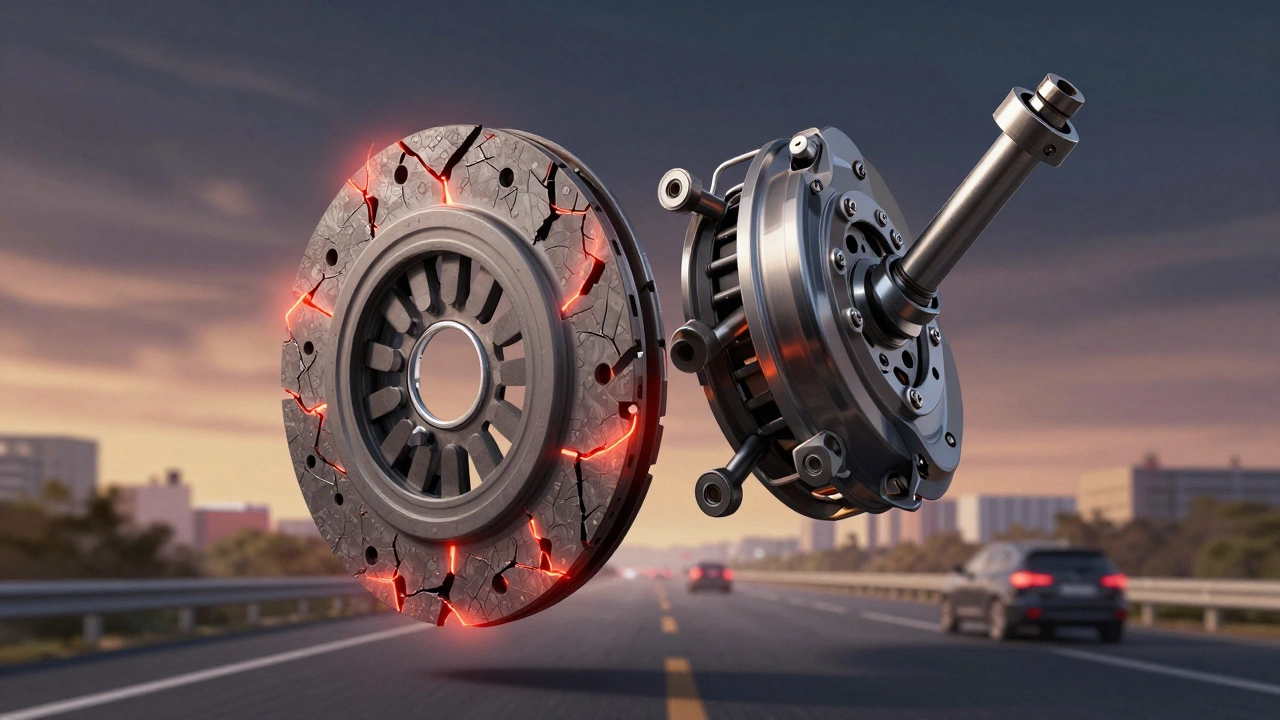
A clutch kit isn’t one part. It’s a system made of three main components that work together to disconnect and reconnect engine power to the transmission. The clutch disc is the friction material sandwiched between the flywheel and pressure plate. The pressure plate clamps the disc down with spring force. The release bearing (or throw-out bearing) disengages the clutch when you press the pedal. All three wear together. Replace one without the others, and you’ll likely be back in the shop within a year.
Average Lifespan: What the Numbers Really Mean
Manufacturers often say a clutch lasts 60,000 to 100,000 miles. That’s a safe average - but it’s misleading if you’re a city driver or a weekend warrior. In real-world use:
- City drivers with heavy stop-and-go traffic: 30,000 to 60,000 miles
- Highway commuters with smooth shifting: 80,000 to 120,000 miles
- Truck haulers or performance drivers: 40,000 to 70,000 miles
- Well-maintained, gentle drivers: 120,000 to 150,000+ miles
There are documented cases of clutches lasting over 200,000 miles - but those are outliers. They usually belong to drivers who never ride the pedal, shift smoothly, and avoid hill starts in gear.
What Kills a Clutch Faster?
It’s not age. It’s behavior. Here’s what actually wears out your clutch:
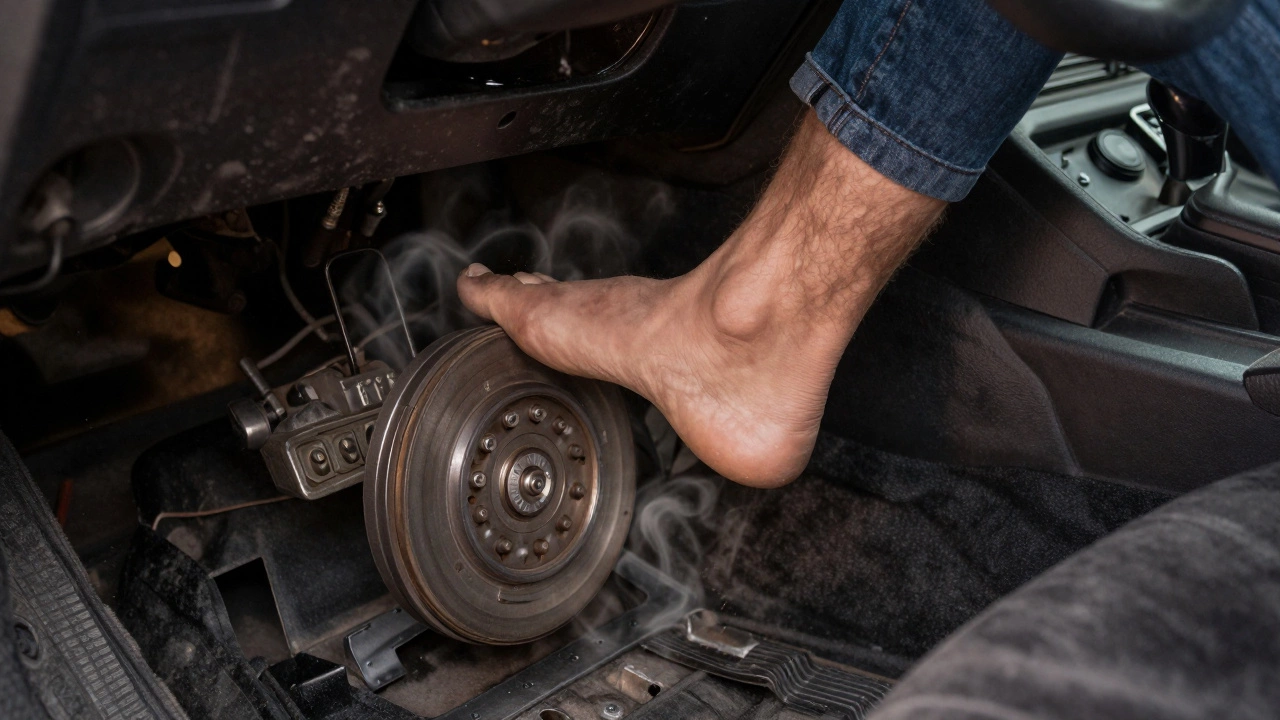
- Left-foot resting - Even light pressure on the pedal heats up the release bearing and causes premature wear.
- Half-clutching on hills - Holding the car in place by feathering the clutch instead of using the brake grinds the friction material.
- Aggressive launches - Flooring it from a stop in first gear puts extreme heat and torque on the disc.
- Shifting too fast - Skipping the clutch fully (double-clutching isn’t always better) can damage synchronizers and overload the disc.
- Heavy towing or hauling - Extra load means more slip and heat, especially in lower gears.
One mechanic I spoke with said he sees clutch failures every 20,000 miles in drivers who use manual cars like automatics - no patience, no finesse. On the flip side, older drivers who learned on manuals in the ’80s often get 120,000+ miles because they shift with their hands, not their right foot.
Signs Your Clutch Is Failing
You don’t need a diagnostic tool to spot a dying clutch. Here are the real-world red flags:
- Slipping - Engine revs up, but the car doesn’t accelerate. Happens most under load - like climbing a hill or accelerating hard.
- Hard or spongy pedal - If the pedal feels stiff, or goes all the way to the floor, something’s wrong with the hydraulic system or the disc.
- Grinding noises - Especially when shifting. That’s not the gears - it’s the disc not fully disengaging.
- Burning smell - A faint odor after heavy use? That’s friction material overheating. A strong, persistent smell? You’re on borrowed time.
- Difficulty shifting - Gears feel resistant or pop out unexpectedly. This often means the clutch isn’t fully releasing.
These signs don’t appear overnight. They build slowly. If you notice one, don’t wait for the others. A failing clutch can leave you stranded - or worse, damage your transmission.
How to Make Your Clutch Last Longer
Clutch longevity isn’t about the part - it’s about your habits. Here’s how to stretch it:
- Use the brake, not the clutch - When stopped on a hill, apply the brake. Release the clutch fully. Then ease off the brake and accelerate. No holding.
- Shift smoothly - Don’t yank the lever. Match engine RPM to gear speed. A quick, clean shift is better than a rushed one.
- Avoid riding the pedal - Keep your foot off the clutch unless you’re actively shifting.
- Don’t “bounce” the clutch - Repeatedly tapping the pedal to control speed (like in traffic) is a silent killer.
- Check fluid levels - Hydraulic clutches use fluid similar to brakes. Low fluid = inconsistent engagement. Top off every 20,000 miles.
One simple trick: If you can’t shift without double-clutching (pressing the clutch twice), your clutch is likely worn. It’s a sign the disc is thin and the pressure plate isn’t holding tight.
When to Replace It - And What to Replace With
Never replace just the clutch disc. Always swap the whole kit: disc, pressure plate, and release bearing. Why? Because:
- The pressure plate’s springs weaken over time - even if it looks fine.
- The release bearing spins every time you press the pedal. It’s worn out long before you notice.
- Installing a new disc on an old pressure plate causes uneven wear and early failure.
Also, consider upgrading. If you drive hard, get a performance clutch with a higher torque rating. If you tow, choose a heavy-duty organic or ceramic composite disc. Stock replacements work fine for daily drivers, but don’t expect them to last under stress.
Most clutch jobs cost $800 to $1,500. Labor dominates because you have to remove the transmission. That’s why it’s smart to replace the clutch kit when you’re already doing other transmission work - like replacing the flywheel or rear main seal.
Does Climate or Terrain Matter?
Absolutely. In hot climates - like Arizona or Texas - clutch life drops 15% to 20% because heat accelerates friction material breakdown. In mountainous areas, constant hill starts and low-gear use wear clutches faster than flatland driving. Drivers in cities like San Francisco or Seattle report clutch replacements every 50,000 miles on average, while those in rural areas with long highway stretches often hit 120,000.
Myth Busting
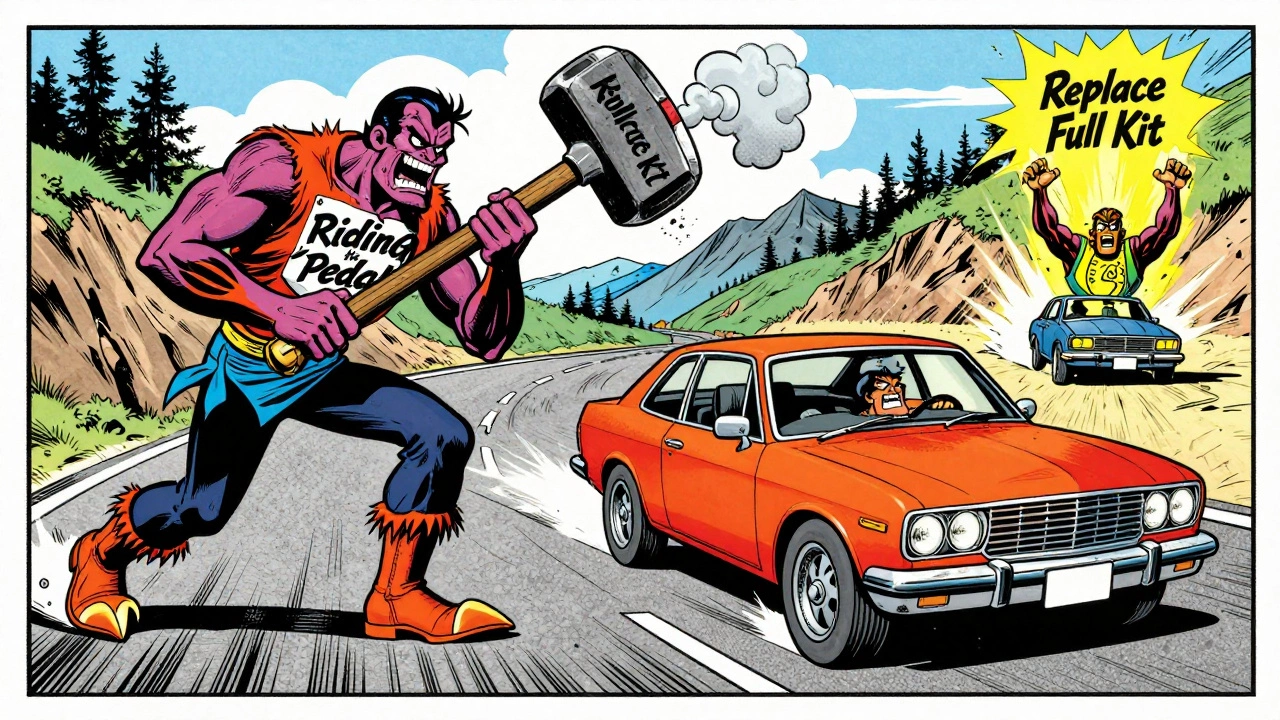
- Myth: A clutch lasts the life of the car. Truth: Most manuals don’t live past 150,000 miles without a clutch job.
- Myth: More expensive clutches last longer. Truth: A $400 performance clutch won’t last longer than a $200 OEM one if you drive the same way. Quality matters, but usage matters more.
- Myth: You can tell by mileage alone. Truth: A 10-year-old car with 40,000 miles might have a worn clutch if it was used in stop-and-go traffic. A 5-year-old car with 100,000 highway miles might still have its original clutch.
What Happens If You Ignore It?
Driving with a bad clutch doesn’t just make shifting hard - it can destroy your transmission. When the clutch slips, the input shaft spins unevenly. That puts stress on the gears and synchronizers. A worn clutch can crack a gear, melt a synchronizer, or even crack the flywheel. Transmission repairs cost $2,000 to $5,000. A clutch kit? $600.
It’s not worth the risk. If you’re hearing grinding or smelling burning, get it checked. Don’t wait for the clutch to die on the highway.
Can a clutch last 200,000 miles?
Yes, but it’s rare. It usually happens with gentle driving, highway use, and no aggressive habits. Drivers who avoid riding the clutch, shift smoothly, and don’t tow heavy loads have been known to reach 200,000 miles. Most manuals, however, need a clutch replacement before 120,000 miles.
Is it cheaper to replace a clutch yourself?
It can be, but only if you have the tools and experience. Clutch replacement requires lifting the car, removing the transmission, and using a clutch alignment tool. Labor costs make up 70% of the bill. If you’re comfortable with engine work, you can save $500 to $800. But if you mess up the alignment or damage the flywheel, you’ll pay more in repairs.
Do all manual cars have the same clutch life?
No. Smaller engines with lighter clutches (like a Honda Civic) wear slower than high-torque engines (like a Subaru WRX or Ford Mustang). Heavier vehicles designed for towing often come with stronger clutch kits. The design matters as much as how you drive.
Can you drive with a worn clutch?
You can, but you shouldn’t. A slipping clutch puts stress on the transmission and can cause sudden failure. You might be able to limp to a shop, but continuing to drive risks expensive damage. If you notice slipping, grinding, or burning smells, get it checked immediately.
Should I upgrade my clutch if I drive normally?
No. Upgraded clutches are designed for performance, towing, or racing. They’re stiffer, harder to engage smoothly, and wear out faster under normal conditions. If you drive gently and don’t tow, stick with the OEM replacement. It’s smoother, lasts longer in daily use, and costs less.
Final Thought
The clutch isn’t a "set it and forget it" part. It’s a wear item - like brake pads - but with higher consequences if ignored. Your driving habits are the biggest factor. If you treat it with care, it’ll last you over 100,000 miles. If you treat it like an afterthought, it’ll fail before 50,000. Pay attention to the signs. Shift smoothly. Keep your foot off the pedal. And when it’s time to replace it - replace the whole kit. You’ll thank yourself later.