 Jul, 3 2026
Radiator Replacement Time & Cost Estimator
Repair Details
Select options and click "Estimate" to see results.
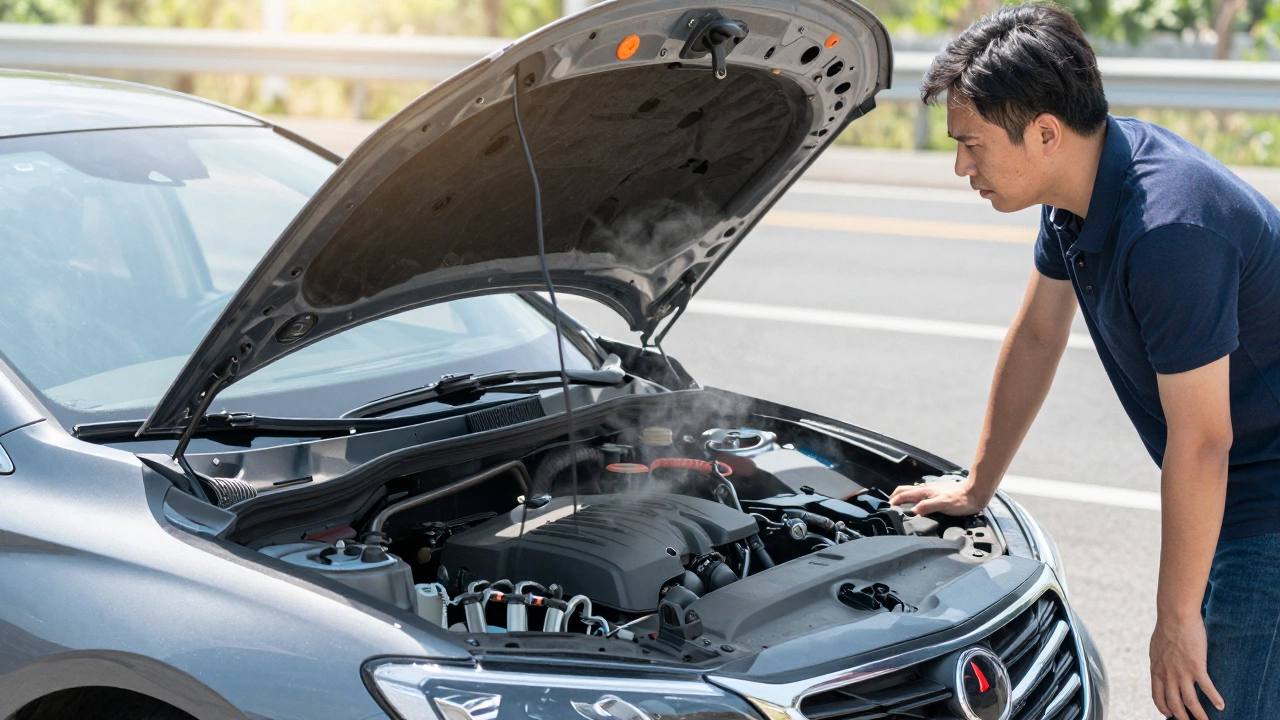
Imagine pulling over on the highway because your temperature gauge is pegged in the red. You’re sweating, the engine is overheating, and you know exactly what’s wrong: a busted car radiator is the heat exchanger that cools engine coolant before it returns to the engine block.. The immediate question isn't just "how much will this cost?" but "how long am I going to be stuck waiting?" If you are planning a repair for July 2026, timing matters more than ever with parts availability fluctuating.
The short answer? For a professional mechanic, replacing a standard radiator takes between 1.5 to 3 hours. For a DIYer with basic tools and some mechanical confidence, expect to spend anywhere from 4 to 8 hours. But these numbers are averages. Your actual timeline depends heavily on your vehicle’s layout, whether you need to replace ancillary components like the water pump or thermostat, and if you hit any rusted bolts along the way.
Why Radiator Replacement Times Vary So Much
You might assume that swapping out a boxy metal component is straightforward. In reality, the radiator sits at the front of your vehicle, often sandwiched between the grille, headlights, condenser, and sometimes even the bumper cover. Access is the biggest variable here.
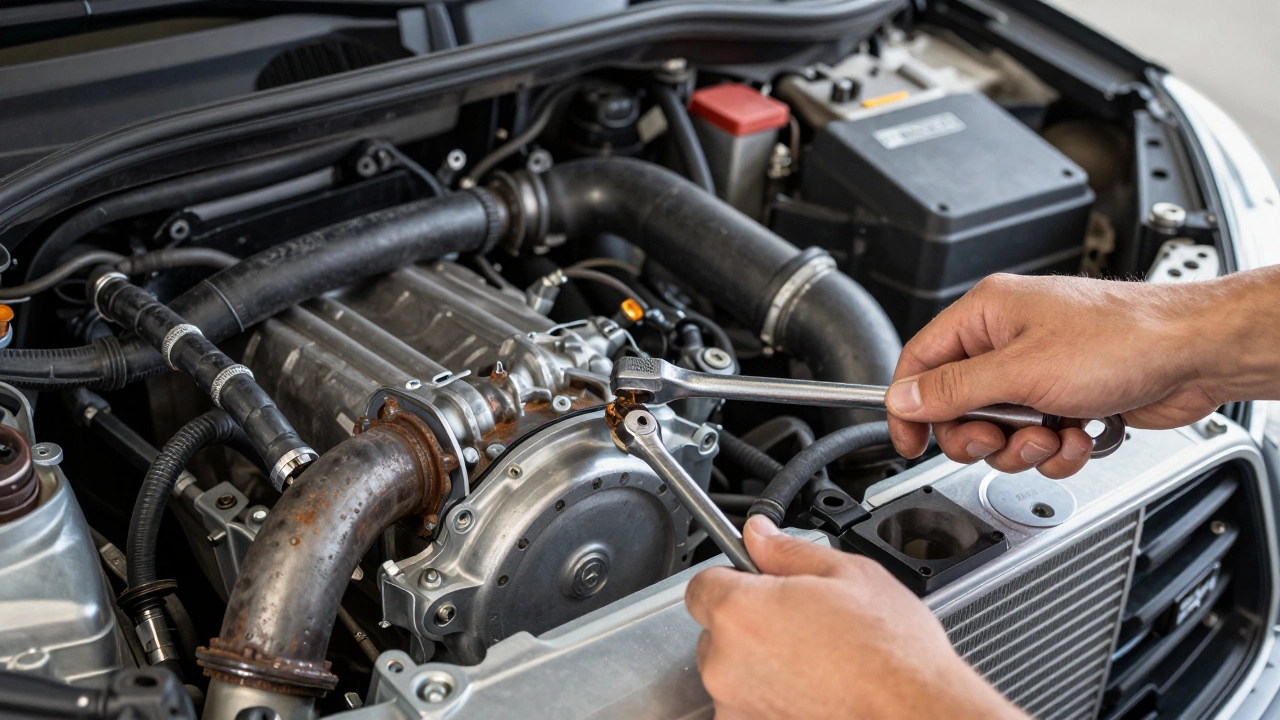
In older vehicles like a 1990s pickup truck, the radiator might be exposed. You drop the lower hose, unbolt the top tank, and pull it out. That could take 45 minutes. Contrast that with a modern turbocharged sedan where the radiator is buried behind a complex assembly of plastic shrouds, intercoolers, and aluminum brackets. You might have to remove the entire front fascia just to get your hands on the mounting nuts. That same job can easily stretch into a full day.
Another major factor is corrosion. If your car has high mileage and lives in a region that uses road salt-like Hamilton, Canada-the bolts holding the radiator support may be seized. Dealing with stripped threads or broken studs adds significant time. A simple bolt removal becomes a drill-and-extract operation, adding an hour or more to the estimate.
Professional Mechanic Timeline vs. DIY Reality
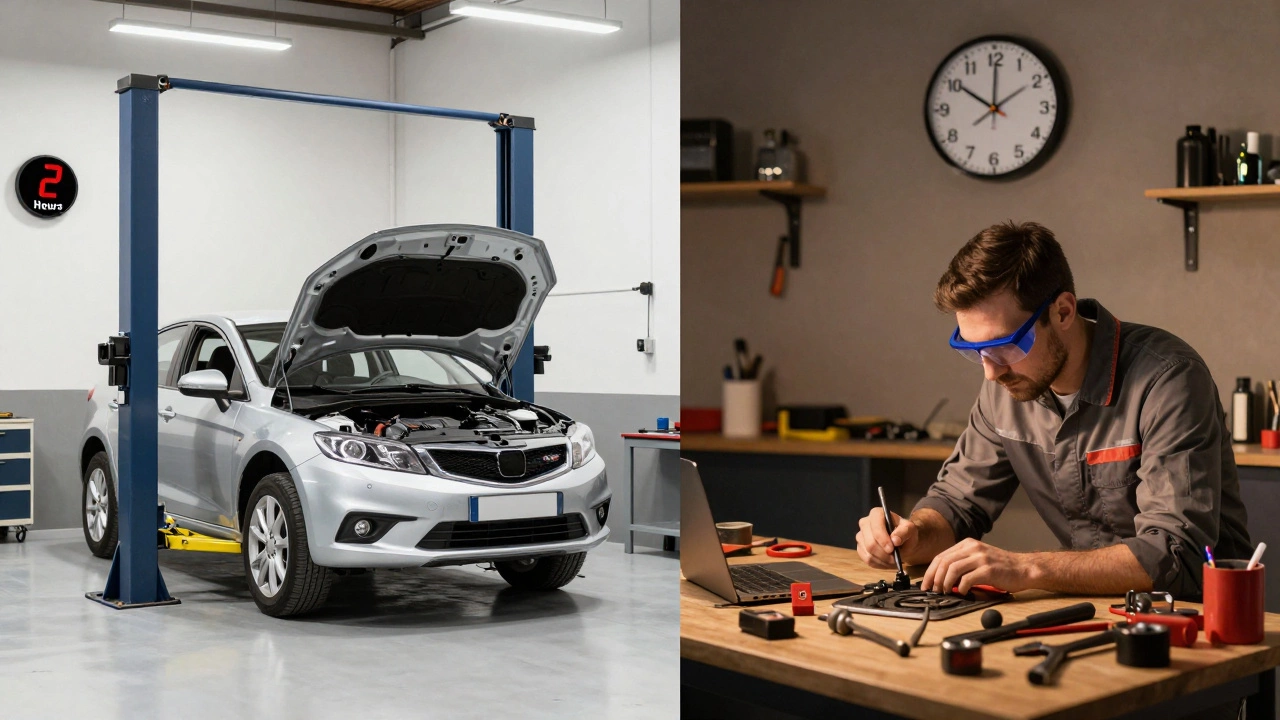
When you drop your car off at a shop, they use "book time" to calculate labor costs. Book time is an industry-standard estimate based on ideal conditions. Here is how the clock ticks for both professionals and homeowners:
| Scenario | Estimated Time | Key Factors |
|---|---|---|
| Standard RWD Sedan (Pro) | 1.5 - 2.5 hours | Easier access, fewer brackets |
| Modern FWD/Crossover (Pro) | 2.5 - 4 hours | Bumper removal, condenser care required |
| DIY First-Timer | 6 - 10 hours | Learning curve, tool hunting, caution |
| DIY Experienced | 3 - 5 hours | Familiarity with systems, proper tools |
Professionals move fast because they have lifts, pneumatic tools, and experience recognizing which bolts strip easily. They also work in teams; one person might drain the fluid while another removes the bumper. As a DIYer, you are doing everything solo, often in a driveway with limited lighting and space. Plus, you need to account for safety steps like letting the engine cool completely to avoid severe burns from hot coolant.
Steps That Add Hidden Time to the Job
If you are looking at a quote that seems high, or if you are planning your weekend project, understand that "replacing the radiator" rarely means just swapping the core unit. Several hidden steps extend the timeline significantly.
Draining and Flushing: You cannot install a new radiator without removing the old coolant. This involves placing catch pans, disconnecting hoses, and draining the block. More importantly, you must flush the system. Old sludge and debris can clog the tiny tubes inside your brand-new radiator within weeks if not removed. A thorough flush takes at least 30-45 minutes alone.
Air Bleeding: Modern engines are sensitive to air pockets in the cooling system. Trapped air causes hot spots and overheating. After installation, you have to run the engine, open bleed valves (if equipped), and top off the reservoir multiple times until the thermostat cycles and no bubbles appear. This process requires patience and can take 20-30 minutes.
Component Inspection: A smart mechanic-or cautious DIYer-will inspect the water pump is a centrifugal pump that circulates coolant through the engine and radiator. and hoses while the system is open. Since these parts share similar lifespans, replacing them now saves you from paying labor twice later. Adding a water pump swap can add another hour to the job.
Vehicle-Specific Challenges in 2026
As we move further into the mid-2020s, vehicle design trends impact repair times. Electric vehicles (EVs) still have radiators, but they cool the battery pack and power electronics rather than an internal combustion engine. These systems often require specialized software to reset pressure sensors and verify flow rates, which can add diagnostic time.
For traditional gas cars, turbocharging is ubiquitous. Turbochargers generate immense heat and rely on precise coolant temperatures. Many modern turbos have integrated oil and coolant lines that connect directly near the radiator support. Disconnecting these lines requires extreme care to avoid damaging seals, slowing down the removal process.
Additionally, many 2020+ models feature active grille shutters. These motorized louvers close to improve aerodynamics and open to let air in. When replacing the radiator, you often have to disconnect or remove these shutters. If the shutter motor fails during removal, you’ve just added a $300 part and another hour of labor to your bill.
Cost Implications of Labor Hours
Time equals money. In 2026, average mechanic labor rates in North America range from $100 to $150 per hour. If your radiator job takes 3 hours book time, you are looking at $300-$450 in labor alone, plus the cost of the part ($150-$400 depending on OEM vs. aftermarket) and fluids.
However, if you do it yourself, you save the labor cost entirely. Your investment is only in tools (ratchet set, socket extensions, torque wrench, funnel, catch pan) and materials. The trade-off is your time. Ask yourself: Is my Saturday worth $400? If you enjoy working on cars and have the space, DIY is rewarding. If you value your free time or lack the right equipment, the shop route is safer.
Signs You Need Immediate Attention
Don’t wait until the engine seizes. Recognizing early symptoms can help you schedule the repair before it becomes an emergency roadside breakdown, which often incurs towing fees and rush-hour labor premiums.
- Visible Leaks: Puddles of green, orange, or pink fluid under the front of your car.
- Overheating: Temperature gauge rising above normal, especially in traffic or hills.
- Discolored Coolant: Rust-colored or muddy coolant indicates internal corrosion.
- Slushy Coolant: A thick, gritty texture suggests antifreeze breakdown.
- Steam from Hood: An obvious sign of catastrophic failure requiring immediate shutdown.
Preparation Checklist for DIY Replacement
If you decide to tackle this yourself, preparation is key to keeping the job within that 4-6 hour window. Gather everything before you start.
- New radiator matching your VIN specifications.
- Coolant mix appropriate for your engine (usually 50/50 pre-mixed).
- Hose clamps (spring clamps often fail; consider worm-gear replacements).
- Penetrating oil (like PB Blaster) applied to bolts the night before.
- Radiator cap (always replace this cheap part to ensure proper pressure).
- Disposable gloves and eye protection (coolant is toxic and stains).
- A helper to hold hoses and catch spills.
By understanding the variables-from bolt corrosion to air bleeding-you can set realistic expectations. Whether you pay a pro or roll up your sleeves, knowing what drives the timeline helps you manage stress and budget effectively.
Can I replace a radiator myself?
Yes, if you have basic mechanical skills, a jack and stands, and a ratchet set. It is considered an intermediate DIY job. However, if your vehicle requires removing the bumper or dealing with sealed turbo lines, it may be too complex for beginners.
How much does it cost to replace a radiator in 2026?
Total costs typically range from $400 to $800. This includes $150-$400 for the part and $250-$400 in labor. Prices vary by vehicle make and model, with luxury brands costing significantly more due to part scarcity and higher labor rates.
Should I replace the water pump at the same time?
It is highly recommended. Since the water pump shares a similar lifespan with the radiator and requires similar labor to access, replacing it now prevents future downtime and saves on labor costs later.
What happens if I don't bleed the cooling system properly?
Air pockets can cause localized overheating, leading to warped cylinder heads or blown head gaskets. Proper bleeding ensures consistent coolant flow and protects your engine from costly damage.
Does driving with a bad radiator hurt the engine?
Absolutely. Continued driving with a failing radiator leads to overheating, which can warp engine blocks, crack heads, and destroy pistons. Stop driving immediately if you suspect radiator failure.