 Jun, 16 2026
Clutch Replacement Time & Cost Estimator
Job Configuration
Select options to see estimates.
You’re sitting in your car, pressing the pedal to the floor, and nothing happens. The gears grind, or worse, the engine revs but the car won’t move. You know what’s wrong: your clutch is dead. But before you book an appointment or buy tools, you have one burning question: how long does this actually take?
The short answer is anywhere from four hours for a simple swap on a front-wheel-drive hatchback to two full days for a complex manual transmission removal on a luxury sedan. But that range doesn’t help much when you’re trying to plan your weekend or negotiate a quote with a mechanic. The real timeline depends on three things: where the transmission sits in the chassis, whether the flywheel needs resurfacing, and if you’re doing it yourself or paying a pro.
Why Clutch Jobs Vary So Much in Time
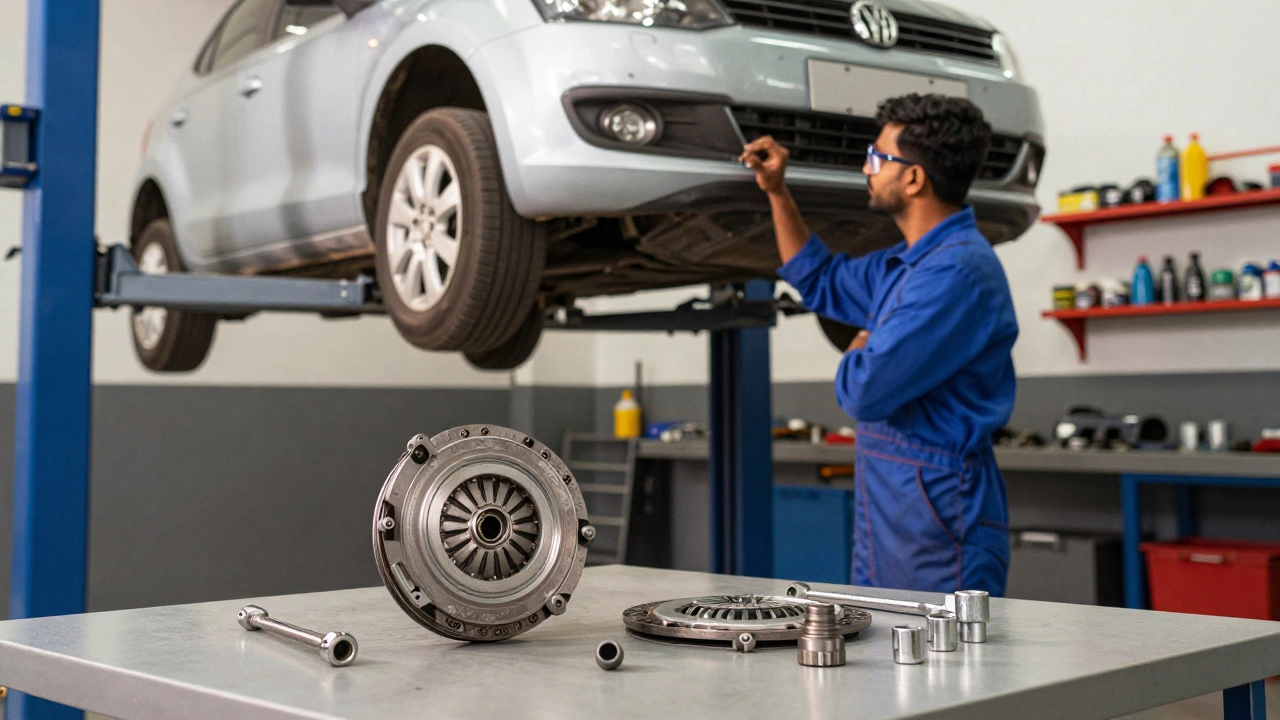
A clutch kit is a set of components including the pressure plate, friction disc, and release bearing that engage and disengage the engine from the transmission. Replacing these parts isn’t like changing oil filters. You can’t just reach under the hood and swap them out. In most cars, the entire transmission must be removed to access the clutch assembly located between the engine and the gearbox.
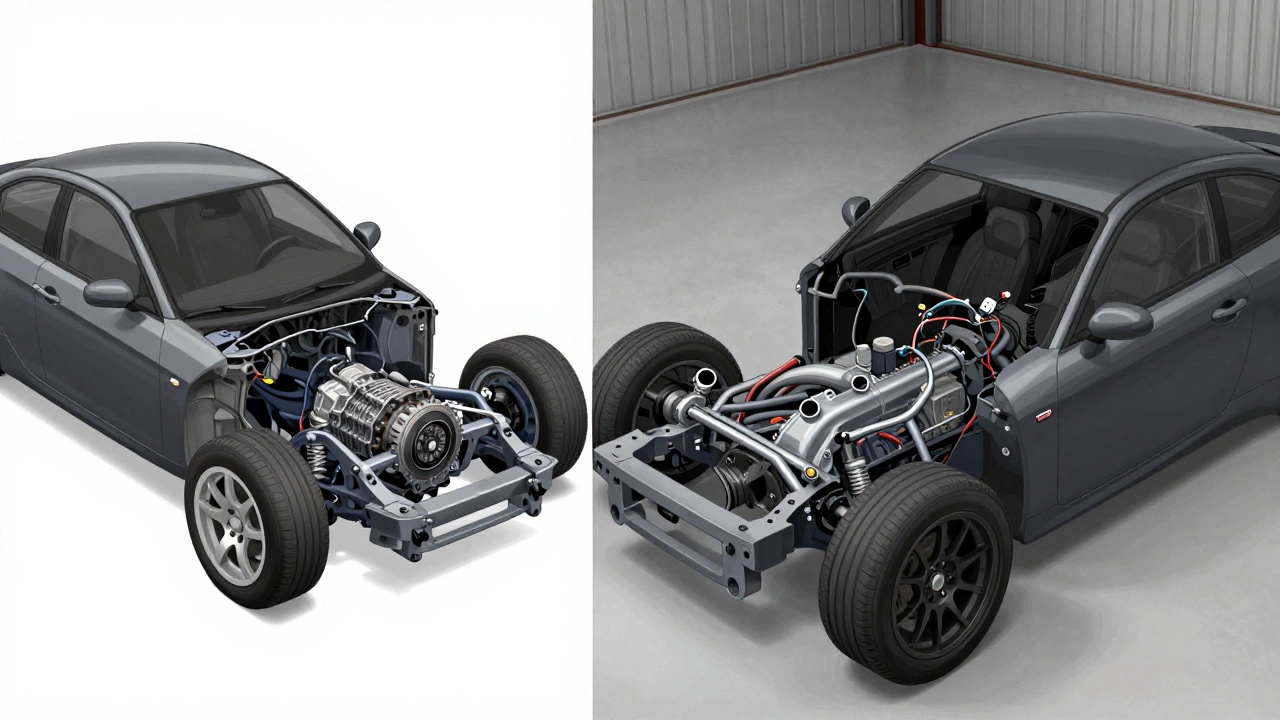
This structural reality creates massive variance in labor time. A compact front-wheel-drive (FWD) car, like a Honda Civic or Ford Focus, often allows mechanics to drop the transmission subassembly from underneath. This might take 3 to 5 hours. However, a rear-wheel-drive (RWD) vehicle, such as a BMW 3-Series or a Ford Mustang, requires removing the driveshaft, unbolting the transmission from the back, and sliding it out through the chassis tunnel. That process alone adds significant complexity and time.
Additionally, modern vehicles come packed with electronics. Sensors, wiring harnesses, and shift actuators must be disconnected carefully. If one connector breaks or a sensor gets misaligned, the job turns into a diagnostic nightmare, adding hours to the estimate.
Professional Mechanic vs. DIY: The Time Gap
If you are taking your car to a professional shop, the clock starts ticking differently than if you are working in your garage. Professionals have lifts, impact wrenches, and experience. They also work in shifts. Here is how the timelines break down:
- Front-Wheel-Drive Compact Cars: A pro will typically quote 4 to 6 labor hours. Expect the car to be ready within one business day.
- Rear-Wheel-Drive Sedans/Coupes: These usually require 6 to 8 labor hours. Because transmissions are heavy and awkward to maneuver, shops often schedule this as a same-day job only if they have enough staff, otherwise, it spills into the next morning.
- Trucks and SUVs: Due to higher ground clearance and heavier drivetrains, expect 7 to 10 labor hours. Many shops will keep these vehicles overnight.
- Luxury or Performance Vehicles: Brands like Audi, Porsche, or Mercedes-Benz often use specialized fasteners or tight engine bays. Labor times can exceed 10 hours, sometimes requiring specific software resets afterward.
If you are a DIYer, multiply those estimates by at least 1.5 to 2. Without a lift, you’ll spend extra time jacking up the car safely. Without a transmission jack, you’ll struggle to support the weight of the gearbox. And without prior experience, removing stuck bolts-especially rusty torque converter bolts or stubborn bellhousing nuts-can eat up half your day. For a first-timer on a standard FWD car, budget a full weekend (10-15 hours) to do it right.
| Vehicle Category | Drivetrain | Pro Mechanic Hours | DIY Estimate |
|---|---|---|---|
| Compact Hatchback | FWD | 3 - 5 hours | 8 - 12 hours |
| Mid-Size Sedan | FWD/AWD | 4 - 6 hours | 10 - 14 hours |
| Sports Car / Coupe | RWD | 6 - 8 hours | 12 - 16 hours |
| Pickup Truck | RWD/4WD | 7 - 10 hours | 15 - 20+ hours |
| Luxury European | Varies | 8 - 12+ hours | 20+ hours |
Hidden Time-Sinks: What Adds Hours to the Job?
Even with accurate estimates, several factors can blow your timeline out of the water. Knowing these beforehand helps you prepare or ask your mechanic about them.
1. Stuck or Seized Bolts
Transmission mounts and bellhousing bolts see immense torque and vibration. Over years, they corrode or stretch. If a bolt snaps off inside the block, you now need to drill and tap it out. This single incident can add 2 to 4 hours of machining work.
2. Flywheel Resurfacing or Replacement
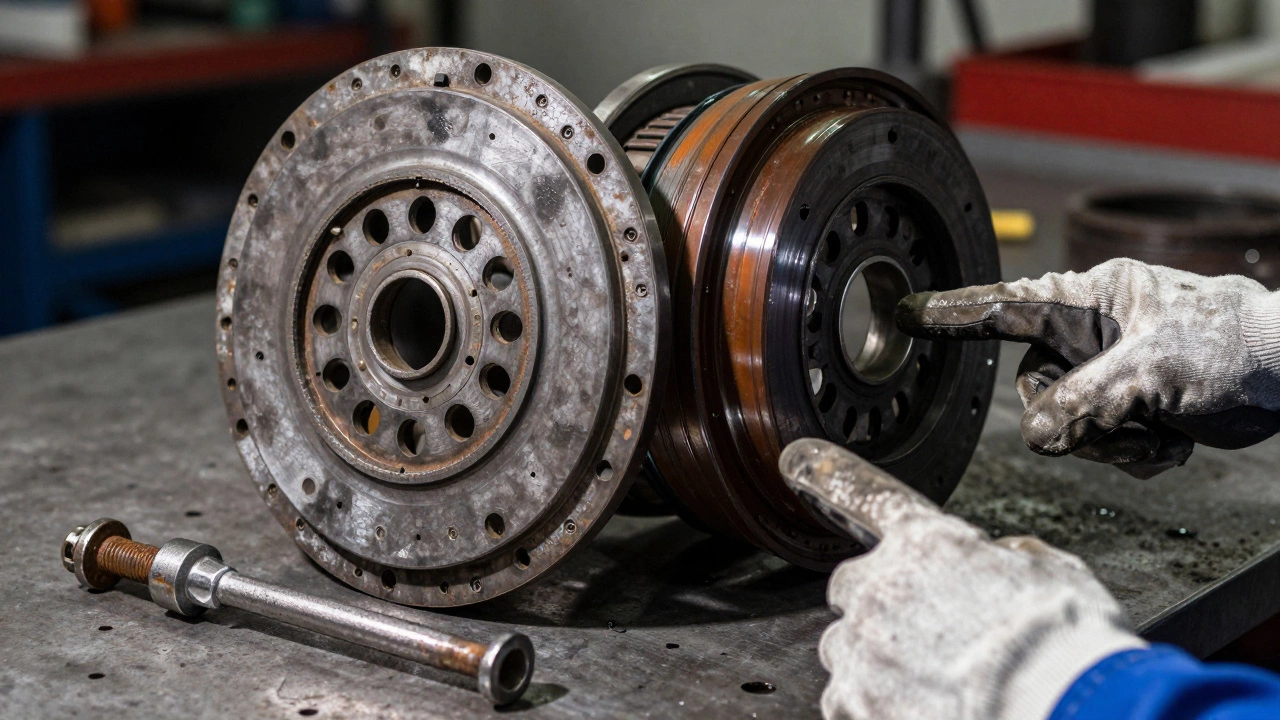
When the old clutch wears out, it deposits material onto the flywheel is a heavy rotating disk attached to the crankshaft that stores rotational energy and provides a friction surface for the clutch disc. If the flywheel is warped or glazed, putting a new clutch on top will cause immediate shuddering. Most pros recommend resurfacing (machining) the flywheel, which takes 30 minutes if done in-house, or sending it out, which delays the car by a day. Dual-mass flywheels (DMFs), common in diesel and modern gasoline engines, cannot be resurfaced; they must be replaced entirely, adding cost and part-sourcing time.
3. Release Bearing Issues
The release bearing is a component that presses against the diaphragm spring of the pressure plate to disengage the clutch when the pedal is depressed is small but critical. Sometimes, the old bearing sticks to its splines or the pilot bushing in the crankshaft seizes. Removing a seized pilot bushing often requires a special puller tool and patience. If you don’t replace the throw-out bearing along with the clutch kit, you risk failing again in six months, wasting all that initial labor.
4. Transmission Mount Failure
To get the transmission out, you must remove the transmission mount. These rubber-and-metal components degrade over time. Mechanics almost always replace them during a clutch job because accessing them later means dropping the transmission again. While this is smart practice, it adds 20-30 minutes to the job and increases parts costs.
Step-by-Step Breakdown of the Process
Understanding the sequence helps explain why there is no shortcut. Here is the typical flow for a front-wheel-drive vehicle:
- Preparation & Safety: Lift the car, secure it on stands, disconnect the battery, and drain the transmission fluid. (30 mins)
- Removal of Obstructions: Remove the driveshaft(s), exhaust hangers, shifter linkage, and electrical connectors attached to the transmission. (1 hour)
- Support & Separation: Position a transmission jack under the gearbox. Unbolt the bellhousing and motor mounts. Carefully separate the transmission from the engine, watching for the torque converter bolts (in automatics/hybrids) or input shaft alignment. (1.5 hours)
- Clutch Access: Once the transmission is clear, unbolt the pressure plate. Remove the old clutch disc and bearing. Inspect the flywheel. (30 mins)
- Installation: Install the new clutch disc, aligning it perfectly with the splines. Bolt on the new pressure plate, torquing in a star pattern to ensure even pressure. Grease the input shaft splines and release bearing sleeve sparingly. (1 hour)
- Reassembly: Slide the transmission back into place. Reinstall all mounts, linkages, wires, and exhaust components. Refill with fresh transmission fluid. (1.5 hours)
- Testing: Start the engine, check for leaks, test gear engagement, and take a short test drive. (30 mins)
Total active work time: ~6.5 hours. Add in coffee breaks, tool searches, and unexpected rust, and you’re looking at a solid 8-hour day.
Cost Implications of Time
Time equals money. In the automotive industry, labor rates vary widely by region and shop type. Independent mechanics might charge $100-$150 per hour, while dealerships can charge $200-$300 per hour.
If a dealership quotes you 10 hours at $250/hour, that’s $2,500 in labor alone. An independent shop quoting 6 hours at $120/hour brings labor down to $720. Always ask for a “flat rate” quote if possible, which covers the entire job regardless of minor delays, protecting you from surprise hourly charges.
Signs You Need to Act Now
Ignoring clutch wear doesn’t just make driving unpleasant; it risks catastrophic failure. If you notice any of these symptoms, start scheduling appointments immediately:
- Slipping: Engine RPMs rise without a corresponding increase in speed, especially during acceleration or uphill climbs.
- High Bite Point: You have to press the pedal almost to the firewall before the car moves.
- Noise: A whining or grinding noise when the clutch pedal is pressed, indicating a worn release bearing.
- Stiff Pedal: The pedal feels hard to push down, suggesting a problem with the hydraulic master/slave cylinder or a broken pressure plate spring.
Mini-FAQ: Common Questions About Clutch Timelines
Can I drive my car after replacing the clutch kit immediately?
Technically, yes, but it’s not recommended. New clutches need a “bedding-in” period. Avoid riding the clutch, launching aggressively, or towing heavy loads for the first 200-300 miles. This allows the friction material to properly mate with the flywheel, ensuring maximum lifespan and smooth operation.
Why does my mechanic want to keep my car overnight?
Most clutch jobs exceed a standard 8-hour workday, especially on RWD or complex vehicles. Shops often start the job late in the day or encounter delays with parts or seized bolts. Keeping the car overnight ensures they can finish the reassembly and testing without rushing, which reduces the risk of errors.
Is it worth doing a clutch replacement myself?
If you have basic mechanical skills, a lift, and the right tools (torque wrench, transmission jack), you can save $500-$1,500 in labor. However, if you’ve never done it before, the learning curve is steep. Mistakes in alignment or torque specs can lead to premature failure or damaged transmission inputs. Only attempt DIY if you are prepared for a multi-day project.
Does the type of clutch kit affect installation time?
Generally, no. Standard organic kits, ceramic performance kits, and dual-disc setups all install similarly. However, some aftermarket performance kits may require additional hardware or specific lubricants. Always follow the manufacturer’s instructions precisely, as deviation can void warranties and complicate the install.
What should I check if the new clutch still slips?
If a brand-new clutch slips, the issue is rarely the disc itself. Check for: 1) Incorrect installation (disc installed backwards), 2) Contamination (grease or oil on the friction surface from a leaking rear main seal), 3) Flywheel issues (not resurfaced or warped), or 4) Hydraulic problems (air in the lines preventing full disengagement/engagement). Diagnose these before assuming the kit was defective.