 Jan, 9 2026
When you’re pushing your car past stock limits-whether you’ve added a turbo, tuned the ECU, or swapped in a bigger engine-you’re not just upgrading power. You’re changing the entire balance of how your car transfers that power to the road. And that’s where the clutch comes in. A stage 2 clutch isn’t just a stronger version of your stock part. It’s a complete re-engineering of the clutch system to handle serious torque and heat. But how much horsepower can it actually handle? The answer isn’t simple, and guessing could cost you a transmission-or worse.
What Exactly Is a Stage 2 Clutch?
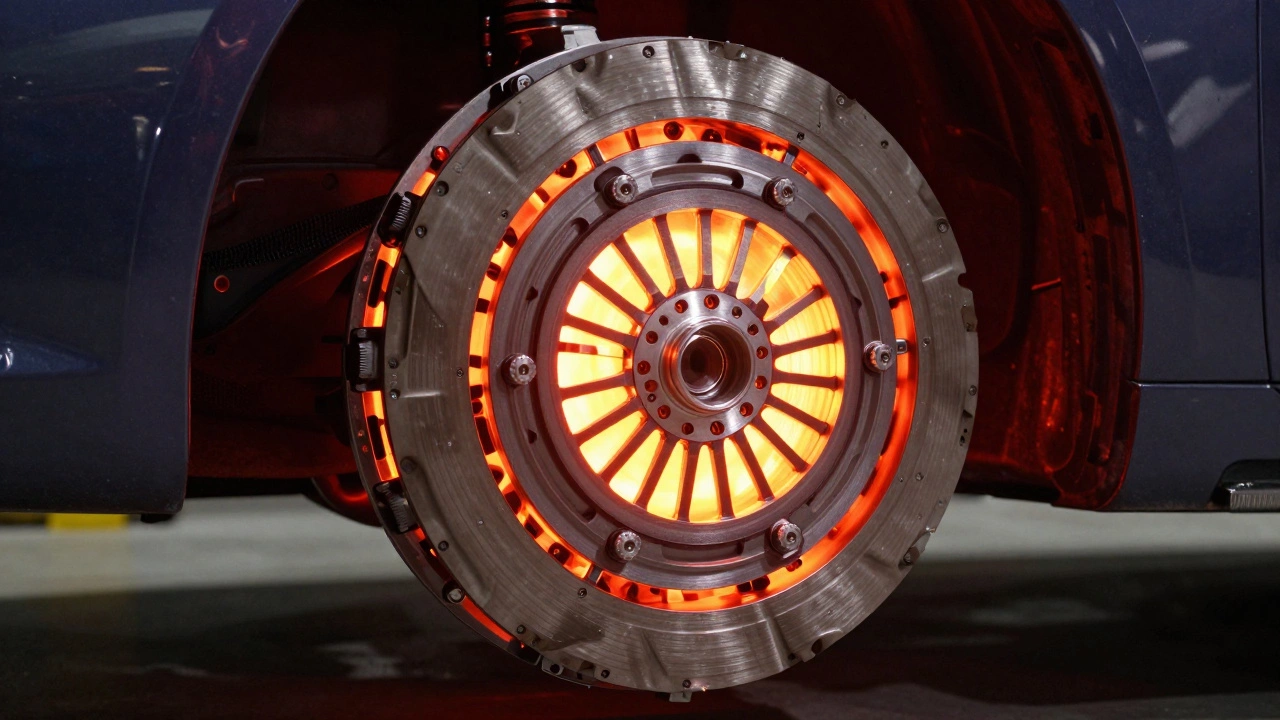
A stage 2 clutch is designed for street-driven performance cars with moderate to significant engine modifications. It’s not for daily commuters with stock engines, and it’s not for full race cars either. Think of it as the sweet spot: enough grip to handle 400-500 horsepower without being too aggressive for regular driving. Most stage 2 kits use a dual-disc or high-friction single-disc setup, often with a sprung hub to reduce chatter and improve drivability. Materials like ceramic, carbon-ceramic, or Kevlar-based friction surfaces replace the stock organic pads. These materials can take more heat and last longer under abuse-but they also need more pedal pressure to engage.
Manufacturers like Exedy, Centerforce, SPEC, and Clutchmasters all make stage 2 kits, and they all rate them differently. But here’s the key: HP rating isn’t the whole story. Torque is what really matters. A 450-hp engine with 400 lb-ft of torque puts less stress on the clutch than a 400-hp engine with 500 lb-ft. That’s why torque capacity is the real number to look at.
Typical HP and Torque Ratings for Stage 2 Clutches
Most stage 2 clutch kits are rated to handle between 400 and 550 horsepower, and torque ratings usually fall between 400 and 550 lb-ft. But these numbers aren’t arbitrary. They’re based on real-world dyno tests and track use. For example:
- A SPEC Stage 2 clutch for a Subaru WRX STI is rated for 450 hp and 450 lb-ft of torque.
- An Exedy Stage 2 for a Mitsubishi Evo X handles up to 500 hp and 520 lb-ft.
- A Centerforce DYAD dual-disc for a Ford Mustang EcoBoost is rated for 550 hp and 550 lb-ft.
These aren’t theoretical limits. They’re the point where the clutch starts to slip under full throttle in higher gears. If you’re running a modified 2.0L turbo that makes 480 hp and 470 lb-ft, a stage 2 clutch will hold up fine-unless you’re doing repeated 1-2-3 gear launches at the track. Then, heat builds up fast, and even the best clutch can fade.
Why Torque Matters More Than Horsepower
Horsepower tells you how fast the engine can do work. Torque tells you how hard it’s pushing. Clutches don’t care about horsepower-they care about torque. Every time you hit the gas hard from a stop, torque is what’s trying to spin the input shaft through the clutch. High-torque engines like the Nissan VR38DETT or the BMW S63 twin-turbo V8 put enormous strain on the clutch system. Even if your car makes “only” 450 hp, if it’s making 550 lb-ft, you’re pushing the limits of most stage 2 kits.
Here’s a real-world example: A customer in Hamilton upgraded his 2015 Volkswagen GTI with a 2.0T tune that added 100 hp and 120 lb-ft of torque. He picked a stage 2 clutch rated for 500 hp and 480 lb-ft. He drove it daily, did a few track days, and it lasted over 20,000 miles. Then he added a bigger turbo and bumped torque to 520 lb-ft. Within 3,000 miles, the clutch started slipping in 3rd gear under heavy acceleration. He didn’t exceed the HP rating-but he blew past the torque limit.
What Happens When You Go Over the Limit?
Slipping is the first sign. You’ll notice the engine revs up but the car doesn’t accelerate as fast as it should-especially in higher gears. It feels like the engine is revving in neutral. That’s the friction material burning off. If you keep driving, the clutch will start to glaze over, then crack, then fail completely. At that point, you’re looking at a $1,500-$3,000 repair bill, and possibly damage to the flywheel, pressure plate, or even the transmission input shaft.
Heat is the silent killer. Clutches generate heat every time they slip-even slightly. A stage 2 clutch can handle short bursts of abuse, but if you’re doing daily stop-and-go traffic with a high-torque engine, the clutch will overheat faster than you think. That’s why many people who run stage 2 clutches on the street end up replacing them sooner than expected.
Stage 2 vs. Stage 3: Where to Draw the Line
If your car makes more than 550 hp or 550 lb-ft of torque, you’re likely in stage 3 territory. Stage 3 clutches are built for track use. They use solid hubs (no springs), aggressive friction materials, and require much more pedal pressure. They’re noisy, harsh, and terrible for daily driving. You’ll feel every gear change like a punch. They’re not for commuting, not for grocery runs, and not for winter driving in Canada.
Stage 2 is the last “street-friendly” option before you commit to a race-only setup. If you’re doing weekend autocross, occasional track days, or just want to enjoy your tuned car without constant clutch drama, stage 2 is the right call. If you’re running a 700-hp drag build, skip stage 2 entirely-go straight to a twin-disc or triple-disc setup.
What to Look for When Buying a Stage 2 Clutch
Not all stage 2 clutches are created equal. Here’s what to check before you buy:
- Torque rating-not HP. Make sure it exceeds your engine’s peak torque by at least 10%.
- Friction material-ceramic and carbon-ceramic last longer and handle heat better than organic or Kevlar.
- Hub design-sprung hubs reduce vibration and make the clutch easier to live with daily.
- Compatibility-some kits require a lightweight flywheel. Others need a specific pressure plate.
- Warranty-reputable brands offer mileage or time-based warranties. Avoid no-name brands with no support.
Also, don’t forget the flywheel. Most stage 2 kits require a performance flywheel. Stock flywheels are too heavy and can cause imbalance or heat retention. A single-mass flywheel reduces rotational mass and improves throttle response-but it also increases noise and vibration. It’s a trade-off.
Real-World Longevity: How Long Do Stage 2 Clutches Last?
There’s no universal answer. A stage 2 clutch in a daily-driven 2018 Honda Civic Type R with 420 hp and 400 lb-ft can last 60,000 miles if driven gently. The same clutch in a 2020 Subaru WRX with 500 hp and 500 lb-ft, used for weekly track days, might only last 20,000 miles. It all depends on how you drive it.
Here’s a rough guideline based on usage:
- Street use, light launches-50,000 to 80,000 miles
- Street with occasional track use-25,000 to 40,000 miles
- Weekly track days or drag racing-10,000 to 20,000 miles
And remember: clutch life isn’t just about miles. It’s about how many times you’ve launched from a stop, how often you’ve held the clutch at the friction point on a hill, and how hot the clutch got during those sessions.
Bottom Line: What’s the Right Stage 2 Clutch for You?
If your car makes less than 400 hp and 400 lb-ft, stick with a stage 1 or even your stock clutch. If you’re over 550 hp or 550 lb-ft, skip stage 2 and go for a stage 3 or dual-disc. But if you’re in the 400-550 hp range and you want to keep your car drivable every day-then a stage 2 clutch is your best bet.
Don’t just pick the cheapest one. Don’t assume higher HP rating = better. Look at torque. Look at material. Look at reviews from people with your exact car and mods. And if you’re unsure, talk to a shop that specializes in your car’s platform. A good installer will know which clutch works best with your engine tune, transmission, and driving style.
Because in the end, it’s not about how much power you can make. It’s about how much power you can actually use without breaking something.
Can a stage 2 clutch handle 600 horsepower?
Most stage 2 clutches are not designed for 600 horsepower. While some may technically hold that power for short bursts, they’ll slip under load and overheat quickly. At 600 hp, you’re typically past the safe limit-especially if torque exceeds 550 lb-ft. You should move to a stage 3 or dual-disc clutch for reliable performance.
Do I need a new flywheel with a stage 2 clutch?
Yes, almost always. Stage 2 clutches are paired with performance flywheels-usually lightweight single-mass flywheels-to reduce rotational mass and improve throttle response. Stock dual-mass flywheels are too heavy and can cause imbalance or vibration with high-torque setups. Replacing the flywheel is part of the upgrade, not an optional extra.
Is a stage 2 clutch good for daily driving?
Yes, but with trade-offs. Stage 2 clutches are stiffer and require more pedal pressure than stock. You’ll notice more vibration and noise, especially in traffic. But if you don’t launch hard every day and avoid riding the clutch, it’s perfectly drivable. Many people use them as daily drivers without issues-especially if they have a sprung hub design.
How do I know if my clutch is failing?
Signs include clutch slipping (engine revs up without acceleration), a spongy or inconsistent pedal feel, unusual grinding or chirping noises when shifting, or a burning smell from the clutch area. If you notice any of these, especially after an engine tune or power upgrade, get it checked before you strand yourself on the side of the road.
Can I install a stage 2 clutch myself?
If you have experience with transmission work, a lift or jack stands, and the right tools (like a clutch alignment tool and torque wrench), yes. But it’s not a beginner job. Misalignment or incorrect torque on the pressure plate bolts can cause vibration or premature failure. If you’re unsure, have a professional handle it-especially since clutch failure can damage the transmission.