 May, 15 2026
Exhaust Upgrade HP Estimator
Enter your engine details to see estimated horsepower gains.
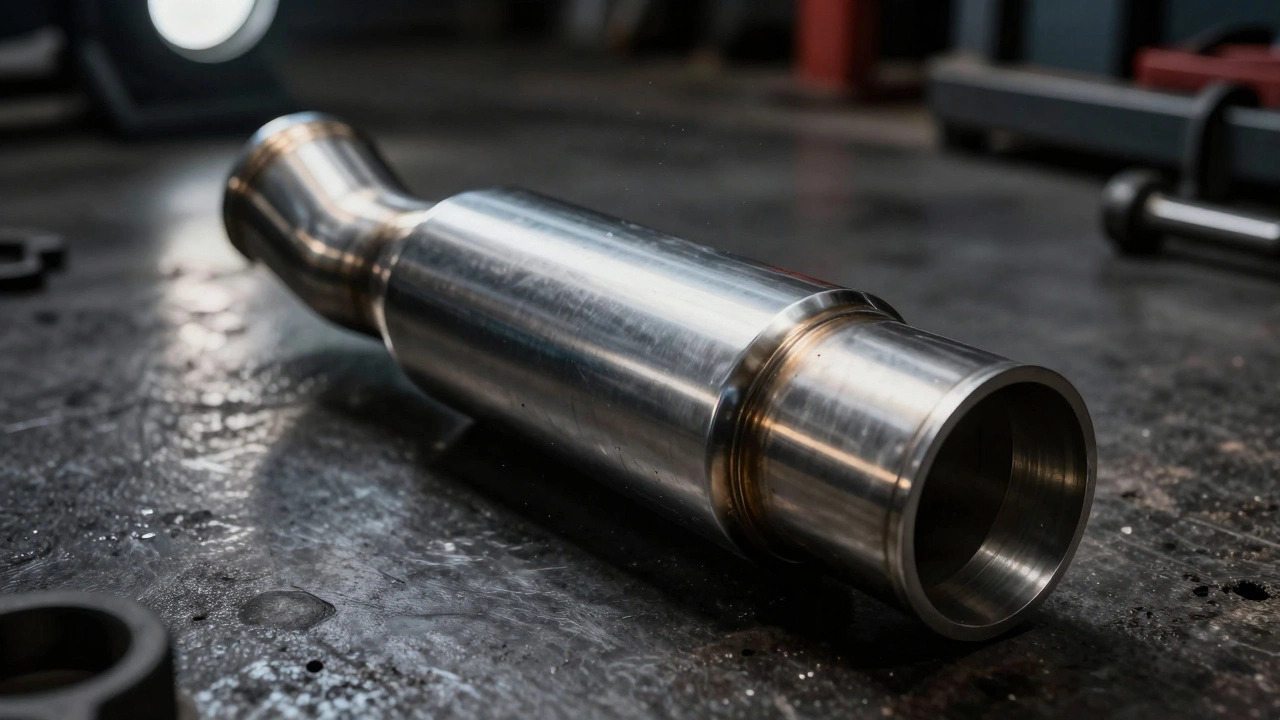
You just bought that shiny 3-inch exhaust is a larger diameter piping system designed to reduce backpressure and improve engine breathing compared to standard 2.5-inch setups. You expect your car to feel like it just swallowed a turbo. But here is the hard truth: if you bolted that pipe onto a stock engine with no other modifications, you might actually lose power. Or worse, you’ll just get louder noise for zero performance gain.
The question "how much HP does a 3-inch exhaust add" doesn't have a single number answer because an exhaust pipe is not a magic wand. It is a plumbing constraint. To understand whether you are gaining or losing horsepower, we need to look at how engines breathe, what restricts them, and why bigger isn't always better unless you force the engine to push more air through it.
Why Bigger Pipes Don't Automatically Mean More Power
Imagine trying to drink a thick milkshake through a tiny coffee stirrer versus a wide smoothie straw. The wider straw lets liquid flow faster, right? That logic holds up until you realize the milkshake itself isn't being poured harder. If the source of the flow (the pitcher) stays the same, widening the exit doesn't make the liquid move faster; it just makes the exit less restrictive.
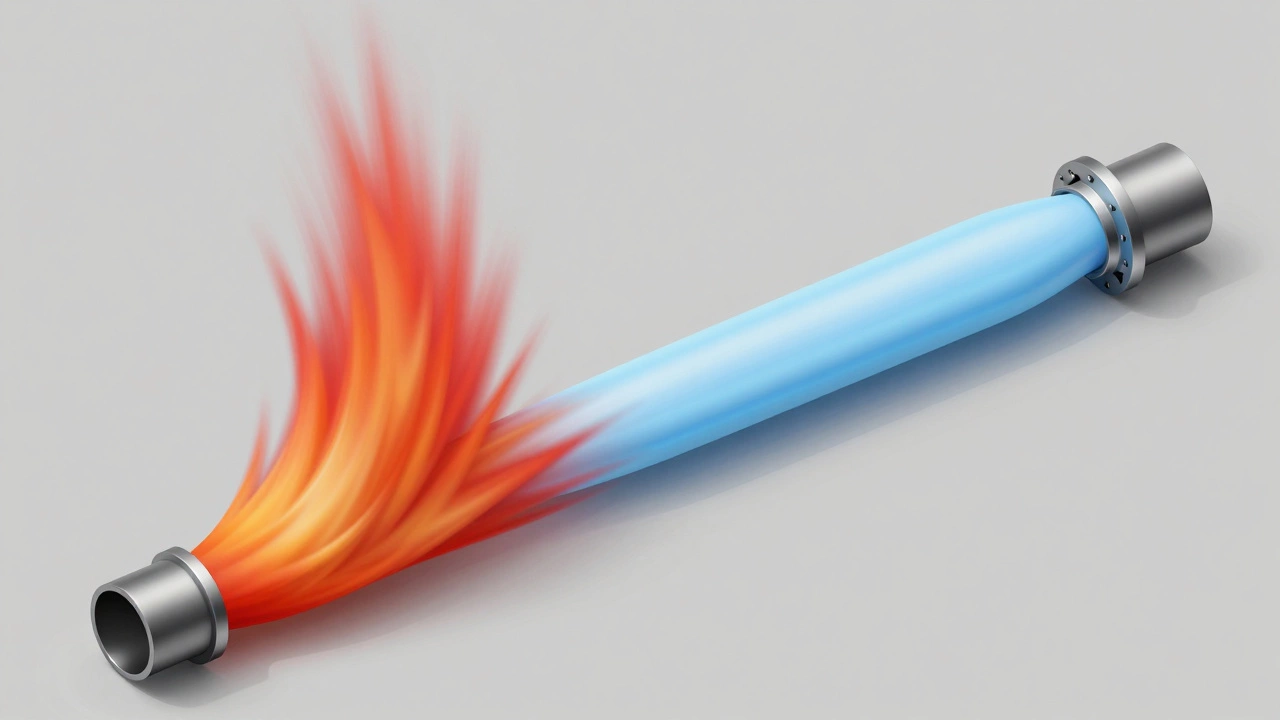
In automotive terms, this is about exhaust gas velocity is the speed at which burnt gases travel through the exhaust system, crucial for creating scavenging effect. Engines rely on a phenomenon called scavenging. When one cylinder fires, it pushes out exhaust gases. Those moving gases create a low-pressure zone behind them, which helps suck the next charge of air/fuel mixture into the adjacent cylinder. This requires high-velocity gas flow.
If you put a 3-inch pipe on a small-displacement engine-say, a 2.0-liter four-cylinder-the gas volume isn't high enough to fill that large pipe quickly. The gas moves slowly. Without that high velocity, you lose the scavenging effect. The result? Poorer cylinder filling at lower RPMs, reduced torque, and a sluggish feeling off the line. You haven't gained horsepower; you've likely killed your mid-range torque curve.
The Role of Backpressure and Flow Restriction
Many people believe all backpressure is bad. They think eliminating it entirely will unleash hidden power. In reality, some backpressure is necessary for proper exhaust valve timing and scavenging efficiency. The goal isn't zero backpressure; it's optimal flow.
A stock exhaust system often uses 2.5-inch piping because manufacturers tune cars for a broad range of driving conditions, emissions compliance, and noise regulations. For a naturally aspirated engine under 4 liters, 2.5 inches is usually the sweet spot. Moving to 3 inches removes restrictions only if the engine was actually choking against them.
Where do these restrictions live? Usually in three places:
- The Catalytic Converter: This is often the biggest bottleneck. A high-flow catalytic converter allows more gases to pass without chemical breakdown delays.
- The Muffler: Cheap mufflers use tight baffles that strangle flow. High-performance straight-through mufflers or resonators help significantly.
- Pipe Diameter Changes: Sudden jumps from 2.25 to 3 inches cause turbulence. Gradual transitions maintain laminar flow.
If your 3-inch upgrade includes a high-flow cat and a free-flowing muffler, you are addressing real restrictions. If you just swapped pipes but kept the stock restrictive muffler and converter, the extra pipe diameter does almost nothing for horsepower.
When a 3-Inch Exhaust Actually Adds Horsepower
So when does the math work in your favor? You start seeing real gains when the engine is producing enough exhaust volume to utilize the larger cross-sectional area. Generally, this happens in two scenarios:
1. Forced Induction (Turbocharged or Supercharged Engines)
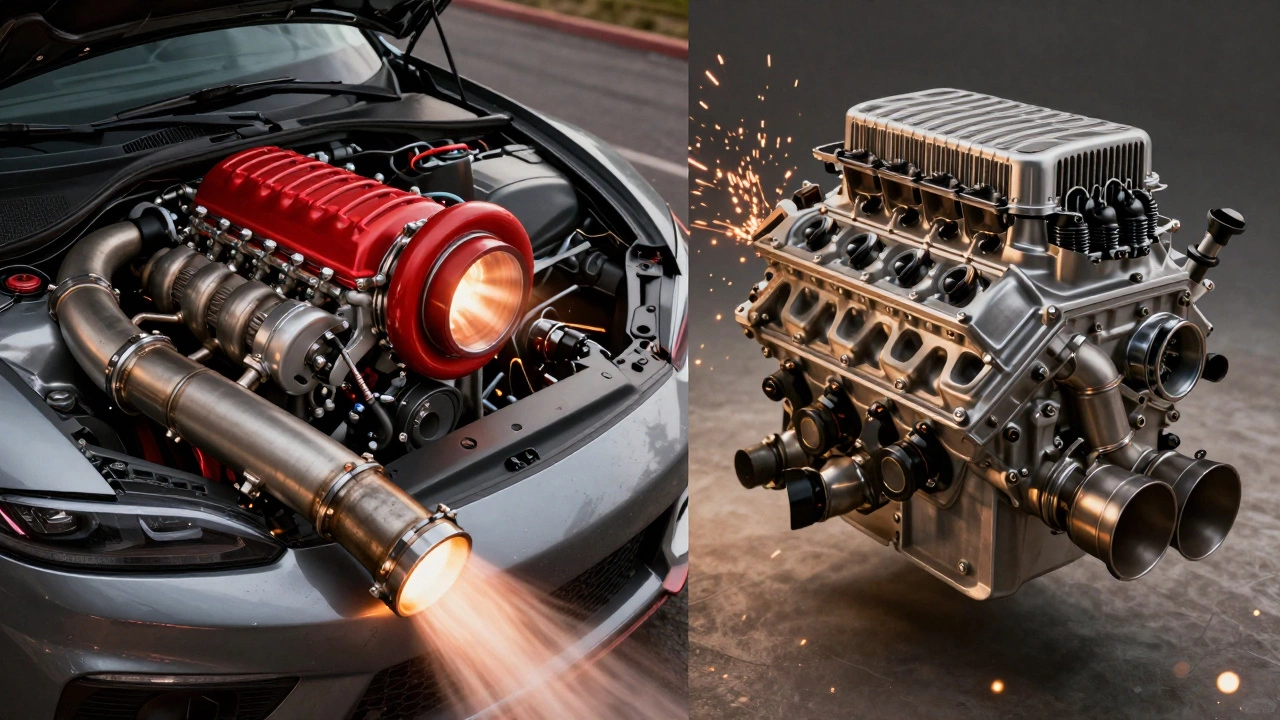
If you have a turbocharger, the turbine wheel spins using exhaust energy. A restricted exhaust starves the turbo, causing lag and heat soak. A 3-inch downpipe and exhaust allow the turbo to spool faster and dump spent gases efficiently. On a well-tuned turbo setup, moving from a restrictive 2.5-inch system to a flowing 3-inch system can yield 10 to 25 wheel horsepower, depending on boost levels and tuning.
2. Large Displacement Naturally Aspirated Engines
Engines over 5.0 liters, especially V8s, produce massive volumes of exhaust gas. A Corvette Z06 or a Ford Mustang GT with a 5.0L Coyote engine benefits from 3-inch piping because the sheer volume of gas needs room to escape. Here, you might see 5 to 15 horsepower gains, mostly due to improved high-RPM breathing and reduced pumping losses.
The Critical Factor: Tuning and ECU Remapping
Here is where most enthusiasts miss the boat. Changing your exhaust changes the engine's airflow dynamics. Your Engine Control Unit (ECU) has learned to manage fuel and ignition timing based on the original exhaust characteristics. When you remove backpressure and change flow rates, the oxygen sensors read differently.
If you install a 3-inch exhaust and don't retune the ECU, the computer may lean out the fuel mixture too much or retard ignition timing to compensate for unexpected sensor readings. This can lead to poor performance, rough idle, or even engine damage over time. A custom ECU tune is software adjustment of engine parameters like fuel maps and ignition timing to match new hardware ensures the engine takes full advantage of the improved exhaust flow. With a proper tune, those potential 10-15 horsepower gains become realized, measurable numbers.
Real-World Expectations: What Numbers Should You Believe?
Let's cut through the marketing hype. Dyno charts online often show huge spikes after an exhaust swap. Many of these tests include simultaneous upgrades: new intake, cold air filter, tune, and exhaust. Isolating the exhaust alone reveals modest results.
| Engine Type | Displacement | Other Mods Required | Expected HP Gain |
|---|---|---|---|
| Naturally Aspirated 4-Cyl | < 2.5L | None | 0 - 2 HP (Likely loss in torque) |
| Naturally Aspirated V6/V8 | 3.0L - 5.0L | High-flow cat/muffler | 3 - 8 HP |
| Turbocharged Small Block | 1.5L - 2.0L | Downpipe + Tune | 8 - 15 HP |
| High-Boost Turbo V6/V8 | 3.0L+ | Full system + Tune | 15 - 30+ HP |
Note that these figures are conservative estimates based on dynamometer testing averages. Actual results vary wildly based on vehicle condition, tire grip, and dyno type (dynojet vs. chassis dyno). Never trust a single dyno pull; always look for consistent trends across multiple runs.
Sounds, Laws, and Social Consequences
Before you weld up that 3-inch pipe, consider the non-performance factors. A larger exhaust with straight-through mufflers gets loud. Really loud. While some love the aggressive growl, others find it distracting or annoying. More importantly, many regions have strict decibel limits.
In places like California, Texas, and various Canadian provinces, modifying your exhaust to increase noise beyond factory specifications can fail inspection. Some areas require specific sound level tests during registration renewal. A 3-inch straight-pipe setup might save you $200 on parts but cost you $500 in fines or forced reversion to stock. Always check local noise ordinances before committing to a loud exhaust configuration.
Choosing the Right Setup: Cat-Back vs. Axle-Back
Not all 3-inch systems are created equal. You generally have two options:
Cat-Back Systems: These replace everything from the catalytic converter back. This offers the most flow improvement because you can swap the restrictive factory cats for high-flow units. However, this affects emissions legality in many jurisdictions. If passing smog checks matters to you, avoid deleting or replacing catalytic converters unless you use legal, CARB-approved high-flow replacements.
Axle-Back Systems: These keep your factory catalytic converters and front pipes, replacing only the muffler and rear pipes. This is the safest bet for legality and daily drivability. You get some flow improvement and a nicer tone, but since the major restriction (the cats) remains, horsepower gains are minimal-usually under 3 HP. It’s primarily an aesthetic and auditory upgrade.
Pro Tips for Maximizing Your Investment
If you decide to go ahead with the 3-inch exhaust, follow these guidelines to ensure you get value from the purchase:
- Maintain Wall Thickness: Don't buy thin-wall tubing to save money. Thinner walls vibrate more, leading to rattles and premature failure from heat fatigue. Look for 16-gauge or thicker stainless steel.
- Use Proper Mandrel Bending: Avoid crush bends in the pipes. Mandrel-bent pipes maintain internal diameter consistency, preventing flow bottlenecks at turns.
- Match Header Sizes: Ensure your exhaust headers or manifold outlets match the 3-inch pipe as closely as possible. A sudden step-up from 2.25-inch primaries to 3-inch collectors creates turbulence.
- Consider Resonators: If drone bothers you, include a resonator in the design. It cancels out specific low-frequency tones without restricting flow like a traditional muffler.
Final Verdict: Is It Worth It?
A 3-inch exhaust adds horsepower only if your engine produces enough exhaust volume to benefit from reduced backpressure. For stock small engines, expect negligible gains and possibly worse low-end torque. For turbocharged vehicles or large displacement engines, paired with a proper tune, you can realistically expect 10 to 25 additional horsepower.
Don't buy the pipe expecting miracles. Buy it because you want better flow for a modified engine, a deeper sound, and a cleaner look. Treat it as part of a holistic performance strategy, not a standalone fix. And always remember: the best modification is one that fits your driving style, local laws, and budget without turning your commute into a nuisance.
Will a 3-inch exhaust void my warranty?
In many countries, including the US and Canada, warranty laws protect consumers. Under the Magnuson-Moss Warranty Act in the US, a manufacturer cannot void your entire warranty simply because you installed an aftermarket exhaust. They must prove that the exhaust directly caused the specific engine failure. However, if your engine blows up due to lean running conditions from an untuned exhaust, they may deny coverage for that repair. Keep records of professional installation and tuning.
Does a 3-inch exhaust improve fuel economy?
It can, but slightly. By reducing backpressure, the engine works less hard to expel exhaust gases, improving thermal efficiency. Most drivers see a marginal improvement of 1-3 MPG in highway cruising. However, if the louder sound tempts you to drive more aggressively, you'll burn more fuel than you save. The primary benefit is performance, not economy.
Is 3-inch exhaust too big for a 2.0L engine?
For a naturally aspirated 2.0L engine, yes, 3-inch piping is generally too large. It reduces exhaust gas velocity, killing low-end torque and making the car feel sluggish. Stick to 2.25 or 2.5-inch systems for small displacement NA engines. If your 2.0L is turbocharged and boosted above 15 psi, then 3-inch becomes appropriate.
How much does a quality 3-inch exhaust system cost?
Prices vary widely. An axle-back system typically ranges from $400 to $800. A full cat-back system from reputable brands like Borla, MagnaFlow, or Corsa costs between $800 and $1,500. Custom fabricated systems by local shops can exceed $2,000 including labor. Always factor in potential tuning costs ($300-$600) if you're modifying a forced-induction engine.
Can I install a 3-inch exhaust myself?
Axle-back systems are DIY-friendly, requiring basic tools like wrenches and sockets. Cat-back systems are more complex, involving removing catalytic converters and potentially cutting brackets. If you lack experience with jack stands, torque specs, and exhaust hangers, professional installation is recommended to prevent leaks and misalignment.