 Nov, 28 2025
Car Battery Price Calculator
Choose Your Vehicle
Recommended Battery
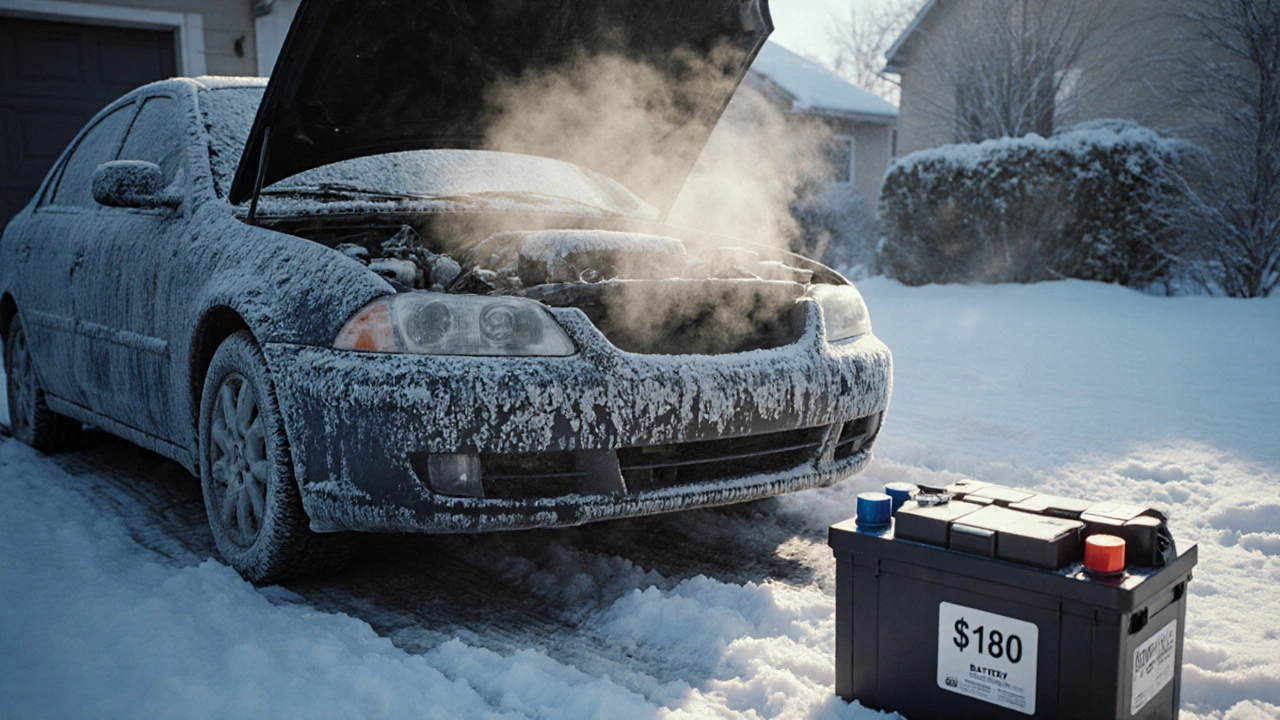
Every winter, someone in Hamilton wakes up to a dead car battery and panics. They see a $200 battery at the auto parts store, a $120 one online, and a $75 one at the discount warehouse. Then they wonder: How much should I pay for a car battery? The answer isn’t a number. It’s a match - between your car, your driving habits, and the climate you live in.
What You’re Really Buying When You Pay for a Car Battery
A car battery isn’t just a box of lead and acid. It’s a precision component designed to handle your vehicle’s electrical load. The price difference between a $60 battery and a $180 one isn’t just brand name. It’s cold cranking amps (CCA), reserve capacity (RC), warranty length, and build quality.
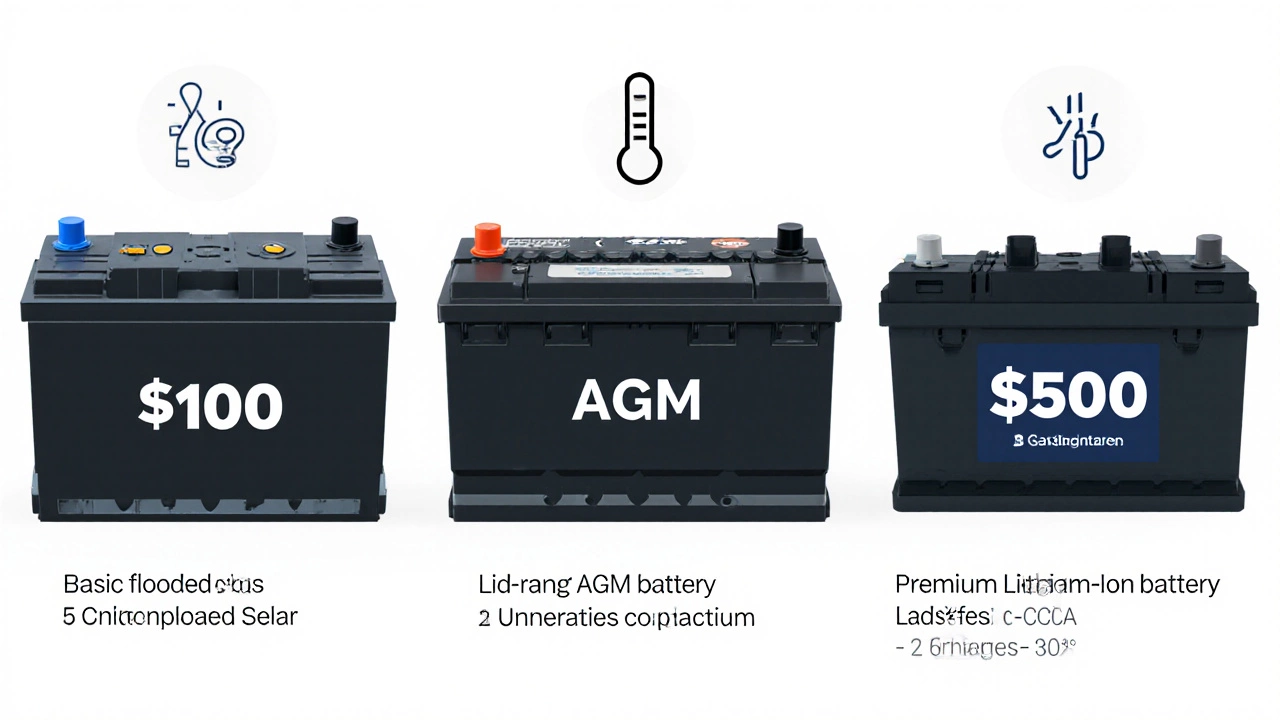
In Canada, where temperatures regularly drop below -20°C, a battery with 600 CCA might barely start your car. A 700 CCA battery? It’ll crank reliably even on the coldest mornings. That’s not a luxury - it’s survival. And if your car has a start-stop system, a standard battery will die in under two years. You need an AGM (Absorbent Glass Mat) battery, which costs more but lasts longer under heavy cycling.
Here’s what actually changes with price:
- CCA (Cold Cranking Amps): Higher = better cold weather performance. For Ontario winters, aim for at least 650 CCA.
- Reserve Capacity (RC): Minutes the battery can power essentials if the alternator fails. 90+ minutes is ideal.
- Warranty: A 3-year free replacement warranty is standard. A 5-year one with pro-rata coverage is better.
- Technology: Flooded lead-acid is cheapest. AGM is 30-50% more expensive but lasts 2x longer in modern cars.
What You Should Actually Pay Based on Your Car
There’s no universal price. A 2010 Honda Civic doesn’t need the same battery as a 2024 BMW X5. Here’s what you’ll realistically pay by vehicle type:
| Vehicle Type | Battery Type | Price Range | Expected Lifespan |
|---|---|---|---|
| Compact Sedan (Toyota Corolla, Honda Civic) | Flooded Lead-Acid | $85-$130 | 3-5 years |
| Midsize SUV (Honda CR-V, Ford Escape) | Flooded or AGM | $110-$170 | 4-6 years |
| Full-Size Truck (Ford F-150, Ram 1500) | AGM or High-CCA Flooded | $150-$220 | 5-7 years |
| Modern Luxury/Electric Hybrid (BMW, Tesla Model 3) | AGM or Lithium-Ion | $200-$350 | 5-8 years |
Check your owner’s manual. It lists the exact battery group size and minimum CCA. Don’t guess. A battery that’s too small won’t start your car. One that’s too big won’t fit.
Where to Buy - And Where Not To
You can buy a battery at Walmart, Canadian Tire, AutoZone, or online. But not all sources are equal.
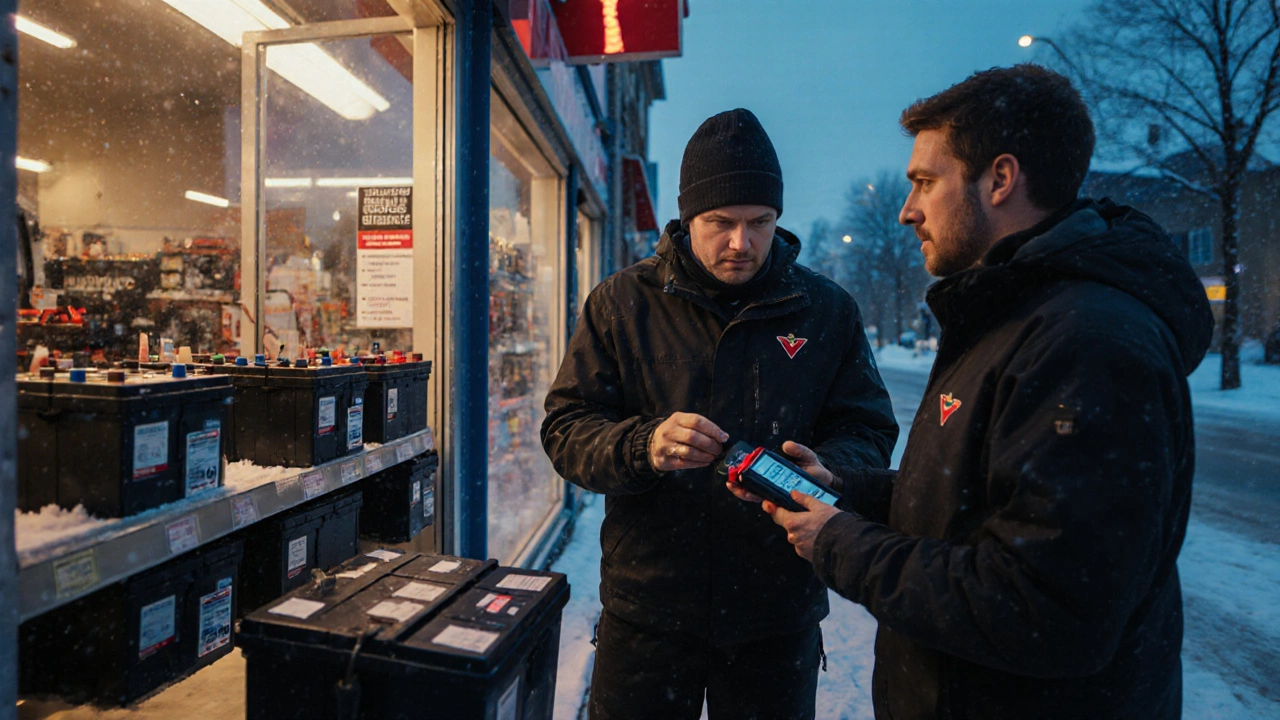
- Auto parts stores: Best for warranty and testing. They’ll test your old battery for free and install the new one. Canadian Tire often has $20 core charge refunds if you bring in your old battery.
- Warehouse clubs (Costco, Sam’s Club): Good prices on Interstate or DieHard batteries. Warranty is solid, but installation isn’t always included.
- Online (Amazon, RockAuto): Cheapest option, but you’re on your own for installation and returns. Watch out for expired stock - batteries sit on shelves for months.
- Dealerships: They’ll charge you $250+ for a battery that costs $120 elsewhere. Only go here if your car needs a proprietary battery (some Teslas, BMWs, or hybrids).
Pro tip: Ask for the manufacture date. Batteries degrade over time, even on the shelf. Look for a sticker with a letter and number (A=January, B=February, etc.) and the last two digits of the year. Don’t buy one made more than 6 months ago.
Signs You’re Being Overcharged (or Underbuying)
Here’s how to avoid getting ripped off:
- Red flag: They push you to a $250 battery for a 2015 Hyundai Accent. That’s unnecessary.
- Red flag: A $60 battery with no warranty. It’s probably a rebadged Chinese import.
- Green flag: A $140 AGM battery with a 5-year warranty for your 2022 Subaru Outback. That’s the sweet spot.
- Green flag: They test your alternator and starter before selling you a new battery. If your alternator is failing, no battery will help.
Don’t fall for the “premium” label. Brands like Optima, Odyssey, and Bosch are good - but so are Duralast, Interstate, and DieHard. The real difference is in specs, not logos.
How to Make Your Battery Last Longer
You spent $150 on a good battery. Don’t kill it in 18 months.
- Drive at least 30 minutes once a week. Short trips don’t fully recharge the battery.
- Turn off lights, radio, and heated seats before turning off the engine.
- Use a battery maintainer in winter if you don’t drive often. A $30 trickle charger beats a $180 replacement.
- Keep the terminals clean. Corrosion = poor connection = strain on the battery.
- Don’t let the battery sit unused for more than 3 weeks. Even parked cars drain power slowly.
In Hamilton, where snow and salt eat undercarriages, battery terminals corrode fast. Clean them every spring with a baking soda and water paste. It’s free and extends battery life by years.
What Happens If You Buy the Wrong One?
Buying a battery with too low CCA? Your car won’t start on a -25°C morning. You’ll be stranded. You’ll pay $150 for a tow and another $120 for a replacement.
Buying a battery with too high CCA? It might not fit. Or it could overload your car’s charging system. Some modern vehicles have strict voltage limits. A mismatched battery can fry your alternator - costing $800 to fix.
Buying a flooded battery for a start-stop car? It’ll swell, leak, and die in 12 months. AGM batteries handle repeated discharges. Flooded ones don’t.
It’s not about saving $30. It’s about avoiding $500 in damage.
Bottom Line: What You Should Pay Right Now
For most drivers in Canada in 2025:
- Standard car (sedan, compact SUV): Pay $100-$140 for a quality flooded battery with 650+ CCA and a 3-year warranty.
- Truck, SUV, or start-stop system: Pay $150-$200 for an AGM battery with 700+ CCA and a 5-year warranty.
- Luxury or hybrid: Pay $200-$300. You have no choice - the car requires it.
Don’t buy the cheapest. Don’t buy the most expensive. Buy the one that matches your car’s needs - and your climate.
And if your battery died last winter? Don’t wait until next winter to replace it. Batteries don’t die suddenly - they fade. Get it tested now. A $20 test at Canadian Tire could save you $200 in cold-weather towing.
How long does a car battery last?
Most car batteries last 3 to 5 years. In cold climates like Canada, they often last closer to 3 years because freezing temperatures strain the chemical reaction inside. AGM batteries can last up to 7 years, especially if you drive regularly and avoid short trips.
Can I replace my car battery myself?
Yes, if you have basic tools and know how to disconnect the negative terminal first. But modern cars have electronic systems that can reset or glitch if power is lost. Some need a battery programmer to relearn settings. If you’re unsure, get it installed professionally - most auto parts stores do it for free.
Do I need a specific battery brand?
No. Brands like Optima, Bosch, and Odyssey are reliable, but so are Duralast, Interstate, and DieHard. What matters is the battery’s group size, CCA, RC, and technology (AGM vs. flooded). Match the specs in your owner’s manual, not the brand name.
Why are AGM batteries more expensive?
AGM batteries use glass mat separators that hold the acid more securely, making them spill-proof, vibration-resistant, and better at handling deep discharges. They’re also built to handle start-stop systems and high electrical loads from modern electronics. The materials and manufacturing are more complex, so they cost more - but they last longer and perform better in tough conditions.
Should I buy a battery with a higher CCA than recommended?
It’s usually safe to go higher - like 700 CCA instead of 600 - as long as the battery fits in the tray and the terminals align. Higher CCA means better cold starts. But don’t go way over. A 1000 CCA battery in a small car might be physically too big or cause charging system issues. Stick within 10-15% above the manufacturer’s minimum.
Is it worth buying a battery online?
Only if you’re confident in the seller’s return policy and the battery’s age. Many online batteries sit in warehouses for months before shipping. A battery older than 6 months loses performance. Local stores test batteries before sale and often include free installation. Online is cheaper, but risky if you’re not sure what you’re getting.
Next Steps: What to Do Today
1. Check your car’s owner’s manual for the correct battery group size and minimum CCA.
2. If you’re in Canada and it’s November, test your battery now. Most auto parts stores offer free testing.
3. If your battery is over 3 years old and you’ve had trouble starting in cold weather, replace it before the first snowstorm.
4. Bring your old battery back for a core refund - you’ll get $15-$30 back at most stores.
5. Don’t wait for failure. A dead battery in the middle of a winter commute isn’t just inconvenient - it’s dangerous.