 May, 27 2026
Exhaust Repair Cost Estimator
Configure Your Repair Scenario
Estimated Cost Breakdown
Select options and click calculate to see your estimate.
You pull into the shop, and the mechanic tells you the truth: your exhaust is shot. The quote comes back higher than expected, and suddenly you’re wondering if this part of your car really costs that much to fix or upgrade. It’s a fair question. An exhaust system is a critical automotive component that manages engine emissions, reduces noise, and can influence performance. It does more than just make your car sound sporty; it keeps harmful gases out of the cabin and ensures your engine runs efficiently. But because the market ranges from cheap generic pipes to high-end titanium setups, figuring out exactly how much you should spend can feel like guessing in the dark.
The short answer is that you should expect to pay between $200 and $1,500 for a standard replacement, depending on whether you need a simple muffler swap or a full system overhaul. However, throwing money at the wrong part won’t help. To get the best value, you need to understand what drives the price up or down, when to save, and when splurging actually makes sense.
Breaking Down the Cost Factors
Price isn't random. When you look at quotes for exhaust work, three main things dictate the final number: materials, labor, and the specific components failing. Understanding these helps you spot a rip-off or find a deal.
Materials Matter More Than You Think
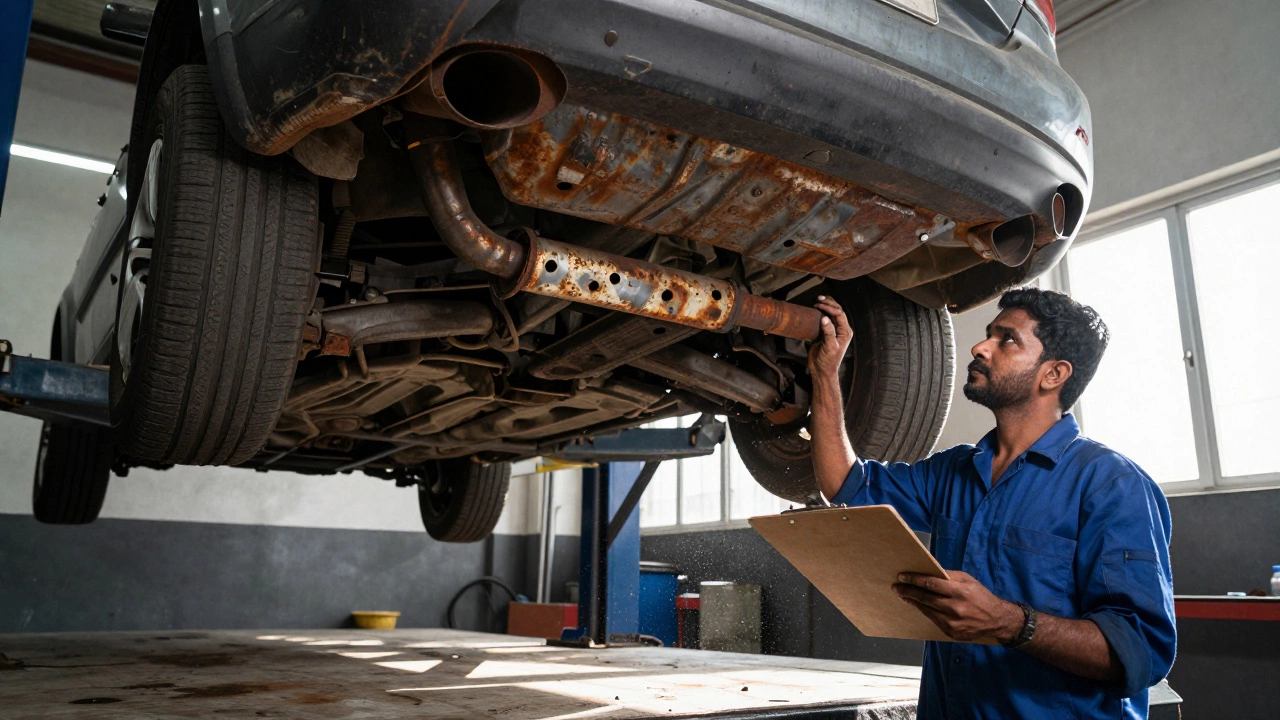
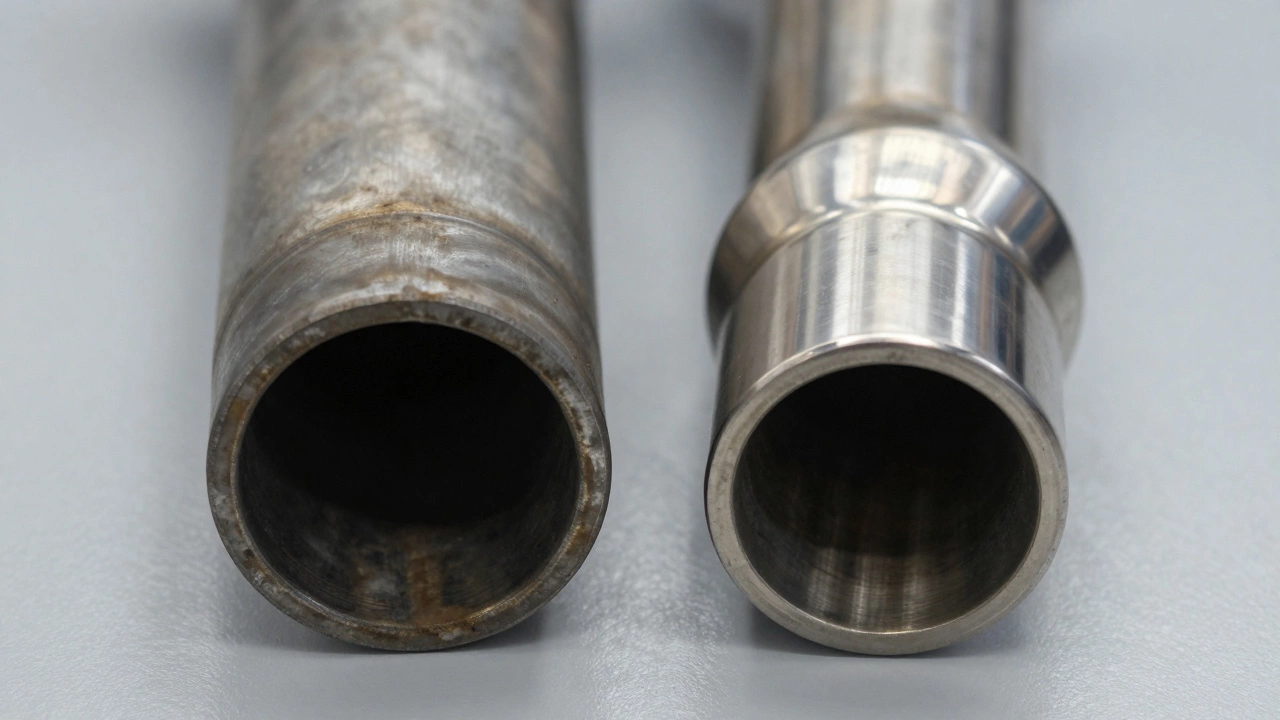
The metal used in your exhaust determines its lifespan and cost. Most budget-friendly systems use mild steel. It’s cheap to manufacture but rusts quickly, especially in areas with road salt. If you live somewhere cold, a mild steel exhaust might only last two or three years before holes start appearing.
Stainless steel is the gold standard for durability. Specifically, grade 304 or 409 stainless steel resists corrosion far better than mild steel. While the upfront cost is higher-often double that of mild steel-it usually lasts the life of the vehicle. Then there are premium options like aluminized steel or even titanium for performance builds. Titanium is incredibly light and heat-resistant but comes with a hefty price tag, often reserved for racing applications rather than daily drivers.
Labor Is the Hidden Variable
Parts are only half the battle. Exhaust work involves crawling under a car, dealing with rusted bolts, and often requires cutting and welding. A simple muffler replacement might take an hour. Replacing a catalytic converter or a full manifold-to-tip system can take four hours or more. Labor rates vary wildly by location, ranging from $80 to $150 per hour in many regions. Always ask if the quote includes disposal fees for the old parts, as hazardous waste handling adds to the bill.
Standard Replacement vs. Performance Upgrades
Your spending strategy changes completely based on why you are replacing the exhaust. Are you trying to fix a broken car, or are you trying to make it faster?
| Component | Budget Option (Mild Steel/OEM) | Premium Option (Stainless/Aftermarket) | Typical Lifespan |
|---|---|---|---|
| Muffler Only | $200 - $400 | $400 - $700 | 3-5 years / 10+ years |
| Catalytic Converter | $800 - $1,200 | $1,200 - $2,500+ | 10+ years |
| Full System (Cat-back) | $600 - $1,000 | $1,000 - $2,500 | 5-7 years / 15+ years |
| Headers & Manifold | $400 - $800 | $800 - $1,500 | 10+ years |
If your goal is simply to pass inspection and stop the rattling noise, stick to OEM (Original Equipment Manufacturer) quality parts or reputable mid-tier brands. You don’t need race-grade titanium to drive to the grocery store. In this scenario, spending over $600 for a basic sedan’s exhaust is usually unnecessary unless you opt for long-lasting stainless steel.
However, if you are modifying the engine, the math changes. High-performance engines produce more heat and pressure. A stock exhaust can become a bottleneck, restricting airflow and reducing power gains. Here, investing in a high-flow cat-back system or performance headers pays off. Brands like Borla, MagnaFlow, or Corsa offer systems that balance sound, durability, and slight horsepower increases. For serious enthusiasts, companies like Borla or Flowmaster provide tuned systems that optimize backpressure. In these cases, spending $1,500 to $3,000 is common and justified by the performance return.
When Cheap Turns Out Expensive
We’ve all seen those shiny exhaust tips advertised for $50 online. They look great in the photo, but installing them often reveals poor fitment. Cheap aftermarket parts frequently suffer from thin gauge metal that warps under heat, leading to leaks within months. These leaks not only create annoying whistling noises but can also allow carbon monoxide to enter the passenger compartment-a serious safety hazard.
Another trap is the "universal" fit exhaust. These require significant fabrication skills to install correctly. If you aren’t comfortable with a welder, buying a universal kit will likely result in paying a professional to fix the bad fit anyway, doubling your cost. Always prioritize direct-fit kits designed specifically for your year, make, and model. They bolt on easily and ensure proper alignment with sensors and mounts.
The Catalytic Converter Conundrum
The most expensive single part of any exhaust system is the catalytic converter, which reduces toxic gases and pollutants in exhaust gas from an internal combustion engine into less-toxic pollutions. Because they contain precious metals like platinum, palladium, and rhodium, they are targets for theft. If yours has been stolen or failed due to age, the replacement cost skyrockets.
OEM catalytic converters from dealerships can cost upwards of $2,000 including labor. Independent shops might offer slightly lower prices, but regulations in many states prohibit using non-certified replacements. Before paying a huge sum, verify if your local laws allow for aftermarket catalytic converters. In some jurisdictions, you must use EPA-approved parts, which limits your choices and keeps prices high. Don’t risk a fine by installing a cheap, unverified unit.
DIY vs. Professional Installation
Can you save money by doing it yourself? Absolutely, if you have the right tools and space. A muffler or resonator replacement is one of the more manageable DIY projects for an intermediate mechanic. You’ll need a jack, stands, wrenches, penetrating oil, and possibly a reciprocating saw if bolts are seized.
However, DIY risks exist. Improperly tightened clamps can lead to leaks. Misaligned hangers cause excessive vibration, wearing out bushings prematurely. And working underneath a raised vehicle carries inherent danger. If you lack experience with exhaust systems, the savings from skipping labor might be wiped out by fixing installation errors later. For complex jobs involving oxygen sensors or catalytic converters, professional installation is usually worth the peace of mind.

Signs You Need to Invest Now
Ignoring exhaust problems doesn’t make them go away; it makes them worse. Watch for these red flags that indicate immediate investment is needed:
- Loud rumbling or roaring: Indicates a hole in the muffler or pipe.
- Hissing sounds under acceleration: Suggests a leak near the manifold or gaskets.
- Rotten egg smell: Points to a failing catalytic converter struggling to process sulfur compounds.
- Check Engine Light: Often triggered by oxygen sensor readings affected by exhaust leaks.
- Visible rust or holes: Especially around joints and bends where moisture collects.
Addressing minor issues early, like replacing a cracked hanger ($20-$50), prevents stress on the entire system. Letting a small leak persist can damage nearby sensors or cause soot buildup that ruins other components.
Maximizing Value Without Compromising Safety
To get the most bang for your buck, follow these practical steps:
- Get multiple quotes: Call at least three independent shops. Dealerships are convenient but rarely the cheapest option for exhaust work.
- Ask about warranty: Good manufacturers offer lifetime warranties against perforation. Avoid shops that sell parts with no guarantee.
- Choose stainless steel if possible: Even if it costs $100-$200 more upfront, it lasts significantly longer than mild steel, saving you future repairs.
- Verify fitment: Ensure the part is listed as "direct fit" for your specific vehicle configuration (e.g., twin exhaust vs. single).
- Consider modular systems: Some brands sell components separately. If only your muffler is dead, buy just that piece instead of the whole system.
Remember, an exhaust system is a safety device first and a cosmetic one second. Never compromise on emissions compliance or structural integrity to save a few dollars. Investing in a quality system protects your health, your wallet in the long run, and the environment.
Is it worth replacing just the muffler?
Yes, if the rest of your exhaust system is in good condition. Replacing only the muffler is the most cost-effective solution, typically costing between $200 and $500. However, inspect the surrounding pipes for rust. If adjacent sections are corroded, replacing the entire rear section may be more economical in the long term.
How much does a new catalytic converter cost?
Prices vary widely. A standard OEM replacement can range from $800 to $1,500 including labor. High-performance vehicles or those requiring specific precious metal content may exceed $2,000. Aftermarket options exist but must meet EPA standards to avoid legal issues.
Does a new exhaust increase fuel economy?
Slightly. A clogged or restricted exhaust forces the engine to work harder, reducing efficiency. Replacing a damaged system restores optimal flow, potentially improving MPG by 1-3%. Performance exhausts claim larger gains, but real-world results depend heavily on driving habits and other modifications.
Can I install an exhaust myself?
Simple muffler or resonator swaps are feasible for DIYers with basic tools. Complex jobs involving headers, catalytic converters, or welding require professional expertise. Incorrect installation can lead to dangerous fumes entering the cabin or voided warranties.
What is the difference between cat-back and axle-back exhausts?
An axle-back system replaces everything from the rear axle differential to the tailpipe, primarily changing sound. A cat-back system starts after the catalytic converter, affecting both sound and potentially performance by improving exhaust flow throughout the mid-section. Cat-backs are generally more expensive but offer greater benefits.