 Feb, 27 2026
Radiator Health Checker
How to Use This Tool
Answer the questions below about your radiator maintenance and symptoms. This tool analyzes your answers to determine if your radiator likely needs replacement.
Radiator Assessment
Based on your answers, your radiator may still be in good condition. However, it's recommended to check your coolant and consider a professional inspection.
Most people don’t think about their car’s radiator until it starts leaking steam or the temperature gauge spikes. But here’s the truth: car radiators don’t need replacing as often as you might think. If you’re asking how often they need to be replaced, the real answer isn’t about mileage-it’s about condition, maintenance, and what’s happening inside your cooling system.
Typical Lifespan of a Car Radiator
A well-maintained radiator can last the lifetime of your car. That’s right-150,000 miles, sometimes even 200,000. Many vehicles built after the year 2000 have radiators made from plastic and aluminum, which are lighter and cheaper but more vulnerable to corrosion and stress fractures than old-school copper-brass units. Still, with proper care, they rarely fail before 10 years.
Here’s what most mechanics see in the field: radiators that last 10-15 years without issues. But if you skip coolant changes, drive in extreme heat, or ignore small leaks, that lifespan can drop to 5 years or less. The radiator itself isn’t the weak link-it’s the neglect around it.
Signs Your Radiator Actually Needs Replacing
Not every leak or odd smell means you need a new radiator. Here’s what to look for:
- Constant coolant loss-If you’re topping off coolant every few weeks and there’s no visible leak under the car, the radiator might be corroding from the inside.
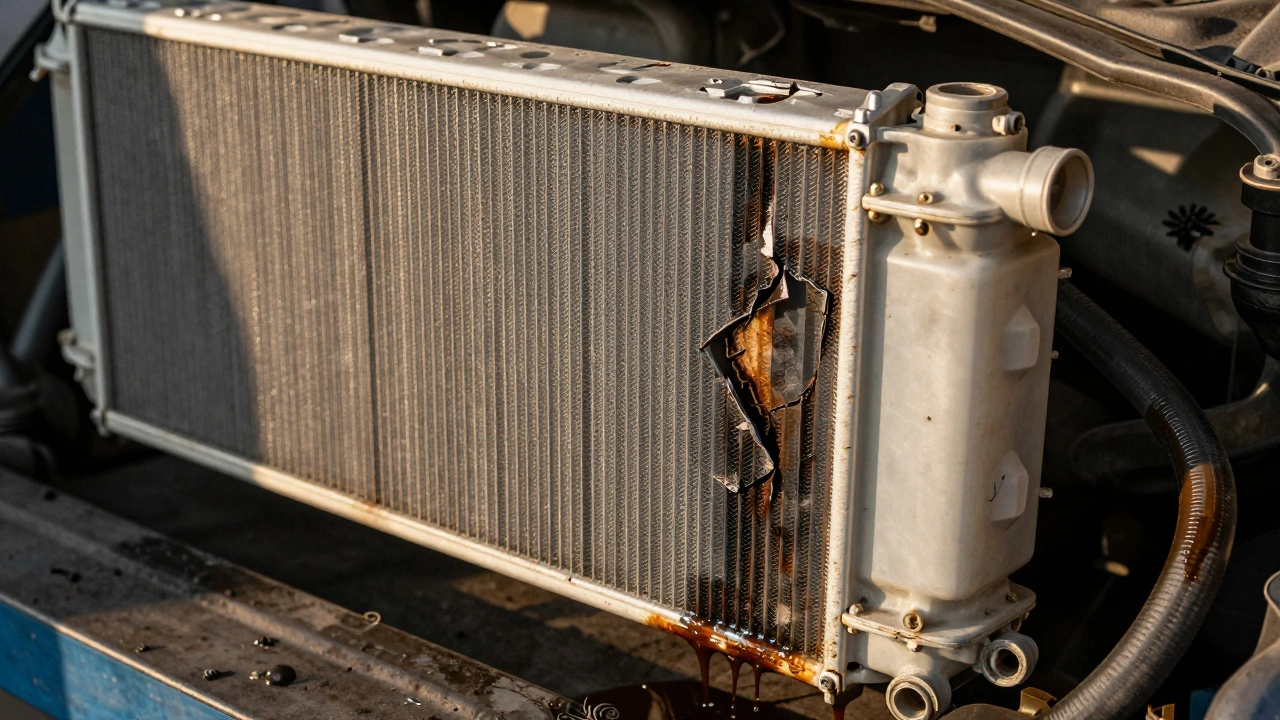
- Visible rust or corrosion-Check the end tanks and fins. If the metal is flaking or the plastic tanks are cracked, it’s time.
- Overheating at low speeds-If your car runs fine on the highway but overheats in traffic, the radiator may not be moving enough air. Clogged tubes or a damaged fan shroud can cause this.
- Discolored or sludgy coolant-Coolant should be bright green, red, or orange. If it looks brown and gritty, internal corrosion is likely eating away at the radiator’s metal.
- Steam or sweet-smelling vapor-This means coolant is escaping into the engine bay. A cracked tank or damaged seal is often the cause.
If you see two or more of these signs, replacing the radiator is likely the right move. But if it’s just one-like a small drip-try flushing the system first. Sometimes, a clogged radiator can be cleaned, not replaced.
Why Coolant Changes Matter More Than You Think
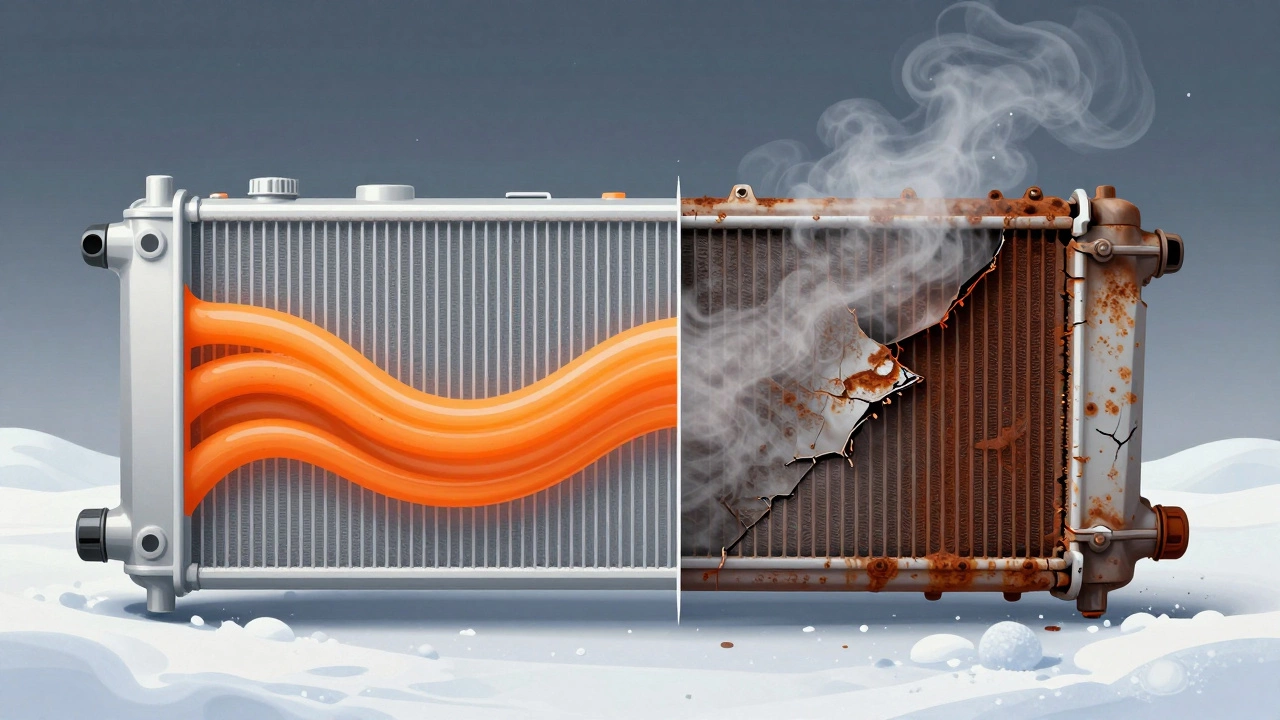
The biggest killer of radiators isn’t age-it’s old coolant. Most manufacturers recommend changing the coolant every 5 years or 100,000 miles. But many drivers don’t. Coolant doesn’t just transfer heat. It contains corrosion inhibitors that protect the radiator, water pump, and heater core.
When those inhibitors break down, the coolant turns acidic. That acid eats through aluminum, copper, and solder joints. In Hamilton winters, where road salt is everywhere, this problem gets worse. Salt finds its way into the cooling system through tiny leaks or condensation, then combines with old coolant to create a corrosive cocktail.
One mechanic I know in Dundas replaces 3-4 radiators a month just from neglected coolant. He says, “I’ve seen radiators that look like they’ve been sandblasted inside. That’s not wear and tear. That’s laziness.”
What About Aftermarket vs. OEM Radiators?
If you do need a replacement, you’ll have choices: OEM (original equipment manufacturer), aftermarket, or used. Here’s the breakdown:
| Type | Cost | Material | Warranty | Best For |
|---|---|---|---|---|
| OEM | $400-$700 | Plastic/Aluminum | 1-3 years | Exact fit, factory specs |
| Aftermarket (high-end) | $300-$500 | Aluminum with reinforced tanks | 2-5 years | Improved durability, better flow |
| Aftermarket (budget) | $150-$250 | Thin plastic, basic fins | 1 year | Short-term fix |
| Used (salvage yard) | $50-$150 | Varies | None | Only if you’re certain of condition |
Most people should go with a high-end aftermarket radiator. They’re often better than OEM because manufacturers have improved designs over the years. For example, many now include internal baffles to improve coolant flow, or thicker end tanks to resist cracking. But avoid the cheapest options-they’re the ones that crack after one winter.
What Else Should You Replace at the Same Time?
Replacing a radiator is a 3-5 hour job. If you’re going through that effort, don’t just swap the radiator and call it done. Here’s what you should do:
- Replace the thermostat-It’s cheap ($20-$40) and often fails around the same time. A stuck thermostat causes overheating, even with a new radiator.
- Flush the entire cooling system-Use a professional-grade flush to remove sludge and rust. Don’t just drain and refill.
- Check the water pump-If it’s original and over 80,000 miles, consider replacing it. A failing pump can ruin a new radiator in weeks.
- Inspect hoses and clamps-Soft, cracked, or bulging hoses are a ticking time bomb. Replace them if they’re over 8 years old.
- Use the right coolant-Never mix types. Use the one specified in your owner’s manual. In Ontario, many recommend ethylene glycol-based coolant with silicate additives for aluminum protection.
What About Radiator Caps and Coolant Level?
It sounds simple, but a bad radiator cap is one of the most common causes of radiator failure. The cap maintains pressure in the cooling system. If it can’t hold pressure, coolant boils at lower temperatures, leading to overheating and eventual damage.
Replace the radiator cap every 5 years, even if it looks fine. It’s a $15 part that prevents a $600 repair. And always keep coolant at the full mark. Running low-even just an inch below-puts extra strain on the system.
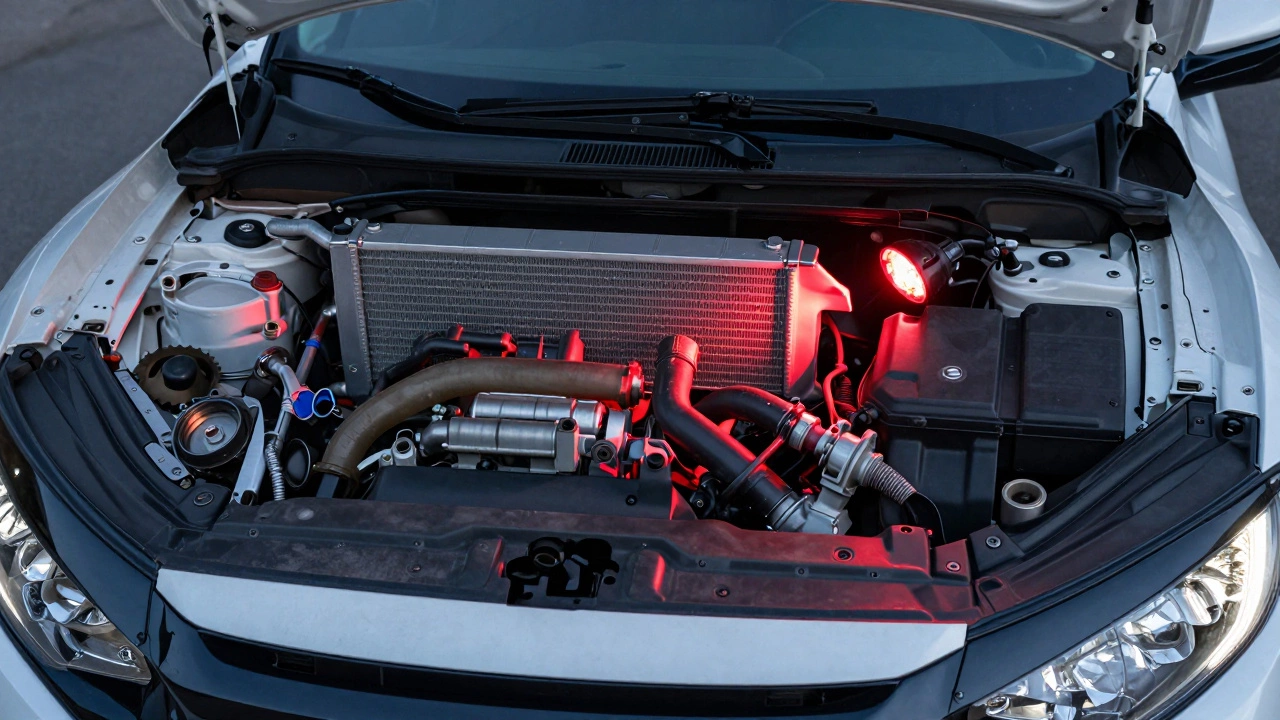
Real-World Example: A 2018 Honda Civic in Hamilton
A client brought in a 2018 Civic with 98,000 km. It was overheating on highway trips. No leaks. No warning lights. Just steam.
We checked the coolant-it was dark, thick, and smelled burnt. The radiator end tanks had tiny cracks. The thermostat was stuck open. The cap held only 8 psi instead of 15.
Instead of replacing just the radiator, we did a full system refresh: new radiator, thermostat, cap, hoses, and a complete flush. We used Honda-specific coolant. The car now runs cool, even in -20°C winters. Cost? $720. A new radiator alone would’ve cost $500-and it would’ve failed again in 12 months.
When You Can Skip Replacement
Not every problem needs a new radiator. Sometimes, cleaning works:
- If your radiator is clogged with debris (leaves, bugs, road grime), a professional pressure flush can restore 80% of its flow.
- If you have minor seepage from a loose hose clamp or cracked plastic fitting, tightening or replacing the fitting may be enough.
- If coolant is low due to evaporation (not leaks), topping off and checking for leaks can buy you years.
Don’t rush into replacement. Rule out simpler fixes first. A mechanic can pressure-test your cooling system in under an hour. That’s cheaper than a new radiator.
Final Rule of Thumb
If your radiator is over 10 years old and you’ve never changed the coolant, replace it. If it’s under 10 years and you’ve maintained the system, leave it alone. The key isn’t mileage-it’s maintenance history. Your radiator doesn’t care how many kilometers you’ve driven. It cares if you’ve kept the coolant clean and the pressure right.
Most radiators last longer than the car. But only if you do the little things.
Can a radiator last 200,000 miles?
Yes, absolutely. Many cars, especially those with regular coolant changes and no overheating history, have radiators that last beyond 200,000 miles. The key is consistent maintenance-not the odometer reading.
Is it worth repairing a cracked radiator instead of replacing it?
Usually not. Most radiator cracks are in the plastic end tanks, which can’t be reliably repaired. Even epoxy fixes fail under heat and pressure. Replacing it is cheaper and safer than risking a breakdown.
Do I need to replace the radiator if my car overheats once?
Not necessarily. One overheating event could be caused by a bad thermostat, low coolant, or a failed fan. But if it happens again, or if the radiator shows signs of damage, then yes-replace it. Repeated overheating destroys radiators from the inside.
Can I use tap water instead of coolant in a pinch?
Only in an emergency. Tap water lacks corrosion inhibitors and freezes in cold weather. If you must use it, replace it with proper coolant within 48 hours. Long-term use will damage your radiator and water pump.
How much does it cost to replace a radiator?
In Ontario, expect $400-$800 total, including labor. OEM parts are on the higher end. Aftermarket options can be 30% cheaper. Always get the cooling system flushed at the same time-it’s essential.