 Dec, 1 2025
Fuel Pump Pressure Tester
Check Your Fuel Pressure
Modern fuel pumps should maintain 35-65 psi of pressure. Enter your reading below to verify if your pump is working properly.
Enter your readings above and click to check results
If your car sputters on the highway, stalls at stoplights, or won’t start even with a full tank, you might be dealing with a bad fuel pump. It’s one of the most common but misunderstood car problems. People often blame the battery, the spark plugs, or even the engine-when the real issue is right under the gas tank. A failing fuel pump doesn’t always scream for help. Sometimes it just whispers: a slow start, a loss of power uphill, or a sudden engine cut-out on the freeway. By the time it dies completely, you’re stranded. But fixing it isn’t as scary as it sounds-if you know what to look for.
What a Fuel Pump Actually Does
The fuel pump’s job is simple: it pulls gasoline from the tank and pushes it through the fuel lines to the engine at the right pressure. Modern cars use electric fuel pumps mounted inside the gas tank. They’re designed to last 100,000 to 150,000 kilometers, but dirt, water, or running the tank low too often can kill them early. A weak pump doesn’t deliver enough pressure. A dead one delivers nothing. Either way, the engine starves for fuel and reacts like it’s running out of gas-even when the tank is full.
Signs You Have a Bad Fuel Pump
Not every hesitation means a bad pump. But if you’re seeing three or more of these, it’s time to check:
- Engine won’t start, even after cranking for more than 10 seconds
- Stalling at high speeds or under heavy load (like climbing a hill)
- Loss of power when accelerating or towing
- Engine sputtering at steady speeds, especially above 80 km/h
- Loud whining noise coming from the rear of the car when the ignition is on
- Intermittent stalling that clears up after letting the car sit for 10-15 minutes
These symptoms often show up after the car has been running for a while. That’s because the pump heats up and fails under load. If your car starts fine in the morning but dies after a 30-minute drive, that’s a classic sign.
How to Test a Fuel Pump Before Replacing It
Don’t just replace the pump because the car won’t start. You might be throwing money away. A fuel pressure test takes 15 minutes and saves you hundreds.
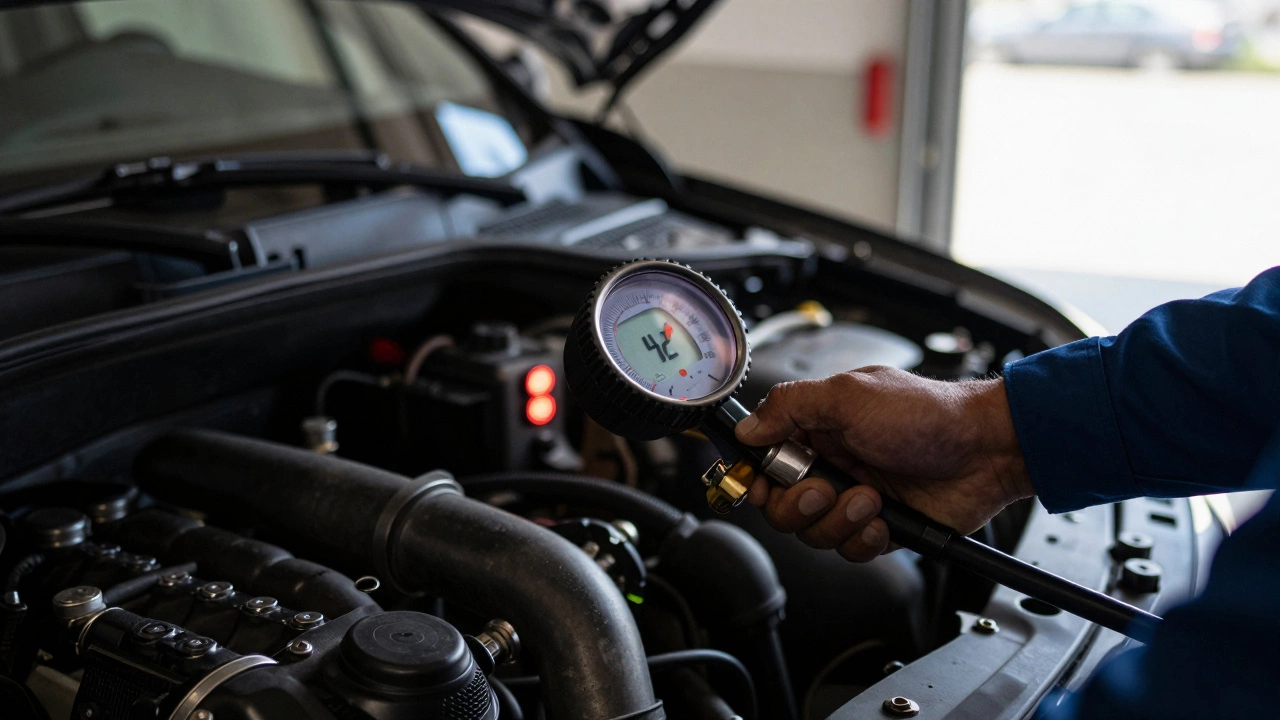
You’ll need a fuel pressure gauge-these cost under $40 at auto parts stores. Most vehicles have a test port on the fuel rail under the hood. Look for a small metal nipple with a cap that looks like a tire valve. Remove the cap, attach the gauge, and turn the key to the “on” position (don’t start the engine). The pump should prime for two seconds and show pressure. For most cars, normal pressure is between 35 and 65 psi. Check your owner’s manual for exact numbers.
If the gauge reads zero, the pump isn’t working. If it’s low-say, under 25 psi-you’ve got a weak pump. If it’s normal, the problem is likely a clogged fuel filter, a bad relay, or a wiring issue.
Here’s a quick trick: listen. When you turn the key to “on,” you should hear a brief hum from the rear of the car. If you don’t hear it, check the fuse and relay first. A blown fuse is cheap. A dead pump is expensive.
Step-by-Step Fuel Pump Replacement
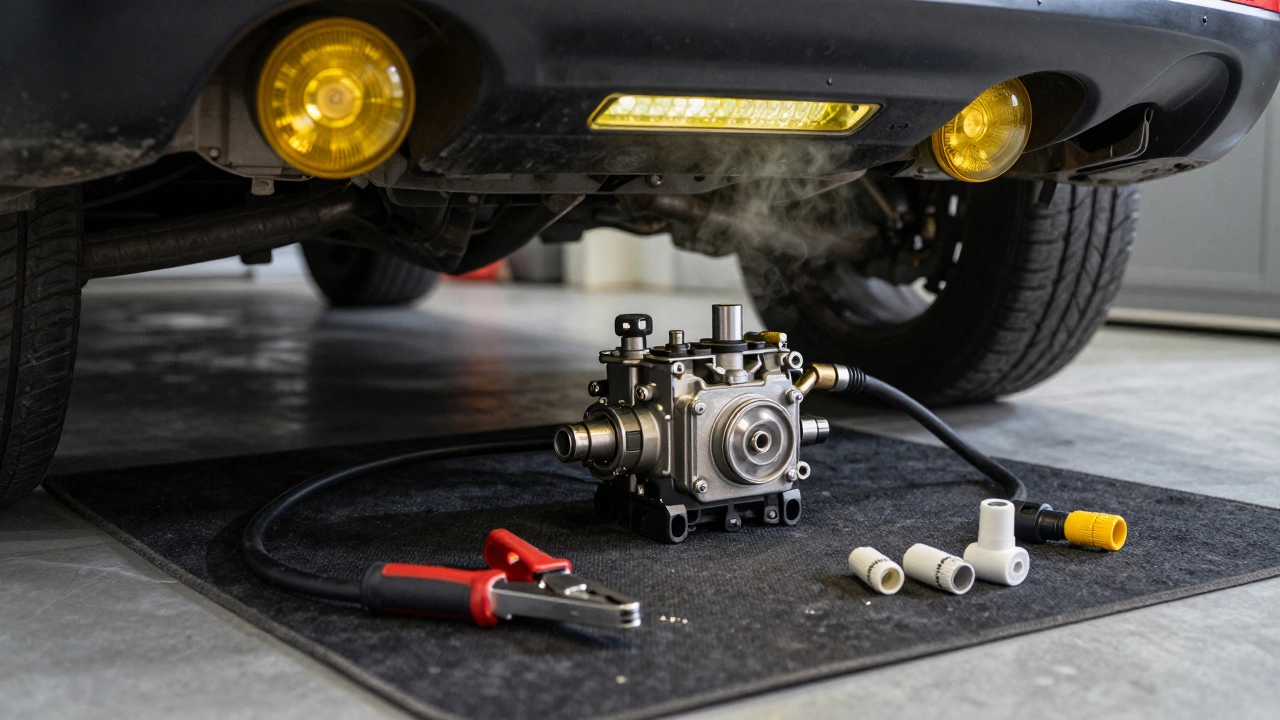
If the test confirms a bad pump, here’s how to replace it. This works for most cars with in-tank pumps, including popular models like the Honda Civic, Ford F-150, and Toyota Camry.
- Relieve fuel pressure. Disconnect the battery. Then, start the engine and let it run until it dies. This drains pressure from the lines.
- Drain the gas tank. You don’t need to empty it completely, but get it below 1/4 full. Less fuel = less weight and less mess.
- Remove the rear seat. Most cars have an access panel under the rear seat or in the trunk. Look for a round cover with screws or clips.
- Disconnect the fuel lines and electrical connector. Use a fuel line disconnect tool to avoid spills. Label wires if they’re not color-coded.
- Unbolt the fuel pump module. It’s usually held by a ring or clips. Turn it counterclockwise to remove.
- Swap the old pump for the new one. Make sure the new pump matches the old one exactly-check part numbers. Some kits include a new filter and O-rings.
- Reinstall everything in reverse. Tighten the mounting ring securely. Reconnect the fuel lines and electrical plug.
- Reconnect the battery. Turn the key to “on” for 5 seconds (don’t start). Do this three times to prime the system.
- Start the engine. Let it idle for 2 minutes. Check for leaks under the car.
Take your time. Fuel is flammable. Work in a well-ventilated area. Keep a fire extinguisher nearby. And never smoke.
What to Buy: Aftermarket vs. OEM
Not all fuel pumps are created equal. OEM (original equipment manufacturer) pumps from Ford, GM, or Toyota cost more-sometimes double-but they’re built to factory specs. Aftermarket pumps from brands like Delphi, Bosch, or Airtex are cheaper and often just as reliable.
Here’s what to look for:
- Make sure the part number matches your exact year, make, and model
- Check if the pump includes a new strainer and mounting hardware
- Avoid no-name brands with no warranty
- Look for pumps with a 2-year or longer warranty
In Hamilton, where winters are harsh and roads are salted, a high-quality pump is worth the extra $50. Corrosion kills cheap pumps faster.
How to Prevent a Bad Fuel Pump
Prevention is cheaper than replacement. Here’s how to make your pump last:
- Never run the tank below 1/4 full. The fuel cools the pump. Running low overheats it.
- Use quality gasoline. Cheap fuel has more dirt and water that clog the pump’s filter.
- Replace the fuel filter every 40,000 to 60,000 km. A clogged filter forces the pump to work harder.
- Don’t ignore warning signs. A faint whine or slow start isn’t normal.
These habits can double the life of your fuel pump. It’s not magic-it’s just basic care.
When to Call a Pro
You can replace a fuel pump yourself if you’re comfortable with basic tools. But if you’re unsure about:
- Relieving fuel pressure safely
- Handling fuel lines without spilling
- Diagnosing electrical issues
-then take it to a mechanic. A bad fuel pump job done wrong can cause a fire. A professional will charge $400-$800 total, but they’ll also check the fuel lines, relay, and wiring harness. You’ll know it’s done right.
What Happens If You Ignore a Bad Fuel Pump?
Ignoring it doesn’t make it go away. A failing pump can cause:
- Engine misfires from lean fuel mixture
- Damage to fuel injectors from inconsistent pressure
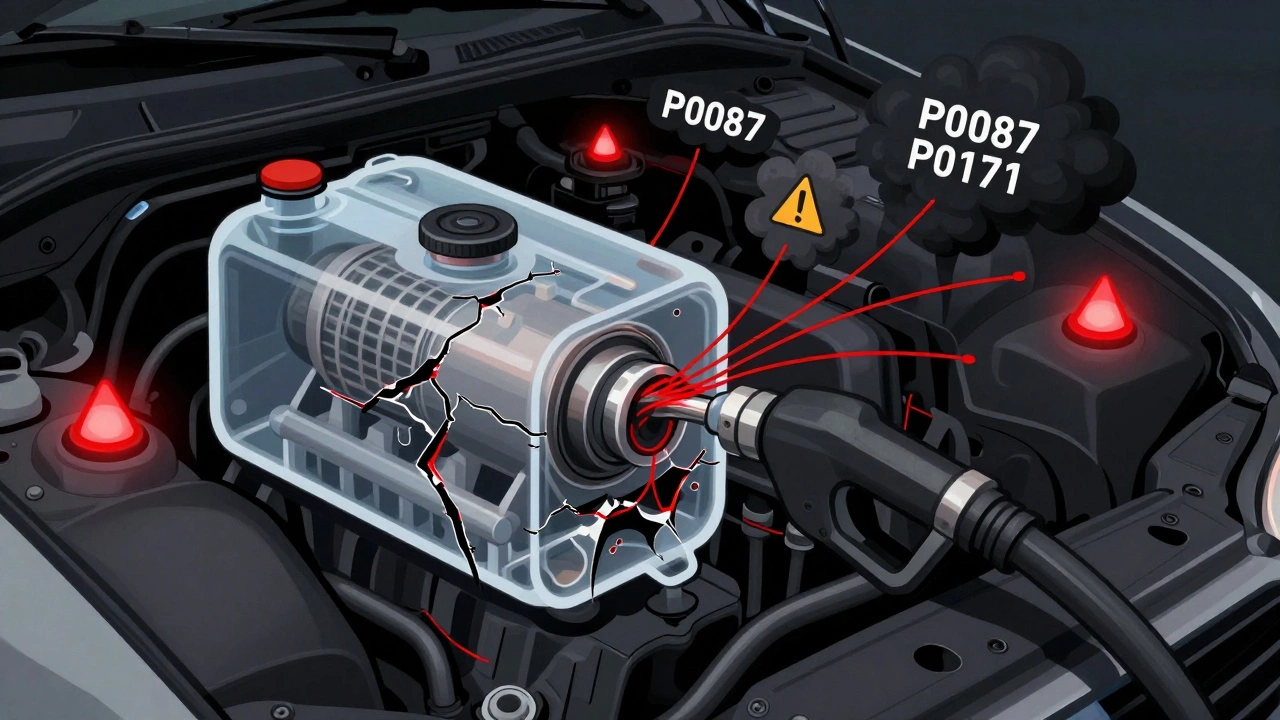
- Check engine light with codes like P0171 or P0087
- Complete engine failure if the pump dies while driving
Worse, a dead pump can leave you stranded on a dark highway in January. In Hamilton, that’s not just inconvenient-it’s dangerous.
Can a bad fuel pump cause the check engine light to come on?
Yes. A weak or failing fuel pump often triggers codes like P0087 (fuel rail pressure too low) or P0171 (system too lean). The engine control unit detects that not enough fuel is reaching the cylinders and flags it as a problem. But these codes can also come from a clogged filter or bad injector, so a pressure test is needed to confirm the pump is the culprit.
How long does it take to replace a fuel pump?
For a DIYer with basic tools, expect 3 to 5 hours. Most of that time is draining the tank, removing the seat, and carefully disconnecting lines. Professionals can do it in 1.5 to 2 hours because they have lifts and specialized tools. If the pump is hard to access-like in some SUVs or older cars-it can take longer.
Can you drive with a bad fuel pump?
You might be able to drive short distances, but it’s risky. The pump may work fine on flat roads but fail when you need power-like merging onto a highway or climbing a hill. If the pump fails completely while driving, the engine shuts off instantly. No warning. No power steering. No brakes. That’s not worth the gamble.
Why does my fuel pump make a whining noise?
A loud whine usually means the pump is wearing out. The internal brushes or bearings are failing, causing friction. It can also happen if the pump is running dry-because the tank is low. If you hear this noise, test the pressure immediately. A whining pump won’t last long.
Do I need to replace the fuel filter when replacing the pump?
Yes. Most fuel pumps come with a new strainer, but the main fuel filter is often separate and located in the fuel line. If your filter hasn’t been changed in the last 40,000 km, replace it at the same time. A dirty filter is one of the top reasons pumps fail early. Replacing both at once saves labor and prevents repeat repairs.
Next Steps
If your car is acting up and you suspect the fuel pump, start with the pressure test. It’s cheap, fast, and definitive. If the pump is bad, get the right replacement part and replace it before winter hits hard. Don’t wait until you’re stuck on the 403 at 7 a.m. with a half-empty tank and freezing fingers. Fix it now. Your next drive will thank you.