 Sep, 22 2026
Suspension Noise Diagnostic Tool
Hearing a strange noise from your suspension? Select the sound you hear to identify the likely culprit, estimated part costs, and repair difficulty.
Likely Culprit
Select a noise type above to start diagnosis.
You’re driving down a familiar road, maybe hitting that one pothole you’ve been avoiding for months, and suddenly-clunk. Or worse, a rhythmic creak-creak-creak every time you turn the wheel. It’s annoying, sure, but it’s also your car trying to tell you something important. Ignoring those noises can lead to bigger, pricier repairs later. The good news? Most suspension noises are fixable, often with parts you can grab at any auto store or online retailer.
The suspension system is essentially the interface between your vehicle’s frame and the wheels. Its job is to absorb shocks from the road while keeping tires planted firmly on the pavement. When components wear out, they stop doing their job silently. Instead, metal hits metal, rubber hardens and cracks, or joints lose their lubrication. That noise isn’t just background chatter; it’s a diagnostic clue. If you hear it, you need to identify the source before replacing random parts. Let’s break down how to pinpoint the problem and fix it without wasting money.
Identifying the Noise Source
Before you buy anything, listen. Different sounds point to different culprits. A sharp clunk over bumps usually means loose or worn control arm bushings or ball joints. A continuous rattle might be a broken sway bar link. A high-pitched squeak when turning suggests dry strut mounts or lower ball joints. And a deep groan? That’s often failing shock absorbers or struts.
Here’s a quick way to triage: park on a flat surface, put the car in park (or first gear), and have someone rock the front end up and down while you listen underneath. If you hear clunks, check the stabilizer links and control arms. If the noise comes from the rear, focus on leaf spring shackles (on trucks) or rear shock mounts. For squeaks, try spraying a small amount of silicone-based lubricant on suspected pivot points. If the noise disappears temporarily, you’ve found the general area, though permanent replacement is still likely needed.
Common Culprits and Fixes
Most suspension noises stem from three main areas: bushings, ball joints, and shocks/struts. Let’s tackle them one by one.
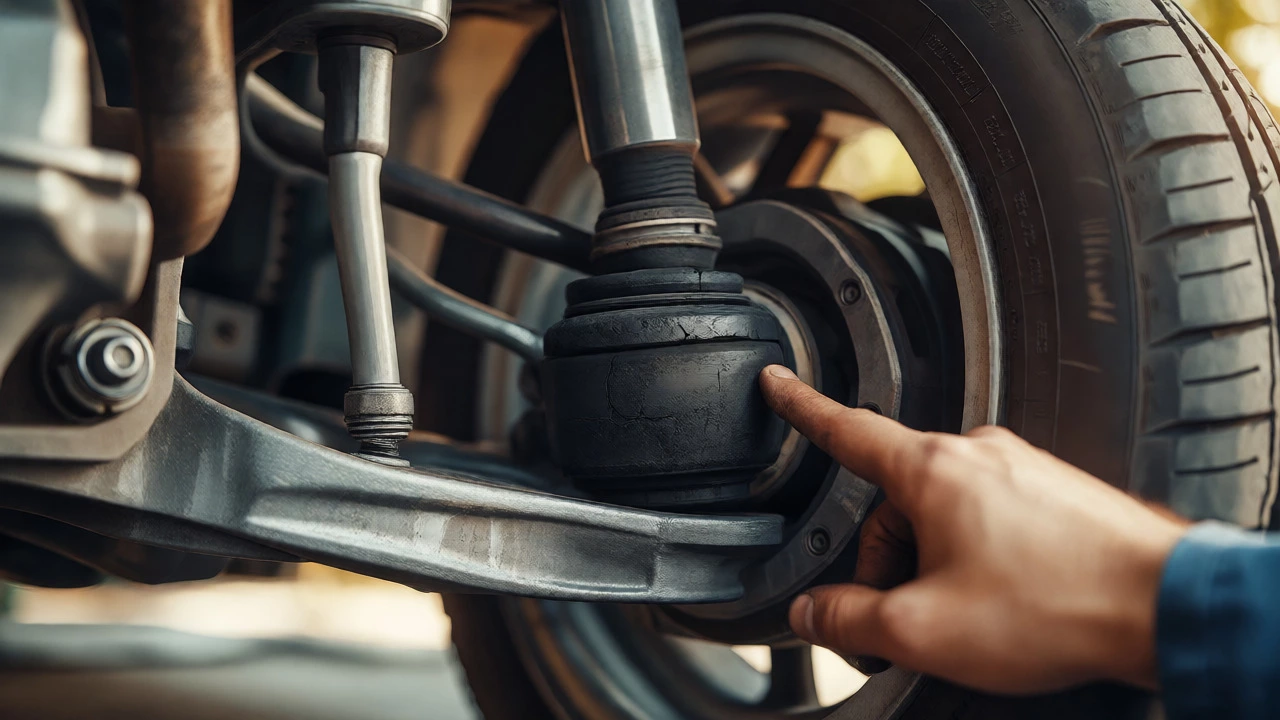
Bushings are rubber or polyurethane sleeves that isolate metal parts from each other. Over time, heat, ozone, and road grime cause rubber to crack and harden. Once cracked, they allow excessive movement, leading to clunks and uneven tire wear. Replacing them requires pressing old ones out and new ones in-a job that often needs a hydraulic press or specialized tools. If you’re handy, some kits come with sleeve bolts that let you tighten the new bushing into place without pressing. Polyurethane bushings last longer than rubber but can transmit more vibration if not properly greased during installation.
Ball joints connect the control arm to the steering knuckle, allowing the wheel to move up and down and steer simultaneously. They’re sealed units filled with grease. If the boot tears, dirt gets in, and the joint wears out. Symptoms include wandering steering, uneven inner tire wear, and knocking over bumps. Unlike bushings, ball joints are safety-critical. Don’t drive long distances with a bad one. Replacement involves unbolting the old joint and installing a new one, often requiring an alignment afterward.
Shocks and struts dampen spring oscillations. When they leak fluid or lose internal pressure, they become ineffective. You’ll notice excessive bouncing after dips, nose-diving when braking, and a general floaty ride. While worn shocks don’t always make loud noises immediately, severe failure can cause bottoming out, resulting in metallic bangs. Replacement is straightforward: unbolt the top mount and bottom eyelet, then swap in the new unit. Always replace them in pairs (both fronts or both rears) to maintain balance.
Diagnosis Tools and Techniques
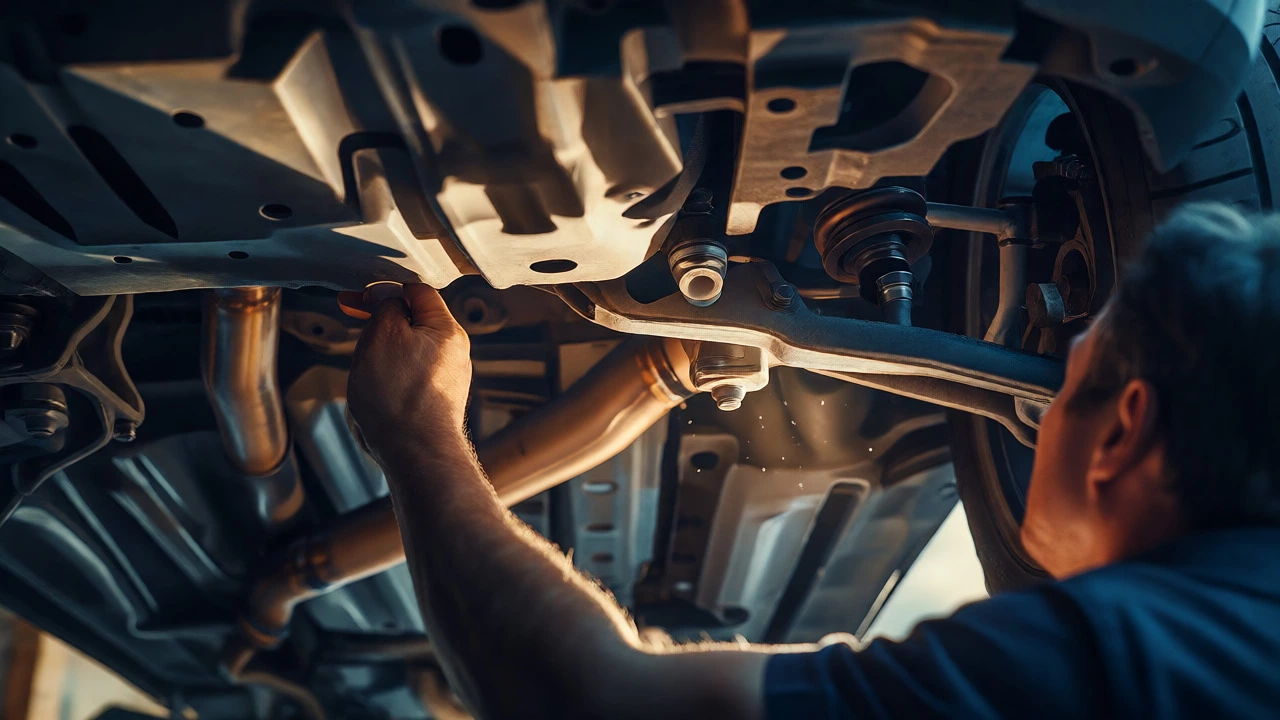
You don’t need a professional shop to diagnose most issues, but having the right tools helps. A mechanic’s stethoscope is invaluable for isolating specific noises. Place the probe on suspected components while someone drives slowly over a bump. The loudest sound indicates the faulty part. Alternatively, use a long screwdriver as a makeshift stethoscope-place the tip near your ear (carefully!) and touch the handle to the component.
Another effective method is the “bounce test.” Push down hard on each corner of the car and release. The car should rebound once and settle. If it bounces multiple times, the shocks or struts on that corner are shot. Check for visual signs too: look for oil leaks around shock bodies, cracked rubber boots, or rusted mounting hardware. Loose lug nuts can also mimic suspension noises, so double-check torque specs first.
| Noise Type | Likely Cause | Fix Difficulty | Estimated Cost (Parts) |
|---|---|---|---|
| Clunk over bumps | Worn control arm bushings or ball joints | Moderate to Hard | $50-$150 per side |
| Squeak when turning | Dry strut mounts or ball joints | Easy to Moderate | $30-$80 per side |
| Rattle at low speed | Loose or broken sway bar links | Easy | $20-$60 per pair |
| Deep groan/banging | Failing shocks/struts or bottoming out | Moderate | $40-$120 per unit |
| Creaking over rough roads | Worn leaf spring shackles (trucks/SUVs) | Easy | $15-$40 per set |
Step-by-Step Repair Process
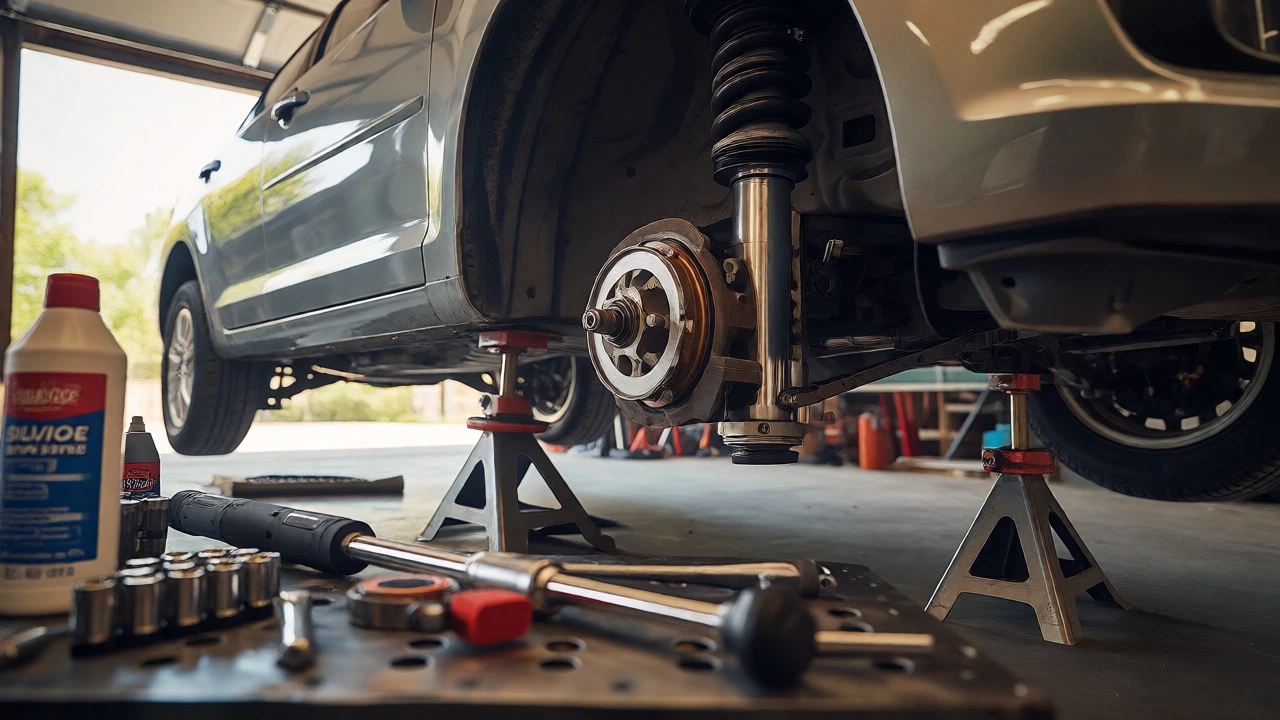
Once you’ve identified the culprit, here’s how to approach the fix. Safety first: always use jack stands, never rely solely on a hydraulic jack. Chock the wheels opposite the end you’re working on.
- Secure the vehicle: Lift the car using a floor jack at the manufacturer-specified lift points. Place jack stands under solid frame rails or reinforced pinch welds. Lower the car onto the stands.
- Remove wheels: Take off the wheels to access suspension components easily. Inspect brake pads and rotors while you’re there-this is a great opportunity to check for wear.
- Disconnect components: For sway bar links, remove the two bolts connecting the link to the bar and the control arm/knuckle. For ball joints, you may need to separate the tie rod end and remove the cotter pin and castle nut. Use a pickle fork or a dedicated ball joint separator tool to pop the taper apart.
- Replace the part: Install the new component with fresh hardware. Torque all bolts to spec using a torque wrench. Under-tightening causes play; over-tightening strips threads or crushes bushings prematurely.
- Reassemble and test: Put the wheels back on, lower the car, and take it for a short test drive. Listen for remaining noises. If the noise persists, recheck your work or look for secondary issues like loose exhaust shields or heat shields rattling against the chassis.
When to Seek Professional Help
Some jobs are better left to pros. If you suspect subframe bushing failure, alignment issues persist after DIY repairs, or you encounter seized bolts that won’t budge without risking damage, call a mechanic. Also, if your vehicle has air suspension or complex multi-link setups (common in luxury cars), the complexity increases significantly. Specialized tools and knowledge are required to avoid damaging expensive components.
Remember, suspension health affects handling, braking distance, and tire life. Fixing noisy suspension isn’t just about comfort-it’s about safety and preserving your investment. Start with the easy checks, listen carefully, and tackle repairs systematically. Your wallet-and your ears-will thank you.
Can I drive with a noisy suspension?
It depends on the noise. Squeaks and minor rattles are usually safe for short periods, though they indicate wear. However, loud clunks, especially accompanied by steering wander or pulling, suggest critical failures like ball joints or control arms. Continuing to drive could lead to loss of control, so get it checked ASAP.
How much does it cost to fix suspension noise?
Costs vary widely based on the part and labor. Simple fixes like sway bar links or lubricating bushings can cost $50-$100 total. Replacing ball joints or control arms typically runs $150-$400 per side including labor. Full strut replacements might cost $300-$600 per corner. DIY saves labor costs but requires tools and time.
Do I need an alignment after fixing suspension?
Yes, in most cases. Replacing ball joints, control arms, or tie rods changes the geometry of the suspension. Even swapping shocks can affect camber slightly. An alignment ensures even tire wear and proper handling. Skipping it can negate the benefits of the new parts.
What lubricant works best for suspension squeaks?
Silicone-based spray lubricants are ideal because they don’t attract dirt like petroleum-based oils. White lithium grease works well for metal-on-metal contacts like ball joint pins if accessible. Avoid WD-40 for long-term lubrication-it’s a penetrant, not a lasting lube.
Why does my suspension only make noise when cold?
Rubber bushings stiffen in cold temperatures, causing increased friction and noise until they warm up from driving. This is common in older vehicles. If the noise disappears after 10-15 minutes of driving, it’s likely age-related rubber hardening rather than immediate mechanical failure, though replacement may eventually be needed.