 Dec, 26 2025
Radiator Health Checker
Assess your radiator's health by checking the symptoms below. This tool will help you determine if you need immediate service or preventive maintenance.
Does your temperature gauge regularly climb into the red during normal driving?
Do you see coolant puddles under your car?
Does your coolant look muddy or have chunks floating in it?
Does the radiator feel hot on top but cold on bottom?
Is your coolant cloudy or milky?
Does your radiator look swollen or warped?
Is your radiator more than 8 years old?
When your car starts running hot, it’s easy to panic. But before you assume the engine is doomed, check the radiator. It’s one of the most overlooked parts in your cooling system-and one of the first to fail. A bad radiator doesn’t always scream for attention. Sometimes it just quietly stops doing its job until your engine overheats on the highway. If you’ve noticed strange symptoms lately, you’re not imagining things. Here’s how to know if your radiator is bad before it leaves you stranded.
1. Your Engine Keeps Overheating
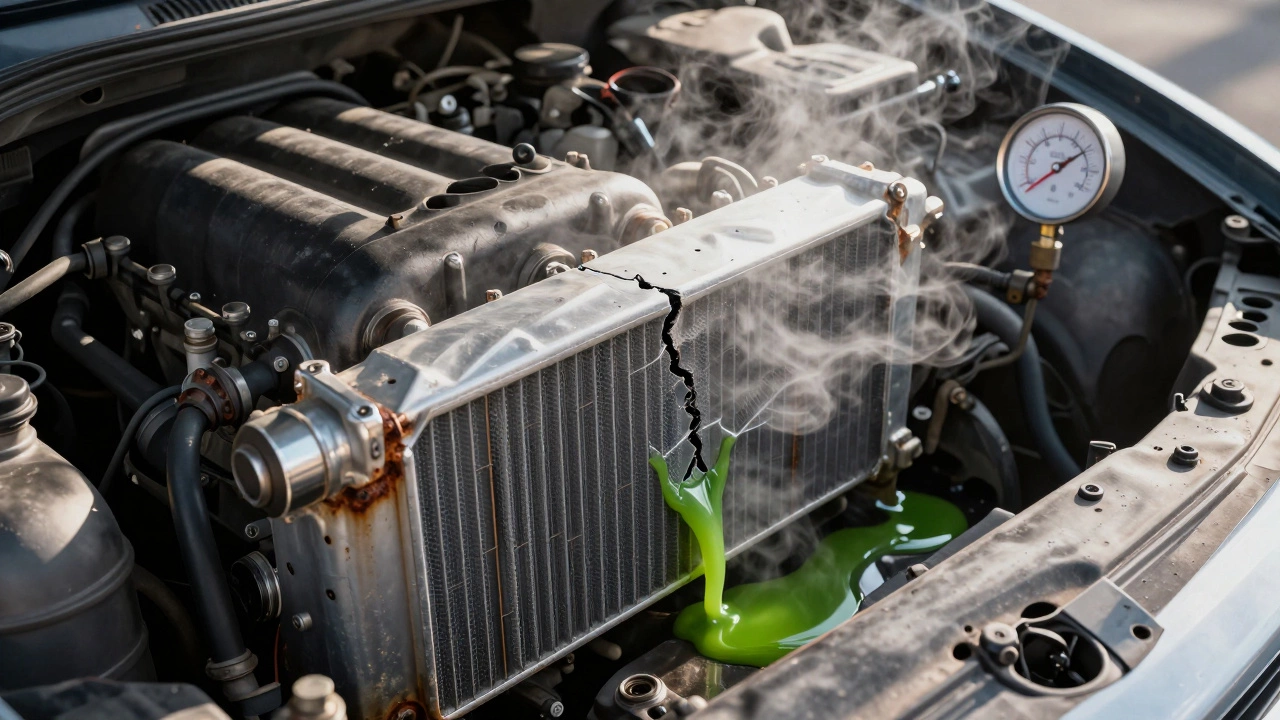
Overheating is the #1 red flag. If your temperature gauge regularly climbs into the red, especially during normal driving or mild weather, your radiator is likely struggling. It’s not just about the gauge, though. Look for steam rising from under the hood, or the smell of hot coolant-sweet and chemical-like. This isn’t normal. Modern engines run hot, but they’re designed to stay within a tight range. If you’re constantly topping off coolant or seeing warning lights, the radiator can’t dump heat fast enough. Maybe it’s clogged inside. Maybe it’s leaking. Either way, it’s failing.
2. Coolant Is Leaking Under the Car
Check your driveway or parking spot after the car’s been sitting. A puddle of green, orange, or red fluid? That’s coolant. Radiators are made of aluminum and plastic, and over time, those materials crack or corrode. The top tank, bottom tank, or side seams are common leak spots. Even a slow drip adds up. A half-quart lost every week means your system runs low, and low coolant = overheating. Don’t ignore it. A small leak now can turn into a blown head gasket in a month.
3. Rust or Sludge Inside the Coolant
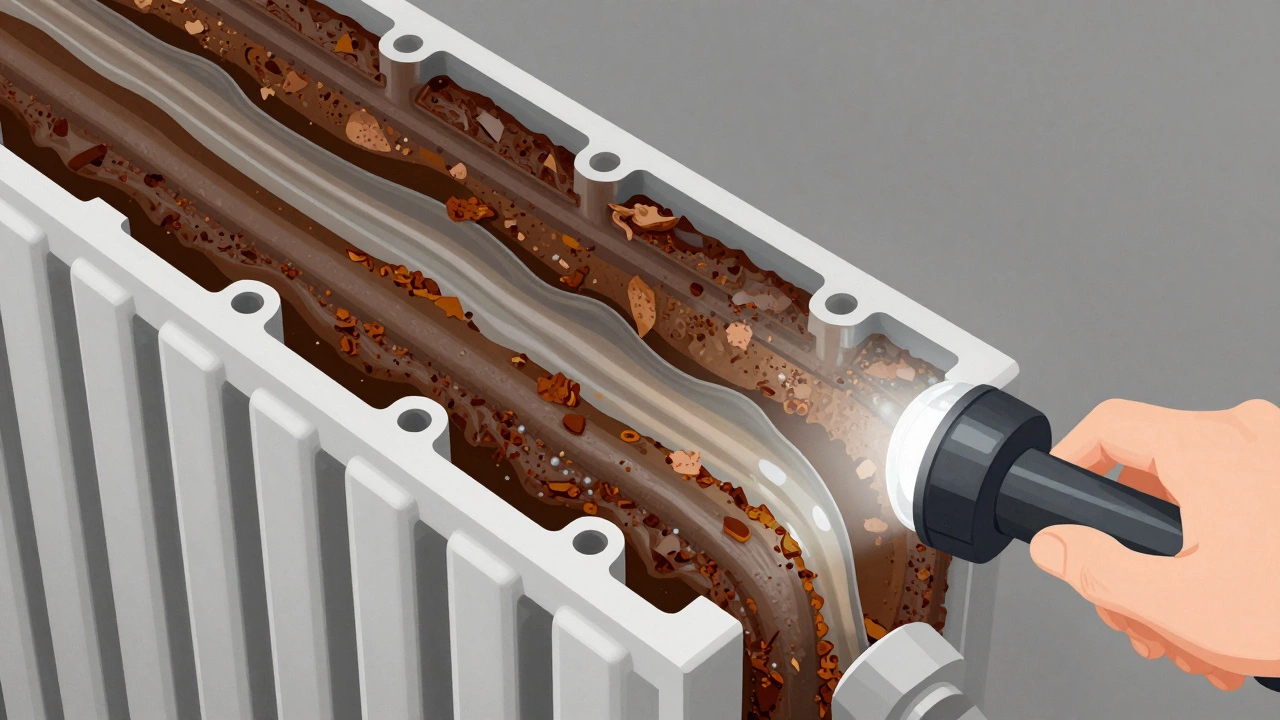
Take off the radiator cap (only when the engine is cold!) and look inside. If the coolant looks muddy, brown, or has thick chunks floating in it, your radiator is rusting from the inside. Old coolant breaks down and loses its protective additives. That lets metal parts corrode. Rust flakes clog the narrow cooling passages. Sludge builds up and blocks flow. You might think a coolant flush fixes it-but if the radiator itself is corroded, flushing won’t help. You’re just moving the junk around. A clean radiator should have clear, bright coolant. Anything else? It’s time to replace it.
4. The Radiator Feels Hot on Top, Cold on Bottom
Here’s a simple trick: when the engine is warm (but not hot), carefully touch the top and bottom of the radiator with the back of your hand (wear gloves). If the top is scalding but the bottom is cool, coolant isn’t circulating. That’s a classic sign of internal blockage. The hot coolant enters the top, but the clogged passages prevent it from flowing down and releasing heat. The result? The radiator can’t cool the engine, even though it’s full of fluid. This isn’t a thermostat issue-it’s the radiator’s internal structure failing.
5. Discolored or Milky Coolant
If your coolant looks like a milkshake-cloudy, white, or oily-it’s mixing with engine oil. That usually means a cracked cylinder head, blown head gasket, or cracked radiator. Radiators don’t usually cause this, but if oil is in the coolant, the radiator’s internal tubes are likely corroded or damaged enough to let fluids cross. This is serious. Oil in coolant damages the water pump, seals, and bearings. Coolant in oil kills engine lubrication. Either way, the radiator is part of the problem. Don’t delay. This can destroy your engine in days.
6. The Radiator Is Bulging or Warped
Look at the radiator from the front. Does it look swollen? Are the tanks bulging outward? Overheating and pressure build-up can warp the plastic end tanks. Even a slight bulge means the radiator can’t handle normal pressure. The cap might be fine, but the tank is weak. If you hear a hissing sound when the engine is running, or the radiator feels soft when you press it gently, it’s failing. Plastic doesn’t stretch forever. Once it’s deformed, it’s done. No repair. No patch. Replacement only.
7. It’s More Than 8 Years Old
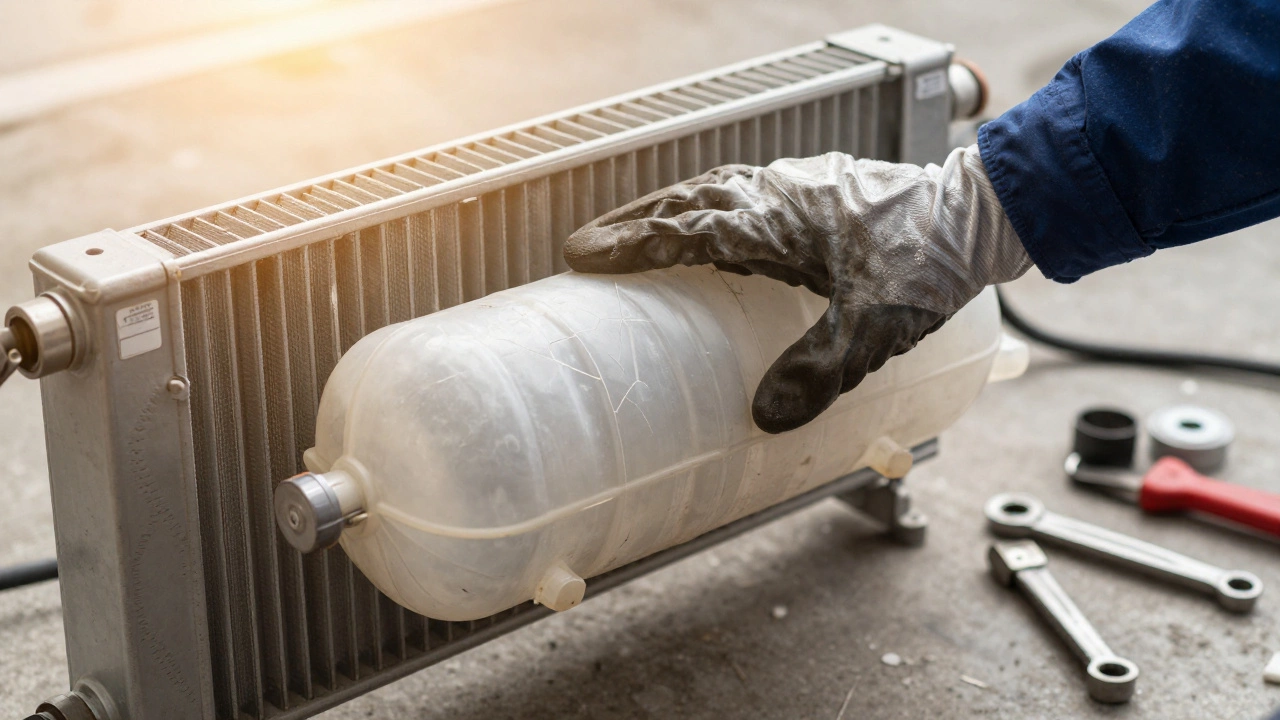
Radiators don’t last forever. Even if it’s not leaking or overheating, if yours is over eight years old, it’s at high risk. Aluminum corrodes slowly. Plastic becomes brittle. Coolant additives wear out. In places like Hamilton, where winters are harsh and roads are salted, corrosion accelerates. A 10-year-old radiator might still work-but it’s playing Russian roulette. Most mechanics recommend replacing radiators every 8-10 years as preventive maintenance. Waiting for failure is expensive. Replacing it before it dies saves you from towing fees, engine repairs, and rental cars.
What to Do Next
If you’ve spotted one or more of these signs, don’t wait. Drive your car to a shop with a pressure tester. They’ll pressurize the cooling system and find leaks you can’t see. They’ll also check for blockages with a flow test. If the radiator is bad, get it replaced. Don’t try to save money with a used part. A cheap aftermarket radiator might look fine, but it’s often made with thinner materials and won’t last. Stick with OEM or reputable brands like Denso, Valeo, or Spectra. A good radiator costs $300-$600 installed, but a bad one can cost $3,000 in engine damage.
Preventing Future Problems
After you replace the radiator, protect it. Use the right coolant-always match the manufacturer’s specs. Mix it 50/50 with distilled water. Don’t use tap water; it has minerals that cause scale and rust. Change the coolant every 4-5 years, even if the bottle says “lifetime.” And never ignore the temperature gauge. A few seconds of warning can save your engine.
Can a radiator be repaired instead of replaced?
Rarely. Small leaks in metal tubes can sometimes be patched with epoxy or solder, but plastic tanks can’t be reliably fixed. Even if you seal a leak, the radiator is likely clogged or corroded inside. Most shops won’t even attempt repairs anymore-they replace it. It’s faster, safer, and cheaper in the long run.
Can a bad radiator cause the heater to stop working?
Yes. The heater core uses hot coolant from the radiator to warm the cabin. If the radiator is clogged or low on coolant, the heater core won’t get enough flow. You’ll notice weak heat or cold air blowing, even when the engine is warm. It’s not the heater core failing-it’s the radiator not supplying enough hot fluid.
How often should I flush my radiator?
Every 4 to 5 years, or every 60,000 to 100,000 kilometers. But check your owner’s manual-some manufacturers recommend every 2 years for older cars. Flushing removes rust, scale, and old additives. Don’t wait until your car overheats. A flush is $80-$150. A new radiator is $500. Prevention pays.
Can I drive with a bad radiator?
Not safely. Even a small leak or slight overheating can warp the cylinder head or blow the head gasket. Once that happens, repair costs jump from a few hundred to several thousand. If you notice any signs of radiator trouble, stop driving and get it checked. Pushing it risks total engine failure.
What’s the difference between a radiator and a condenser?
They’re side by side, but they do different jobs. The radiator cools engine coolant. The condenser cools refrigerant for the air conditioning. They look similar-both have aluminum fins-but the radiator handles much higher temperatures. If your AC isn’t working, it’s the condenser. If your engine overheats, it’s the radiator. Don’t confuse them.