 May, 21 2026
Exhaust Pipe Size Calculator
Enter your engine details below to get a recommendation.
Analysis Details
Enter your engine specs to see if your current exhaust size is optimal.
There is nothing worse than buying a shiny new performance part only to find out it doesn’t fit your car. You might have spent hours researching the best exhaust systems are complex assemblies of pipes and mufflers that channel gases away from an engine, but if the diameter is wrong, that investment goes straight into the scrap heap. Getting the right size isn't just about aesthetics; it directly impacts how your engine breathes, which affects power, fuel economy, and noise levels.
Most people assume exhaust sizing is a simple plug-and-play scenario. It’s not. An exhaust system relies on precise geometry to manage gas flow velocity and pressure. If you pick a pipe that is too large, you lose low-end torque because the gas moves too slowly to create a scavenging effect. If it’s too small, you choke the engine, creating excessive backpressure that forces the engine to work harder just to expel waste gases. Understanding how to measure and select the correct size requires looking at three specific factors: physical measurement, engine displacement, and intended use.
The Quick Summary: Key Takeaways
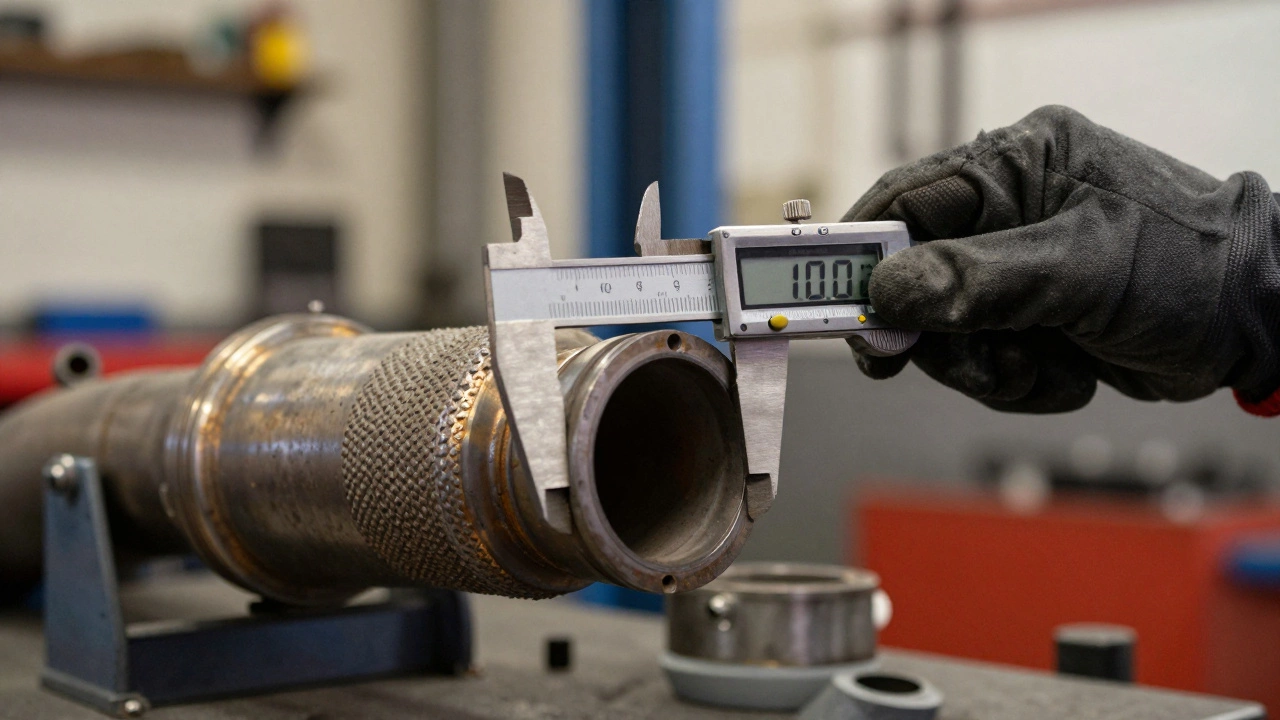
- Measure the Inside Diameter (ID): Always measure the inner width of the existing pipe or flange, not the outer metal wall.
- Match Engine Displacement: Generally, smaller engines (under 2.0L) need 1.5-2.0 inch pipes, while larger V8s often require 2.5-3.0 inches.
- Velocity Matters More Than Volume: A slightly smaller pipe with faster-moving gas often produces more power than a huge pipe with sluggish flow.
- Check Flange Patterns: Physical diameter is useless if the bolt holes don’t align with your manifold or downpipe.
Why Exhaust Diameter Actually Matters
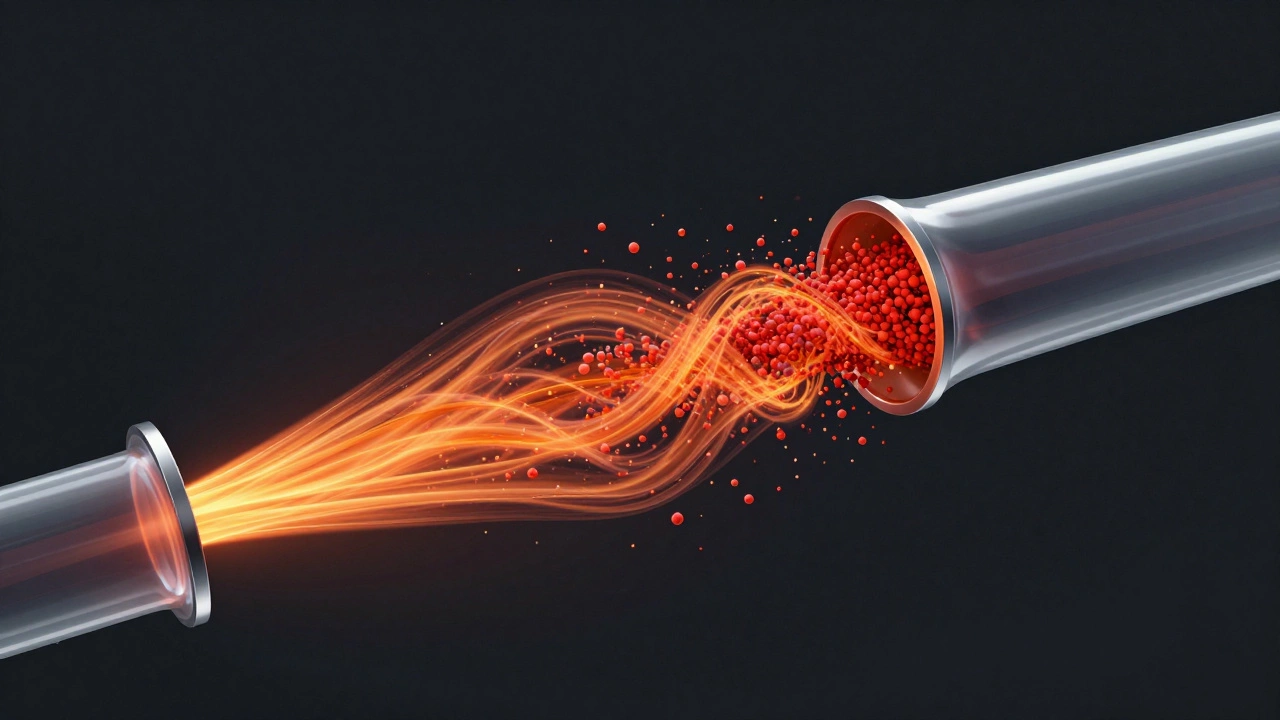
To understand why size matters, you have to look at physics. Your engine burns fuel and creates hot, expanding gas. This gas needs to exit the cylinder quickly so fresh air and fuel can enter for the next cycle. The exhaust pipe acts as a tunnel. If the tunnel is narrow, traffic backs up (backpressure). If the tunnel is a highway with no cars, the individual cars (gas molecules) slow down because there’s no momentum pushing them forward.
This concept is known as scavenging. When gas flows at high velocity through a correctly sized pipe, it creates a vacuum effect that pulls additional gas out of the cylinder. This improves volumetric efficiency. If you install a massive 3-inch pipe on a small four-cylinder engine, the gas velocity drops significantly. The scavenging effect disappears, and you likely lose horsepower in the lower RPM range where most driving happens.
Conversely, if you put a tiny 1.5-inch pipe on a high-performance V8, the engine chokes itself. The backpressure increases, raising internal temperatures and reducing the amount of fresh charge that can enter the cylinders. The result is a sluggish, overheating engine that feels like it’s dragging a parachute behind it.
How to Accurately Measure Your Current Exhaust
The first step in determining what size you need is knowing what you currently have. Many owners guess based on how the pipe looks, but visual estimation is notoriously inaccurate due to rust, scale, and wall thickness variations.
You will need a few basic tools:
- A caliper (digital or vernier is best)
- A tape measure
- A flashlight
- Gloves (exhaust parts are sharp and dirty)
Here is the process to get an accurate reading:
- Locate the Cleanest Section: Look for a part of the pipe that hasn’t been cut, welded, or heavily corroded. The section near the catalytic converter or before the muffler is usually good.
- Measure the Outer Diameter (OD): Use your caliper to measure the outside of the pipe. Note this number.
- Estimate Wall Thickness: Standard exhaust tubing typically has a wall thickness of about 0.065 to 0.095 inches. For a rough estimate, subtract 0.15 inches total (0.075 from each side) from the OD to get the approximate Inside Diameter (ID).
- Verify with Inner Measurement: If possible, measure the inside directly. Insert the caliper jaws into the pipe opening. Ensure they touch opposite sides of the inner wall without hitting any weld beads or ridges.
If you cannot access the inside, measuring the flange at the manifold is often easier. Most factory manifolds have standardized flange sizes. For example, many Ford V8s use a 2.5-inch outlet, while older GM small blocks often use 2.25-inch outlets. Checking a service manual or online forum for your specific Vehicle Identification Number (VIN) can confirm these standards without lifting a tool.
Sizing by Engine Type and Displacement
Once you know your current size, you need to decide if you want to change it. Sizing is largely dictated by engine displacement (the total volume of all cylinders) and how much airflow the engine can move.
| Engine Type | Displacement Range | Recommended Pipe ID | Best For |
|---|---|---|---|
| Small 4-Cylinder | Under 2.0L | 1.5" - 1.75" | Daily driving, fuel economy |
| Inline-6 / Turbo 4 | 2.0L - 3.0L | 2.0" - 2.25" | Turbocharged applications, balanced power |
| V6 Engines | 3.0L - 4.0L | 2.25" - 2.5" | Performance sedans, trucks |
| Naturally Aspirated V8 | 5.0L - 7.0L | 2.5" - 3.0" | High RPM power, muscle cars |
| Big Block / Diesel | Over 7.0L | 3.0" - 4.0"+ | Heavy towing, maximum airflow |
Note that turbocharged engines behave differently than naturally aspirated ones. Turbos rely on exhaust gas energy to spin the turbine. A smaller downpipe (1.75" to 2.25") helps spool the turbo faster, reducing lag. However, once the turbo is spinning, a restrictive pipe causes heat soak and power loss. Many modern turbo setups use variable geometry turbos or split-pipe designs to balance this trade-off.
Common Mistakes When Choosing Exhaust Size
It is tempting to think bigger is always better. This is the single biggest error in exhaust modification. Here are three pitfalls to avoid:
Ignoring Backpressure Limits: Every engine has an optimal backpressure range. Too little, and you lose torque. Too much, and you lose peak horsepower. For street-driven vehicles, staying within 0.5 to 1.0 PSI of backpressure at wide-open throttle is generally safe. Measuring this requires a specialized gauge, but sticking to manufacturer-recommended diameters usually keeps you in this zone.
Mismatching Headers and Pipes: If you install long-tube headers that exit at 2.5 inches but connect them to a 2.25-inch mid-pipe, you create a bottleneck. The restriction happens right after the header collector, negating the benefit of the expensive headers. Always ensure the entire path from the manifold to the tailpipe is consistent or gradually increasing in diameter.
Overlooking Legal Restrictions: In many regions, modifying exhaust size beyond certain limits violates noise ordinances or emissions laws. A 3-inch straight pipe on a daily driver might sound incredible at night but could result in a failed inspection or a fine during daytime traffic. Check local regulations regarding decibel limits and catalytic converter requirements before purchasing oversized components.
When to Upgrade vs. When to Stick with Stock
Not every car needs a larger exhaust. If you drive a commuter sedan and prioritize fuel economy and quiet operation, the stock exhaust is likely optimized for those goals. Upgrading to a larger system might actually decrease mileage because the engine runs richer to compensate for changed airflow dynamics.
Consider upgrading if:
- You have installed other modifications that increase airflow, such as a cold air intake or ECU remap.
- You experience noticeable heat soak or power loss at high RPMs.
- You are building a race car where peak horsepower outweighs low-end torque concerns.
- The original system is corroded, leaking, or damaged beyond repair.
If your goal is simply a deeper sound without losing performance, consider a high-flow muffler or resonator delete rather than changing the pipe diameter. These changes alter acoustics without drastically affecting gas velocity.
Installation Tips for a Perfect Fit
Even with the correct size, installation errors can ruin performance. Here is how to ensure your new exhaust works as intended:
Use High-Temperature Sealant: Exhaust joints expand and contract with heat cycles. Never rely solely on gaskets for flange connections. Apply a thin layer of copper-based anti-seize or high-temp exhaust sealant to prevent leaks and make future removal easier.
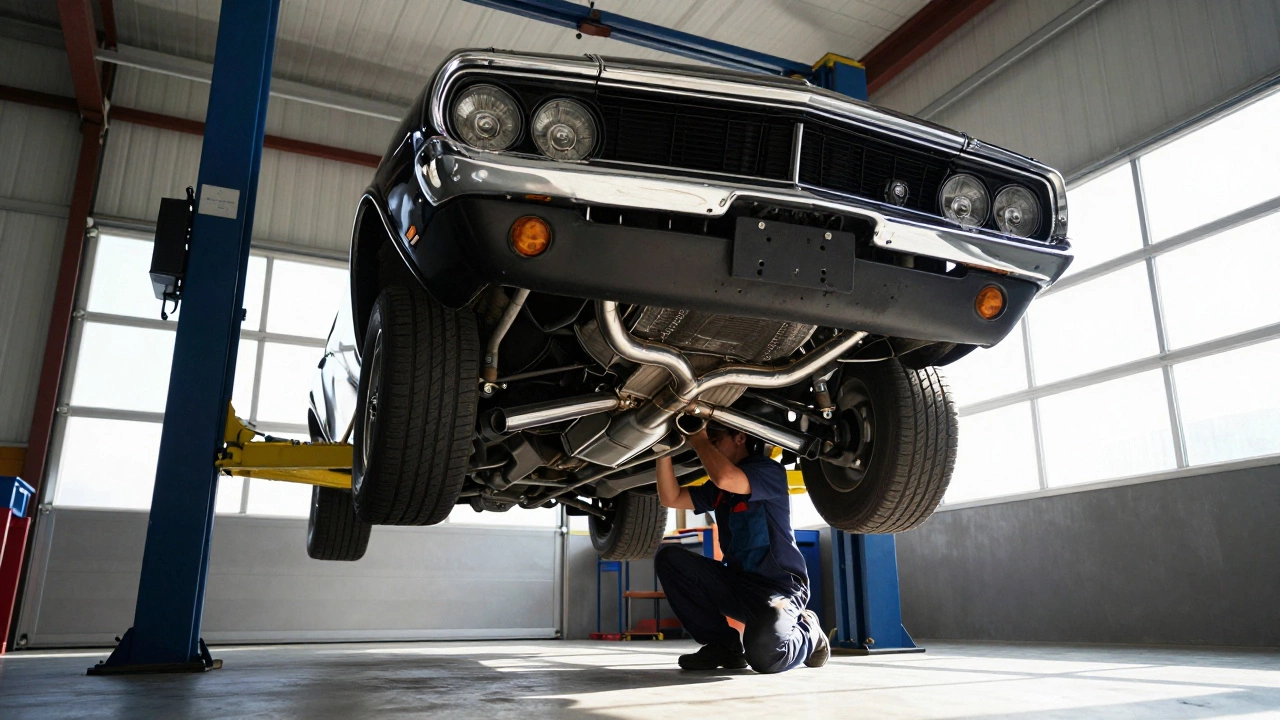
Support Properly: Exhaust systems weigh significant amounts. Rubber hangers isolate vibration, but they also support weight. Ensure all hangers are securely attached to the chassis. A sagging pipe can rub against the undercarriage, causing damage or fire hazards.
Check for Clearance: Before welding or clamping, verify that the new pipe clears suspension components, brake lines, and the driveshaft. Dynamic movement during cornering and braking can shift positions slightly. Leave at least half an inch of clearance everywhere.
Frequently Asked Questions
Can I mix different exhaust pipe sizes?
Yes, but with caution. It is common to have a smaller diameter near the engine (for velocity) stepping up to a larger diameter near the muffler (to reduce noise and backpressure). However, sudden jumps in diameter cause turbulence. Use gradual transitions or cones when changing sizes to maintain smooth airflow.
Does exhaust size affect fuel economy?
Indirectly, yes. An optimally sized exhaust reduces engine strain, potentially improving efficiency. However, overly large exhausts can disrupt air-fuel ratios, causing the engine computer to inject more fuel to compensate, which lowers mileage. Stock sizes are usually tuned for the best balance of power and economy.
What is the difference between OD and ID in exhaust measurements?
OD stands for Outer Diameter, which includes the metal wall thickness. ID stands for Inner Diameter, which is the actual space available for gas to flow. When discussing performance and fitting, ID is the critical measurement. Always specify ID when ordering parts to avoid confusion.
Will a larger exhaust make my car louder?
Generally, yes. Larger pipes allow more gas to escape with less restriction, often resulting in a deeper, louder tone. However, the muffler design plays a bigger role in volume than pipe diameter alone. A well-designed 3-inch system can be quieter than a poorly designed 2-inch one.
How do I know if my exhaust is too restrictive?
Signs include poor acceleration at high RPMs, excessive heat under the hood, and a "choked" feeling when pressing the gas pedal. You may also notice a drop in fuel efficiency. Removing the oxygen sensor temporarily and covering its port can simulate restriction; if performance drops significantly, your current system may be adequate.