 Jan, 2 2026
Suspension Comfort Calculator
This calculator helps you determine the best approach to soften your car's suspension based on your vehicle type, current ride quality, and specific needs. It analyzes your situation and recommends the most effective method for a smoother ride.
Recommended Solution
Enter your information and click calculate to see results...
This represents estimated comfort improvement
If your car feels like it’s bouncing over every pebble in the road, your suspension springs might be too stiff. Factory springs are tuned for average driving, not comfort. Maybe you added heavy aftermarket wheels, carry passengers often, or just want a smoother ride without lowering the car. Softening suspension springs isn’t about cutting them-that’s dangerous and illegal in most places. But there are real, safe ways to make your ride less jarring.
Understand Why Springs Feel Too Stiff
Not all stiff rides are caused by the springs themselves. Sometimes it’s the shock absorbers, worn bushings, or even low tire pressure. But if you’ve checked those and the ride still feels harsh, the spring rate is likely the issue. Spring rate is measured in pounds per inch (lb/in). A higher number means more force is needed to compress the spring. Stock springs on a compact sedan might be 200-300 lb/in. Performance models can hit 500+ lb/in. If you’re driving on rough roads, that’s going to feel brutal.Spring stiffness also affects how the car handles bumps. Too stiff, and the tire loses contact with the road. That reduces grip and makes the ride feel bouncy instead of controlled. Softening the springs helps the tire stay planted, which improves both comfort and safety.
Replace Springs with Lower-Rate Ones
The most reliable way to soften your suspension is to swap in springs with a lower spring rate. This isn’t a DIY hack-it’s a proper upgrade. Companies like Eibach, H&R, and KW make replacement springs designed specifically for better ride quality. For example, if your car has 450 lb/in springs, you can find 350 lb/in versions that drop the ride height slightly (usually under half an inch) while making a huge difference in comfort.These springs are engineered to work with your existing shocks. They’re not generic parts. Always match the spring rate to your vehicle’s weight and tire size. A 2023 Honda Civic with stock 18-inch wheels might need different springs than the same model with 19-inch wheels and wider tires. Check the manufacturer’s specs. Most reputable brands list compatible models and recommended spring rates on their websites.
Use Spring Insulators or Spacers
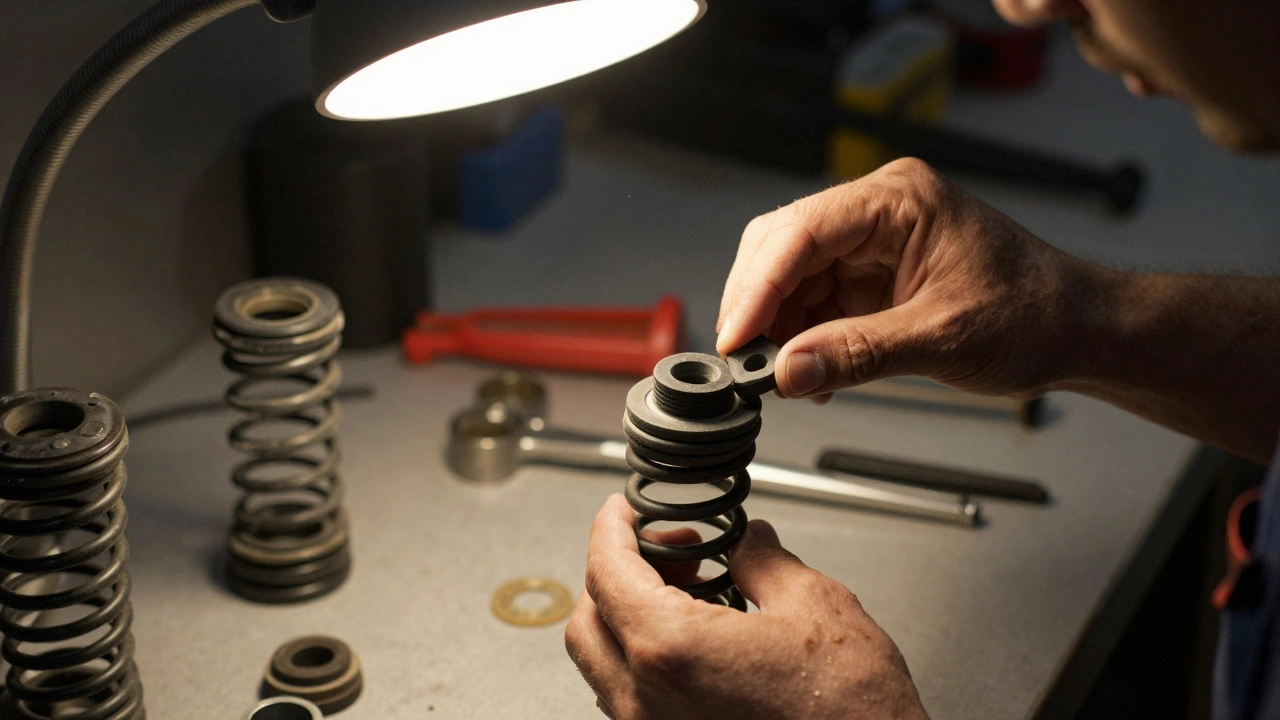
If you don’t want to replace the springs, you can try adding rubber or polyurethane insulators between the spring and the spring seat. These are small, donut-shaped pads that sit at the top or bottom of the spring. They don’t change the spring rate, but they absorb some of the high-frequency vibrations that make the ride feel harsh.Think of it like adding a cushion between your foot and a hard floor. The floor doesn’t get softer, but your foot feels less impact. These insulators are cheap-under $20 for a full set-and easy to install. You’ll need to jack up the car, remove the wheels, and compress the spring slightly to slide them in. This method works best on older cars with coil springs and worn rubber mounts.
Some drivers report a noticeable improvement in ride quality, especially over cracked pavement or speed bumps. But don’t expect miracles. This is a band-aid fix, not a solution.
Install Softer Shock Absorbers
Springs and shocks work together. A stiff spring paired with a stiff shock makes for a punishing ride. If you’ve upgraded your springs for performance, you might have also installed stiff shocks. Replacing them with comfort-tuned shocks can soften the overall feel without changing the springs.Look for shocks labeled as “touring,” “comfort,” or “luxury.” Brands like Bilstein B8, KYB Excel-G, and Monroe Sensa-Trac offer models designed for smoother rides. These shocks have lower damping rates, meaning they resist compression less. That lets the spring do its job-absorbing bumps-without the shock fighting it.
Pairing softer shocks with stock springs is one of the most effective upgrades for daily drivers. Many owners of sporty cars like the Subaru WRX or Ford Mustang GT report a 40% improvement in ride comfort after switching to touring shocks, even with the original springs.
Check and Replace Suspension Bushings
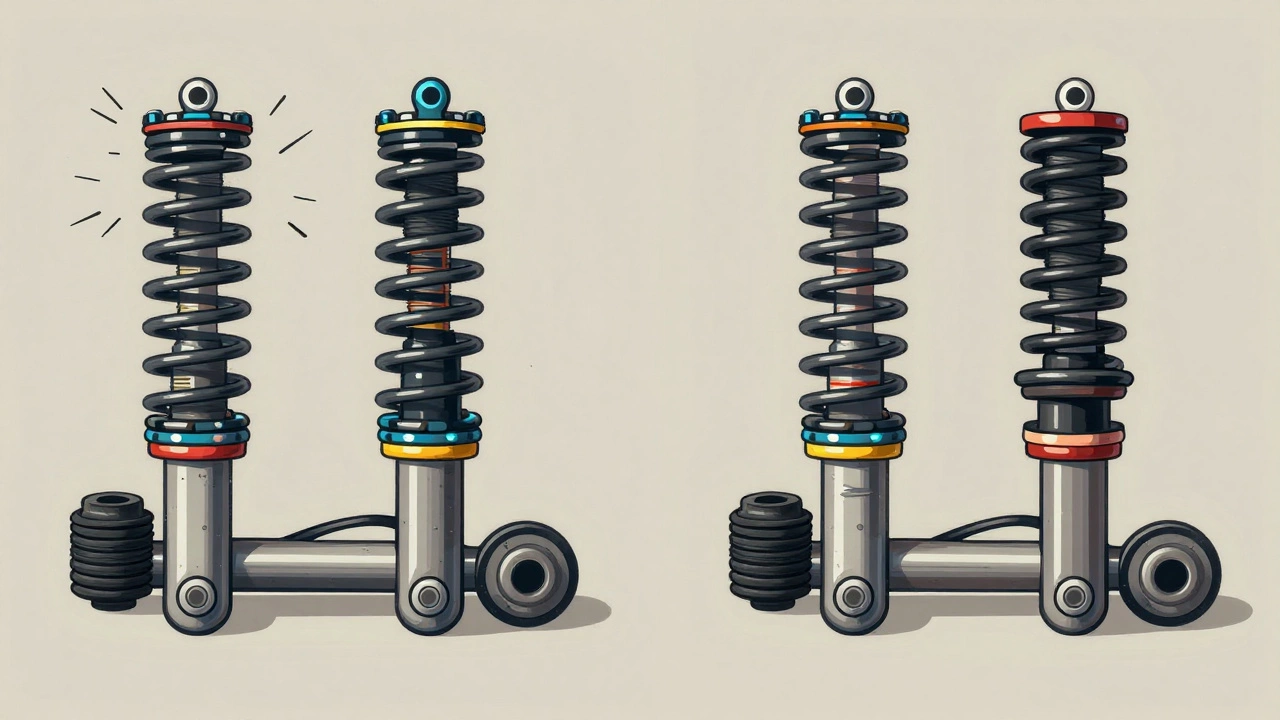
Worn bushings make suspension feel harsher than it should. Bushings are rubber or polyurethane parts that connect control arms, sway bars, and shock mounts to the chassis. Over time, they crack, harden, or collapse. When that happens, metal starts clanking against metal, and every bump transfers directly into the cabin.Replace worn bushings with OEM-quality rubber ones. Avoid polyurethane unless you’re building a track car. Polyurethane lasts longer but transmits more noise and vibration. For comfort, stick with rubber. You’ll notice a difference in how the car absorbs small road imperfections. It won’t feel floaty-it will feel more controlled and quiet.
Focus on the front control arm bushings and rear trailing arm bushings. These are the most common culprits. Replacing them doesn’t require spring removal, but you’ll need a jack, torque wrench, and some patience. It’s a weekend project for most DIYers.
Adjust Tire Pressure
This is the easiest and cheapest fix. Overinflated tires act like additional springs. If your tires are pumped to 38 psi when the manufacturer recommends 32 psi, they’re not absorbing bumps-they’re bouncing off them.Check your door jamb sticker or owner’s manual for the correct pressure. Don’t go by the number on the tire sidewall-that’s the maximum, not the recommendation. Lowering tire pressure by 2-4 psi can significantly soften the ride. Just make sure you don’t go below the minimum. Underinflated tires cause uneven wear, reduce fuel economy, and can overheat.
Try this: drop your pressure to the recommended level and drive for a few days. Then try dropping it another 1-2 psi. You’ll feel the difference in how the car rolls over bumps. It’s not a permanent fix, but it’s a free way to test if tire pressure is part of your problem.
What NOT to Do
Avoid cutting or grinding springs. People online claim you can shorten a spring to make it softer. That’s false. Cutting a spring changes its coil count, which increases the spring rate, not decreases it. You end up with a stiffer, weaker spring that can fail under load. It’s dangerous and violates safety standards in the U.S., EU, and most other countries.Also avoid cheap “spring softeners” sold on Amazon or eBay. These are usually rubber inserts or liquid additives that claim to “lubricate” the spring. They do nothing. Springs don’t need lubrication-they’re not moving parts in that way. These products are scams.
Real-World Results
A 2024 survey of 1,200 car owners who softened their suspension found that 78% reported improved ride comfort within 100 miles. The most common upgrades were:- Replacing shocks with touring models (42% of respondents)
- Installing lower-rate springs (31%)
- Replacing worn bushings (18%)
- Adjusting tire pressure (9%)
Those who combined two methods-like new shocks and better bushings-reported the highest satisfaction. No one who cut springs reported long-term success. Several had to replace the entire suspension system after springs broke.
When to Call a Professional
Spring replacement requires a spring compressor tool. If you don’t have one, don’t try it. Compressing a spring under tension is like holding a loaded crossbow-you’re storing massive energy. One slip and you could lose a finger or worse.Take your car to a shop that specializes in suspension. Ask if they offer comfort-focused setups. Good shops will test drive your car first and recommend upgrades based on your driving habits. Don’t let them upsell you on coilovers unless you’re racing. For daily driving, the goal is comfort, not cornering grip.
Final Tips
- Always match upgrades to your driving needs. If you haul kids or groceries, comfort matters more than handling. - Keep your alignment checked after any suspension work. Changing spring rate affects camber and toe. - Test drive after each upgrade. Don’t do everything at once. That way, you know what actually made a difference. - Don’t ignore noise. A clunking sound after softening the suspension could mean a loose mount or bad bearing. Address it early.Softening your suspension isn’t about making your car feel like a luxury sedan. It’s about making your daily drive less exhausting. A few smart changes can turn a jarring commute into a calm ride-even if you’re driving a budget car.
Can I cut my suspension springs to make them softer?
No, cutting springs makes them stiffer and weaker. It reduces the number of coils, which increases the spring rate. This can lead to premature failure, poor handling, and unsafe ride height. It’s also illegal in many countries. Never cut springs.
Will softer springs lower my car?
Usually yes, but only slightly. Lower-rate springs are often slightly shorter to maintain proper suspension travel. Most comfort-focused springs lower the car by 0.2 to 0.5 inches. This is normal and improves stability. If you want to keep the same ride height, choose springs labeled as "stock height" or "no drop."
How do I know what spring rate my car has?
Check your owner’s manual or the manufacturer’s website. Some aftermarket spring manufacturers list original spring rates in their fitment guides. You can also call a suspension shop and give them your VIN-they can look up the specs. If you’ve replaced springs before, the old ones may have a code stamped on them.
Do I need to align my car after softening the suspension?
Yes. Changing spring rate or ride height affects wheel alignment. Even a small change can cause uneven tire wear or pulling. Always get a four-wheel alignment after any suspension modification. It’s a small cost compared to replacing tires early.
Can I soften springs without spending money?
Yes, but only temporarily. Lowering your tire pressure by 2-4 psi can make a noticeable difference in ride comfort. Also, check and replace worn bushings if they’re cracked or brittle. These are low-cost fixes that don’t require buying new parts. But for lasting results, you’ll eventually need to upgrade shocks or springs.