 Dec, 23 2025
Oil Level Checker
Determine if your car is dangerously low on oil using dipstick measurements. Follow the steps in the article to check properly.
How to Use This Tool
1. Check your dipstick as described in the article
2. Note the minimum (MIN) and maximum (MAX) marks
3. Enter the oil level measurement in the form below
Dipstick Readings
Result
Running your car with low oil is like running a marathon with no water. You might make it a few miles, but something’s going to break. And when it does, it’s not just a repair-it’s a costly, time-consuming mess. The good news? You don’t need a mechanic to spot the warning signs. Most of them are obvious if you know what to look for.
Check the oil dipstick first
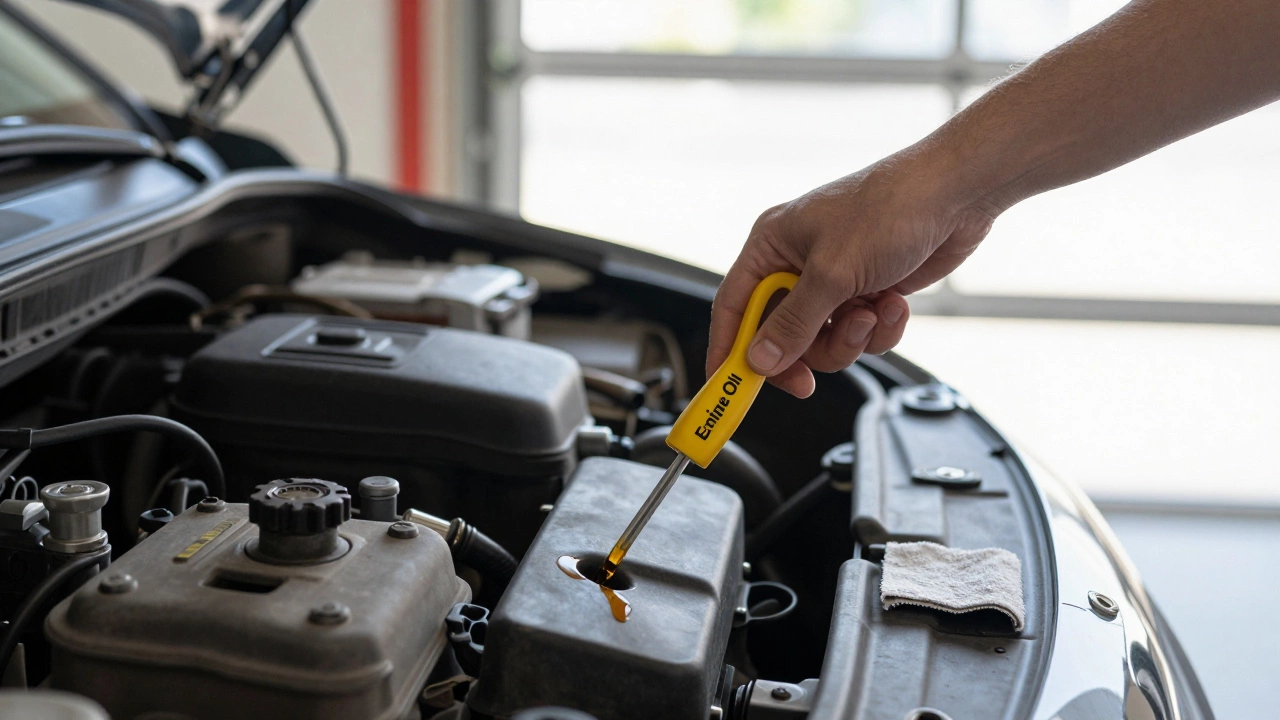
The dipstick is the simplest, fastest way to know your oil level. Pop the hood, find the bright yellow or orange handle labeled "Engine Oil," pull it out, wipe it clean with a rag, then stick it back in all the way. Pull it out again. Look at the end. There are two marks: one for minimum and one for maximum. If the oil line is below the minimum mark, you’re low. Not just a little low-dangerously low.
Do this monthly, or before any long trip. Cold engine. Level ground. Wait five minutes after turning off the car. Oil needs time to drain back into the pan. Checking it while hot or right after driving gives you a false reading. I’ve seen people add oil because they thought they were low-only to find out they’d just checked it too soon. Then they overfilled it. That’s just as bad.
Listen for engine noise
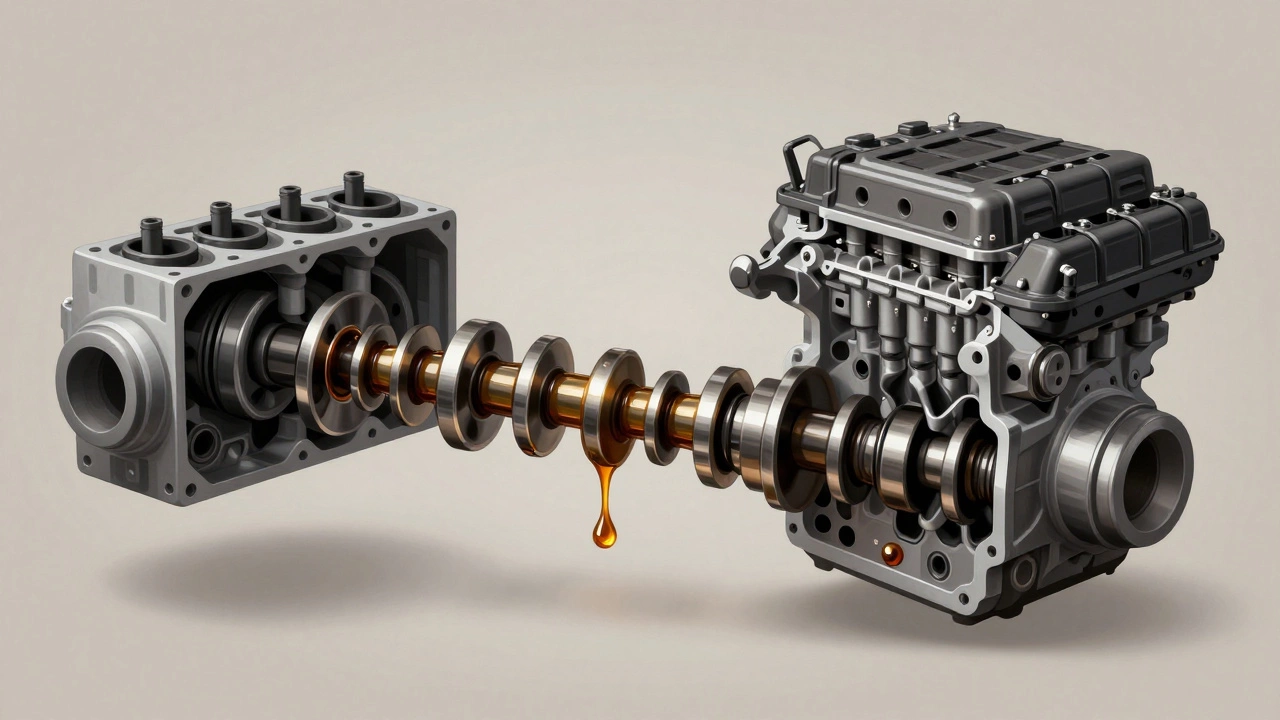
When oil drops too low, metal starts grinding on metal. You’ll hear it. A knocking, ticking, or rattling sound from under the hood, especially when you accelerate or idle. It’s not normal engine noise. Normal is a quiet hum. This is a sharp, metallic clatter. It’s the lifters, valves, or even the crankshaft bearings starving for lubrication.
Some people ignore it, thinking it’s just an old engine. But that noise isn’t aging-it’s failing. A 2018 study by the Society of Automotive Engineers found that 42% of sudden engine failures in vehicles under 10 years old were linked to low oil levels over time. That’s not a coincidence. That’s neglect.
Watch for the oil warning light
Your car’s dashboard has a light shaped like an oil can. If it comes on while driving, stop as soon as it’s safe. This isn’t a "remind me later" alert. This is a red flag that oil pressure has dropped below safe levels. The light doesn’t just mean you’re low on oil-it means the oil isn’t circulating properly. That’s serious.
Some newer cars have digital readouts that tell you exact oil levels. But if your car has the old-school oil can light, don’t wait for it. Check the dipstick before you even start driving. Don’t assume the light is broken. It’s there for a reason.

Smell burning oil
Oil doesn’t usually burn inside the engine. If you smell something like burnt toast or hot grease, especially when the car is running, that’s oil leaking onto hot engine parts. It could be a worn gasket, a loose filter, or even a cracked valve cover. But it also means oil is disappearing faster than it should.
One driver in Hamilton noticed the smell every morning after leaving the driveway. He kept topping off the oil every two weeks. Six months later, his engine seized. The leak was small, but constant. He didn’t realize how much he was losing until it was too late. If you smell oil, don’t just add more. Find out where it’s going.
Check for oil leaks under the car
Look under your parked car. Is there a dark, slick puddle? Fresh oil is amber or brown. Old oil is black and thick. If you see it on your driveway or garage floor, you’re losing oil. Even a slow drip adds up. A quarter of a quart every 1,000 miles might not seem like much-but over a year, that’s almost two full quarts gone. Most engines hold between four and six quarts. You don’t have much buffer.
Check the oil filter, the drain plug, and the valve cover gasket. These are the usual culprits. A loose filter or a cracked gasket can cost $50 to fix. A damaged engine costs $4,000.
Notice performance issues
Low oil doesn’t just hurt the engine-it hurts how your car drives. You might feel sluggish acceleration, rough idling, or the engine hesitating when you press the gas. That’s because the oil isn’t lubricating the moving parts properly. The engine has to work harder. It’s like trying to pedal a bike with a flat tire.
Some people blame the fuel system or spark plugs when the real issue is oil. I’ve seen mechanics replace fuel injectors and sensors on cars that just needed an oil top-up. The symptoms look similar. But if the oil level is fine and the problem goes away after adding oil, you’ve found your answer.
What to do if your car is low on oil
Don’t panic. But don’t ignore it either.
- Turn off the engine. Let it sit for five minutes.
- Check the dipstick. Confirm the level.
- Find out what type of oil your car needs. Check your owner’s manual. Most modern cars use 5W-30 or 5W-20. Using the wrong type can cause more damage.
- Add oil slowly. Pour in half a quart at a time. Wait a minute, then recheck. Don’t overfill.
- Start the engine and let it run for a minute. Turn it off. Check again.
- If the level is still low after adding a full quart, you likely have a leak or internal issue. Get it checked.
Never drive with the oil light on. Never drive with oil below the minimum mark. Even a short trip can cause permanent damage. I’ve seen engines survive 50 miles with low oil. But they never ran the same after.
Prevent it from happening again
Make checking your oil part of your routine. Do it every time you fill up with gas. That’s about every 300 to 400 miles. Keep a bottle of the right oil in your trunk. Keep a rag and a funnel in the glovebox. It takes two minutes. It saves thousands.
Change your oil on schedule. Most manufacturers say every 7,500 to 10,000 miles with synthetic oil. But if you drive in stop-and-go traffic, extreme heat, or dusty conditions, do it every 5,000 miles. Oil breaks down over time. It doesn’t just disappear-it loses its ability to protect.
And if you’re not sure what you’re seeing? Take a picture of the dipstick. Compare it to a full one. Ask a friend. Or go to a shop for a free check. Most places will do it for free if you’re buying parts. It’s not a hassle-it’s insurance.
Your engine doesn’t talk. But it gives you signs. You just have to pay attention.
Can I just add oil without changing it?
Yes, you can top off oil between changes if the level is low. But if you’re constantly low, there’s a leak or the engine is burning oil. Just adding oil without fixing the cause won’t help long-term. It’s like putting gas in a car with a hole in the tank.
How often should I check my engine oil?
Check it at least once a month, or every time you fill up with gas. If your car is older, driven hard, or has over 100,000 miles, check it weekly. Modern engines use less oil, but they still need monitoring.
What happens if I drive with low oil?
Driving with low oil causes metal parts in the engine to grind together without lubrication. This leads to overheating, increased friction, and eventually, engine seizure. You could lose your engine in under 20 minutes. The damage is permanent and expensive to fix.
Can low oil cause the check engine light to come on?
Yes. Low oil pressure can trigger the check engine light because the car’s computer detects abnormal engine conditions. It won’t tell you it’s low oil-it’ll show a generic code like P0522 (oil pressure sensor issue). Always check the dipstick before assuming it’s a sensor problem.
Is it normal for a car to burn oil?
A little is normal in older engines-up to a quart every 2,000 miles. But if you’re adding a quart every 500 miles, that’s a problem. Worn piston rings or valve seals are the usual causes. It’s not something you should ignore.