 Oct, 30 2026
Spark Plug Diagnostic Assistant
Answer the questions below to determine if your spark plugs are likely failing or if another issue is at play.
Step 1: Engine Symptoms
Select all symptoms you are currently experiencing:
Step 2: Visual Inspection
If you have pulled a plug, what does it look like?
Step 3: Multimeter Resistance Test
Set meter to Ohms (Ω). Measure resistance between terminal nut and center electrode tip.
Diagnosis Result
You’re driving along, and suddenly the car starts jerking. Or maybe it’s just harder to start in the morning than it used to be. You suspect the spark plugs are the culprit, but how do you know for sure? Replacing them blindly is a waste of money if they’re fine, but ignoring them can lead to bigger engine headaches. The good news? Testing for bad spark plugs doesn’t require a mechanic’s degree or expensive tools. Most of it comes down to looking, listening, and using a basic multimeter.
This guide walks you through exactly how to diagnose failing spark plugs yourself. We’ll cover the physical signs on the plug itself, the symptoms your engine gives you, and the electrical tests that confirm whether the plug is dead or just dirty. By the end, you’ll know if you need new plugs or if something else is messing with your ignition system.
Spotting the Warning Signs Before You Open the Hood
Your engine talks to you before it breaks down completely. If you listen closely, you can often tell if your spark plugs are struggling long before you pull them out. These aren’t vague feelings; they are specific mechanical behaviors tied directly to ignition failure.
- Rough Idling: When you stop at a red light, does the RPM needle dance around instead of settling? A steady idle usually sits between 600-1000 RPM. If it drops below 500 or spikes erratically, one or more cylinders might be missing fire because the spark isn’t strong enough.
- Hard Starting: In cold weather, especially here in Hamilton where temperatures drop fast, weak sparks struggle to ignite the fuel-air mixture. If you crank the key for more than two seconds before the engine catches, check your plugs first.
- Engine Misfires Under Load: This is distinct from rough idling. Try accelerating onto a highway ramp. If the car hesitates, stumbles, or feels like it’s losing power momentarily, that’s a classic load-dependent misfire. It means the spark can’t keep up with high cylinder pressure.
- Reduced Fuel Economy: Unburnt fuel goes straight out the exhaust when a plug fails. If your gas mileage drops by 10% or more without any change in driving habits, inefficient combustion is likely the cause.
- Check Engine Light (CEL): Don’t ignore this. While many things trigger the CEL, codes P0300 through P0308 specifically indicate misfires in individual cylinders. If you see P0301, it’s cylinder number 1. That tells you exactly which spark plug to inspect.
The Visual Inspection: What Your Old Plugs Tell You
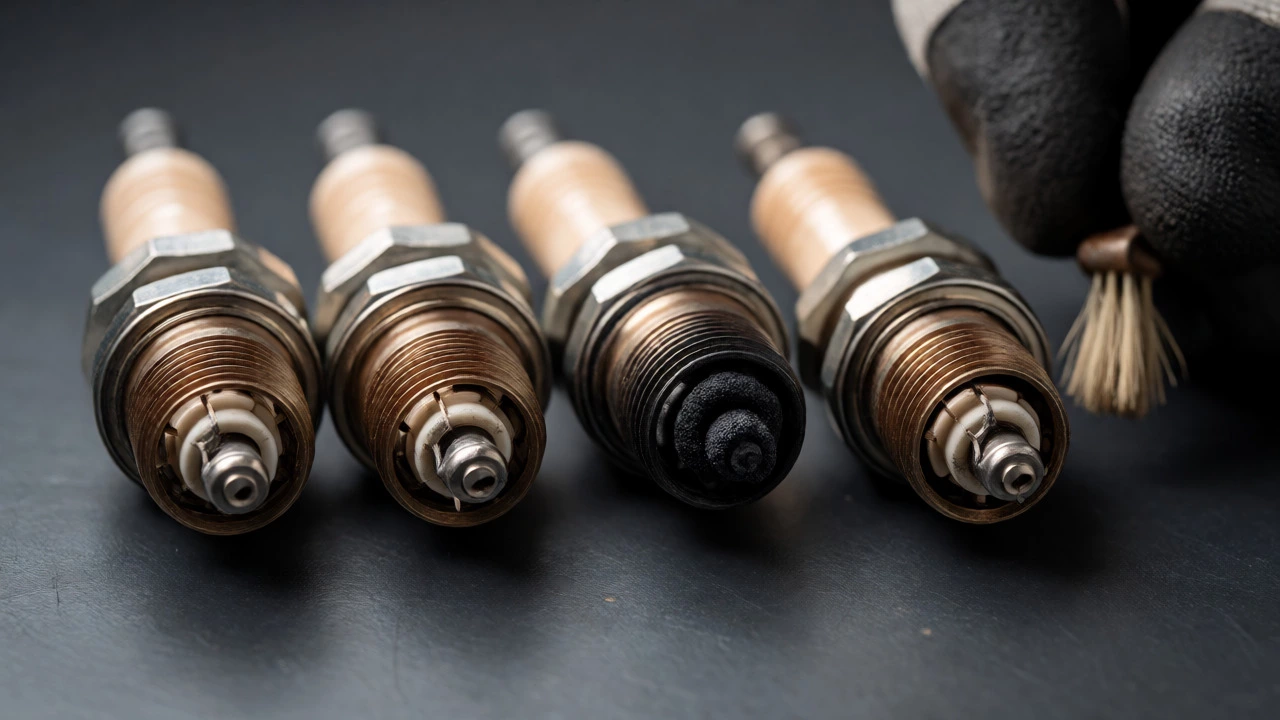
Pulling the spark plugs is the most direct way to test them. Yes, you have to get your hands a little greasy, but the evidence is right there on the electrode tip. Each plug should match its cylinder, so lay them out in order (1-4 for a 4-cylinder, etc.) as you remove them. This helps you spot patterns.
Here is what healthy vs. unhealthy looks like:
| Condition | Appearance | Likely Cause | Action Required |
|---|---|---|---|
| Healthy | Light tan or grayish color on the insulator tip. Dry and clean. | Normal operation. | No action needed. Clean and reinstall if within life span. |
| Carbon Fouled | Black, dry, sooty deposits covering the tip. | Rich fuel mixture, short trips, or weak spark. | Clean with wire brush or replace. Check air filter and injectors. |
| Oil Fouled | Wet, black sludge or oily residue. | Blown piston rings or valve stem seals leaking oil into combustion chamber. | Replace plug. Investigate internal engine wear (compression test). |
| Pre-ignition/Detonation | White blisters, melted electrodes, or sandblasted look. | Overheating, low octane fuel, or incorrect timing. | Replace immediately. Check cooling system and fuel grade. |
| Gap Too Wide | Electrodes worn down, gap visibly larger than spec. | Natural wear over time. | Adjust gap or replace. Wider gaps require higher voltage to jump. |
A critical detail people miss: compare all plugs together. If one is black and fouled while the others are tan, you have an isolated issue-maybe a bad coil pack or injector for that specific cylinder. If they are all black, the problem is systemic, like a clogged air filter or faulty oxygen sensor causing a rich mixture across the board.
Using a Multimeter: The Electrical Reality Check
Visuals are great, but electricity is invisible. Sometimes a plug looks okay but won’t conduct properly. This is where a simple digital multimeter saves you from guessing. You don’t need fancy equipment; a $20 meter works fine.
Step-by-Step Resistance Test
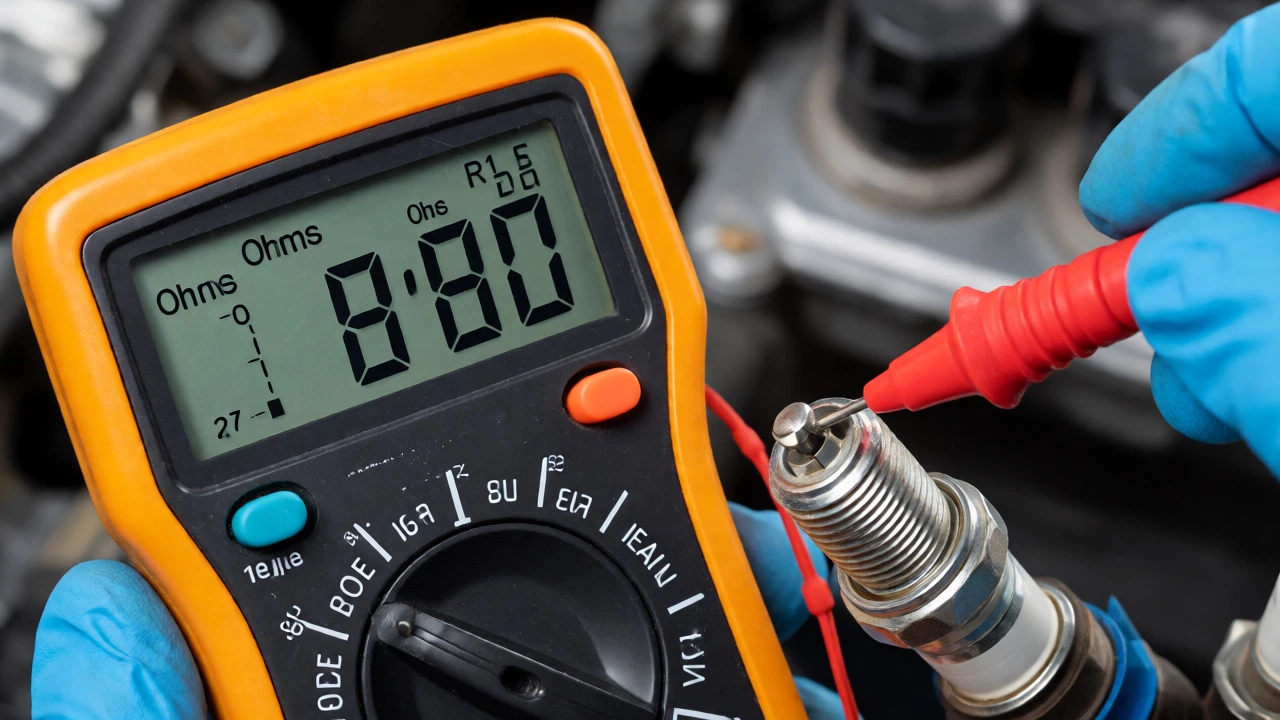
- Set the Meter: Turn your multimeter to the Ohms (Ω) setting. Use the lowest range, typically 200Ω or 2kΩ.
- Measure Internal Resistance: Place one probe on the terminal nut at the top of the spark plug and the other probe on the center electrode tip at the bottom.
Note: Some resistive spark plugs have built-in resistors to reduce radio interference. Check your owner’s manual for the expected value. Usually, it’s between 3kΩ and 7kΩ. If it reads infinite resistance (OL), the internal resistor is broken, and the plug must be replaced. If it reads near zero ohms, the internal connection is shorted. - Check Coil Pack Output (Optional): If the plug passes, the issue might be the ignition coil. Measure the primary resistance of the coil pack according to manufacturer specs. Mismatched coils cause uneven firing.
Why does resistance matter? Modern cars use Electronic Control Units (ECU) to manage timing. If a spark plug has degraded resistance, the ECU might not detect the misfire instantly, leading to prolonged poor performance before the Check Engine Light even turns on.
Checking the Gap: Is It Within Spec?
Even if the plug is electrically sound, a wrong gap kills performance. The gap is the distance between the center electrode and the ground electrode. Factory specs vary, but common ranges are 0.030” to 0.045” (0.76mm to 1.14mm). Wear naturally widens this gap.
Use a feeler gauge tool to measure. Slide the blade corresponding to your car’s spec (e.g., 0.040”) between the electrodes. It should slide in with slight friction. If it falls through easily, the gap is too wide. If it won’t fit, it’s too tight.
- Too Wide: Requires more voltage to jump. Your ignition coils work harder, potentially overheating and failing prematurely. Result: Misfires under acceleration.
- Too Tight: Spark is too small to ignite the dense fuel-air mixture effectively. Result: Poor fuel economy and sluggish response.
If you find the gap off-spec, you can gently bend the ground electrode back with a gap tool. However, if the electrode is worn rounded rather than flat, replacement is better than adjustment. Adjusting a worn plug is a temporary fix at best.
Common Pitfalls When Testing Spark Plugs
DIYers often make mistakes that lead to false diagnoses. Avoid these traps:
- Tightening Too Much: Over-torquing cracks the ceramic insulator. This creates a path for spark leakage, meaning the spark jumps outside the combustion chamber instead of inside it. Always use a torque wrench. Typical spec is 15-20 ft-lbs, but check your manual.
- Ignoring Coil Packs: On modern engines with Coil-On-Plug (COP) systems, a bad coil mimics a bad spark plug perfectly. If you replace plugs and the problem persists, swap the coil packs between cylinders. If the misfire moves with the coil, the coil is dead, not the plug.
- Mixing Plug Types: Never mix copper, platinum, and iridium plugs in the same engine. They have different heat ranges and conductivity rates. Mixing them causes uneven combustion cycles, which shakes the engine and stresses mounts.
- Forgetting the Air Gap: Ensure no debris blocks the area between the plug well and the head. Water or dirt accumulation can cause tracking (electricity jumping sideways), simulating a misfire.
When to Replace vs. Clean
Should you clean those carbon-fouled plugs or toss them? Here’s a rule of thumb based on material type:
| Plug Type | Typical Lifespan | Cleaning Recommended? | Notes |
|---|---|---|---|
| Copper Core | 20,000 - 30,000 miles | Yes, if lightly fouled | Soft metal wears quickly. Electrode erosion is common. |
| Platinum | 60,000 - 80,000 miles | Maybe | Harder surface resists wear. Only clean if visually dirty but structurally intact. |
| Iridium | 80,000 - 100,000+ miles | No | Fine wire electrode is fragile. Cleaning can damage the tip geometry. |
If the plug is older than its rated lifespan, replace it regardless of appearance. Metal fatigue happens internally, invisible to the eye. A fresh set costs less than towing fees.
Final Thoughts on DIY Ignition Health
Testing spark plugs is one of the highest-value maintenance tasks you can do. It takes twenty minutes, requires minimal tools, and solves half of all "engine running poorly" complaints. Start with the symptoms-rough idle, hard start, poor mileage. Then move to visual inspection. Finally, verify with a multimeter if you’re unsure. If everything checks out green, look elsewhere: fuel injectors, vacuum leaks, or mass airflow sensors. But nine times out of ten, those little ceramic tubes are the silent killers of performance.
Can I drive with a bad spark plug?
You can drive short distances, but it's risky. A severely misfiring plug dumps unburnt fuel into the exhaust, which can overheat and destroy your catalytic converter-a repair costing hundreds or thousands of dollars versus the cost of a plug. Limit speed and avoid heavy loads until fixed.
How often should I replace spark plugs?
It depends on the material. Copper plugs last about 20,000-30,000 miles. Platinum lasts 60,000-80,000 miles. Iridium can go 100,000 miles or more. Always check your vehicle's owner manual for the specific interval recommended by the manufacturer.
Do all spark plugs need to be replaced at once?
Yes. Even if only one is bad, replace the entire set. New plugs have tighter tolerances and fresher electrodes. Mixing old and new creates uneven resistance and combustion efficiency, leading to rough running and potential stress on the ignition coils.
What does a white spark plug mean?
A white or blistered tip indicates overheating. This is often caused by pre-ignition, detonation, lean fuel mixture, or using a plug with a heat range that is too hot for your engine's operating conditions. It requires immediate attention to prevent engine damage.
Can a bad spark plug cause transmission problems?
Indirectly, yes. Severe engine misfires can confuse the Transmission Control Module (TCM), causing harsh shifts or delayed engagement because the engine RPM doesn't match the expected load. Fixing the ignition issue usually resolves the shifting complaint.