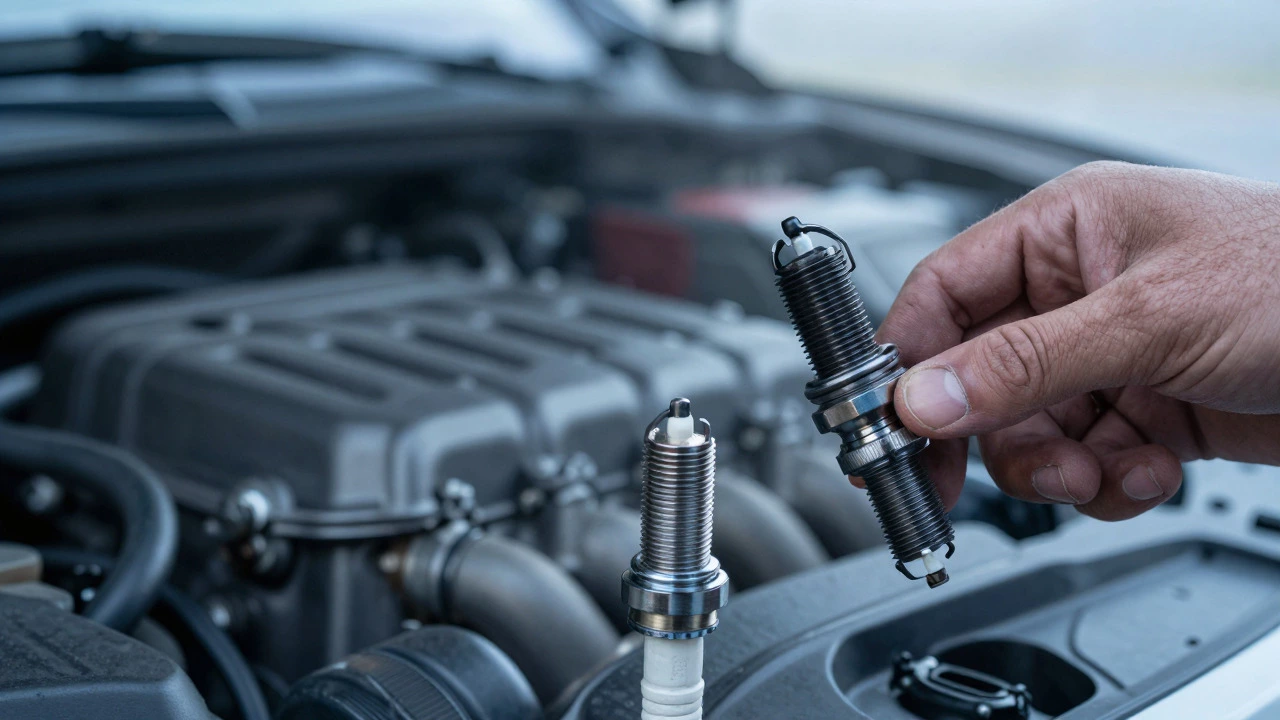
 Jul, 21 2026
Picture this: your car starts hesitating on a cold morning. You check the service manual and notice one cylinder is misfiring. The logical shortcut seems obvious-just swap that single bad plug, save money on the other seven, and drive away. It feels like a smart hack. But in the world of internal combustion engines, shortcuts often lead to expensive detours.
The short answer to whether you can change only some spark plugs is yes, but it is rarely a good idea. Most mechanics will tell you to replace them all at once. Why? Because spark plugs are not isolated components; they work as a synchronized team. When one fails, the others are usually close behind. Replacing just one creates an imbalance in your engine’s performance, potentially leading to rough idling, reduced fuel economy, and even damage to your catalytic converter.
Why Spark Plugs Fail Together
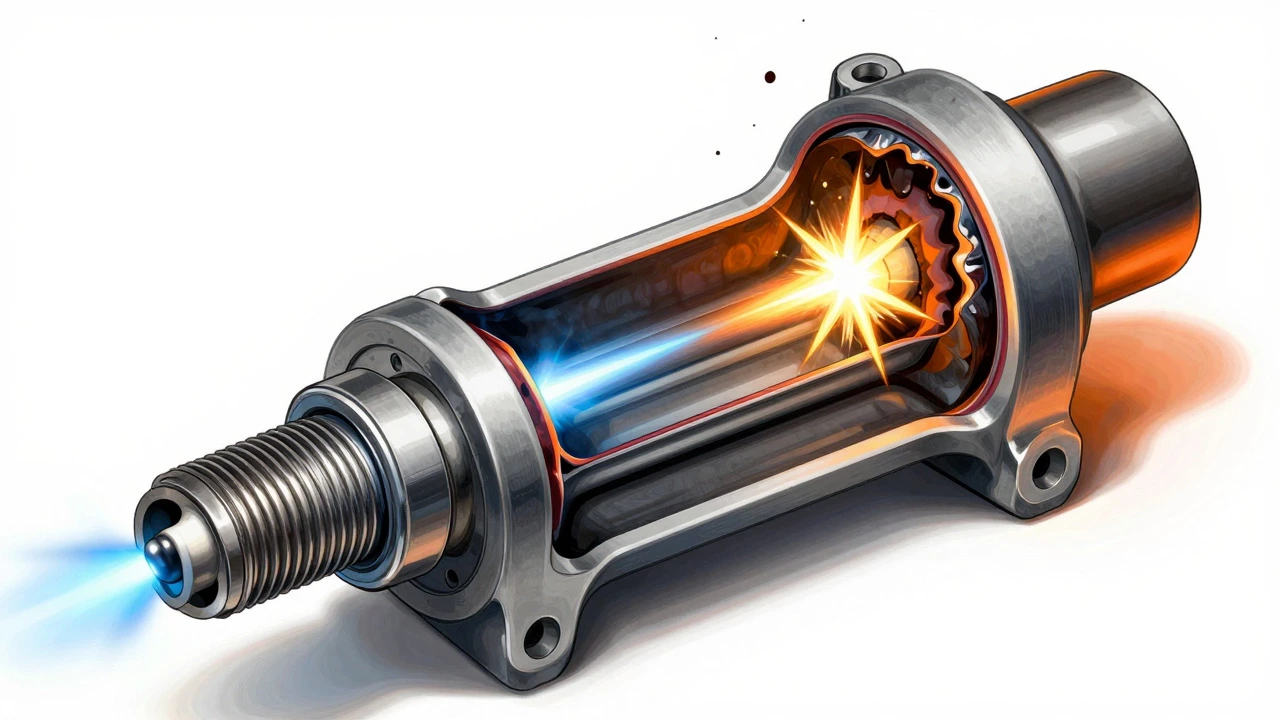
To understand why partial replacement is risky, you need to look at how spark plugs are small but critical components that ignite the air-fuel mixture in an engine's cylinders through an electric spark. They are installed in the same environment, subjected to the same heat cycles, compression pressures, and fuel quality. If one plug has worn out after 60,000 miles, the others have likely experienced nearly identical wear patterns.
Think of it like running shoes. If the sole on your left shoe wears down completely while the right one still looks fine, you wouldn’t buy just one new shoe. Your gait would be off, causing pain and inefficiency. Similarly, when you mix old, worn plugs with brand-new ones, you create uneven combustion. The new plug fires sharply and efficiently, while the old plug struggles, firing weakly or late. This discrepancy forces the engine control unit (ECU) to constantly adjust timing and fuel delivery, which it can never perfectly balance.
| Factor | Replace All Plugs | Replace Only Bad Plug |
|---|---|---|
| Engine Balance | Maintains uniform combustion across all cylinders | Creates uneven power delivery and rough idle |
| Long-Term Cost | Higher upfront cost, lower long-term risk | Lower upfront cost, higher risk of repeat visits |
| Fuel Efficiency | Optimized for current manufacturer specs | Reduced due to ECU compensation efforts |
| Labor Charges | Paid once for full job | May require multiple labor sessions if others fail soon |
The Hidden Dangers of Mixed Sets
When you install a new spark plug alongside old ones, you introduce several mechanical risks that go beyond simple discomfort. The most immediate issue is the gap specification. New plugs come with precise electrode gaps set by the manufacturer. Old plugs, however, have eroded electrodes. Even if you measure the gap on the old plug and adjust it, the material loss means the spark intensity differs. This leads to incomplete combustion in the older cylinders.
Incomplete combustion is dangerous because unburnt fuel travels into the exhaust system. This excess fuel can overheat and damage the catalytic converter is an emissions control device that converts toxic gases from the engine into less harmful pollutants. A failed catalytic converter costs significantly more to replace than a full set of spark plugs. In modern direct-injection engines, this risk is even higher because these systems operate at higher pressures and temperatures, making them less forgiving of ignition inconsistencies.
Another concern is the condition of the ignition coils. Each spark plug connects to an ignition coil (or shares one in older distributor systems). If a plug failed due to carbon tracking or oil fouling, it may have put extra strain on its corresponding coil. By replacing only the plug, you leave a stressed component in place. That coil could fail shortly after, requiring another trip to the shop and another round of labor charges.
When Might Partial Replacement Make Sense?
While the general rule is "replace all," there are rare scenarios where changing a single plug might be acceptable. These exceptions usually apply to older vehicles with high mileage where the cost of a full set outweighs the benefit, or in emergency roadside situations where getting home safely is the only goal.
- Emergency Roadside Repair: If you are stranded and a mechanic confirms only one plug is faulty, swapping that one gets you moving again. Just plan to replace the rest as soon as possible.
- Very High Mileage Vehicles: On cars with over 150,000 miles, removing all plugs carries a small risk of stripping threads in the cylinder head. If one plug is visibly damaged, replacing just that one minimizes invasive work.
- Single-Cylinder Engines: Obviously, motorcycles or lawn mowers with one cylinder don’t have this problem. Replace the single plug when needed.
For most daily drivers, especially those under 100,000 miles, these exceptions do not apply. The labor involved in accessing the spark plugs is often the biggest cost factor. Mechanics charge for the time it takes to remove intake manifolds, valve covers, or other components to reach the plugs. Once that labor is paid for, adding the cost of three or four extra plugs is negligible compared to paying labor rates again in six months.
How to Choose the Right Spark Plugs
If you decide to do the job right and replace all plugs, selecting the correct type matters. Using the wrong plug can cause pre-ignition, knocking, or poor performance. Always consult your owner’s manual for the recommended heat range and material.
There are three main types of spark plugs available today:
- Copper Core: Affordable and effective for older engines. They wear out faster, typically lasting 20,000-30,000 miles.
- Platinum: More durable than copper, with finer electrodes that resist erosion. They last around 60,000 miles and provide better fuel efficiency.
- Iridium: The premium choice. Iridium electrodes are extremely hard and thin, allowing for a stronger spark and longer life spans of up to 100,000 miles or more.
If your vehicle originally came with iridium plugs, stick with iridium. Mixing materials (e.g., putting copper plugs in an engine designed for iridium) can disrupt the engine’s calibration. Modern ECUs adapt to wear over time, so introducing a different conductivity level can confuse the computer’s learning process.
Signs Your Spark Plugs Need Replacement
You shouldn’t wait for a failure to address spark plugs. Preventive maintenance is cheaper than reactive repairs. Watch for these common symptoms:
- Rough Idling: The engine shakes or vibrates noticeably when stopped at a light.
- Poor Acceleration: The car feels sluggish or hesitant when you press the gas pedal.
- Decreased Fuel Economy: You find yourself filling the tank more frequently without changing driving habits.
- Check Engine Light: Codes like P0300 (random misfire) or P0301-P0308 (specific cylinder misfire) often point to ignition issues.
- Difficulty Starting: The engine cranks longer than usual before catching, especially in cold weather.
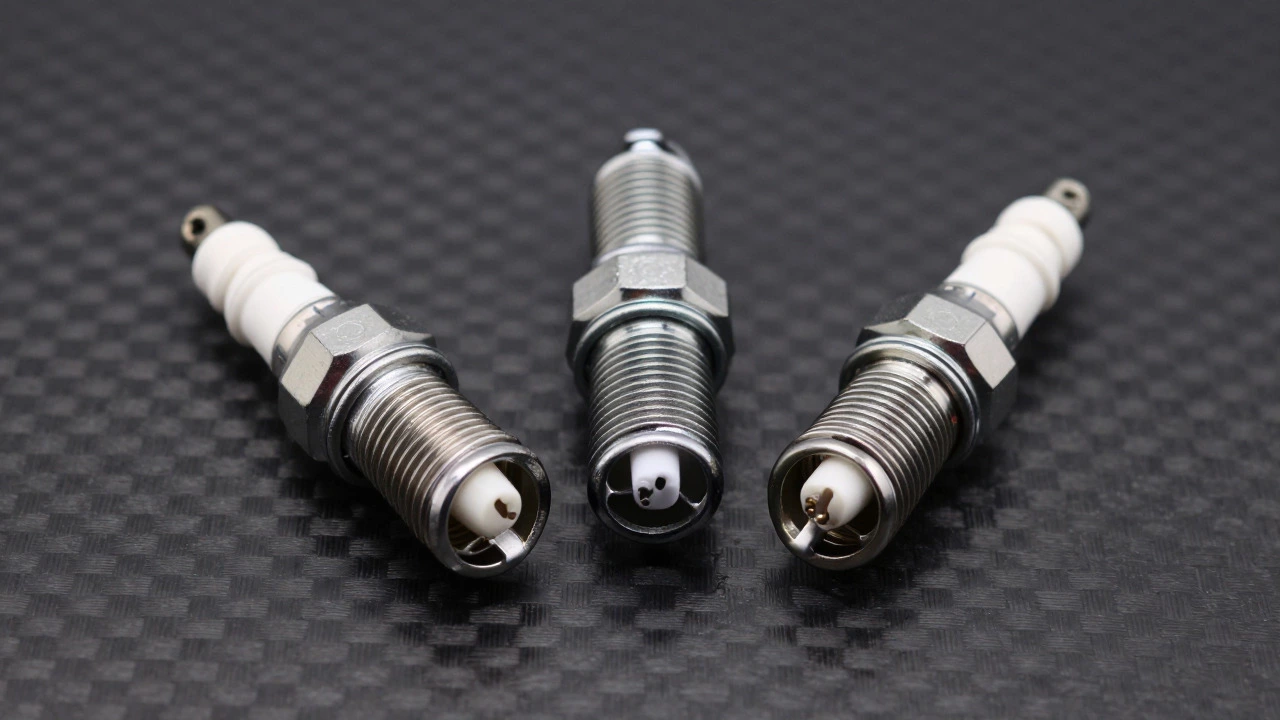
If you experience any of these, inspect the plugs. Pull one out and look at the electrode. A healthy plug should have a light tan or gray color. Black, sooty deposits indicate a rich fuel mixture or oil leakage. White, blistered tips suggest overheating. Gaps that are too wide or irregular mean the plug is nearing the end of its life.
DIY vs. Professional Installation
Replacing spark plugs is one of the few maintenance tasks many car owners can handle themselves. However, it requires care. Over-tightening can crack the ceramic insulator or strip the threads in the cylinder head. Under-tightening can allow compression leaks, leading to misfires. Use a torque wrench set to the manufacturer’s specification, usually between 10 and 20 foot-pounds depending on the engine.
Also, ensure the engine is cool before starting. Hot engines expand metal parts, increasing the risk of breaking fragile components. Keep the area clean; dropping a bolt or debris into an open spark plug hole can cause catastrophic engine damage. Use a magnetic pickup tool and cover openings with rags when not actively working on them.
Can I replace just one spark plug if my check engine light comes on?
Technically yes, but it is not recommended. If one plug caused a misfire, the others are likely near the end of their lifespan. Replacing only one leaves the engine unbalanced, potentially causing further issues like rough idling or increased fuel consumption. It is safer and more cost-effective in the long run to replace the entire set.
How often should spark plugs be replaced?
Replacement intervals depend on the plug material. Copper plugs should be changed every 20,000-30,000 miles. Platinum plugs last about 60,000 miles. Iridium plugs can go up to 100,000 miles or more. Always check your vehicle’s owner manual for the specific recommendation for your model.
What happens if I use the wrong type of spark plug?
Using the wrong heat range or material can cause pre-ignition, engine knocking, or poor performance. It may also confuse the engine control unit, leading to inefficient fuel burning and potential damage to the catalytic converter. Always use the manufacturer-recommended specifications.
Is it expensive to replace all spark plugs?
The cost varies by vehicle. For a standard four-cylinder engine, parts might cost $20-$60, with labor adding $100-$200 if done professionally. In complex engines with hidden plugs, labor can exceed $400. However, this is far cheaper than repairing a damaged catalytic converter or engine resulting from prolonged misfires.
Can bad spark plugs damage my engine?
Yes. Severe misfires from bad plugs can wash lubrication off cylinder walls, leading to piston damage. Unburnt fuel can overheat and destroy the catalytic converter. In extreme cases, dropped plug fragments can score cylinder heads or pistons. Regular replacement prevents these costly failures.