 Dec, 19 2025
Suspension Safety Risk Calculator
Assess Your Suspension Safety
Enter your symptoms and driving conditions to calculate your suspension risk level. Based on 10+ years of Ontario driving data.
Recommended actions
Driving with worn suspension isn’t just uncomfortable-it’s dangerous. You might not notice it right away, but if your car bounces too much over bumps, leans heavily in turns, or feels like it’s floating instead of staying planted, your suspension is failing. And ignoring it doesn’t make the problem go away. It makes it worse-and riskier.
What Suspension Actually Does
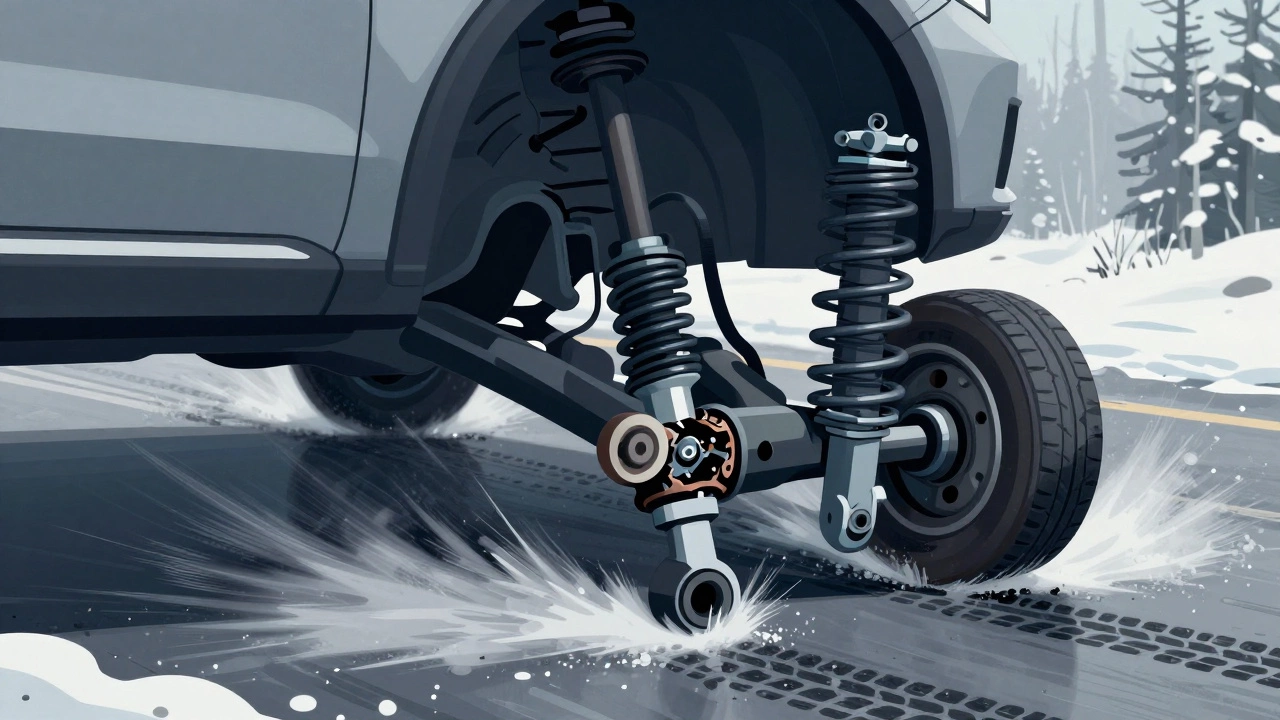
Your car’s suspension isn’t just there to make the ride smooth. It’s a critical safety system. It keeps your tires in contact with the road, helps you steer accurately, and lets your brakes work the way they’re meant to. When shocks and struts wear out, or springs weaken, your tires lose grip. That means less control when you need it most-like during sudden stops or evasive maneuvers.
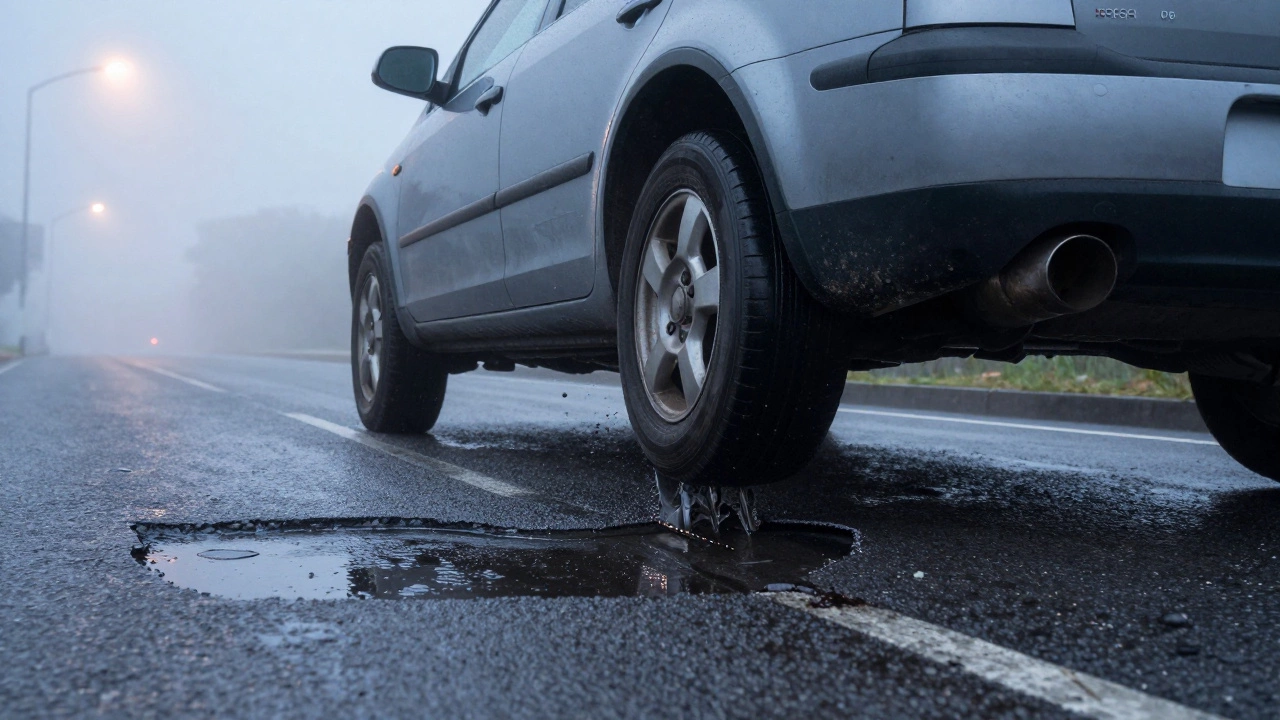
In Hamilton, where winters bring icy roads and spring thaw turns streets into pothole minefields, worn suspension can turn a normal commute into a hazard. A 2023 study by the Canadian Automobile Association found that vehicles with degraded suspension were 47% more likely to lose control on wet or snowy surfaces compared to those with properly functioning systems.
Signs Your Suspension Is Worn Out
You don’t need a mechanic to tell you something’s wrong. Here’s what to look for:
- Excessive bouncing after hitting a bump-your car should settle quickly, not keep rocking like a boat.
- Nose diving when you brake hard. The front end should dip slightly, not slam down like a diving board.
- Uneven tire wear, especially on the inside or outside edges. This isn’t just a tire issue-it’s a suspension alignment problem.
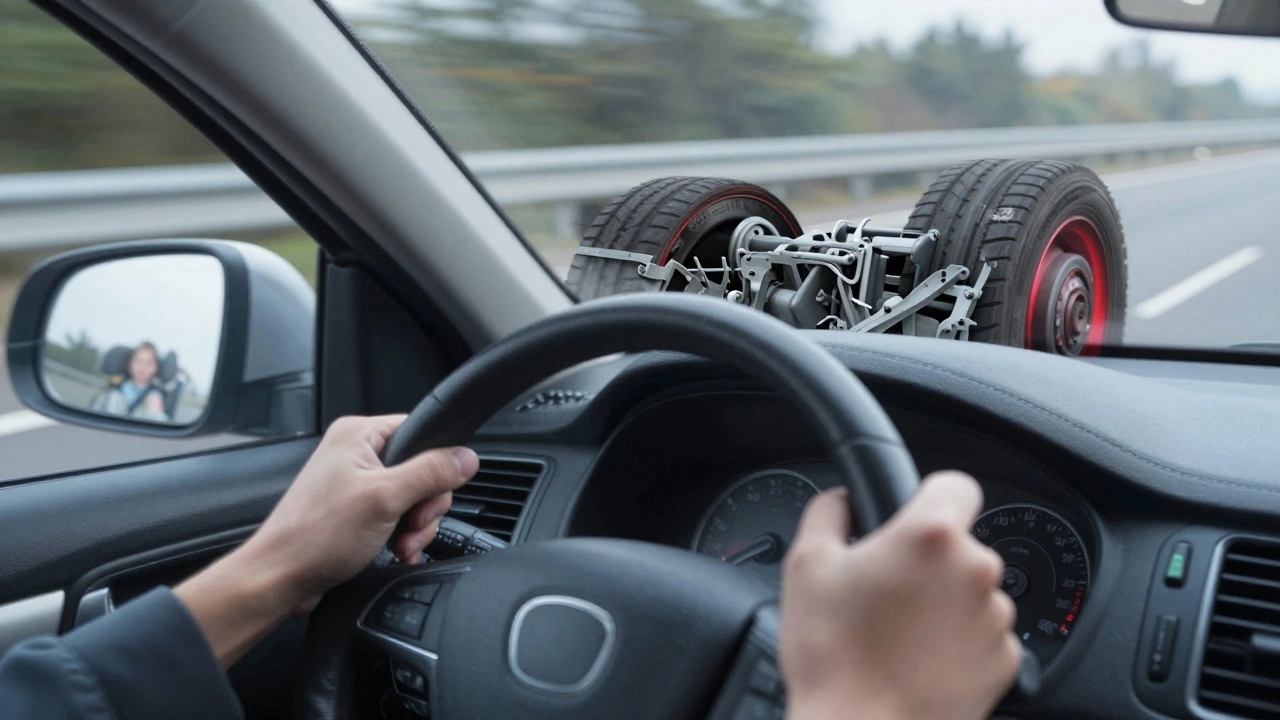
- Steering that feels loose or wobbly, especially at highway speeds.
- Noise like clunking, knocking, or rattling when you go over bumps.
- Oil leaks on the shocks or struts. If you see grease or fluid on the metal casing, the seals are gone.
If you notice even one of these, don’t wait. Suspension parts don’t fail suddenly-they degrade slowly. By the time you notice it, you’re already driving on borrowed time.
Why Driving with Worn Suspension Is Risky
It’s not just about comfort. Worn suspension affects every part of your car’s handling:
- Longer stopping distances-your tires can’t grip properly, so your brakes work harder and less effectively.
- Reduced steering response-your car won’t turn where you point it, especially in emergencies.
- Increased risk of hydroplaning-if your tires aren’t pressed firmly against the road, water builds up underneath.
- Damage to other parts-worn suspension puts extra stress on your tires, brakes, steering components, and even the frame.
Imagine braking hard on a rainy morning in Burlington. Your worn shocks can’t hold the front end up. The tires lose contact. You skid. You don’t stop in time. That’s not a hypothetical-it’s a common scenario in Ontario winters.
How Long Do Suspension Parts Last?
Most manufacturers say shocks and struts last between 50,000 and 100,000 kilometers. But that’s under ideal conditions. In places like Hamilton, where roads are salted in winter and potholes are a seasonal feature, they wear out faster.
Real-world data from local mechanics shows that 60% of vehicles over 8 years old in Southern Ontario have worn suspension components-even if the owner didn’t notice any symptoms. If you drive daily, commute on rough roads, or carry heavy loads, your suspension may need replacement by 60,000 km.
There’s no magic number. The best way to know? Get a professional inspection every 20,000 km-or once a year, whichever comes first.
What Happens If You Ignore It?
Ignoring worn suspension doesn’t save you money-it costs you more in the long run.
- Tires wear out 30-50% faster-replacing four tires every 20,000 km instead of 40,000 km adds up fast.
- Brakes overheat and fade because they’re working harder to stop a car that won’t stay stable.
- Steering and alignment parts wear out-ball joints, control arms, and tie rods fail prematurely.
- Frame damage-in extreme cases, the impact from unrestrained suspension can crack or warp the chassis.
One mechanic in Ancaster told me about a customer who drove with bad struts for two years. When they finally brought it in, they needed new shocks, tires, brake rotors, and a front-end alignment. The repair bill was $2,800. The shocks alone would’ve cost $600 two years earlier.
What Should You Do?
If you suspect your suspension is worn:
- Don’t drive long distances-especially on highways or rough roads.
- Get a professional inspection-ask for a full suspension check. A good shop will lift the car and check shocks, struts, springs, bushings, and mounts.
- Replace in pairs-always replace shocks or struts on both sides of the same axle. Mixing old and new parts creates imbalance and worsens handling.
- Choose quality parts-OEM or reputable aftermarket brands like Monroe, KYB, or Bilstein. Cheap parts fail faster and compromise safety.
- Get an alignment after replacement-new suspension changes how your wheels sit. Without alignment, your tires will wear unevenly again.
Replacing suspension isn’t a luxury. It’s maintenance-just like changing your oil or brake pads. Skip it, and you’re gambling with your safety and your wallet.
Bottom Line
Driving with worn suspension is never OK. It’s not a "maybe" or a "wait and see." It’s a clear warning sign that your car is no longer safe to drive at normal speeds. The longer you wait, the more damage you risk-not just to your vehicle, but to yourself and others on the road.
If your car feels different-bouncier, looser, noisier-trust that feeling. Get it checked. Replace what’s worn. It’s not expensive compared to the cost of an accident, a tow truck, or new tires and brakes from premature wear. Your suspension keeps you grounded. Don’t let it fail when you need it most.
Can worn suspension cause tire wear?
Yes. Worn shocks or struts let your tires bounce instead of staying flat on the road. This causes uneven wear-usually on the inside or outside edges. You might think you just need new tires, but unless you fix the suspension, the new tires will wear out just as fast.
How much does it cost to replace suspension parts?
Replacing a pair of shocks or struts typically costs between $500 and $900, including labor and alignment. If springs or bushings are also worn, the total can go up to $1,500. But compared to replacing tires every 20,000 km instead of 40,000 km-or paying for accident repairs-it’s a smart investment.
Can I drive with one bad shock absorber?
Technically, yes-but you shouldn’t. Driving with one worn shock creates imbalance. Your car will pull to one side, handle poorly in turns, and put extra stress on the other side. It also accelerates wear on the remaining good part. Replace both at the same time.
How often should I check my suspension?
Have it inspected every 20,000 km or once a year, whichever comes first. If you drive on rough roads, carry heavy loads, or live in an area with harsh winters, check it every 10,000 km. Don’t wait for symptoms-by then, it’s already worn.
Are aftermarket suspension parts reliable?
Yes-if you choose reputable brands like Monroe, KYB, Bilstein, or Sachs. Avoid no-name brands sold at discount stores. They often use inferior materials and don’t last as long. Stick with parts that match or exceed OEM specs. Safety isn’t the place to save money.
What to Do Next
If you’ve noticed any signs of worn suspension, don’t delay. Book an inspection with a trusted mechanic. Take your car for a short drive and pay attention: does it feel loose? Does it bounce? Do the tires look uneven? Write it down. Bring those notes with you.
Don’t wait until you’re stuck on the side of the road in the middle of a snowstorm. Suspension problems don’t fix themselves. And they don’t get better with time. The sooner you act, the safer you’ll be-and the less you’ll pay.