 Jan, 23 2026
Radiator Replacement Cost Calculator
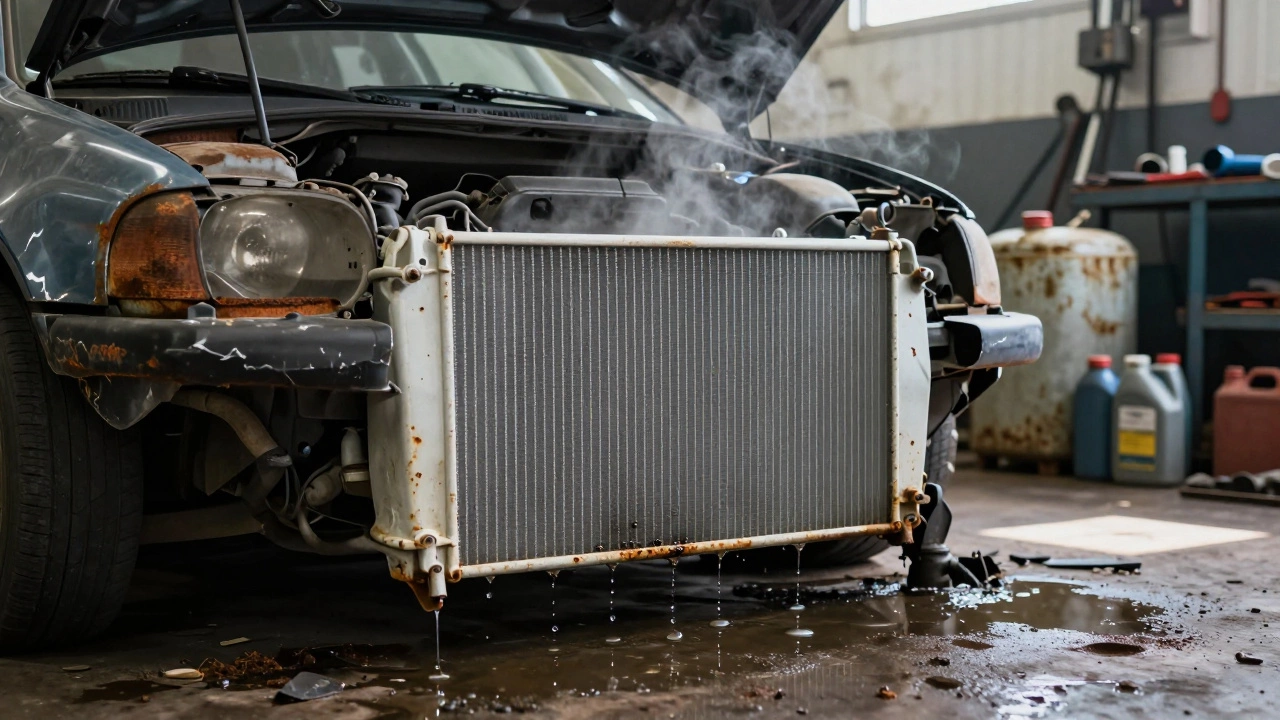
Your car overheats. Steam comes out from under the hood. The temperature gauge spikes into the red. You pull over, and now you’re staring at a repair shop quote: $800 to replace the radiator. Is that just a scam, or is your radiator really done? Most people panic at this point. But here’s the truth: replacing a radiator isn’t always necessary-and it’s not always the cheapest fix.
How Radiators Actually Fail
Car radiators don’t just wear out like brake pads. They don’t have a set lifespan. Most last 10 to 15 years if the coolant is changed regularly. But when they do fail, it’s usually because of one of three things: corrosion, physical damage, or clogging.
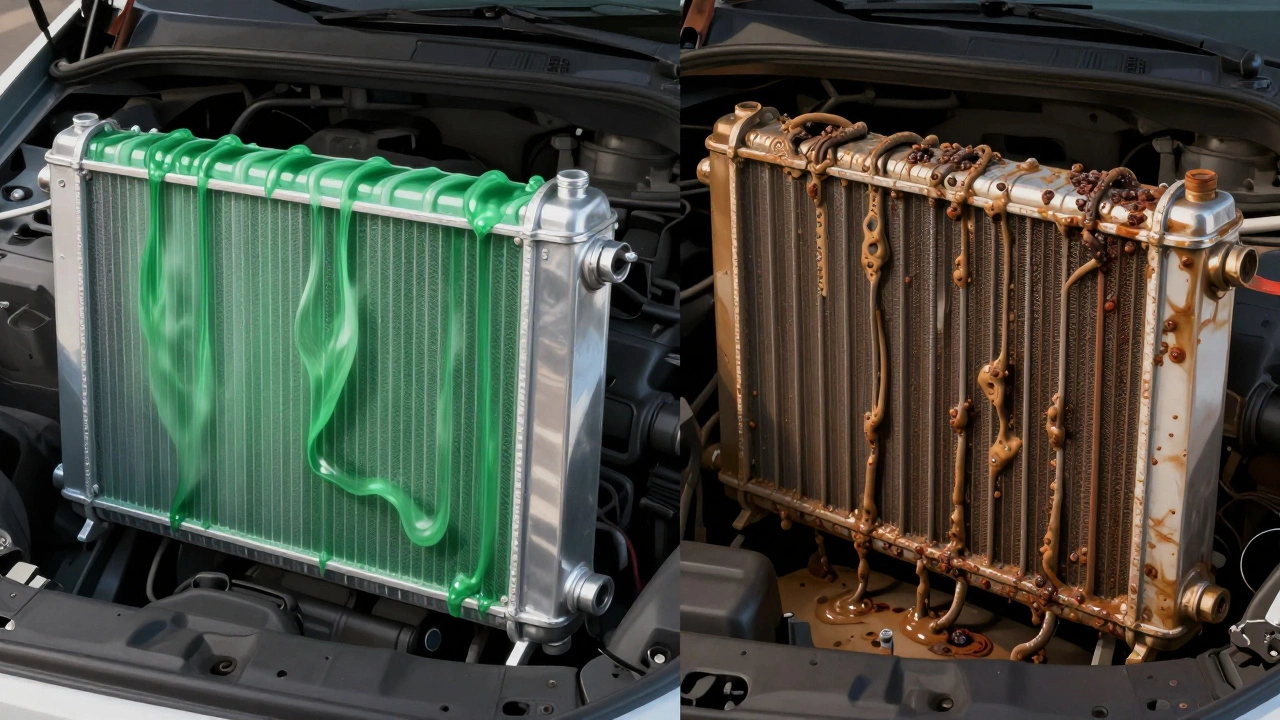
Corrosion happens when old coolant breaks down. Coolant isn’t just water-it’s a mix of antifreeze and corrosion inhibitors. Every two years, those inhibitors fade. Without them, the metal inside the radiator starts to rust. Aluminum cores and brass tanks are especially vulnerable. You won’t see rust on the outside, but inside? Tiny pinhole leaks form. One small leak, and your car starts losing coolant slowly. You top it off every week. Then one morning, it overheats for good.
Physical damage is easier to spot. A rock kicked up from the road, a minor front-end collision, even a careless car wash with a high-pressure wand can crack the plastic end tanks. These tanks aren’t meant to take impact. Once they crack, coolant leaks out fast. No more slow drips-just a puddle under your car after parking.
Clogging is the silent killer. Over time, rust, scale, and debris build up inside the radiator tubes. Coolant can’t flow properly. The engine heats up even when you’re driving at highway speeds. You might notice the heater blowing cold air in winter-that’s a sign the coolant isn’t circulating.
Signs Your Radiator Needs Replacing
Not every overheating event means you need a new radiator. But here are the five clear signs you’re past the point of repair:
- Constant low coolant levels-you’re refilling every few days, even with no visible leaks under the car.
- Visible coolant leaks-wet spots near the radiator, especially around the seams or end tanks.
- Sludge in the coolant-when you check the reservoir, the fluid looks brown, gritty, or oily. Clean coolant is bright green, red, or orange and clear.
- Overheating at low speeds-your car runs fine on the highway but boils when idling or stuck in traffic. That means the radiator can’t move enough air through the fins.
- Temperature gauge spikes-even after replacing the thermostat and water pump, the problem returns.
If you see two or more of these, it’s time to consider replacement. But if you’re only seeing one-like a small leak-you might still be able to fix it.
Repair vs. Replace: What’s Cheaper?
Let’s say you’ve got a small leak at the top of the radiator. A mechanic offers you two options: a $120 radiator sealant treatment or a $750 replacement. What do you pick?
Sealants work sometimes. They’re designed to flow through the cooling system and plug tiny holes in the radiator or heater core. They’re a band-aid. If the leak is a single pinhole and the radiator is otherwise in good shape, it might last another year. But if the radiator is already corroded or clogged, sealant will just clog it further. It can damage the water pump or thermostat. I’ve seen it happen three times in the last six months here in Hamilton.
Replacement is the real fix. But it’s not always the best value. Here’s the breakdown:
| Option | Cost (Parts + Labor) | Expected Lifespan | Risk of Future Failure |
|---|---|---|---|
| Radiator Sealant | $40-$120 | 3-12 months | High |
| Repair (solder or epoxy) | $150-$300 | 1-2 years | Moderate |
| New OEM Radiator | $600-$900 | 10-15 years | Low |
| New Aftermarket Radiator | $350-$600 | 5-8 years | Low to Moderate |
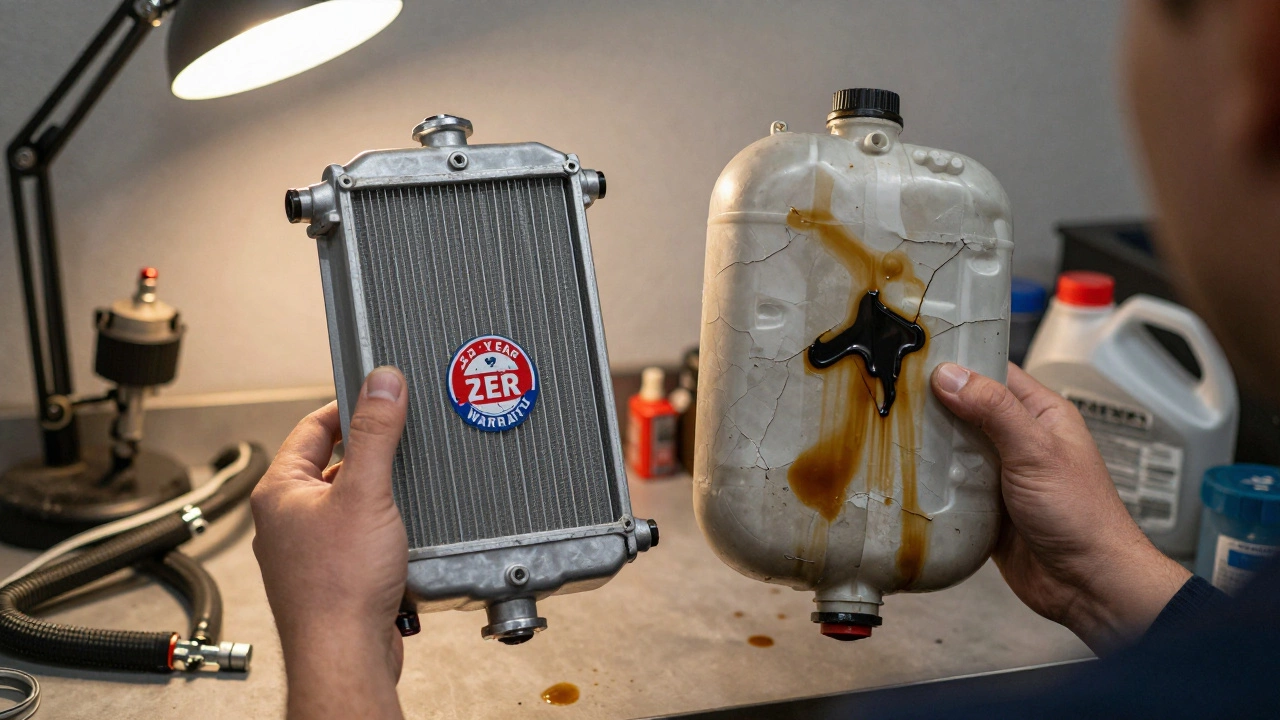
Aftermarket radiators are fine for most drivers. Brands like Denso, Spectra, and Valeo make units that match OEM specs. They’re cheaper, and they come with a 2-year warranty. OEM is only worth it if you’re keeping the car for 10+ years or you drive in extreme conditions-like towing heavy loads in summer heat.
When Replacement Is a Waste of Money
Here’s a hard truth: if your car is older than 12 years and has over 150,000 km, replacing the radiator might not make financial sense. Why?
Older cars often have multiple failing systems. The water pump might be on its last legs. The thermostat housing could be cracked. The hoses are brittle. The coolant reservoir is leaking. Replace the radiator, and you’re spending $500 to fix one problem-while the rest of the cooling system is about to fall apart.
I worked on a 2011 Honda Civic last month. The radiator had a small leak. The owner wanted to replace it. But when we drained the coolant, we found the water pump was grinding. The thermostat was stuck. Two of the hoses were soft as rubber bands. Total repair cost: $1,200. The car was worth $2,800. We did a full cooling system flush, replaced the hoses and thermostat, and sealed the radiator leak. It’s been running fine for six months now. No radiator replacement needed.
If your car is worth less than $3,000, and you’re not planning to keep it for more than two years, spending $600 on a radiator is rarely worth it. Fix the leak. Monitor it. Plan for a new car instead.
What Happens If You Don’t Replace It?
Ignoring a bad radiator doesn’t just mean overheating. It means engine damage. And that’s expensive.
When coolant leaks or stops circulating, the engine gets too hot. Metal expands. Pistons can seize. Head gaskets blow. Cylinder heads warp. A blown head gasket costs $1,500 to $3,000 to fix. A new engine? $4,000 to $8,000.
That’s why a $600 radiator replacement isn’t expensive-it’s insurance. But only if you’re replacing it for the right reasons. If you’re doing it because you’re scared of overheating, but your car is otherwise fine? Go ahead. If you’re doing it because you think it’ll “improve performance”? That’s a myth. A clean, functioning radiator doesn’t make your car faster. It just keeps it from melting down.
How to Choose a Replacement Radiator
If you decide to replace it, here’s how to pick the right one:
- Match the OEM part number-check your owner’s manual or look up your VIN at a parts store. Don’t guess.
- Choose aluminum over plastic-modern radiators use aluminum cores and plastic tanks. Aluminum lasts longer and handles heat better.
- Check the core thickness-thicker cores (2-row or 3-row) cool better. Good for towing or hot climates.
- Look for a warranty-at least 2 years. If they don’t offer one, walk away.
- Buy from reputable brands-Denso, Spectra, Valeo, and AC Delco are reliable. Avoid no-name brands on Amazon.
And always replace the thermostat and coolant at the same time. A new radiator with old coolant is like putting fresh tires on a car with bad brakes.
Final Decision Checklist
Still not sure? Use this quick checklist:
- Is your car worth more than $4,000? → Yes = consider replacement
- Are you planning to keep it 3+ years? → Yes = replace
- Do you have multiple cooling system issues? → No = fix the leak, monitor
- Is the coolant dirty or sludgy? → Yes = replace radiator and flush system
- Is your car over 150,000 km and over 12 years old? → Maybe skip it-focus on maintenance
If you answered yes to the first two and no to the rest, go ahead and replace it. Otherwise, repair, monitor, and save your money for the next car.
Bottom Line
Replacing your radiator isn’t about being safe-it’s about being smart. Don’t let fear or pressure from a mechanic push you into an expensive fix. Most radiator issues can be diagnosed and managed without a full replacement. But if the radiator is truly worn out, and your car still has value, then yes-it’s worth it. Just make sure you’re replacing it for the right reason: to protect your engine, not to chase a myth.
Can a radiator be repaired instead of replaced?
Yes, but only for small leaks. Soldering or epoxy repair works for pinhole leaks in metal sections. It won’t fix cracked plastic tanks or clogged cores. Repairs are temporary-usually lasting 1-2 years. If the radiator is old or corroded, replacement is more reliable.
How long does a radiator last?
A well-maintained radiator lasts 10 to 15 years. Coolant changes every 2-3 years are key. Without them, corrosion builds up inside and causes leaks or clogs. Cars driven in extreme heat or used for towing may need replacement sooner.
What causes a radiator to fail?
Three main causes: corrosion from old coolant, physical damage from road debris, and internal clogging from rust and debris. Corrosion is the most common. It’s silent and slow, often going unnoticed until the radiator starts leaking or overheating.
Is it safe to drive with a leaking radiator?
Not for long. A small leak might let you drive a few days if you keep topping off coolant. But if the level drops too low, the engine will overheat. That can warp the cylinder head, blow the head gasket, or seize the engine. It’s a high-risk gamble.
Should I use a radiator sealant?
Only as a temporary fix. Sealants can clog the cooling system, damage the water pump, or mask a bigger problem. They’re not a long-term solution. If you use one, plan to replace the radiator within 6 months.
How much does radiator replacement cost?
Labor and parts range from $350 to $900. Aftermarket radiators cost $200-$500; OEM parts are $400-$700. Labor is usually $150-$300. Prices vary by car model-luxury or high-performance cars cost more. Always get a written quote before starting.