 Apr, 17 2026
What Exactly is a MERV Rating?
Before we look at why MERV 14 might be too much, we need to understand what we're actually measuring. MERV is Minimum Efficiency Reporting Value, a standard developed by ASHRAE to rate how effectively an air filter traps particles of different sizes.
Think of it like a screen door. A low MERV rating is like a wide mesh that only stops big flies. A high MERV rating is like a fine fabric that stops tiny gnats. The problem is that the finer the mesh, the harder it is for air to push through. In a home, your HVAC blower motor is designed to move a specific volume of air. If you put a "wall" of MERV 14 material in front of it, the motor has to work twice as hard to pull the same amount of air into your home.
The Danger of Air Resistance and Pressure Drop
When you use a filter that's too dense, you create something called Pressure Drop, which is the difference in air pressure between the intake and the output of the filter. In a residential setting, a high pressure drop is a recipe for disaster. Your HVAC Blower Motor is the heart of your system. If it can't get enough air, it starts to overheat. Modern ECM motors might ramp up their speed to compensate, which consumes more electricity and wears out the bearings faster. Older permanent split capacitor (PSC) motors will simply lose airflow, leaving some rooms cold in the winter and stifling in the summer.
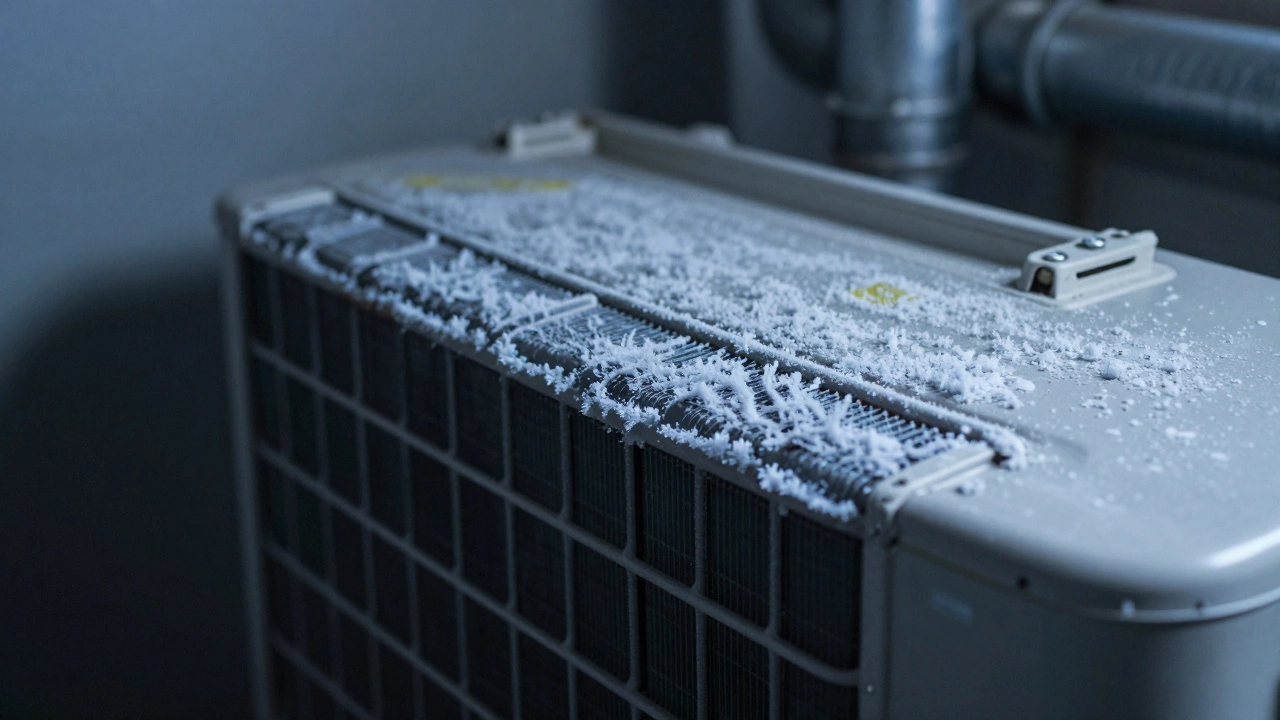
If the airflow is restricted too much, the Evaporator Coil (the part that cools the air) can actually freeze over in the summer. Without enough warm air passing over the coil to keep it from dropping below 32°F, ice builds up, eventually blocking airflow entirely and potentially causing liquid refrigerant to slug back into your compressor, which can kill your entire system in one afternoon.
| MERV Rating | Particles Captured | Airflow Restriction | Best Use Case |
|---|---|---|---|
| 1-4 | Dust bunnies, lint | Very Low | Protecting equipment only |
| 8-11 | Pollen, dust mites, pet dander | Moderate | Standard homes with allergies |
| 13-16 | Bacteria, smoke, virus droplets | High | Hospitals, labs, specialized HVAC |
Who Actually Needs MERV 14?
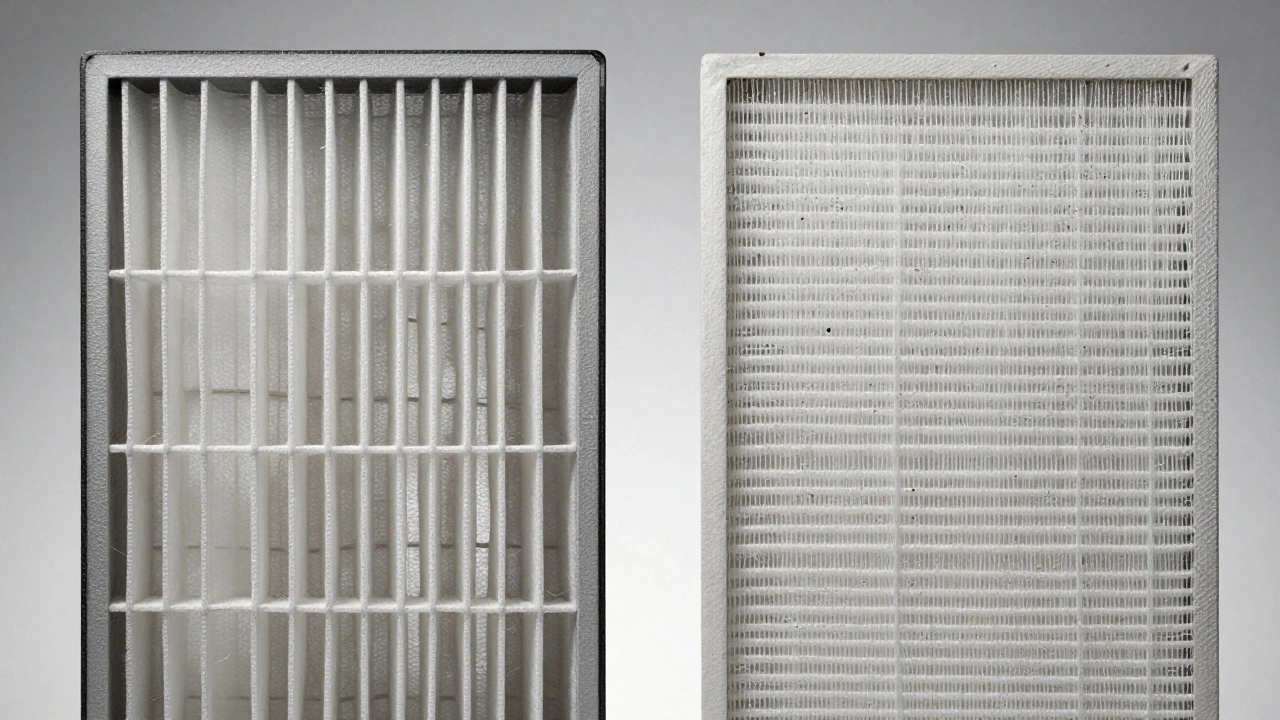
MERV 14 isn't a "bad" filter; it's just designed for a different environment. You'll find these in Hospital Grade Filtration systems or high-tech clean rooms. These facilities have industrial-sized blowers specifically engineered to overcome the massive air resistance of a dense filter. They often use deep-pleated filters (4 to 12 inches thick) instead of the 1-inch filters we use at home. More surface area means the air can spread out more, reducing the pressure drop.
If you live in a home with severe respiratory issues or a compromised immune system, you might be tempted to go this route. However, unless you've had an HVAC professional calculate your Static Pressure-which is the measure of resistance to airflow in your ducts-you are guessing with a very expensive piece of machinery. If your ducts are too small or have too many bends, a MERV 14 filter will act like a plug in a drain.
The Sweet Spot for Most Homeowners
For 90% of residential homes, a MERV 8 to MERV 11 filter is the gold standard. Why? Because it strikes a balance. It's tight enough to stop the stuff that makes you sneeze-like pollen and pet dander-but loose enough that your blower motor doesn't have to fight for its life. If you've noticed your AC running longer cycles than usual or you hear the motor sounding "strained," you might already be using a filter that's too restrictive.
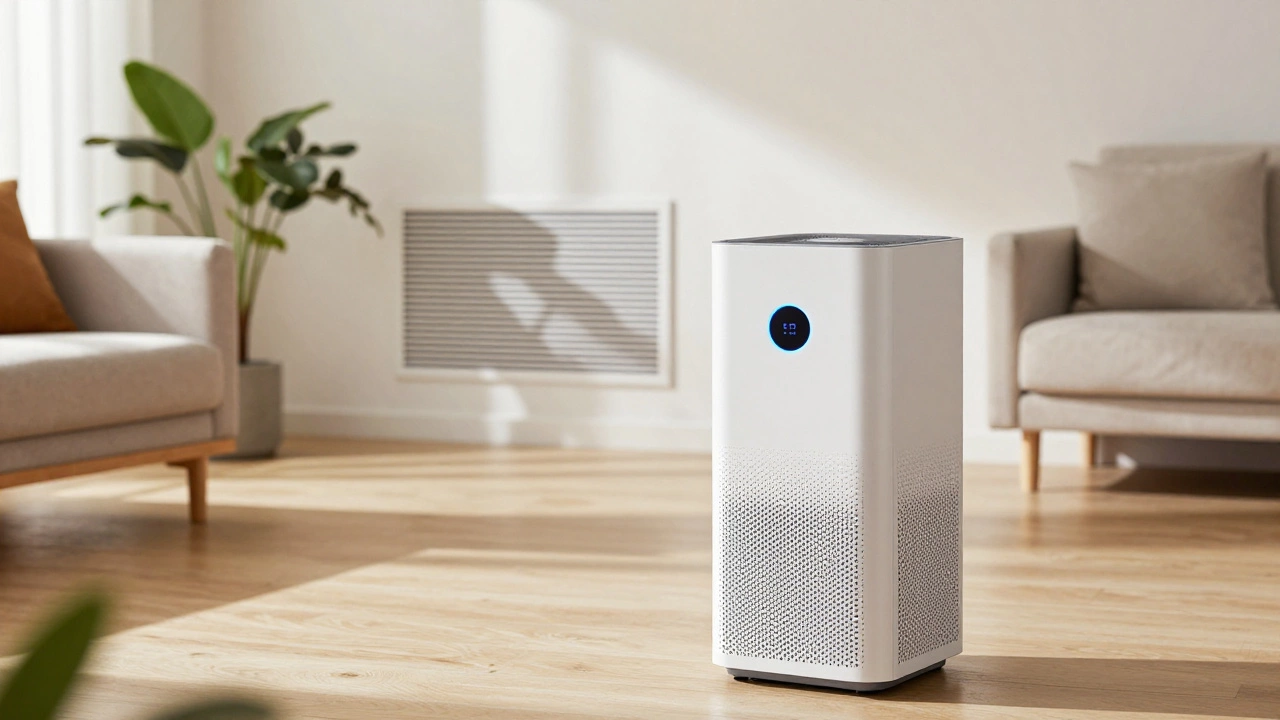
If you really want the air quality of a MERV 14 without killing your furnace, look into HEPA Purifiers as a standalone addition. A portable air purifier uses a fan specifically designed for a high-density filter. By taking the filtration load off your central HVAC and putting it into a dedicated machine in the bedroom or living room, you get the clean air you want without risking a system blowout.
Signs Your Filter is Too Restrictive
Since you can't see the air pressure inside your ducts, you have to look for the symptoms. If you've recently switched to a higher MERV rating and notice the following, it's time to step back down to a MERV 11:
- Hot or Cold Spots: Some rooms aren't getting air because the blower can't push it through the denser filter.
- Frequent Cycling: The system turns on and off more often (short-cycling) because the evaporator coil is getting too cold.
- Loud Noise: A whistling sound coming from the return vent often indicates air is being forced through a narrow gap at high velocity.
- Ice on the Outdoor Unit: If you see frost on the refrigerant lines, your airflow is likely too low.
Alternative Ways to Improve Air Quality
If you're chasing that "clinical" level of air purity, don't rely solely on the filter. Try these steps instead:
- Increase Ventilation: Open windows when the outdoor air quality is good to flush out indoor pollutants.
- Use a Dehumidifier: Many allergens thrive in humidity. Keeping your home at 45-50% humidity makes filters more effective by keeping particles from clumping or sticking.
- Regular Vacuuming: Using a vacuum with its own HEPA filter removes the bulk of the dust from carpets before it ever reaches your HVAC return.
- Check Duct Leaks: Seal the gaps in your ductwork. It's better to have a MERV 8 filter with 100% of the air reaching the rooms than a MERV 14 filter where 30% of the air is leaking into your attic.
Can a MERV 14 filter void my HVAC warranty?
While the filter itself doesn't void the warranty, the damage caused by using one might. If a high-MERV filter causes the blower motor to overheat and burn out or leads to a compressor failure due to a frozen coil, the manufacturer may classify this as "improper maintenance" or "misuse," potentially denying your warranty claim.
How often should I change a high-MERV filter?
High-MERV filters actually clog faster because they catch much smaller particles. While a cheap fiberglass filter might last 3 months, a MERV 13 or 14 filter can become saturated in 30 days if you have pets or live in a dusty area. You should check it every 30 days; if it looks grey or brown, replace it immediately to avoid restricting airflow.
Is a MERV 13 a safe middle ground?
MERV 13 is often the absolute limit for residential systems. It captures virus-carrying droplets and smoke, which MERV 11 does not. However, it still carries a significant pressure drop. Only use MERV 13 if your HVAC technician has confirmed your system can handle the increased static pressure.
Do thicker filters (4-inch) make high MERV ratings safer?
Yes. Because a 4-inch or 5-inch pleated filter has much more surface area, the air moves slower through the material, which lowers the pressure drop. If you have a deep-pleat housing, you can often run a MERV 13 or 14 more safely than you could with a standard 1-inch slot filter.
Does a MERV 14 filter remove odors?
Not necessarily. MERV ratings measure the capture of physical particles, not gases or odors. To remove smells or VOCs (volatile organic compounds), you need a filter with an activated carbon layer. A MERV 14 filter will stop a piece of dust, but it won't stop the smell of burnt toast or paint fumes.
Next Steps for Your Home
If you're currently using a MERV 14 and feel nervous about your system, do a quick "tissue test." Hold a single ply of toilet paper up to your return vent while the system is running. If the paper doesn't snap firmly against the grate, your airflow is too low. Switch to a MERV 11 and see if you notice a difference in the temperature of your rooms.
For those with severe allergies, the best move is to keep the central HVAC at a moderate MERV 8-11 level and buy a high-quality HEPA air purifier for the bedroom. This gives you the best of both worlds: a healthy HVAC system and surgically clean air where you spend the most time.