 Aug, 7 2026
Air Filter Health & Cost Calculator
Enter Your Data
Symptom Checklist
Select any issues you are currently experiencing:
Analysis Results
Estimated Annual Loss
$0.00
Due to poor fuel efficiency
Potential Savings
+0 MPG
With a clean filter
Filter Status
Unknown
Enter data to check
Recommendation:
Your car might be telling you something is wrong before it actually breaks down. Often, the culprit isn't a massive mechanical failure but a small, overlooked component: the engine air filter a critical part that traps dust, dirt, and debris before they enter the engine. When this filter gets clogged, your engine struggles to breathe. It’s like trying to run a marathon while holding your breath. You won’t get far, and you’ll feel terrible doing it.
Ignoring a dirty air filter doesn't just hurt your driving experience; it can lead to expensive repairs down the line. But how do you know if yours is bad? You don't need a mechanic's degree to spot the warning signs. If you pay attention to how your vehicle sounds, smells, and feels, you can catch the problem early.
The Warning Lights on Your Dashboard
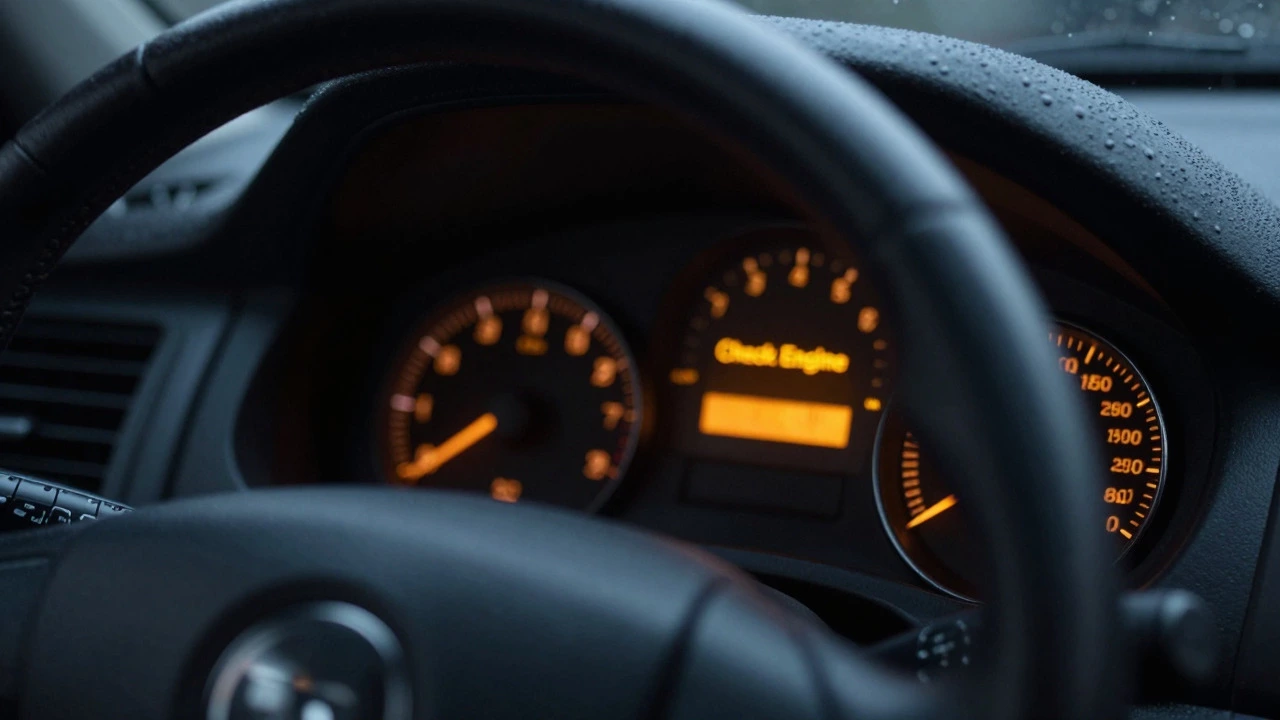
The most obvious sign that something is amiss with your car is a light on the dashboard. Specifically, look for the Check Engine Light an amber or red warning indicator that signals potential engine or emissions system faults. While this light can mean many things, a severely restricted airflow caused by a blocked air filter can trigger it. The engine control unit (ECU) monitors the air-fuel mixture. If the filter is too clogged, the mixture becomes too rich (too much fuel, not enough air). This imbalance confuses the sensors, prompting the ECU to throw a code and illuminate the light.
Don't ignore this light. Even if the car seems to drive fine, a persistent Check Engine Light indicates that your engine is running inefficiently. Over time, this inefficiency wears out other components, such as spark plugs and oxygen sensors, leading to higher repair bills.
Changes in Engine Sound and Performance
If your car starts sounding different, listen closely. A healthy engine has a specific rhythm and tone. When the air filter is compromised, that sound changes. You might notice a rough idle, where the engine shakes or stutters when you’re stopped at a red light. This happens because the engine is struggling to maintain a steady combustion cycle without adequate airflow.
Another auditory clue is unusual noises during acceleration. You might hear coughing, sputtering, or even backfiring from the exhaust. These sounds indicate that unburned fuel is exiting the engine because the air-fuel ratio is off. If you’ve recently changed your oil or checked your tires and everything looks good, but the noise persists, check the air filter housing. A visual inspection takes less than two minutes and could save you a trip to the shop.
Decreased Fuel Economy
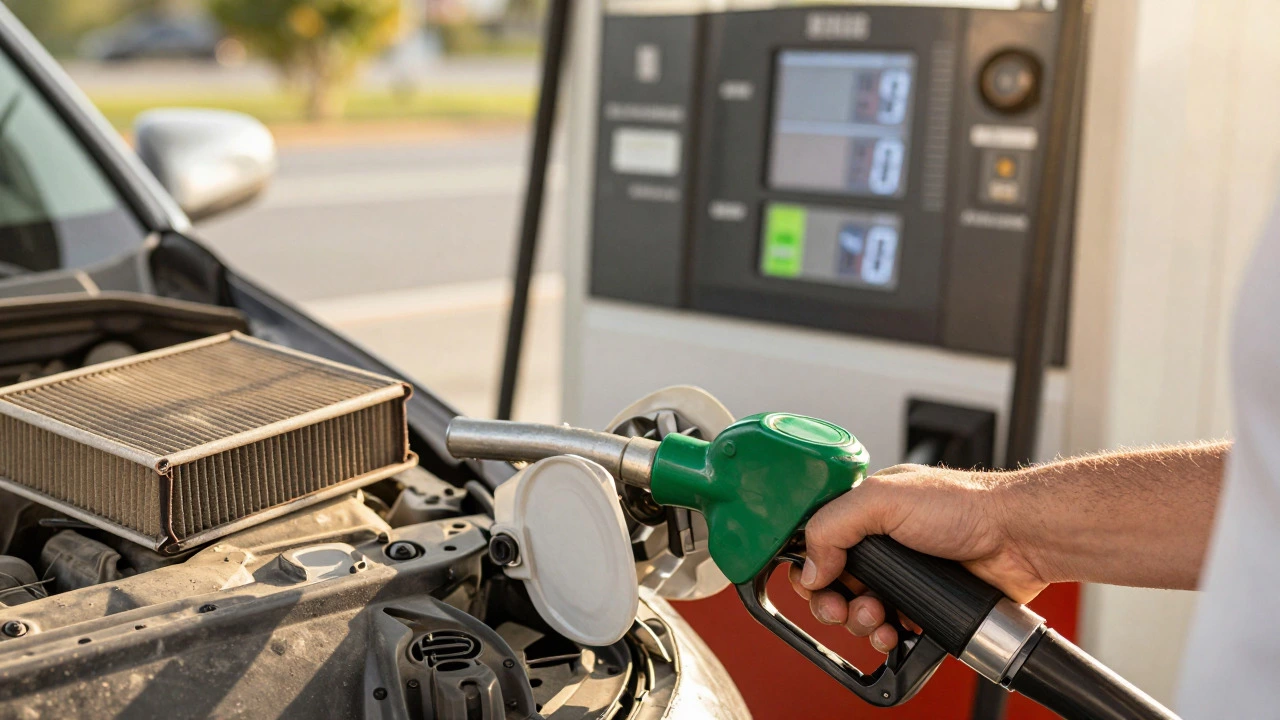
Have you noticed that you’re filling up the tank more often? If your driving habits haven’t changed, a clogged air filter could be draining your wallet. Think about it: the engine needs a precise balance of air and fuel to burn efficiently. When the filter is packed with dirt, the engine receives less air. To compensate, the computer injects more fuel. This results in a "rich" mixture that wastes gasoline.
Studies have shown that replacing a dirty air filter can improve gas mileage by up to 10-15% in older vehicles. In modern cars with direct injection, the impact might be smaller, but it’s still significant over thousands of miles. If you’re paying $40 or more per fill-up, saving even 5% adds up to hundreds of dollars a year. Checking your filter is one of the cheapest ways to boost your MPG.
Visible Smoke and Strange Smells
Sometimes, the symptoms are visible or olfactory rather than auditory. If you see black smoke coming from your tailpipe, especially during acceleration, your engine is burning too much fuel. Black smoke is essentially soot-unburned carbon particles resulting from an overly rich air-fuel mixture. While this can also indicate issues with fuel injectors or ignition coils, a clogged air filter is a common and easily fixable cause.
You might also smell raw gasoline when you start the car or after a short drive. This "gasping" smell means fuel is entering the combustion chamber but isn’t burning completely. It’s not just unpleasant; it’s harmful to the environment and potentially dangerous if fumes accumulate near the engine bay. If you detect this scent, inspect the air filter immediately. A clean filter ensures proper airflow, which helps fuel burn completely and cleanly.
Loss of Power and Acceleration Issues
Does your car feel sluggish when you press the gas pedal? If you used to merge onto highways effortlessly but now find yourself needing extra space to gain speed, your engine might be suffocating. A restricted air filter limits the amount of oxygen available for combustion. Less oxygen means less power. This lack of responsiveness is particularly noticeable in smaller engines or when carrying heavy loads.
This symptom is often mistaken for general wear and tear or a failing transmission. However, if the issue appeared suddenly rather than gradually, the air filter is a prime suspect. Replacing it can restore your car’s pep and make driving feel smoother and more confident. It’s a simple fix that brings immediate relief.
| Symptom | Clean Filter | Clogged Filter |
|---|---|---|
| Engine Idle | Smooth and steady | Rough, shaking, or stalling |
| Fuel Efficiency | Optimal MPG | Decreased MPG (up to 15% loss) |
| Acceleration | Responsive and quick | Sluggish and delayed |
| Exhaust Smoke | Invisible or faint white | Black smoke under load |
| Dashboard Lights | No warnings | Check Engine Light may appear |
Visual Inspection: What to Look For
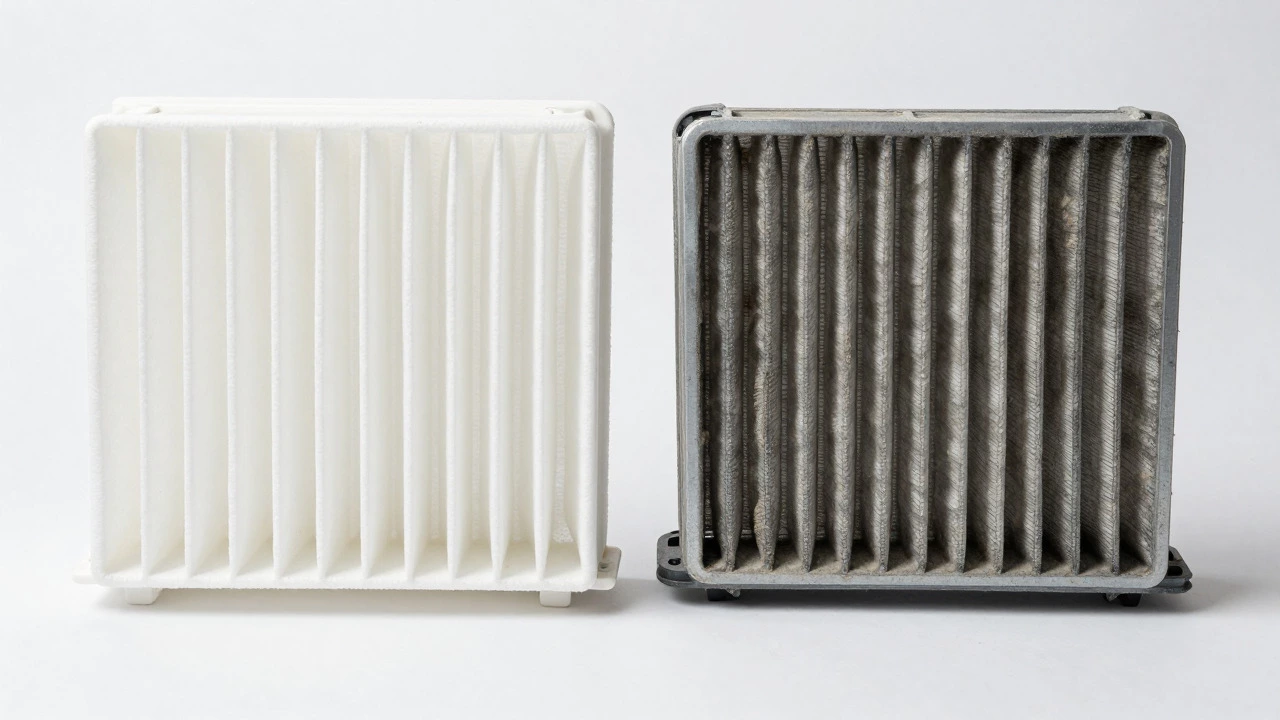
You don’t always need symptoms to know your filter is bad. A visual check is the most reliable method. Most air filters are housed in a plastic box near the front of the engine bay, connected to the throttle body by a large rubber hose. Open the hood, unclip the housing, and pull out the filter.
Hold it up to a bright light. If you can’t see light passing through the pleats, it’s time to replace it. Look for embedded dirt, leaves, bugs, or grease stains. Even if the filter looks okay on the surface, deep within the paper media, particles can block airflow. Manufacturers typically recommend changing the filter every 12,000 to 15,000 miles, but if you drive in dusty areas, city traffic, or rural roads, you may need to swap it out every 5,000 to 7,000 miles.
The Hidden Cost of Neglect
Why does a $15 part matter so much? Because it protects the heart of your vehicle. The engine contains thousands of moving parts, including pistons, valves, and bearings. Dust and sand act like sandpaper inside these tight spaces. Without a functional air filter, abrasive particles enter the combustion chamber and cylinder walls. Over time, this causes premature wear, reduced compression, and potentially catastrophic engine damage.
Replacing an air filter is one of the easiest DIY tasks you can perform. It requires no special tools, just a screwdriver or a pair of hands to unclip the housing. Spending ten minutes on this task can prevent hundreds of dollars in future repairs. It’s a small investment for long-term reliability.
When to Seek Professional Help
While a bad air filter is usually easy to fix, sometimes the symptoms overlap with more serious issues. If replacing the filter doesn’t resolve the rough idle, poor acceleration, or Check Engine Light, you may have deeper problems. Faulty mass airflow sensors, vacuum leaks, or failing fuel injectors can mimic air filter symptoms.
If you’re unsure about diagnosing the issue, take your car to a trusted mechanic. They can use diagnostic tools to read error codes and measure airflow precisely. Don’t let fear of complex repairs stop you from checking the basics first. Often, the simplest solution is the correct one.
How often should I change my car air filter?
Most manufacturers recommend replacing the engine air filter every 12,000 to 15,000 miles. However, if you frequently drive in dusty conditions, off-road, or in heavy city traffic, you should check it every 5,000 to 7,000 miles. Always consult your owner’s manual for specific intervals tailored to your vehicle.
Can a clogged air filter cause my car to stall?
Yes, a severely clogged air filter can cause your car to stall, especially at idle or low speeds. When the engine cannot get enough air, the air-fuel mixture becomes too rich, disrupting combustion and potentially causing the engine to shut off unexpectedly.
Is it safe to drive with a dirty air filter?
It’s generally safe for short distances, but not recommended for long-term use. Driving with a dirty filter reduces fuel efficiency, decreases engine performance, and increases wear on internal components. Prolonged neglect can lead to costly engine damage.
Can I clean a paper air filter instead of replacing it?
No, standard paper air filters are designed to be disposable. Cleaning them can damage the delicate fibers and reduce their filtration efficiency. Only reusable cotton gauze or foam filters should be cleaned according to the manufacturer’s instructions.
Does a new air filter really improve gas mileage?
In vehicles with heavily clogged filters, yes. Restoring proper airflow allows the engine to run at its optimal air-fuel ratio, which can improve fuel economy by up to 10-15%. In modern cars with electronic fuel injection, the improvement may be less dramatic but still beneficial.