 Oct, 23 2026
Spark Plug Health Diagnostic Tool
Select the symptoms your vehicle is experiencing to assess the likelihood of spark plug failure and estimate financial impact.
Diagnosis Status
Select symptoms above to see assessment.
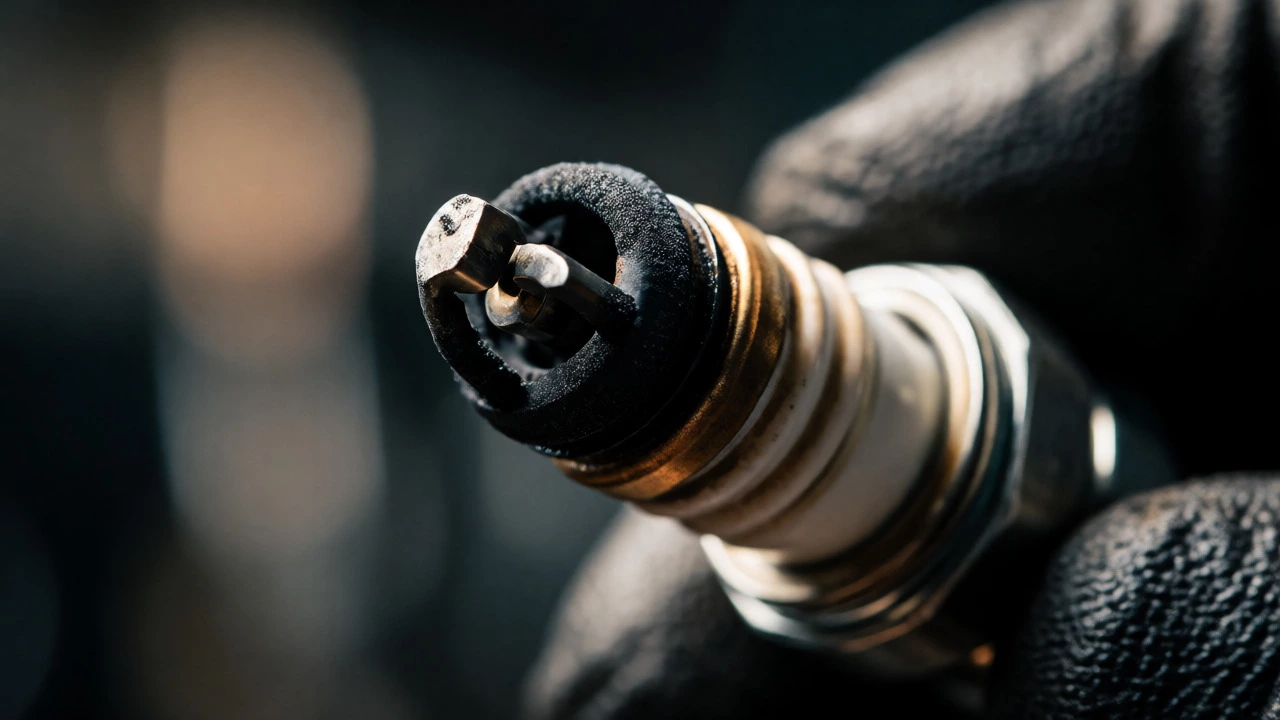
- Carbon Fouled: Black, dry soot. Cause: Short trips/Rich mixture.
- Oil Fouled: Wet, black sludge. Cause: Oil leak into cylinder.
- Worn Electrode: Rounded tip, wide gap. Cause: Age/Mileage.
- Blistered: White spots/bubbles. Cause: Overheating/Pre-ignition.
Note: Always inspect plugs when cool.
You’re driving down the highway, maybe heading out for groceries or just commuting home, and suddenly your car feels... off. It’s not a dramatic breakdown, but there’s a subtle hesitation when you hit the gas, or perhaps the engine shudders slightly while waiting at a red light. These aren’t just quirks; they are often the first whispers that your spark plugs are failing. Ignoring these signs can lead to bigger headaches later, like damaged catalytic converters or even engine seizure. But how do you know for sure if it’s the plugs or something else? Let’s break down exactly what a bad spark plug looks like, sounds like, and feels like, so you can diagnose the issue before it costs you a fortune.
The Most Common Symptom: Rough Idling and Misfires
If you’ve ever sat in a parked car with the engine running and felt it vibrating more than usual, you’ve likely experienced a rough idle. This happens because one or more cylinders aren’t firing correctly. Think of your engine as a team of horses pulling a cart; if one horse stumbles or stops pulling, the whole cart jerks. That stumble is a misfire.
A healthy spark plug creates a precise, high-voltage arc that ignites the air-fuel mixture at the exact right moment. When the plug wears out, the gap between the electrodes widens, or carbon builds up on the tip, the spark becomes weak or inconsistent. The result? Unburned fuel exits the cylinder, causing that shaky feeling in the steering wheel or seat. You might also hear a popping sound from the exhaust, which is unburned fuel igniting in the hot exhaust system. If your RPM needle bounces around while you’re stopped, pay attention. It’s rarely normal.
Sluggish Acceleration and Poor Throttle Response
Ever step on the gas pedal expecting a surge of power, only to get a lazy, hesitant response? This sluggish acceleration is a classic indicator of ignition trouble. Your engine needs strong sparks to burn fuel efficiently under load. When you accelerate, the engine demands more energy quickly. Weak plugs can’t keep up, leading to a delay in power delivery.
This isn’t just annoying; it’s dangerous if you need to merge onto a busy highway. You press the pedal, but the car doesn’t respond with the urgency you expect. In turbocharged engines, this lag can feel exaggerated because the turbo is working harder to compensate for the incomplete combustion. If you notice your car struggling to climb hills or pass other vehicles, inspecting the plugs should be near the top of your diagnostic list. It’s a cheap fix compared to replacing a turbocharger or transmission component.
Dropping Fuel Economy: The Silent Wallet Hit
Have you noticed you’re visiting the gas station more often than usual? A drop in fuel economy is one of the most measurable signs of bad spark plugs. Modern engines rely on precise timing and complete combustion to maximize efficiency. When plugs fail, fuel goes to waste instead of powering the wheels.
According to data from the U.S. Department of Energy, worn spark plugs can reduce gas mileage by up to 30%. That’s significant. If your average miles per gallon (MPG) drops noticeably without any change in your driving habits, weather, or tire pressure, look under the hood. For example, if you used to get 35 MPG on the highway and now you’re lucky to hit 30, inefficient combustion is likely the culprit. The engine computer tries to compensate by injecting more fuel, hoping some of it will ignite properly, but this strategy burns money rather than saving it.
| Symptom | Likely Cause | Severity Level |
|---|---|---|
| Rough Idle / Vibration | Misfire due to wide electrode gap or carbon fouling | Moderate |
| Hard Starting | Weak spark unable to ignite cold fuel mixture | High |
| Check Engine Light | Oxygen sensor detects unburned oxygen (P030x codes) | Immediate Action Required |
| Poor Fuel Economy | Incomplete combustion wasting fuel | Low (Long-term cost) |
Hard Starting and Cold Weather Struggles
Starting your car on a chilly morning in Hamilton can be tough enough, but bad plugs make it tougher. A hard start occurs when the battery turns the engine over, but it refuses to catch immediately. You crank and crank until finally, it sputters to life.
Cold starts require a stronger spark because the fuel-air mixture is denser and harder to ignite when temperatures drop. Worn plugs struggle to generate the necessary voltage jump across the enlarged gap. If your car takes more than two or three seconds to start consistently, especially in winter, don’t blame the battery alone. Check the plugs. Replacing them often resolves starting issues that seem unrelated to electrical health. It’s a common misconception that only old cars suffer from this; modern direct-injection engines are sensitive to plug condition too.
The Check Engine Light: Don’t Ignore the Code
Your dashboard warning lights are trying to talk to you. When a check engine light illuminates, it’s often accompanied by specific error codes related to misfires. Common OBD-II codes include P0300 (random/multiple cylinder misfire) or P0301 through P0308 (specific cylinder misfire).
These codes indicate that the engine control unit (ECU) detected an imbalance in rotation speed among cylinders, signaling that one isn’t producing power. While this could be a coil pack or injector issue, spark plugs are frequently the root cause. Scanning the code gives you a targeted direction. If you see a misfire code, checking the plugs is the logical first step. They are inexpensive and easy to access on many models, making them the low-hanging fruit of diagnostics.

Visual Inspection: What Does a Bad Plug Look Like?
Sometimes, the best diagnosis is visual. Pull out a spark plug (ensure the engine is cool!) and look at the tip. Here’s what to watch for:
- Carbon Fouling: The tip looks black and dry, covered in soot. This means the plug wasn’t getting hot enough to burn off deposits, often due to short trips or rich fuel mixtures.
- Oil Fouling: Wet, black sludge on the plug indicates oil leaking past piston rings or valve seals into the combustion chamber.
- Electrode Wear: The center electrode looks rounded or eroded. New plugs have sharp edges; old ones look worn down. This increases the gap required for a spark, straining the ignition system.
- Blistering: White spots or blisters on the insulator suggest overheating, possibly from pre-ignition or using the wrong heat range plug.
If you see heavy corrosion on the threads or the ceramic insulator is cracked, replace the plug immediately. Cracks allow moisture in, which can short out the spark entirely.
When to Replace vs. Clean
Can you clean a spark plug? Sometimes. If it’s lightly carbon-fouled, a wire brush or compressed air might restore performance temporarily. However, if the electrodes are worn or the gap is too wide, cleaning won’t help. The metal has physically changed shape. Replacement is the only permanent fix.
Most manufacturers recommend replacing spark plugs every 30,000 to 100,000 miles, depending on the material. Copper plugs last shorter lives (around 30k), while iridium or platinum plugs can go 60k-100k. Always check your owner’s manual for the specific interval. Don’t wait for total failure; proactive replacement saves money on fuel and prevents damage to the catalytic converter, which is far more expensive to replace.
Can I drive with a bad spark plug?
You can drive for a short time, but it’s risky. Driving with a severe misfire can dump raw fuel into the exhaust, overheating and destroying your catalytic converter. This repair can cost hundreds or thousands of dollars, whereas new plugs cost pennies. Limit your driving distance and avoid high speeds until you fix it.
How much does it cost to replace spark plugs?
Parts typically range from $5 to $25 per plug. Labor varies widely; DIY is free if you have basic tools, while a mechanic might charge $100 to $300 for a full set, depending on accessibility. Some engines require removing intake manifolds, increasing labor time significantly.
Do all spark plugs wear out at the same rate?
Not necessarily, but they usually degrade similarly due to age and usage. However, factors like oil leaks affecting one cylinder or varied cooling airflow can cause uneven wear. Mechanics generally recommend replacing all plugs simultaneously to ensure consistent performance and prevent future labor costs.
What causes spark plugs to foul?
Fouling happens when deposits cover the electrode, preventing a spark. Causes include short city drives (engine never gets hot enough to self-clean), rich fuel mixtures, oil leaks into the combustion chamber, or using the wrong type of plug for your driving conditions.
Is a misfire always a spark plug issue?
No. Misfires can also stem from faulty ignition coils, clogged fuel injectors, vacuum leaks, or low compression. However, spark plugs are the most common and cheapest component to check first. Rule them out before investigating more complex systems.