 Apr, 7 2026
Radiator Health Diagnostic Tool
Select the primary symptom you are experiencing to get a likely cause and recommended action.
Observed Symptoms
Please select a symptom from the list to see the diagnosis.
High Urgency
Likely Cause: Puncture in the aluminum core or a crack in the plastic side tanks.
Very High Urgency
Likely Cause: Clogged radiator core (sludge/scale) or a failing cooling fan motor.
Medium to High Urgency
Likely Cause: Pressurized leaks (fine mist) or internal engine leak (head gasket).
CRITICAL URGENCY
Likely Cause: Blown Head Gasket. Coolant is mixing with engine oil.
Medium Urgency
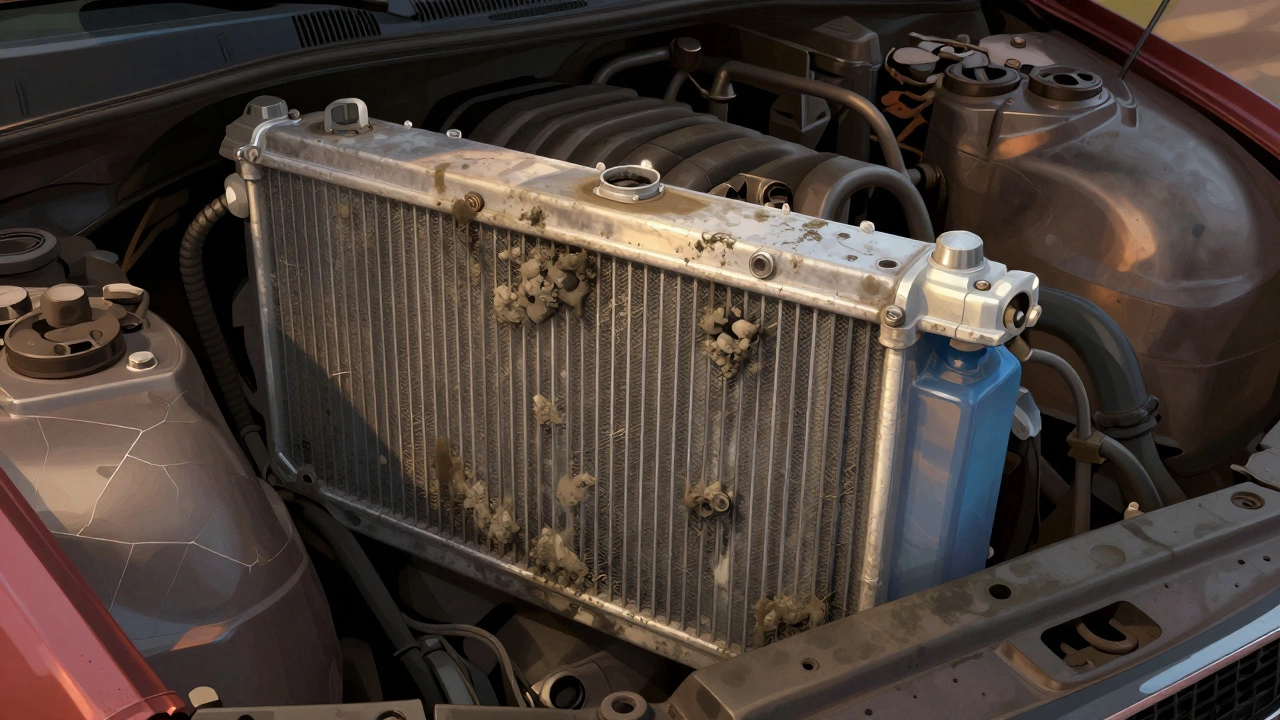
Likely Cause: Slow coolant seep (dried leaks leaving mineral deposits).
Preventative/Medium Urgency
Likely Cause: Physical decay, aluminum corrosion, or blocked airflow from debris.
Key Takeaways for Radiator Health
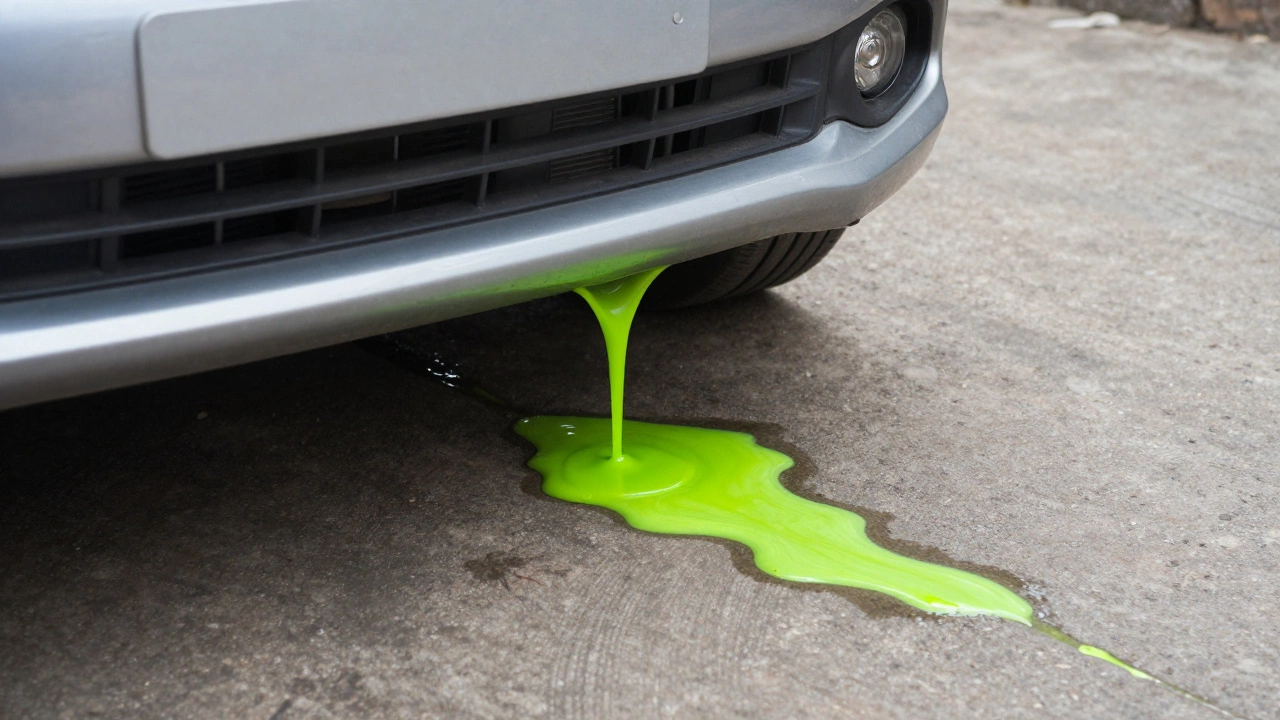
- Watch for coolant leaks (bright green, orange, or pink fluid) under the car.
- Keep an eye on the temperature gauge; spikes during idling are a major red flag.
- Check for "milky" oil or bubbling in the coolant reservoir.
- Listen for the cooling fan; if it's not spinning, your radiator can't shed heat.
- Replace your radiator if you see significant corrosion or plastic tank cracks.
The Obvious Red Flags: Leaks and Puddles
The most straightforward way to tell if you need a car radiator is a heat exchanger that transfers heat from the engine coolant to the outside air is by looking for leaks. Unlike water, Engine Coolant is dyed bright colors like neon green, orange, or pink to make it stand out. If you see a puddle of this stuff under your front bumper, you've got a problem.
Leaks usually happen in three places. First, there are the aluminum cores where small punctures occur from road debris. Second, the plastic side tanks can develop hairline cracks as they age and expand from heat. Third, the rubber hoses can perish. If you see a crusty, colorful residue around the edges of the radiator, that's a "dried leak." The fluid leaked out, dried, and left a mineral deposit behind. While a tiny seep might be manageable for a week, a steady drip means the pressure is dropping, and your engine is at risk of overheating.
When the Gauge Hits the Red Zone
Your dashboard is your first line of defense. If you notice your temperature needle creeping higher than usual-especially when you're stopped at a red light or idling in traffic-your Cooling System isn't keeping up. A healthy radiator should keep the engine at a steady operating temperature regardless of whether you're doing 70 mph or sitting still.
Why does this happen? Inside the radiator, there are tiny passages called tubes. Over time, these can get clogged with "sludge" or scale-mineral deposits from using tap water instead of distilled water. When the flow is restricted, the coolant can't move fast enough to carry heat away. You might also have a failing Thermostat, which is the valve that tells the coolant when to flow into the radiator. If the thermostat stays closed, the coolant just loops inside the engine, and the radiator stays cold while the engine cooks.
The Mystery of the Disappearing Coolant
Have you found yourself adding a bottle of coolant to your Coolant Expansion Tank every few days, but you don't see any puddles on the ground? This is a sneaky symptom. Some leaks only happen when the system is hot and under pressure. The fluid sprays out in a fine mist that evaporates before it ever hits the pavement.
If the coolant is disappearing and there's no external leak, you might have a more serious internal problem, like a blown Head Gasket. A quick way to check is to look at your oil dipstick. If the oil looks like a chocolate milkshake or a latte, coolant has leaked into the oil gallery. If you see bubbles constantly rising in the coolant reservoir while the engine is running, combustion gases are being pushed into the cooling system. In these cases, replacing the radiator is only part of the fix; you've got an engine internal issue.
Checking for Physical Decay and Corrosion
Sometimes the radiator is leaking or failing simply because it's old. Most modern radiators use a mix of aluminum and plastic. Aluminum is great for heat, but it can corrode if the coolant's pH balance drops. If you look at the radiator fins-the thin, accordion-like metal strips-and see they are bent, crushed, or covered in thick grime and bugs, the airflow is blocked. This is like trying to cool a hot pan by covering it with a towel.
Check the mounting brackets and the plastic tanks for vertical cracks. If you see any "weeping" (slow moisture beads) on the plastic tanks, they are about to fail completely. Once a plastic tank cracks under the 15-20 psi of pressure a cooling system generates, it doesn't just leak-it often bursts, leaving you stranded in minutes.
| Symptom | Likely Cause | Urgency | Action Required |
|---|---|---|---|
| Bright fluid puddles | Puncture or cracked tank | High | Replace Radiator |
| Overheating at idle | Clogged core or bad fan | Very High | Flush or Replace |
| Milky oil on dipstick | Head Gasket failure | Critical | Engine Repair |
| Sweet smell after driving | Slow coolant leak | Medium | Pressure Test |
The Role of the Cooling Fan and Water Pump
It's easy to blame the radiator for everything, but it's part of a team. If your engine is overheating but the radiator looks pristine, check the Radiator Fan. When you stop the car, there's no wind pushing through the grill. The fan has to pull that air through the fins. If the fan motor is burnt out or a fuse has blown, the radiator becomes a useless block of metal because the heat has nowhere to go.
Then there's the Water Pump. This is the heart that pumps the coolant. If the pump's impeller is eroded or the belt is slipping, the coolant just sits still. You can sometimes tell a pump is failing if you hear a grinding or squealing noise coming from the front of the engine, or if you see coolant leaking from the "weep hole" on the pump body.
Do You Need a Flush or a Full Replacement?
Not every overheating issue requires a brand new unit. If your radiator is physically intact but the car is running hot, you might just need a professional cooling system flush. Over time, the additives in the coolant break down, and rust begins to form inside the engine block and radiator. This rust creates a sludge that blocks the narrow passages.
A flush uses a chemical agent to scrub the inside of the system and replace the old fluid with fresh, corrosion-inhibiting coolant. However, if the radiator is over 10 years old, or if you've used "stop-leak" additives in the past, a flush might actually make things worse. Stop-leak products work by sealing holes, but they often clog the rest of the radiator in the process. If you've used those bottles of "leak sealer" more than once, just bite the bullet and buy a new radiator. It's the only way to ensure your engine isn't running on a clogged, inefficient system.
Can I just patch a leaking radiator?
In a pinch, you can use a radiator sealant or a specialized epoxy, but these are temporary fixes. The cooling system operates under high pressure. A patch is likely to fail again, and sealants can clog your heater core or the internal passages of your engine, leading to a complete overheat. If the leak is in the plastic tank, a patch almost never works; replacement is the only safe bet.
Why does my car overheat only when the AC is on?
Your AC condenser sits directly in front of the radiator. When the AC is running, the condenser dumps a massive amount of heat into the air passing through. If your radiator is partially clogged or your fans aren't working at full speed, the radiator can't handle the extra heat load from the AC. This is a classic sign that your radiator's efficiency has dropped and it's time for a replacement or a deep clean.
How often should I replace my radiator?
Radiators aren't like oil filters; they don't have a set replacement interval. If you maintain your coolant (changing it every 30,000 to 50,000 miles) and avoid road debris, a radiator can last the life of the car. However, in salty winter climates, corrosion happens faster. Most people start seeing radiator failure between 100,000 and 150,000 miles.
Is it dangerous to drive with a low coolant level?
Yes, extremely. Without enough coolant, the engine temperature can spike in seconds. This can lead to "cylinder head warping," where the metal actually bends from the heat. Once that happens, you aren't just replacing a radiator; you're rebuilding the entire top half of your engine. If the gauge climbs, pull over immediately.
Can a bad radiator cause a heater problem?
Indirectly, yes. If the radiator is severely clogged, the overall flow of coolant through the system is reduced. This can mean not enough hot coolant reaches the heater core inside the cabin, leaving you with lukewarm air in the winter even if the engine is hot.
Next Steps for Diagnosis
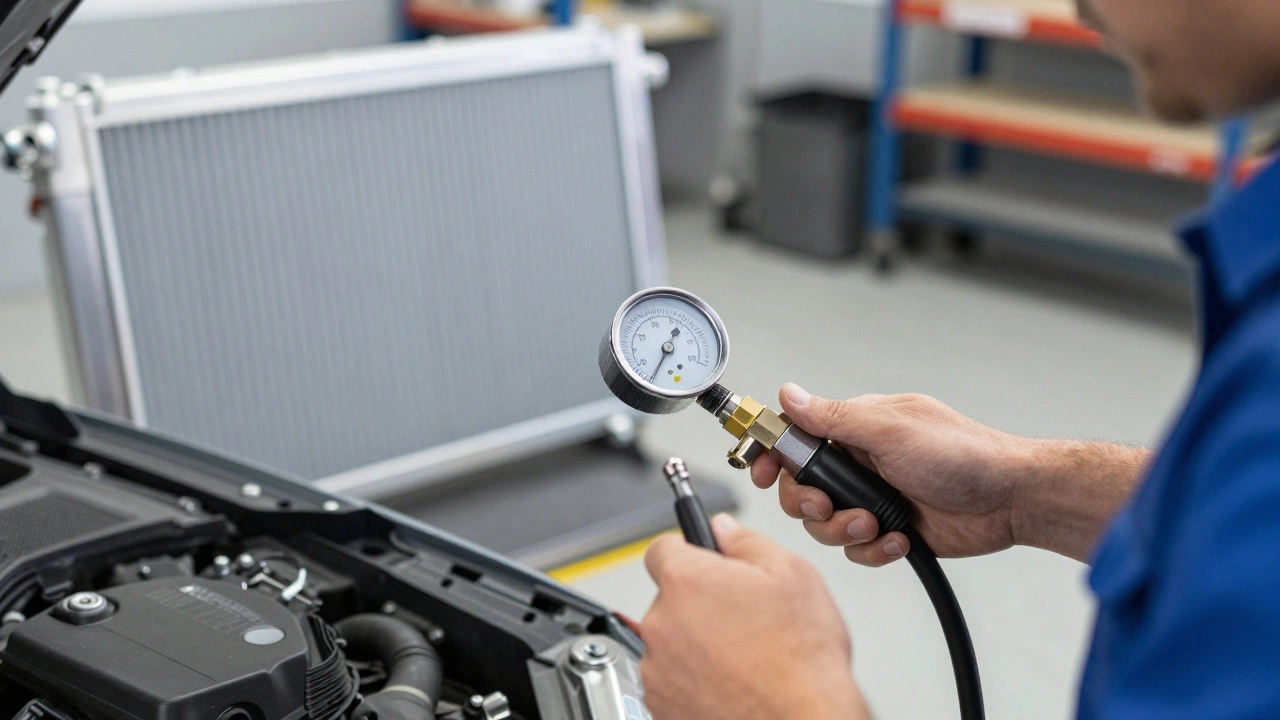
If you suspect your radiator is failing, don't guess-test. Your first move should be a cooling system pressure test. You can rent a pressure tester from most auto parts stores. You attach it to the radiator cap and pump it up to the system's rated pressure (usually listed on the cap). If the needle drops, you've got a leak. If you see water spraying from a specific spot, you've found your culprit.
For those on a budget, start by checking your coolant level and the condition of your hoses. If the hoses feel "crunchy" or excessively soft, replace them along with the radiator. It's much cheaper to do it all at once than to have a new radiator fail because a 20-year-old hose burst. Finally, always remember to bleed the air out of the system after a replacement; an air pocket in the engine can cause instant overheating even with a brand new radiator.