5 Inch Exhaust: What It Is, Why It Matters, and What You Need to Know
When you hear the term 5 inch exhaust, a large-diameter exhaust system designed to reduce backpressure and improve engine flow. Also known as performance exhaust, it's not just for race cars—it’s used by everyday drivers who want better throttle response and a deeper tone without sacrificing reliability. Most stock cars come with exhaust pipes between 2.5 and 3.5 inches. Going to 5 inches is a big jump, and it’s not always better. In fact, putting a 5 inch exhaust on a stock engine can hurt performance, not help it.
The exhaust system, the complete pathway that moves exhaust gases from the engine to the tailpipe includes more than just the pipe size. It involves the headers, catalytic converter, muffler, and resonator. A 5 inch pipe only works well if your engine is producing enough exhaust gas to fill it—usually over 300 horsepower. If your car makes less than that, the gases move too slowly through the large pipe, which creates low-pressure zones and hurts torque. That’s why many shops recommend 3.5 to 4 inch systems for modified street cars, and save 5 inch for drag racers or heavily tuned engines.
The muffler, a component designed to reduce engine noise while allowing exhaust flow you pair with a 5 inch pipe matters just as much. A loud, cheap muffler might sound cool at first, but it can create drone at highway speeds and wear out fast. High-quality, straight-through mufflers made for large-diameter systems last longer and give you control over the tone. You also need to check if your car’s emissions system can handle the change—some states require catalytic converters to remain in place, even on performance upgrades.
People often think bigger exhaust = more power. But power comes from balance. A 5 inch exhaust can help if you’ve upgraded your intake, headers, and tuning. Without those, it’s like putting racing tires on a grocery getter—it looks cool, but doesn’t deliver. The real gain comes from matching the exhaust size to your engine’s output, not just going for the biggest pipe you can find.
You’ll find posts here that break down what happens when you swap out your stock exhaust, how to tell if your current system is holding your engine back, and what mufflers actually do for fuel economy. Some people swear by 5 inch systems. Others have wasted money on setups that made their car slower. The difference? Knowing your engine’s needs—not just chasing noise.
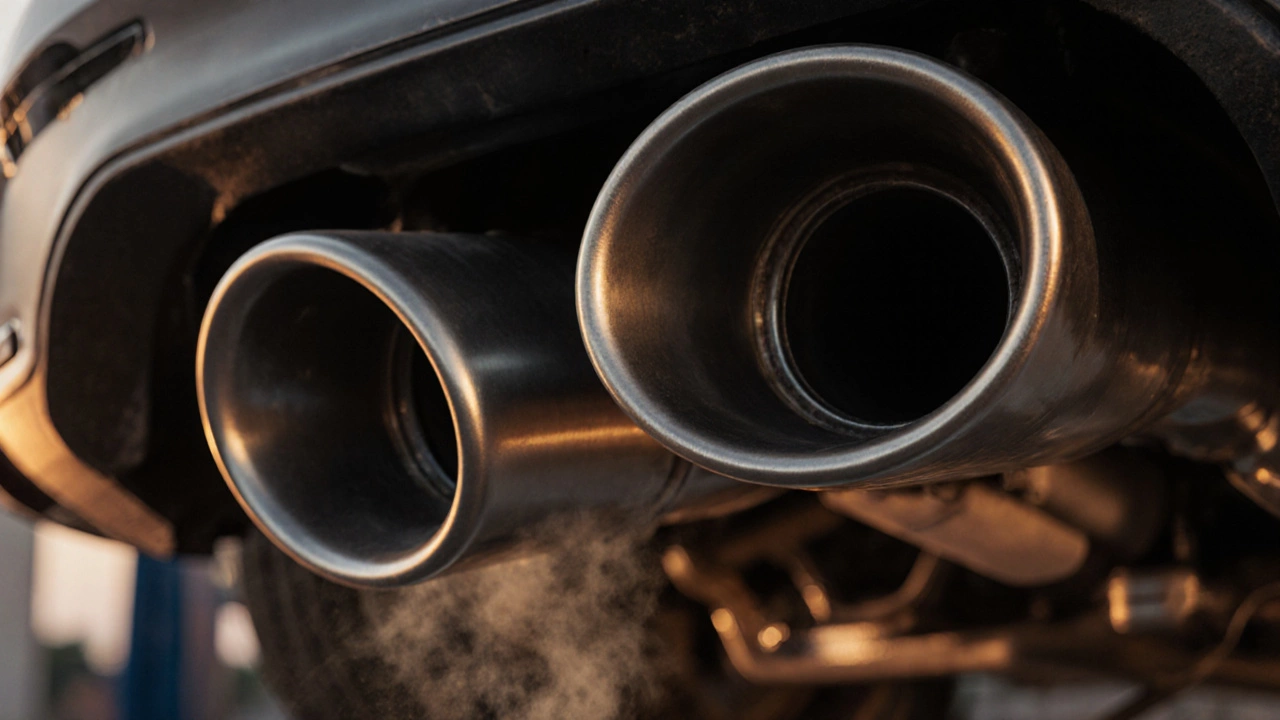
4‑inch vs 5‑inch exhaust: which size is best?
Learn the pros and cons of 4‑inch vs 5‑inch exhaust pipes, how size affects flow, power, and fitment, and get a clear checklist to choose the right diameter for your car.