Air Filter Dust Removal: How to Clean and Maintain Your Car's Air Filter
When your car’s air filter, a component that traps dirt and debris before they enter the engine. Also known as engine air filter, it plays a quiet but critical role in keeping your engine running smoothly and efficiently. A clogged or dusty air filter doesn’t just reduce power—it can hurt fuel economy and even cause long-term engine wear. Most people don’t think about it until the check engine light comes on, but regular air filter dust removal, the process of cleaning accumulated dirt from the filter media can prevent that. It’s not rocket science, but skipping it is like letting sand into your engine’s lungs.
Not all air filters are the same. Paper filters, common in most cars, are usually meant to be replaced, not cleaned. But if you’ve got a reusable cotton or foam filter—often used in performance or off-road vehicles—then air filter cleaning, a maintenance step involving specialized kits and proper drying techniques is part of the routine. You’ll need the right cleaner, a clean workspace, and patience. Rushing this process or using water alone can damage the filter’s coating or leave moisture behind, which leads to mold or reduced airflow. And while you’re at it, check the air box. Dust doesn’t just sit on the filter—it collects around it. A dirty air box means your clean filter won’t stay clean for long.
How often should you do this? It depends. If you drive mostly on paved roads in a city, you might only need to inspect it once a year. But if you’re regularly on gravel, dirt, or dusty highways, check it every 3,000 to 5,000 miles. Look at it in daylight—hold it up to the light. If you can’t see through it, it’s time to clean or replace. A dirty filter forces your engine to work harder, which burns more fuel and wears out parts faster. You don’t need to spend hundreds to fix this. A $15 filter and 10 minutes of your time can save you hundreds in repairs down the line.
Some people think upgrading to a high-flow filter means they can ignore maintenance. That’s a myth. Even the best performance filters get clogged. Others believe they can just vacuum the filter. That might remove surface dust, but it won’t get the fine particles stuck deep in the fibers. Proper cleaning requires the right tools and method. And if you’re not sure what kind of filter you have? Check your owner’s manual—or look up your car’s make, model, and year. There’s no one-size-fits-all answer.
Below, you’ll find real-world guides on how to diagnose air filter problems, when to replace versus clean, and how different filter types perform under real driving conditions. You’ll see what happens when you ignore dust buildup, how much it really costs to skip maintenance, and which filters actually deliver on their promises. This isn’t theory—it’s what people have learned the hard way on roads from Mumbai to Montreal.
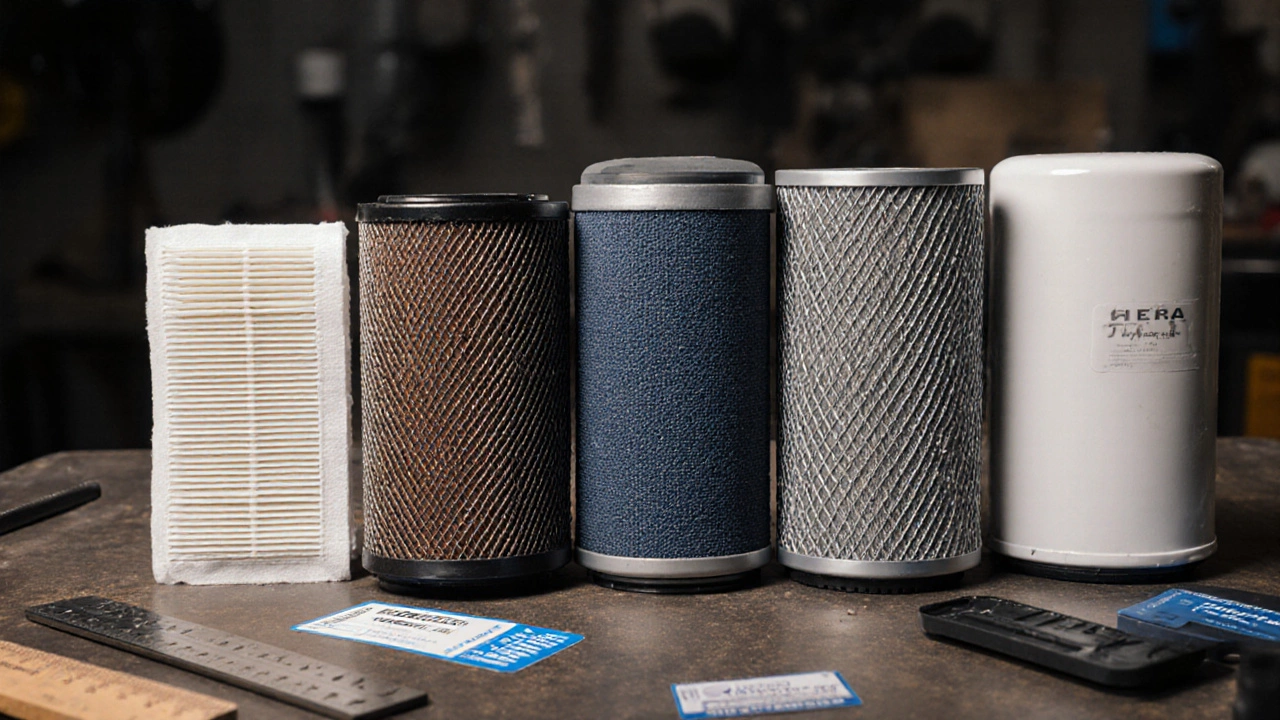
Best Air Filter for Dust Removal: HEPA vs. Cotton vs. Synthetic
Find out which air filter captures the most dust, compare HEPA, cotton, synthetic and paper options, and get installation plus maintenance tips.