Car Air Filter Comparison: Which One Actually Works Better?
When you’re looking at car air filter, a component that cleans the air entering your engine to protect it from dust, dirt, and debris. Also known as engine air filter, it’s one of the few parts you can actually see and touch during a quick check—and yet most people don’t know how much it really matters. A dirty or low-quality filter doesn’t just hurt your gas mileage—it can cause long-term engine wear, reduce throttle response, and even trigger check engine lights. The difference between a $10 filter and a $40 one isn’t just brand name—it’s airflow, filtration efficiency, and durability.
There are three main types you’ll find on the market: paper filters, the standard, disposable type used in most factory installations, cotton gauze filters, reusable, oiled filters often marketed for performance gains, and synthetic foam filters, common in off-road and dusty environments for high dust-holding capacity. Each has trade-offs. Paper filters are cheap and effective but need replacing every 12,000 to 15,000 miles. Cotton gauze filters claim better airflow and can be cleaned and reused, but they need regular re-oiling and can let in more fine dust if not maintained right. Foam filters excel in dirty conditions but aren’t ideal for everyday street driving.
What really affects performance isn’t just the filter material—it’s how well it seals to the housing. A poorly fitted filter, even if it’s the most expensive one, will let unfiltered air sneak in and ruin your engine faster than a cheap one that fits tight. Many people think a high-flow filter automatically means more horsepower. That’s only true if your engine was starved for air to begin with. For most daily drivers, the stock paper filter does the job fine. But if you drive in dusty areas, tow heavy loads, or modify your intake, upgrading to a better seal and a reusable filter makes sense.
Don’t be fooled by marketing claims like "50% more airflow" or "race-proven performance." Real gains come from consistent maintenance, not just the filter’s price tag. Check your filter every 6,000 miles—especially if you drive on gravel roads or in dry climates. A clogged filter forces your engine to work harder, which burns more fuel and strains components. And if you’re replacing it yourself, make sure you clean the housing first. Dirt trapped in the housing can bypass even the best new filter.
What you’ll find below is a collection of real-world tests, cost breakdowns, and user experiences from people who’ve tried different filters on everything from sedans to trucks. No fluff. No sponsored reviews. Just what works, what doesn’t, and what’s worth spending extra on. Whether you’re trying to save money, boost performance, or just avoid a costly engine repair, the right air filter choice makes a difference—so let’s cut through the noise.
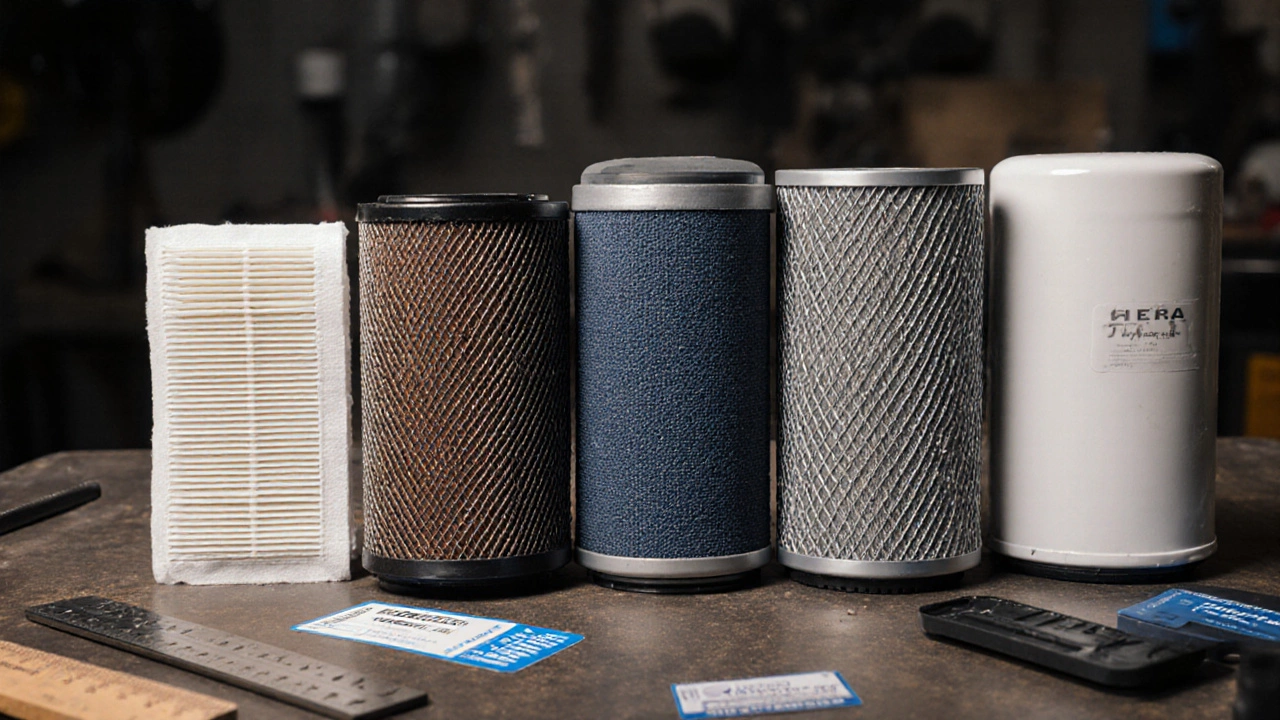
Best Air Filter for Dust Removal: HEPA vs. Cotton vs. Synthetic
Find out which air filter captures the most dust, compare HEPA, cotton, synthetic and paper options, and get installation plus maintenance tips.