Car Radiator Replacement Cost: What You Really Need to Know
When your engine starts running too hot, the car radiator, the main component that cools engine coolant by circulating it through fins and tubes. Also known as a cooling system radiator, it’s not just a metal box—it’s the reason your engine doesn’t turn into a melted mess. A failing radiator doesn’t just cost you money—it can destroy your engine in minutes if you ignore it.
The radiator replacement, the process of removing a damaged radiator and installing a new one to restore proper engine cooling isn’t just about swapping parts. It’s about understanding why it failed. Is it a small radiator leak, a crack or corrosion point that lets coolant escape, often near the tanks or seams? Or is it sludge buildup from old coolant? Maybe your thermostat is stuck, and the radiator’s just taking the blame. The cost of replacement varies wildly—from $300 to over $1,200—because it depends on your car model, labor rates, and whether you’re replacing just the radiator or the whole cooling system repair, a broader fix that may include hoses, water pump, thermostat, and coolant flush.
Most people panic when they see the check engine light or steam rising from under the hood. But the real question isn’t whether you need a new radiator—it’s whether you need it now. A small leak might cost $150 to fix with a sealant. A cracked core? That’s a full replacement. And if your coolant hasn’t been changed in five years, you’re not just replacing a part—you’re preventing a $5,000 engine rebuild.
Some shops will tell you your radiator is bad because the car overheated. But overheating is often the symptom, not the cause. A bad water pump, a clogged hose, or even a faulty fan can make your radiator look like the villain. That’s why checking the whole system matters. You don’t want to spend $800 on a new radiator only to have the same problem next month because you skipped the water pump.
DIYers can save big here. If you’ve ever changed your oil or replaced brake pads, you can handle a radiator swap. It’s messy, it takes a few hours, and you’ll need a drain pan and a wrench set—but it’s doable. The part itself might cost $150 to $400. Labor? That’s where the real markups happen. A shop might charge $600 just to install it. Do the math: if you’re comfortable with basic tools, you’re looking at under $500 total instead of $1,200.
And don’t fall for the "premium" radiator upsell. OEM parts aren’t always better. Aftermarket brands like Denso, Spectra, or Valeo offer the same fit and function for half the price. Just make sure it’s designed for your exact make, model, and year. A mismatched radiator won’t fix your overheating—it’ll make it worse.
What you’ll find below are real stories from people who’ve been there. How one driver spotted a radiator leak by accident while washing his car. Why another spent $900 on a replacement only to find out the thermostat was the real issue. And how a simple coolant flush saved a 2010 Honda Civic from a $4,000 engine failure. These aren’t theory pieces. They’re fixes that worked.
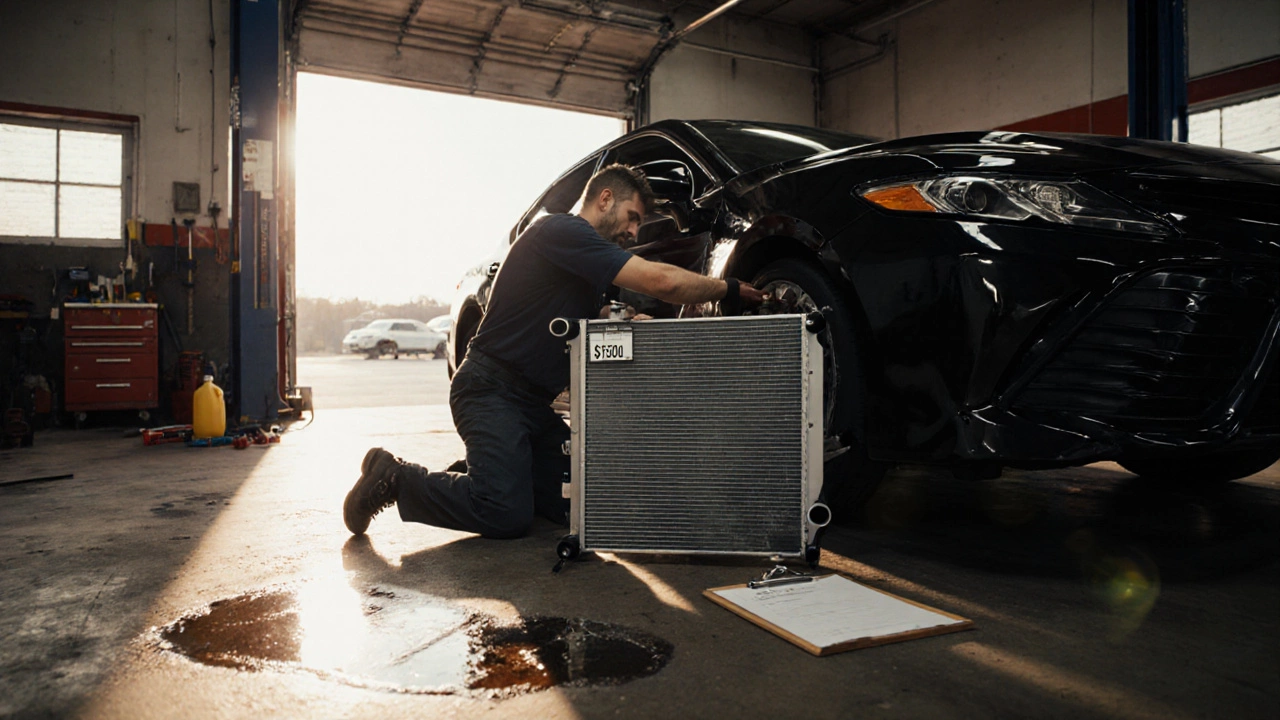
Is It Expensive to Replace a Car Radiator? Real Costs in 2025
Replacing a car radiator costs $600-$1,200 in 2025. Learn what drives the price, how to avoid overpaying, and why skipping this repair can cost thousands more.