Car Suspension Problems: Diagnose and Fix Common Issues
When your car feels like it’s bouncing off the road instead of gliding over it, you’re dealing with car suspension problems, the system that connects your wheels to the chassis and absorbs shocks from uneven surfaces. Also known as vehicle suspension, it’s not just about comfort—it’s safety. A failing suspension affects braking, steering, and tire wear, and can make accidents more likely. If you’ve noticed your car leaning too much in turns, hearing clunks over bumps, or feeling like you’re driving on a trampoline, those aren’t just annoyances—they’re red flags.
The real culprits behind most bad suspension, a condition where shock absorbers, struts, or bushings lose their ability to control wheel movement are age, rough roads, and neglect. Most shocks and struts wear out between 50,000 and 100,000 miles, but if you drive on unpaved roads or carry heavy loads often, they can go bad much faster. worn shocks, damaged dampers that no longer control spring movement make your tires lose contact with the road, especially when braking or turning. And if you hear a loud clunk when going over a speed bump? That’s probably a broken suspension repair, the process of replacing worn or broken components like ball joints, control arms, or sway bar links part—something that can’t be ignored.
You don’t need to be a mechanic to spot these issues. Try the bounce test: push down hard on one corner of your car and let go. If it bounces more than once or twice, your shocks are done. Look for oil leaks on the shock body—any wetness means internal seals have failed. Uneven tire wear, especially cupping or scalloping, is another clear sign the suspension isn’t keeping the tire flat on the road. And if your car pulls to one side or feels loose at highway speeds, it’s time to check the alignment and suspension components together.
This collection of posts gives you the real, no-fluff answers. You’ll find step-by-step guides on how to diagnose car suspension problems, what parts actually need replacing, and how to save money by doing it yourself. We cover everything from identifying worn bushings to choosing the right replacement shocks for your driving style—whether you’re commuting on city streets or tackling rough backroads. No theory, no guesswork. Just what works.
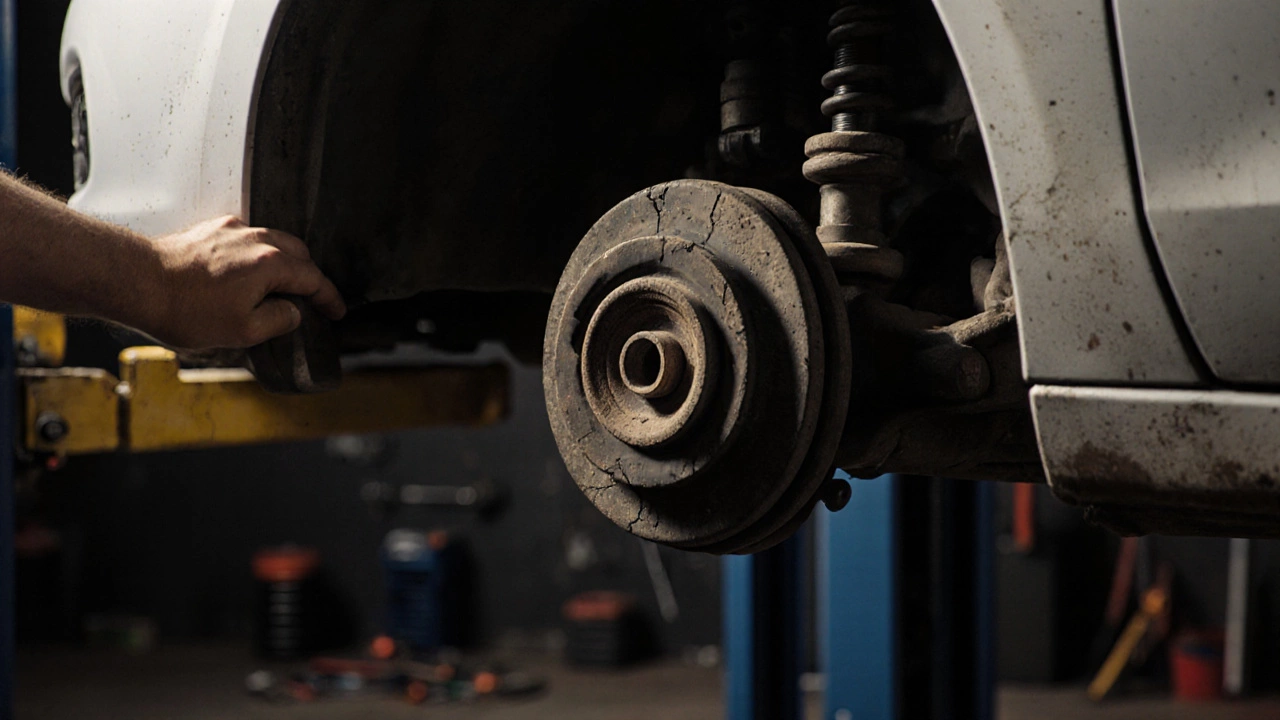
What Does a Bad Suspension System Sound Like? Common Noises and What They Mean
Learn the most common sounds a bad suspension makes-clunks, squeaks, rattles-and what each one means for your car's safety and repair costs. Know when to act before it's too late.

What Happens When Springs Are Too Stiff? Car Handling, Comfort, and Safety Explained
Discover what really happens if your car's springs are too stiff—from annoying bumps to hidden safety risks and damaged suspension. Find tips, facts, and solutions.