Clutch Kit Longevity: How Long Should Your Clutch Last and What Kills It?
When you press the clutch pedal, you’re relying on a clutch kit, a set of components including the clutch disc, pressure plate, and release bearing that connects your engine to the transmission. Also known as a clutch assembly, this system transfers power smoothly — but it’s not built to last forever. Most clutch kits last between 50,000 and 150,000 miles, but that number isn’t magic. It’s shaped by how you drive, what kind of car you have, and whether you treat the clutch like a switch or a delicate control.
Think of your clutch like a brake pad — it wears down every time you use it. But unlike brakes, you can’t easily see the wear. A clutch that’s slipping, grinding, or feeling spongy isn’t just annoying — it’s a warning. If you ride the clutch while waiting at lights, rev too high in first gear, or frequently drive in heavy traffic with your foot on the pedal, you’re eating away at its life. Heavy loads, towing, or aggressive launches in performance cars cut clutch life in half. On the flip side, smooth shifts and letting the clutch fully engage before accelerating can double it.
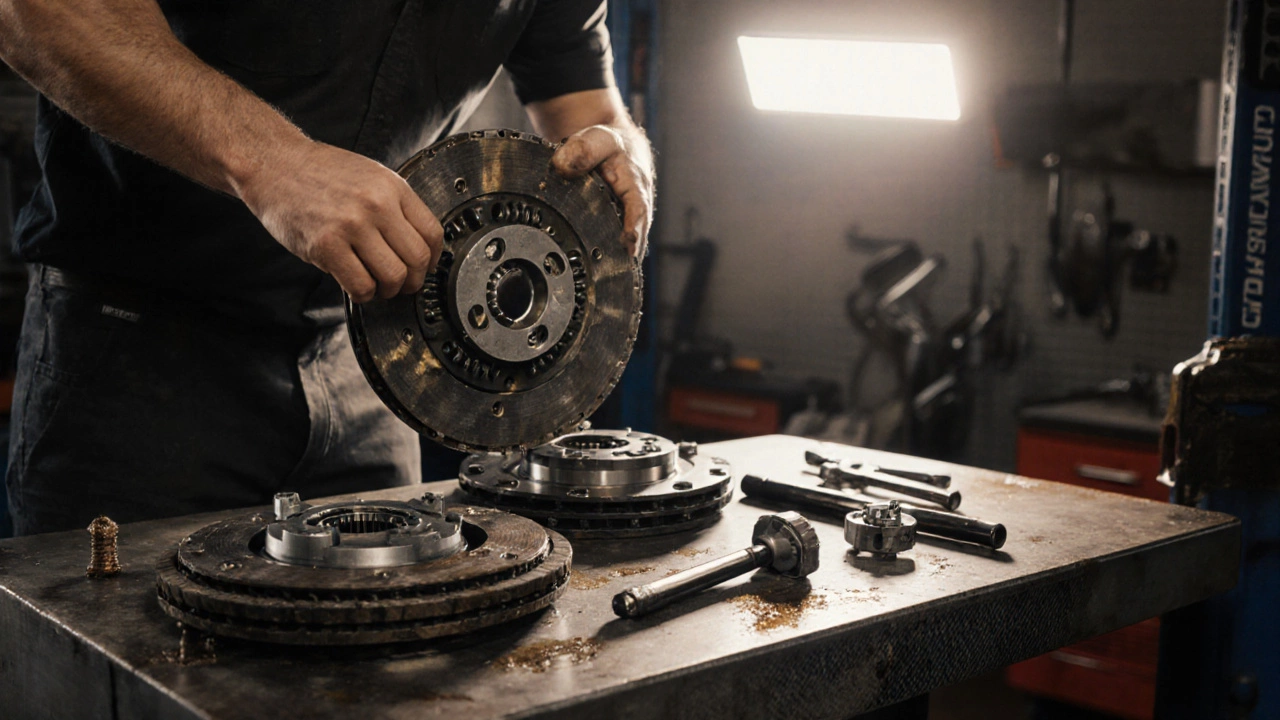
The clutch disc, the friction surface that grips the flywheel is the part that actually wears out. The pressure plate, the spring-loaded component that clamps the disc can warp or weaken over time, especially if overheated. And the release bearing, the part that pushes the pressure plate when you press the pedal often fails silently — until you hear a whining noise when you depress the clutch. These parts don’t just wear independently. When one fails, it can damage the others. That’s why mechanics usually replace the whole clutch kit at once — it’s cheaper and safer than replacing pieces piecemeal.
What’s often missed is how the flywheel, the heavy metal disc bolted to your engine’s crankshaft plays into clutch longevity. If your flywheel is warped, cracked, or worn from years of friction, a new clutch won’t last long on it. That’s why a good clutch replacement includes checking or resurfacing the flywheel. Skipping this step is like putting new tires on bent rims — it looks fine at first, but it won’t hold up.
You don’t need to be a mechanic to spot trouble. If your car hesitates when you shift, the engine revs without acceleration, or you smell burning after a short drive, your clutch is talking. Ignoring it risks damage to the transmission — a repair that costs three times as much as a clutch kit replacement. And while some people think "if it still works, why fix it?" — waiting too long means you’re not replacing a worn part. You’re replacing a broken transmission.
What you’ll find below are real-world stories, step-by-step checks, and cost breakdowns from people who’ve been there. From how to test your clutch at a stoplight to why your manual car’s clutch died at 40,000 miles when the manual promised 100,000 — we’ve got the answers that aren’t in the owner’s manual. No fluff. Just what you need to know before you head to the shop — or decide to do it yourself.
How Many Miles Does a Clutch Last? Real-World Expectations and Signs It’s Failing
A clutch typically lasts between 80,000 and 120,000 miles, but driving habits can cut that in half-or double it. Learn what really wears out a clutch, how to spot early signs of failure, and how to make yours last longer.