Clutch Replacement Mileage: When to Replace Your Clutch and What Affects It
When you hear a grinding noise when shifting, or your car won’t go into gear even with the pedal pressed all the way down, you’re likely dealing with a failing clutch, a mechanical component that connects your engine to the transmission and lets you change gears smoothly. Also known as a clutch assembly, it’s one of the most abused parts in manual cars—and one of the most expensive to replace if you wait too long.
Most clutches last between 50,000 and 150,000 miles, but that number isn’t magic. It’s shaped by how you drive. If you ride the clutch pedal, creep in traffic, or launch hard from a stop, you could burn through a clutch in 30,000 miles. On the flip side, gentle driving and smooth shifts can push it past 150,000. It’s not just mileage—it’s driving style, the way you use the clutch pedal and shift gears that decides its life. Heavy towing, frequent stop-and-go driving, and high-performance engines also eat through clutches faster. The clutch disc, the friction surface that presses against the flywheel wears down over time, just like brake pads. When it gets thin, the clutch slips—your engine revs but the car doesn’t accelerate like it should.
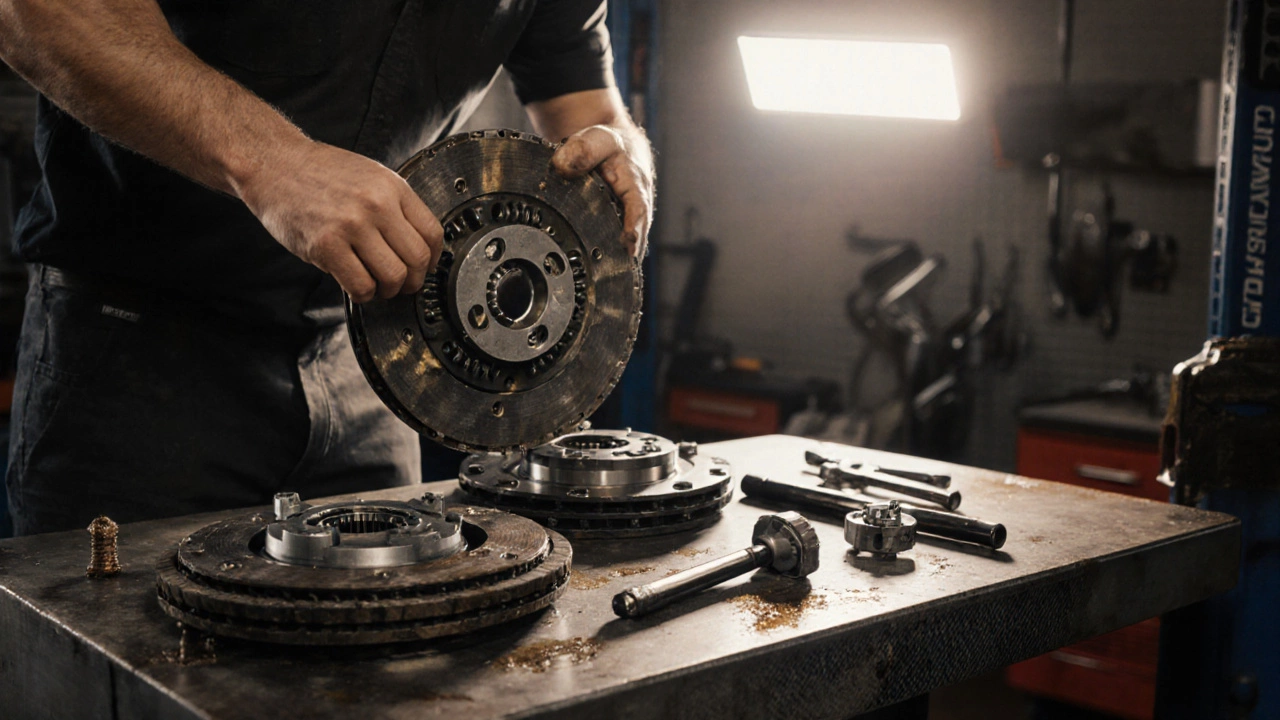
Don’t wait for total failure. Watch for the early signs: a spongy or high clutch pedal, difficulty shifting, burning smell, or the car lurching when you let the pedal out. These aren’t just inconveniences—they’re warnings that the clutch kit, which includes the disc, pressure plate, and release bearing is nearing its end. Replacing it early saves you from damaging the flywheel or transmission, which can double the repair cost. And while you’re at it, check the flywheel, the heavy metal disc bolted to the engine that the clutch presses against. If it’s warped, cracked, or worn, it’ll ruin a new clutch fast.
There’s no universal clock for clutch replacement. It’s not like an oil change. But knowing what to look for, how your habits affect it, and what parts are involved gives you control. Below, you’ll find real-world guides on diagnosing clutch wear, understanding why some clutches fail early, and how to spot trouble before it leaves you stranded on the side of the road.
How Many Miles Does a Clutch Last? Real-World Expectations and Signs It’s Failing
A clutch typically lasts between 80,000 and 120,000 miles, but driving habits can cut that in half-or double it. Learn what really wears out a clutch, how to spot early signs of failure, and how to make yours last longer.