Exhaust Pipe Size: What You Need to Know for Performance and Fit
When you talk about exhaust pipe size, the diameter of the tube that carries exhaust gases from your engine to the tailpipe. Also known as exhaust tubing diameter, it's not just a number—it's a key part of how your engine breathes. Too small, and your engine struggles to push out gases. Too big, and you lose low-end torque and sound control. It’s not about going bigger for the sake of it—it’s about matching the size to your engine’s output, driving style, and what other parts you have.
The exhaust system, the full path exhaust gases take from the manifold to the tailpipe includes more than just the pipe. It connects to the catalytic converter, a emissions control device that turns harmful gases into less toxic ones, the muffler, a component that reduces engine noise, and the tailpipe. Changing the pipe size affects all of them. A 2.5-inch pipe might be perfect for a stock 4-cylinder, but a turbocharged V6 could need 3 inches or more to avoid backpressure. If you upgrade your headers or add a performance cam, your exhaust needs to keep up—or you’ll waste the gains.
People often think louder = faster, but that’s not true. A larger pipe can make your car sound deeper, but it won’t add horsepower unless your engine is producing enough exhaust flow to use it. Many street cars run fine with 2.25 to 2.5 inches. Race cars and high-horsepower builds go bigger—3 to 4 inches—because they’re moving way more air. If you’re just replacing a rusted pipe, match the original size. Don’t guess. Measure it. A mismatched size can trigger check engine lights, hurt fuel economy, or even cause overheating.
What you find below are real-world guides from people who’ve been there. You’ll see how exhaust pipe size links to muffler choice, fuel efficiency, and whether a bigger pipe actually helps or hurts your daily driver. Some posts show how to measure your current setup. Others explain why a 3-inch pipe killed their low-end power. There’s no magic number—it’s about balance. And if you’re thinking about upgrading, these articles will help you avoid the common mistakes that cost time, money, and performance.
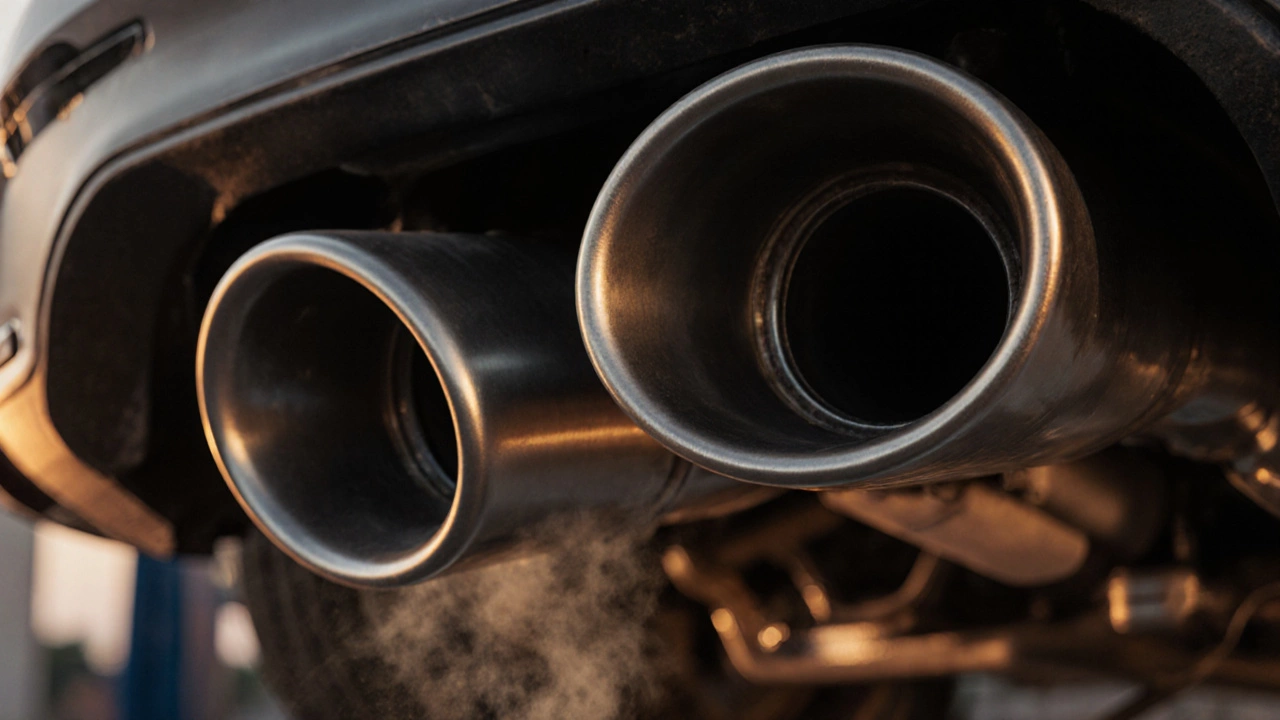
4‑inch vs 5‑inch exhaust: which size is best?
Learn the pros and cons of 4‑inch vs 5‑inch exhaust pipes, how size affects flow, power, and fitment, and get a clear checklist to choose the right diameter for your car.