Oil Change: What You Need to Know About Engine Oil and Maintenance
When you hear oil change, the routine service where old engine oil is drained and replaced with fresh lubricant to protect internal engine parts. Also known as engine oil service, it's one of the most basic—but most critical—tasks any car owner can do. Skip it, and you're gambling with your engine's life. Modern engines run hotter and under more pressure than ever, and clean oil is what keeps everything from seizing up, wearing out, or blowing a gasket.
Not all engine oil, a lubricant designed to reduce friction between moving metal parts inside an internal combustion engine is the same. Your car doesn’t care if it’s cheap or expensive—it cares about viscosity, additives, and whether it matches the manufacturer’s specs. Using the wrong motor oil, a fluid formulated specifically for use in car engines to minimize wear and manage heat can hurt fuel economy, trigger check engine lights, or even cause permanent damage. Synthetic oil isn’t just a marketing buzzword—it’s engineered to perform better under extreme heat and cold, last longer between changes, and flow faster at startup when your engine is most vulnerable.
How often you need an oil change depends on your car, your driving, and the oil you use. Older cars might need it every 3,000 miles. Newer ones? Some can go 10,000 or even 15,000 miles. But if you drive in stop-and-go traffic, haul heavy loads, or live where it’s freezing or scorching hot, you’re putting extra stress on that oil. The clock doesn’t stop just because your dashboard says you’re good for another 5,000 miles. Check your owner’s manual, but also listen to your car—dark, gritty oil or a persistent engine rattle are signs it’s time.
What you’re really buying with an oil change isn’t just new fluid—it’s protection for your engine’s internals: pistons, bearings, valves, and the timing chain. Dirty oil turns into sludge, and sludge clogs tiny passages that supply oil where it’s needed most. That’s how a $50 oil change turns into a $5,000 engine rebuild. And while you’re at it, a good shop will also check your oil filter—because if the filter’s clogged, even the best oil won’t help.
You’ll find posts here that dig into exactly what oil type your car needs, how to tell if you’re using the wrong one, why viscosity ratings like 5W-30 or 10W-40 matter more than you think, and how synthetic blends compare to full synthetics. There are also guides on how to do it yourself, what tools you actually need, and how to spot if someone’s trying to upsell you on unnecessary services. This isn’t about following a schedule blindly—it’s about understanding what’s happening under your hood, so you don’t get stranded, overcharged, or stuck with a dead engine.
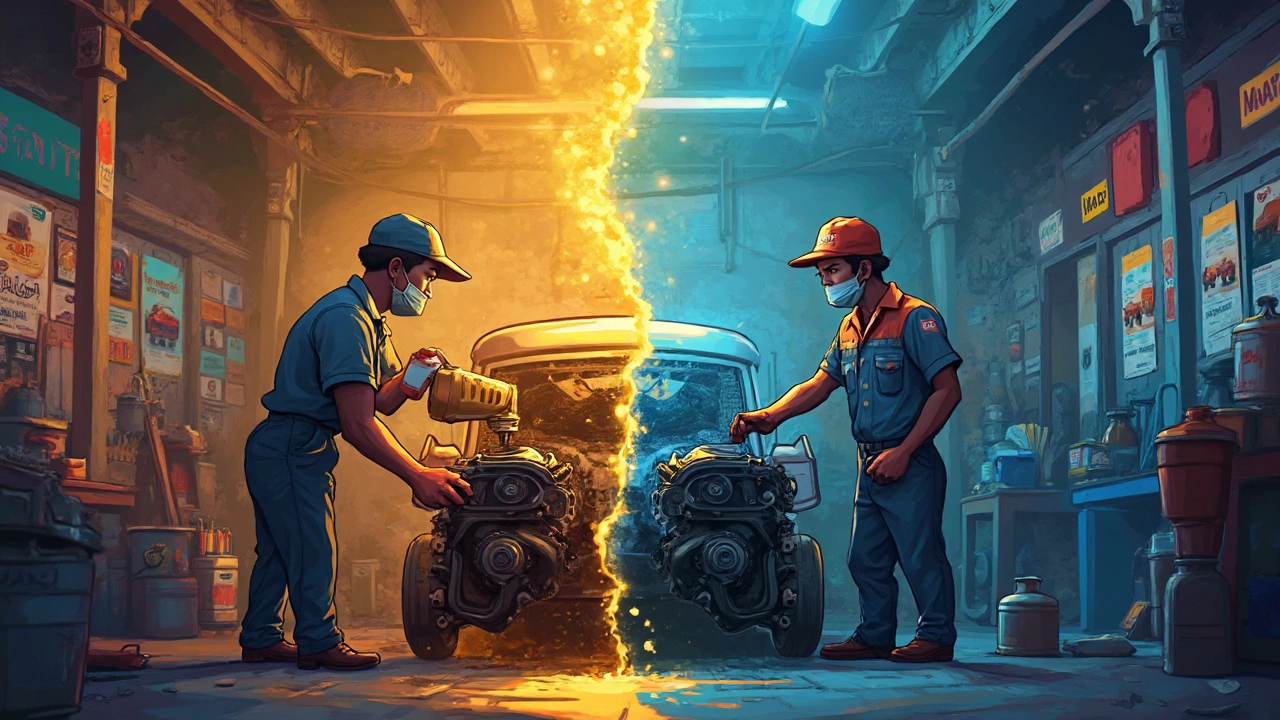
Regular Oil vs Synthetic: What's Really at Stake in Your Car Engine?
Ever wondered if using regular oil instead of synthetic could harm your engine? This article breaks down the facts, risks, and real-world outcomes of swapping oils so you make the smartest choice for your car.

Engine Oil: What Really Happens When Your Car Runs Low
Ever wonder what actually happens when your car is low on engine oil? This article dives into why oil matters, what happens if you skip or delay an oil change, and how to spot the warning signs before real damage hits. You'll learn simple tips for checking oil at home, plus what you can do if you notice trouble. Forget the jargon—just practical steps and real examples to help keep your car running smooth.

How Much Oil Should I Add If It's Low? Engine Oil Basics Made Easy
Not sure how much engine oil to add if your car is running low? This article breaks down what signs to look for, how to read the dipstick, and the right way to top up oil without overfilling. You’ll get practical tips, learn about common mistakes, and find out how much is too much. Whether you're a beginner or just need a quick reminder, this guide makes oil checks easy and stress-free.